Chinese Social Rules
Visiting homes, meeting families, friendship, and everyday social situations in China.

WeChat Pay and Red Envelopes: A Foreigner's Guide to China
WeChat Pay may allow some users to link international cards, but eligibility, supported cards, verification, limits, and merchant acceptance vary by account, is…
Read the guide →
Don't Scold or Embarrass Your Child in Front of Others
Yes. Criticizing or physically disciplining children in public, especially in front of guests, is increasingly viewed as harmful to the child and embarrassing t…
Read the guide →
Don't Touch a Man's Head or Woman's Waist Without Permission
Yes. A man's head and a woman's waist are both considered off-limits for casual or uninvited physical contact. These are deeply personal zones in Chinese cultur…
Read the guide →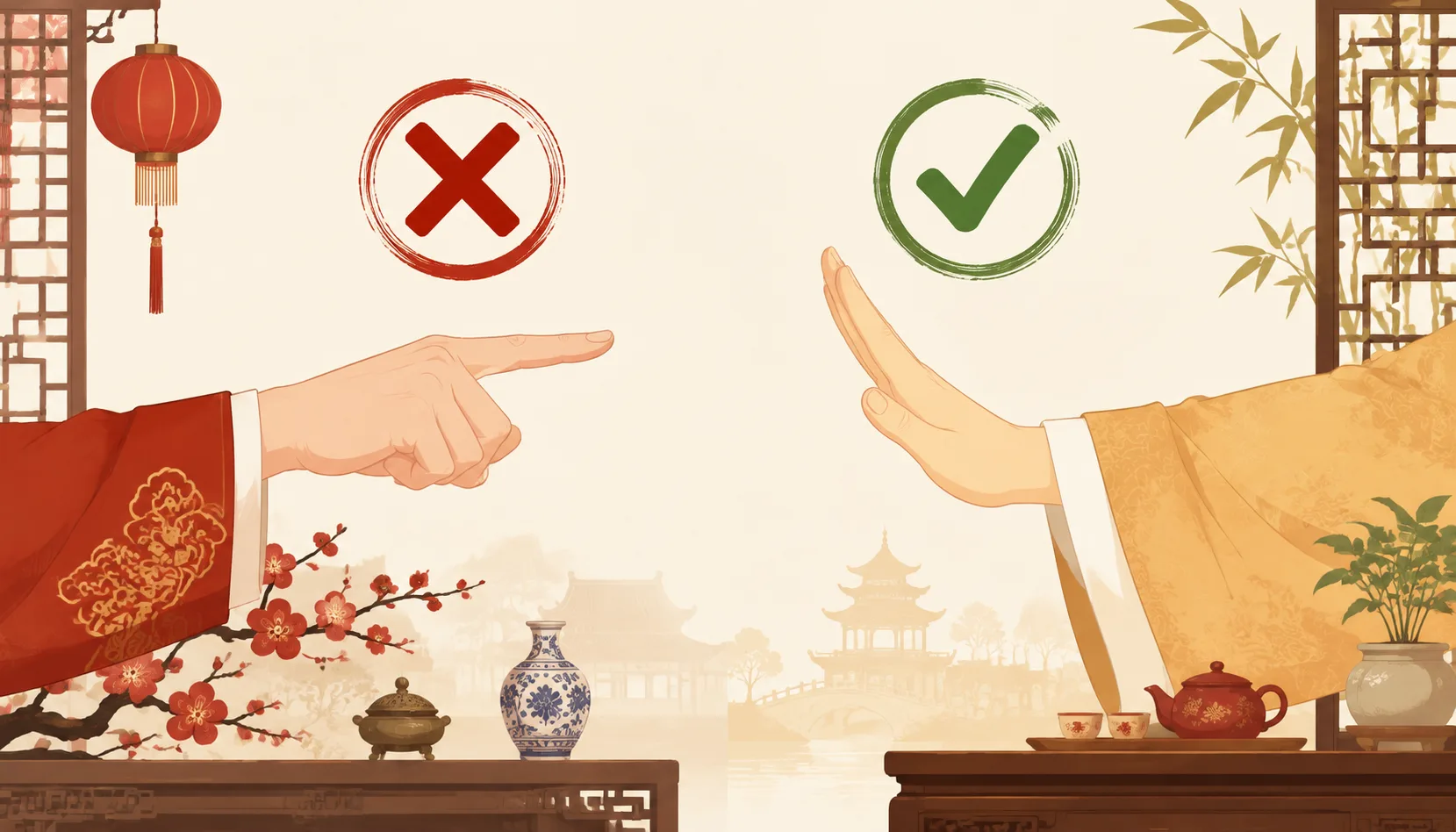
Don't Point at People With Your Index Finger
Yes. Pointing at a person with your index finger is seen as aggressive and disrespectful, regardless of your status or the context. Use an open hand gesture ins…
Read the guide →
Never Interrupt When Two People Are Mid-Conversation
Yes. Cutting into a conversation someone else is having — even with something short — is considered a serious breach of manners. Wait until they finish before s…
Read the guide →
Don't Excuse a Child's Bad Behavior With 'Just a Kid'
No. Using 'they're just a kid' as a blanket excuse for disruptive, rude, or inconsiderate behavior is widely condemned. Parents are expected to correct behavior…
Read the guide →
Don't Randomly Pat Someone on the Shoulder
Generally, no — not without a close relationship or clear context. Shoulder-patting is reserved for elders patting juniors, or leaders patting subordinates. Pee…
Read the guide →
Don't Walk Between Two People Who Are Standing and Talking
Yes. Walking between two people who are standing and talking breaks their connection and is seen as intrusive and disrespectful. Walk around them instead.
Read the guide →
Don't Hit the Face: Exposing Weaknesses in a Conflict
Even in conflict, attacking someone's face (dignity) or deliberately exposing their personal flaws and past failures is considered a serious breach of ethics. T…
Read the guide →
Don't Gossip — Not in Front, Not Behind Their Back
Yes. Gossiping — spreading private information, embellishing stories, or speaking ill of people behind their backs — is strongly condemned as a character flaw.
Read the guide →
Don't Criticize When Someone Is Already in Trouble
Yes. When someone is already struggling, piling on with criticism — even if deserved — is seen as heartless and cruel. The Chinese equivalent of 'kicking someon…
Read the guide →
Leave Room in What You Say and Do — Don't Go to Extremes
Chinese communication culture favors leaving room for flexibility. Making absolute statements or commitments corners you — if circumstances change, you have no …
Read the guide →
Say the Hard Things First: 'Ugly Words Said Early'
'Chǒuhuà shuō dào qiántou' (丑话说到前头) means: state the risks, limitations, and worst-case scenarios upfront before agreeing to help. This is seen as responsible a…
Read the guide →
Don't Use a Loud Voice in Social and Professional Settings
Yes. Talking at a high volume, fast pace, or loud pitch in social settings signals poor self-control and low refinement. Calm, measured speech is admired.
Read the guide →
Never Whisper to One Person When Others Are Present
Yes. Whispering privately in front of others — especially elders — is seen as secretive, disrespectful, and suggests you are hiding something improper.
Read the guide →
Always Tell Your Family When You Leave and Return Home
Yes. Announcing your departure and return is a deeply ingrained family respect ritual. Leaving without a word or coming home silently is considered cold and dis…
Read the guide →
Never Comment on Someone's Physical Appearance or Body
Yes. Making unsolicited comments about someone's height, weight, appearance, or body is considered very rude, even if the comment isn't intended to be mean.
Read the guide →
Give Three Days' Notice Before Visiting Someone's Home
Three days is considered a respectful amount of notice for a planned visit. Two days is acceptable, one day is informal, and showing up unannounced is considere…
Read the guide →
WeChat Moments Etiquette: What Foreigners Should Know
WeChat Moments (朋友圈) is more like a professional-personal hybrid than a pure social feed — your boss, clients, and family all see the same posts. Post 1-3 times…
Read the guide →
Chinese Coworker Relationships: Office Social Dynamics
Expect personal questions about salary, age, and relationship status — they signal warmth, not rudeness. Return meal invitations within 1-2 weeks. Choose a 'fri…
Read the guide →
How to Repay Favors in China: Timing and Unwritten Rules
In China, never repay a favor immediately—it signals you want to end the relationship. Wait a few weeks or months, then return it with something thoughtful, lik…
Read the guide →
WeChat Guanxi: Stay Connected Without Being Annoying
Treat WeChat as a hybrid personal-professional space: engage with Moments thoughtfully (not obsessively), message with a purpose and no immediate ask, and follo…
Read the guide →
Don't Take Small Advantages — 'Gaining Small, Losing Big'
Yes. Habitually taking small advantages — extra samples, free extras, minor perks you didn't earn — is seen as a character flaw that reveals narrow thinking and…
Read the guide →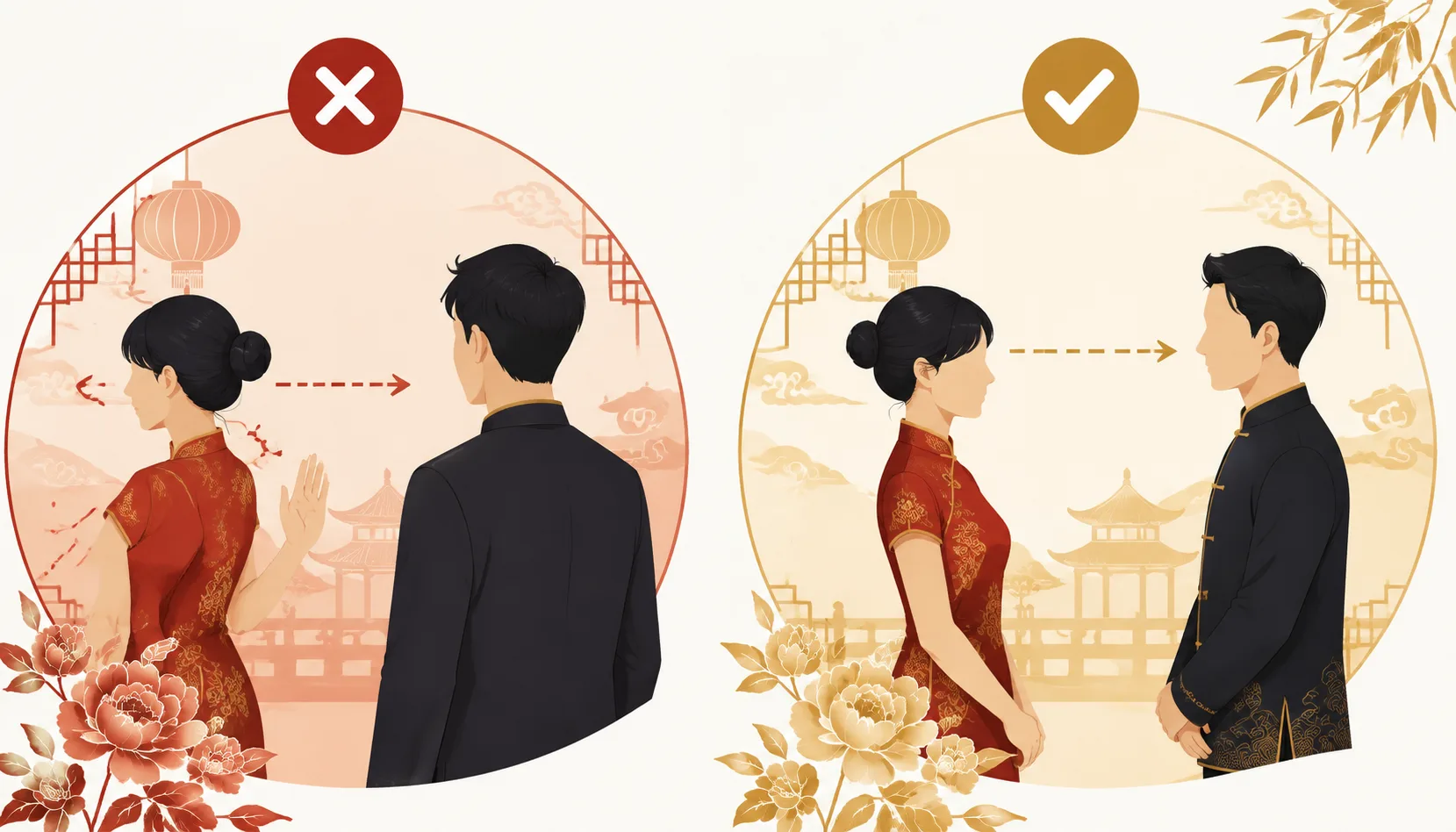
Don't Look at People With a Sideways or Dismissive Glance
Yes. Looking at someone with a side-eye or raising your eyes without lifting your head signals contempt, condescension, or disinterest.
Read the guide →