Are there body parts you should never touch in Chinese social culture?
Quick answer
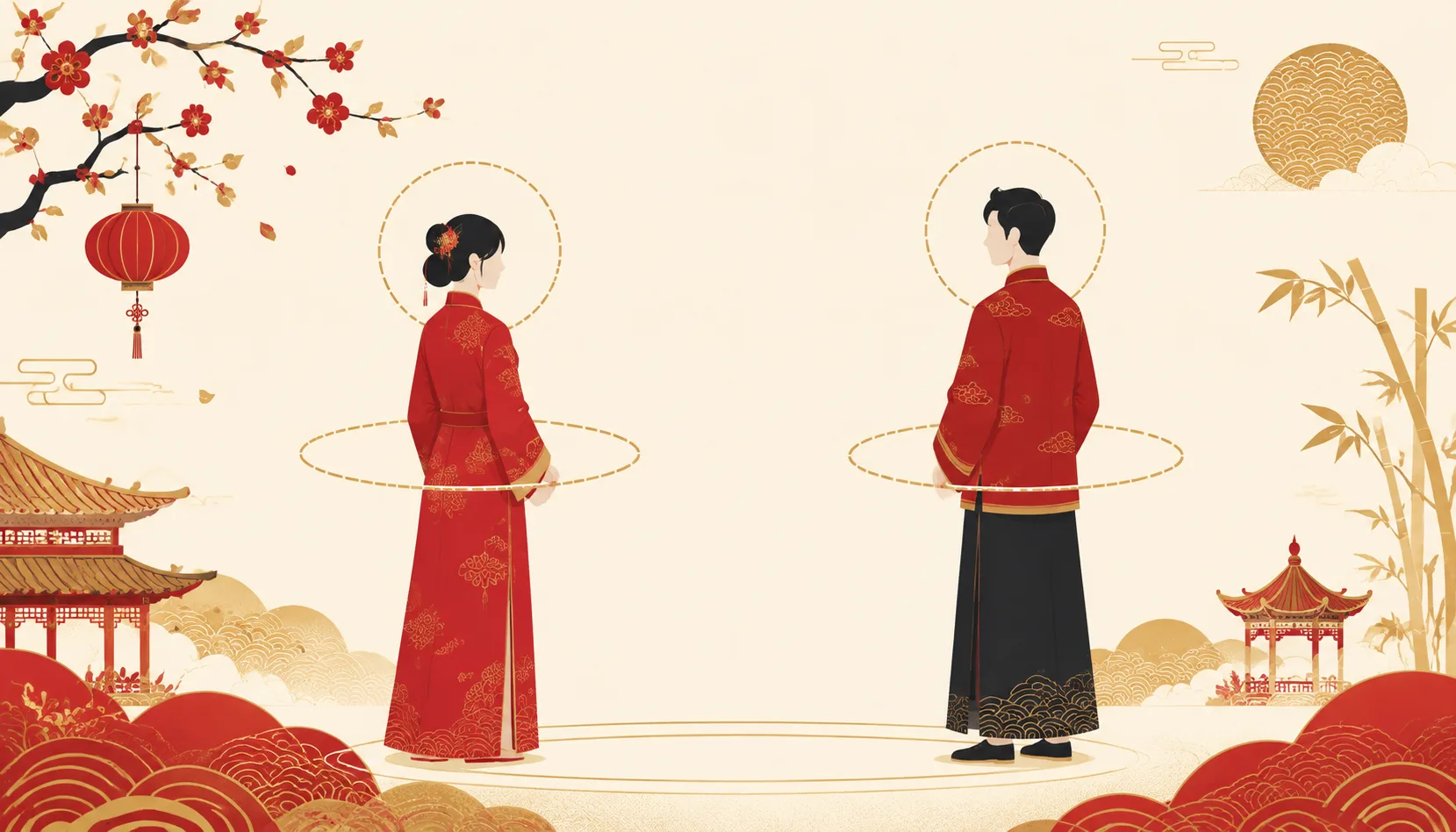
Yes. A man's head and a woman's waist are both considered off-limits for casual or uninvited physical contact. These are deeply personal zones in Chinese culture.
Why This Rule Matters
In Chinese tradition, men's heads became symbolically sacred after the adult 'capping ceremony' (jī lǐ/guān lǐ) at age 20. The head was considered to be guarded by spirits — touching it invited bad luck. For women, the waist is a deeply private area; uninvited contact is considered harassment regardless of intent. Even among same-sex friends, these zones are respected.
What You Should Do
- Ask before any physical contact with someone you're not close to
- Stick to a handshake or nod as standard greeting
- Understand that physical contact norms in China are generally more reserved than in Western cultures
What You Shouldn't Do
- Pat a Chinese man on the head — even as a compliment or affectionate gesture
- Touch a woman's waist, even lightly, without explicit invitation
- Assume that close friendship permits this kind of contact
Practical Tips for Foreigners
This rule applies in most social and formal settings across China. When in doubt, watch what your Chinese host or senior colleague does and follow their lead. Breaking this rule once is forgivable — breaking it repeatedly signals a lack of cultural awareness.
Regional Nuances: North vs. South
While the head and waist taboo is broadly observed, intensity varies by region. In northern cities like Beijing and Tianjin, the rule is more rigid among older generations — a pat on the head from a stranger can be read as a direct challenge to authority, especially in hierarchical workplaces. In southern hubs like Guangzhou and Shenzhen, younger professionals under 35 often shrug it off, particularly in foreign-owned companies. But don't let that fool you: in rural Fujian or Zhejiang, where ancestral customs run deep, even a light touch on a woman's waist during a crowded festival can trigger family intervention. Read the room: if your colleague is from a small town and over 40, treat the rule as absolute.
Real Scenarios: What Goes Wrong
- A Canadian tourist in Beijing, trying to be friendly, patted a young boy on the head while his grandmother looked on—she immediately pulled the child away and gave the tourist a cold stare, and the family's warmth vanished for the rest of the visit.
- At a business dinner in Shanghai, a German executive lightly touched his female colleague's waist to guide her toward the table—she flinched, and the host later quietly advised him that such contact is considered highly inappropriate in China, even among friends.
- A French photographer in Chengdu, while posing for a group shot with locals, put his hand on a woman's shoulder to adjust her position—she stepped back awkwardly, and several men in the group frowned; the photos were taken, but the jovial atmosphere turned tense.
- An Australian visitor in Xi'an, at a temple, playfully ruffled the hair of a monk's young apprentice as a gesture of warmth—the monk immediately intervened, explaining that the head is sacred and must never be touched casually.
Gender and Context Shift the Rules
The taboo isn't symmetrical. Men touching a woman's waist is almost always sexualized — even between friends, it implies intimacy. Women touching men's heads is less charged but still frowned upon in formal settings. Same-gender contact is more tolerated: two male friends may slap shoulders, and female friends often link arms. But cross-gender rules tighten in conservative industries like manufacturing or government. In tech startups in Hangzhou or Shenzhen, the lines blur — a pat on the back from a female CEO to a male junior is common. When in doubt, mirror how locals of the same gender and rank interact with you.
What Your Chinese Host Thinks But Won't Say
When you accidentally touch a man's head, he won't scold you — he'll just go quiet and step back. Inside, he's thinking: 'Does he think I'm a child or a dog?' The head is where the spirit resides in folk belief; disrespecting it is like slapping his ancestors. If you touch a woman's waist, she'll smile politely but may later tell her friends you have 'no boundaries.' The host's hidden calculation: 'If he's this careless with bodies, what else will he mishandle?' Don't apologize profusely — that draws attention. Instead, withdraw your hand, bow slightly, and say 'duì bù qǐ' once. Then change the subject. Over-explaining makes it worse.
What Chinese People Actually Say
- 摸头 | mō tóu | to touch someone's head | shows familiarity; avoid with strangers or elders
- 搂腰 | lǒu yāo | to put arm around someone's waist | intimate gesture; requires close relationship
- 男女授受不亲 | nán nǚ shòu shòu bù qīn | traditional saying about physical contact between men and women | emphasizes appropriate boundaries between genders
2026 Reality Check
2026 Reality Check: The rule still exists but is fading, especially in urban areas.
Gen Z vs Older Generations: Young people in cities generally don't think about this rule daily. Casual hugs, shoulder touches, and waist taps are common among friends. Older generations (50+) still consider head-touching disrespectful, especially from strangers. Waist-touching by men is still seen as inappropriate by most age groups in formal settings.
Beijing/Shanghai vs Smaller Cities: In Tier-1 cities, Western social norms dominate. Head touches happen freely in friend groups. In smaller cities and rural areas, the traditional rule holds stronger—particularly for women's waists, which still carries conservative undertones.
Bottom Line: The rule survives as a guideline, not a strict code. It's most enforced in formal/business contexts and with older people. Younger urban Chinese largely ignore it.
Frequently asked questions
Why is touching a man's head considered disrespectful in China?
In Chinese culture, the head is seen as the seat of the soul and dignity. Touching it without permission can be seen as a serious invasion of personal space and a sign of disrespect.
What does touching a woman's waist imply in Chinese social settings?
Touching a woman's waist is considered highly intimate and inappropriate unless you are in a close romantic relationship. It can be interpreted as a sexual advance or a breach of personal boundaries.
Are there any exceptions where touching these body parts is acceptable?
Yes, exceptions exist for medical professionals during examinations, close family members, or in emergency situations where physical assistance is needed. Always ask for permission first in any other context.
How should I react if someone accidentally touches my head or waist in China?
If it's clearly accidental, a polite smile and stepping back is usually enough. If it's intentional, you can firmly but calmly say 'please don't do that' to set your boundary.
Is it okay to touch a child's head in China?
Even for children, it's best to avoid touching their heads without permission. Many parents are protective of this area, and it's safer to greet children with a wave or a verbal hello instead.
What are other body parts to avoid touching in Chinese culture?
Besides the head and waist, avoid touching someone's feet, as they are considered low and unclean. Also, refrain from patting someone on the back too forcefully, as it may be seen as overly familiar.
Try our tools
Related guides

10 Social Mistakes Foreigners Commonly Make in China
The most common mistakes cluster around face (publicly correcting or disagreeing with someone), physical greeting norms (hugging or back-patting people who are …
Read the guide →
More Social Mistakes Foreigners Make in China (Advanced)
Beyond the obvious chopstick and shoe rules, more subtle mistakes include: assuming silence means comfortable, taking 'good, good' as feedback, using one finger…
Read the guide →
Cross-Cultural Relationships With a Chinese Partner: What to Expect
The main challenges are family approval, language barriers with in-laws, different assumptions about the future (where to live, how to raise children), and mana…
Read the guide →