Chinese Business Etiquette
Chinese business culture — meetings, hierarchy, banquets, and building relationships. (Guides coming as we verify sources.)
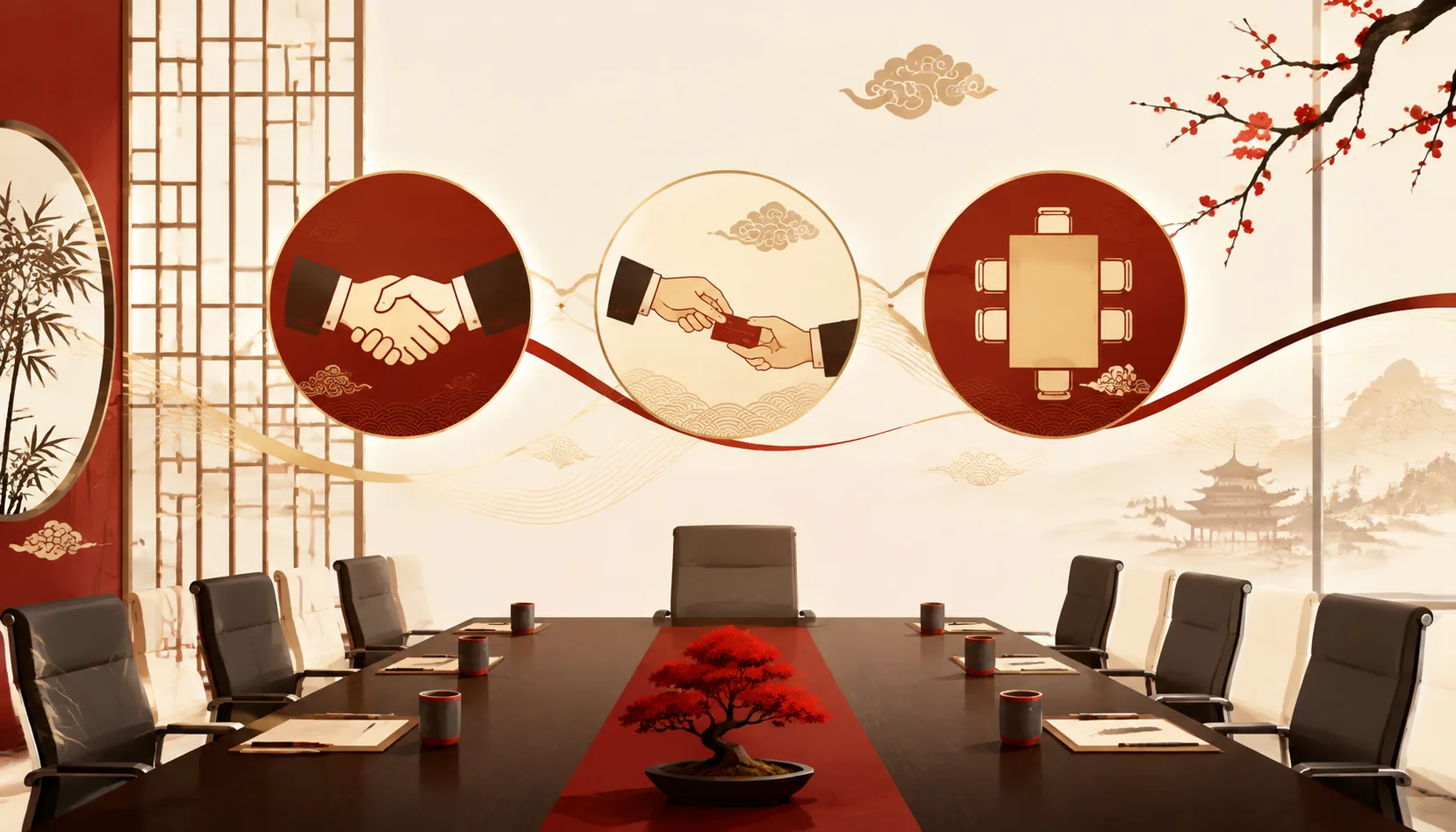
Chinese Business Etiquette Guide 2026: What You Must Know
Chinese business etiquette is easier to navigate when you watch three recurring patterns: relationship-building (guanxi), protecting dignity in public (mianzi),…
Read the guide →
How to Visit Chinese Clients: Appointment to Exit (2026)
Never visit a Chinese client without a confirmed appointment — give 3-5 days' advance notice minimum. Bring a small gift for a first visit. Knock before enterin…
Read the guide →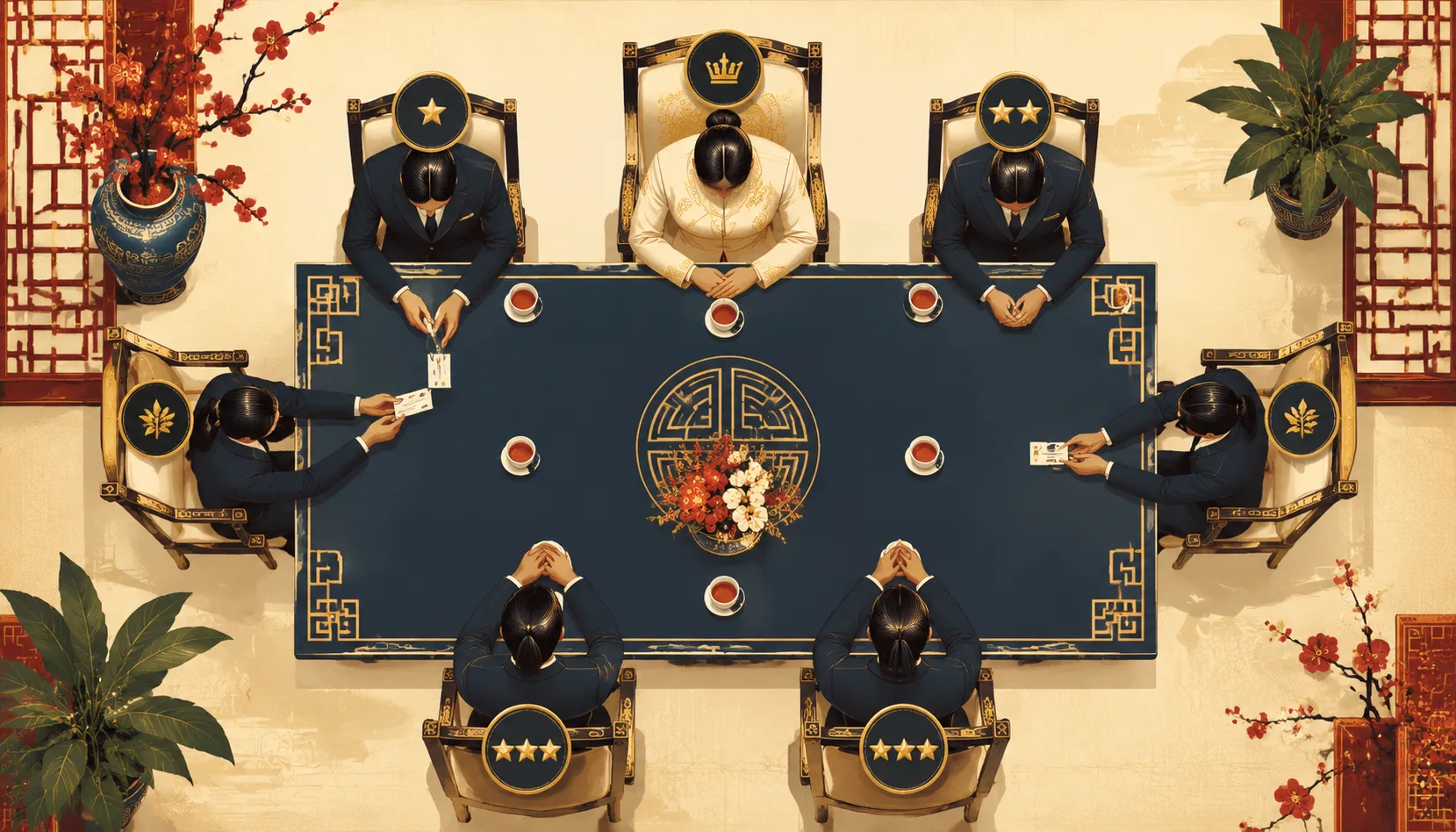
Chinese Formal Meeting Etiquette: Seating & Greetings
Chinese formal meetings run on hierarchy: the most senior person enters first, sits facing the door, speaks first on any topic, and leaves first. You wait to be…
Read the guide →
Chinese Business Communication Style: Indirect Signals
Chinese business communication is high-context: what matters is often what's not said — the tone, the timing, who said it, and what was conspicuously omitted. W…
Read the guide →
Chinese Business Banquet Protocol: Rules & What Not to Do
A Chinese business banquet is not a meal — it's a trust-building ceremony disguised as dinner. The food is secondary. The goal is to establish that you are a re…
Read the guide →
Chinese vs Korean Business Etiquette: Key Differences
While both Chinese and Korean business cultures emphasize hierarchy, respect, and relationship-building (guanxi in China, yeong in Korea), they differ significa…
Read the guide →
Guanxi Circles: Iron vs. Face Relationships in China
Chinese relationships are stratified into concentric circles—from iron relationships (铁关系 tiě guānxi) at the core to face-level acquaintances (面子关系 miànzi guānx…
Read the guide →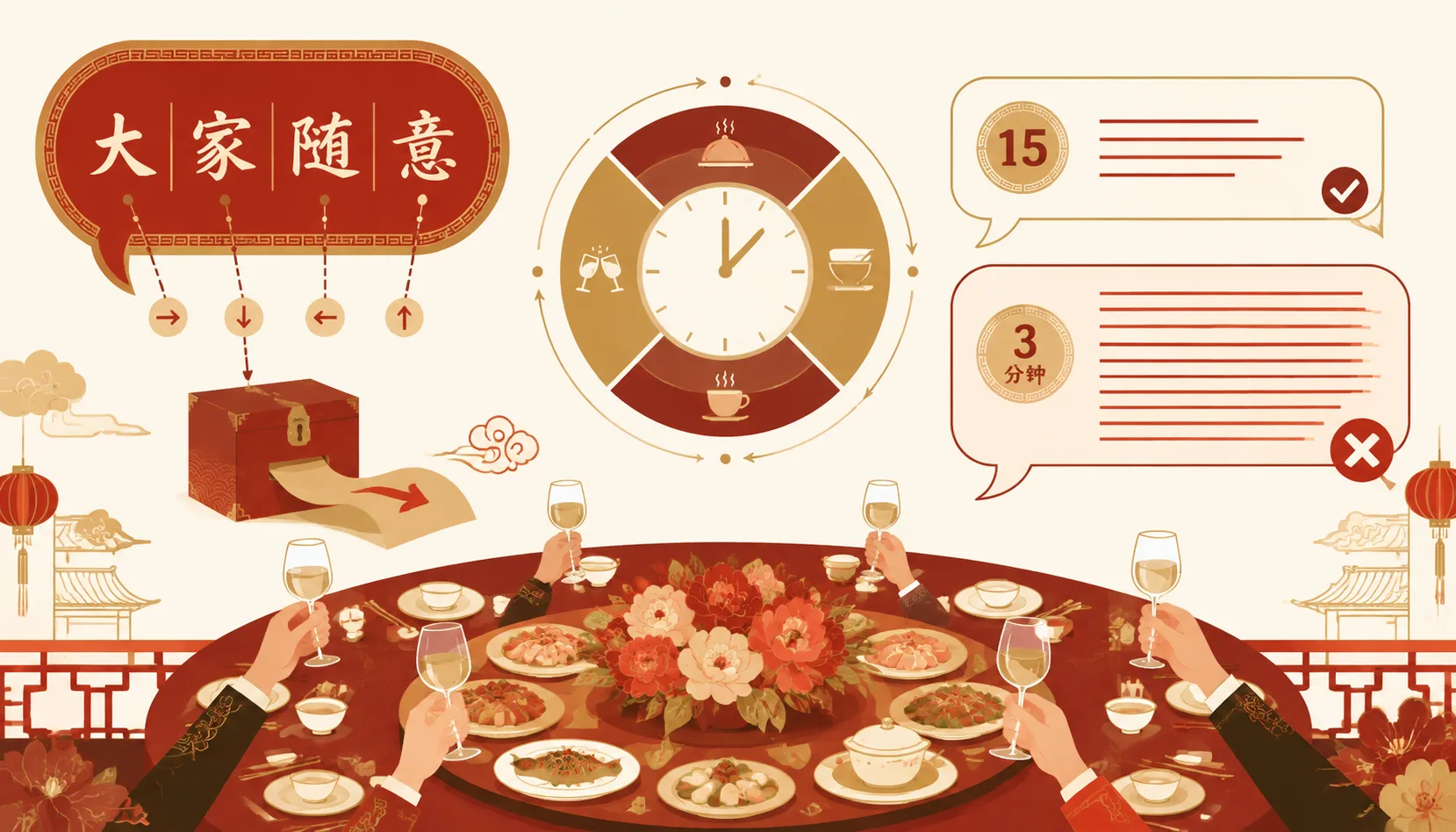
Chinese Business Dinner Phrases: What They Really Mean
In Chinese business dinners, phrases like '大家随意' (be casual) and '我干了,您随意' (I'll drink, you do as you like) are not literal invitations to relax—they are power …
Read the guide →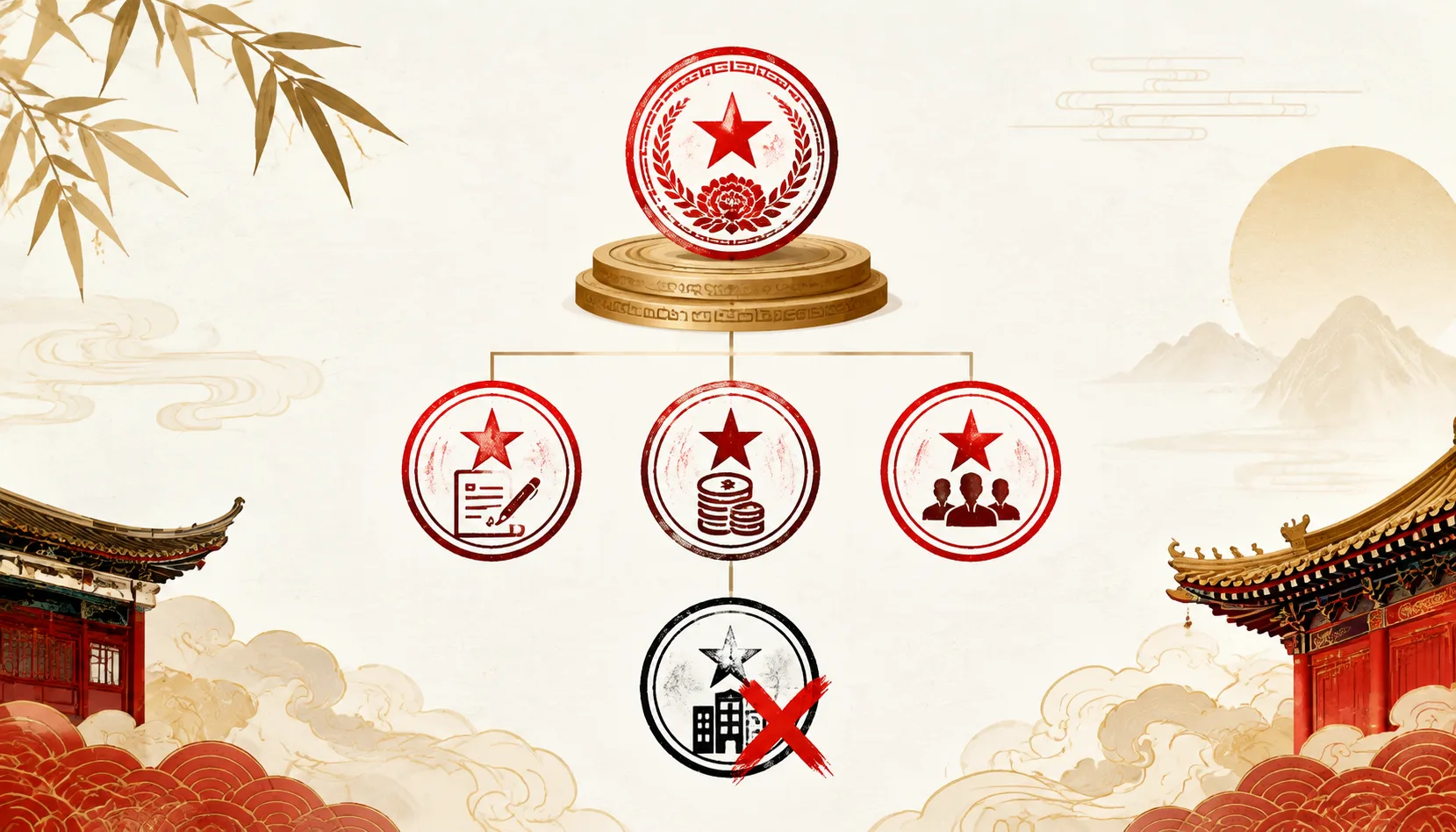
Chinese Company Seal (Gongzhang): Why It Beats a Signature
In China, the company seal (公章) carries legal weight that a personal signature alone does not. It represents the company's institutional will and is protected b…
Read the guide →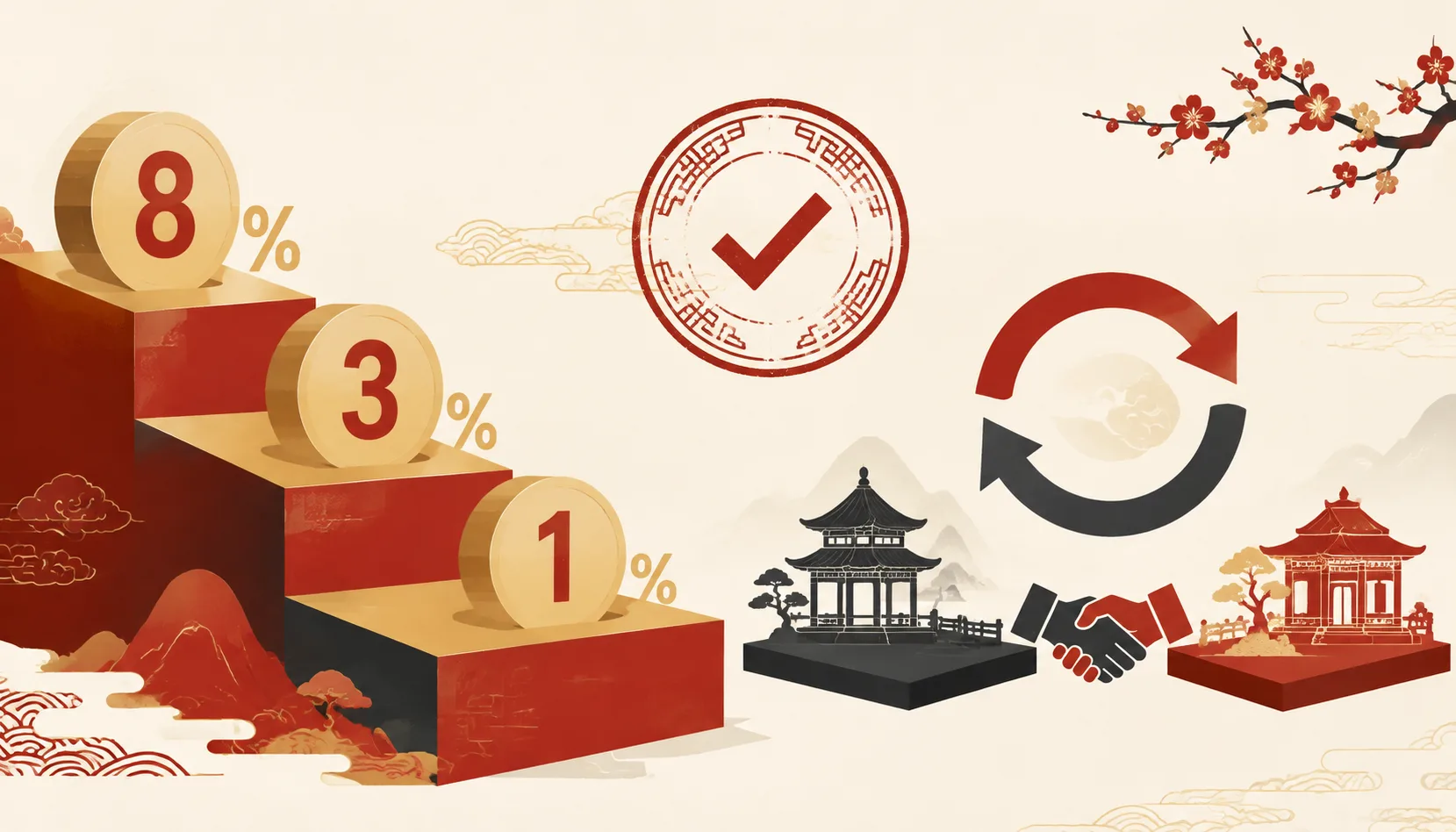
How to Make Concessions in Chinese Business Negotiations
Always leave room in your initial offer, package every concession as a hard-won internal approval, and shrink your concessions incrementally (e.g., 8% → 3% → 1%…
Read the guide →
Chinese Office Birthday Culture: What to Expect and Do
In Chinese offices, birthday celebrations typically involve group gatherings where colleagues contribute money for a collective gift and shared meal, with the b…
Read the guide →
How China's Youngest Workers Are Quietly Rewriting the Rules
At 6:28 on a Tuesday evening in Hangzhou, an alarm goes off on Chen Lu's phone. It is not a reminder for a meeting. It is her signal to leave. The 26-year-old p…
Read the guide →
Trust First or Deliver First? China vs. West Business Logic
On his third trip to Foshan, Mark Sullivan still hadn't signed anything. The American sourcing director had toured the factory twice, inspected the production l…
Read the guide →
The First 90 Days: How Chinese Workplaces Welcome Newcomers
At 11:47 on a Tuesday morning in a Shenzhen office tower, something subtle happens. Keyboards fall quiet in waves. Chairs roll back. Small clusters of colleague…
Read the guide →
The Long Game: Patience as a Professional Virtue in China
On his seventh trip to Hangzhou, the American vice president did the thing he had promised himself he wouldn't: over the third pour of Dragon Well tea, he asked…
Read the guide →
Why Chinese Hospitality Feels Overwhelming — What It Means
The dumplings were still arriving when Daniel Mercer understood he had made a catastrophic mistake. Three hours earlier, the 27-year-old engineer from Leeds had…
Read the guide →
Ganbei: The Art of the Chinese Toast and Why It Builds Trust
The private dining room on the second floor of a Wuxi restaurant seats twelve around a circular table, its glass Lazy Susan already crowded with dishes nobody h…
Read the guide →
Chinese Colleagues Ask If You're Married: What It Means
Emma Clarke had been at her new job in Chengdu for less than 48 hours when the questions began. Her HR manager asked her age. A colleague at the next desk asked…
Read the guide →
The Hidden Language of Chinese Business Card Exchange
On the thirty-eighth floor of a Shenzhen office tower, two men rise from their chairs at the same moment. One produces a small rectangle of cardstock and offers…
Read the guide →
How Chinese Professionals Build Workplace Relationships
At three o'clock on a Tuesday afternoon in a Shanghai office tower, a delivery rider sets fourteen cups of milk tea on the front desk of a gaming company. No on…
Read the guide →
Face (Mianzi) Is a Social Technology — Here's How It Works
The quarterly review at a Shenzhen hardware firm has been running for forty minutes when the flaw becomes obvious. Engineer Zhang's production timeline assumes …
Read the guide →
Hierarchy in Chinese Workplaces: It's Not What You Think
The meeting lasted forty minutes, and to Mark, nothing happened. Eight engineers sat around a glass table in a Shenzhen electronics firm while the junior ones s…
Read the guide →
'好' Doesn't Mean Yes: Acknowledgment vs Commitment in China
In China, "好" often signals polite acknowledgment, not a firm yes—it means "I heard you," not "I agree." This reflects cultural harmony and avoiding direct refu…
Read the guide →
Guanxi Is Not Networking: Why Transactional Thinking Fails
Guanxi isn’t a transaction—it’s a long-term trust deposit that compounds, unlike Western networking’s immediate quid pro quo. Expect months of meals and small f…
Read the guide →