How should Western businesspeople make concessions in Chinese negotiations to protect their bottom line and build trust?
Quick answer
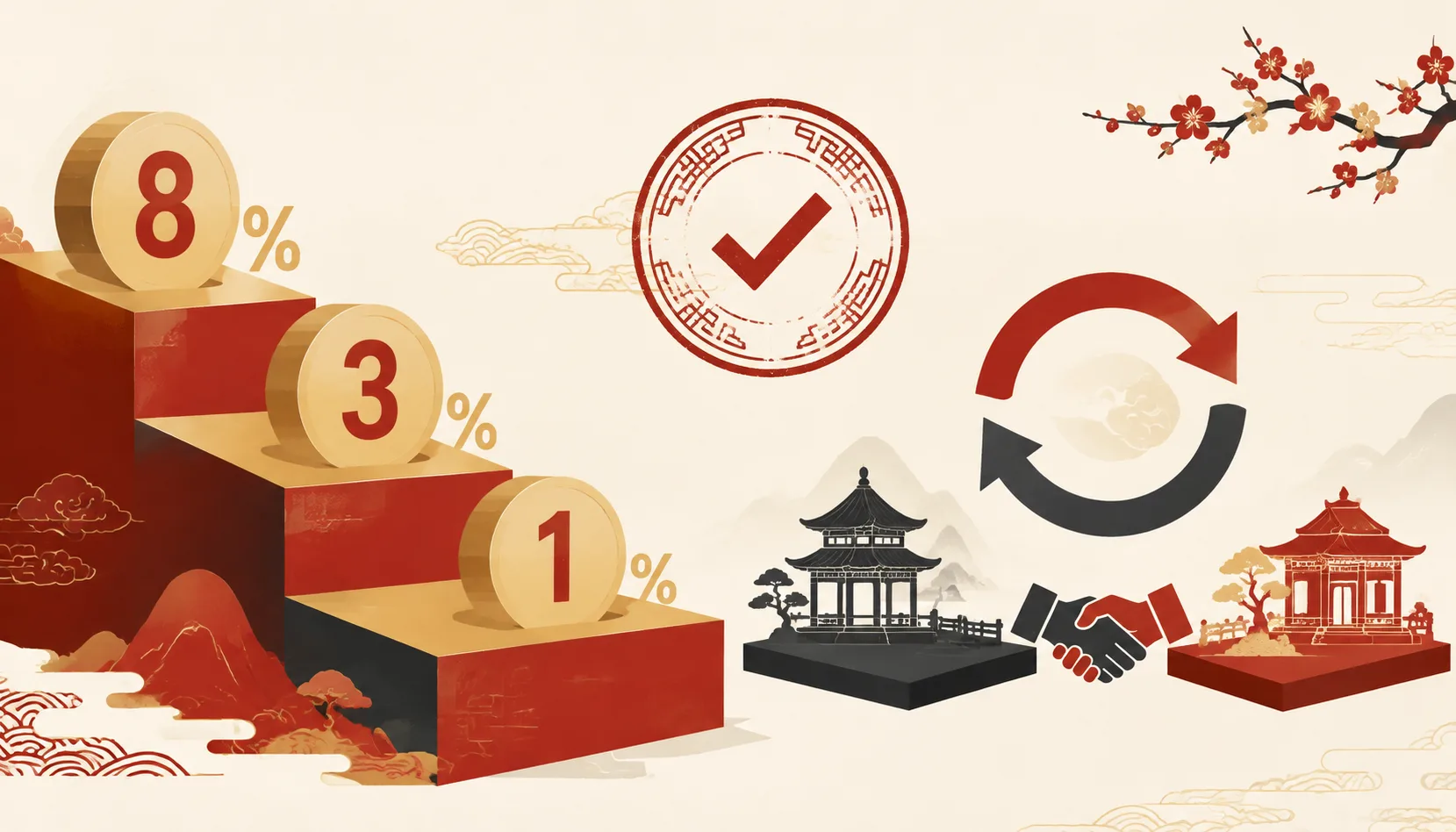
Always leave room in your initial offer, package every concession as a hard-won internal approval, and shrink your concessions incrementally (e.g., 8% → 3% → 1%) to signal you're nearing your limit. Exchange concessions for something of value, and verify 'bottom line' claims with tests like the identity or concession curve test.
Why You Must Leave Room in Your First Offer
In Chinese commercial culture, the first offer is understood to contain 'water' (水分, shuǐfèn) — a deliberate margin for negotiation. If you present your true bottom line as your opening position, you signal either naivety or disrespect. The counterparty will assume there's still room and push further, cutting you below your floor.
Consider this scenario: A German supplier quotes €50,000 for a machine, which is already their minimum viable price. The Chinese buyer, expecting a 10-15% reduction, negotiates down to €45,000. The supplier loses money and trust. Instead, quote €58,000, leaving room to 'concede' to €52,000 while protecting your margin.
Key tactic: Start 10-20% above your target price, depending on the industry. This gives you space to make meaningful concessions without breaching your floor.
| Chinese | Pinyin | English |
|---|---|---|
| 水分 | shuǐfèn | Water (negotiation margin) |
| 留余地 | liú yúdì | Leave room |
Give the Other Side a 'Win' to Report Back
Your Chinese counterpart's boss expects a successful negotiation. If you give nothing, they lose face and the deal may collapse even if terms are good. Every concession you make becomes a trophy for their internal report — their lead negotiator needs a victory for his PowerPoint presentation to management.
This is why you must structure your concessions so they are visible and quantifiable. A 2% price drop, a free training session, or extended payment terms are all 'wins' they can showcase.
Key tactic: Before entering negotiations, list 3-5 low-cost items you can 'sacrifice' — like spare parts or a longer warranty. These become your negotiation chips.
Case example: An American software firm offered a Chinese client a 5% discount (within their budget) but framed it as a 'special exception' due to the client's strategic importance. The client's team celebrated the discount as a major achievement, and the deal closed smoothly.
Layer 1: The Internal Approval Delay
Never concede on the spot. Always use the internal approval delay tactic: 'This exceeds my authorization, I need to check with headquarters. I'll fight for it and reply Wednesday.' This turns every concession into something you won for them, not something you casually gave away.
This delay serves multiple purposes: it signals that your concessions have a cost, it builds anticipation, and it gives you time to evaluate the trade-off. It also mirrors the Chinese side's own internal approval processes, making the negotiation feel more balanced.
Key tactic: When you return with the 'approved' concession, emphasize the effort: 'I had to convince my CEO, but given our long-term relationship, we can offer 2% off.'
| Chinese | Pinyin | English |
|---|---|---|
| 超出我的授权 | chāochū wǒ de shòuquán | Exceeds my authorization |
| 我需要请示总部 | wǒ xūyào qǐngshì zǒngbù | I need to check with headquarters |
Layer 2: Concession Exchange
Never give a concession without asking for something in return. Use the concession exchange formula: 'We can come down 2 points on price, but we'd need X in return — which of these alternatives is easier for you to approve?'
The magic lies in the question 'which is easier for you to approve?' This normalizes that both sides have internal processes and transforms the negotiation from adversarial bargaining into collaborative problem-solving. You're no longer fighting over a single number; you're jointly finding a package that works for both.
Key tactic: Prepare a menu of 2-3 options you'd accept in exchange (e.g., longer contract term, faster payment, larger order volume). Present them as choices, not demands.
Case example: A British manufacturer wanted a 3% price reduction. The Chinese supplier offered 1.5% but asked for a 12-month contract instead of 6 months. The British side agreed, and both felt they'd won.
Layer 3: The Decreasing Concession Curve
The size of your concessions should shrink over time: 8%, then 3%, then 1%. This decreasing curve physically signals that you're approaching your bottom line — more convincingly than any verbal claim. If you give 5% each time, the other side will keep pushing, thinking there's endless room.
For example, if your initial price is $100 and you want to settle at $90, start by conceding $8 (to $92), then $3 (to $89), then $1 (to $88) — but ensure your floor is $88. The shrinking increments tell the other side that the well is running dry.
Key tactic: Plan your concession steps in advance. Decide the maximum total concession you can make, then divide it into 3-4 decreasing increments. Never jump from 8% to 0.5% — that's too abrupt and may seem insulting.
How to Verify 'This Is Our Bottom Line'
When the Chinese side claims 'this is our bottom line,' don't take it at face value. Use these four tests to gauge its truth:
- Identity test: Does the person saying it have the authority to make that decision? If they're a junior negotiator, it's likely a scripted line.
- Concession curve test: Have they made decreasing concessions? If they've given 5%, then 4%, then 3%, they're likely near their limit. If they've given 2% each time, there's probably more room.
- Structural substitution test: Are they offering non-price concessions (like faster delivery) instead of price cuts? That indicates flexibility.
- Polite exit test: Say, 'I understand this is your final offer. I'll need to discuss with my team, but we may have to walk away.' If they suddenly find room, it wasn't a true bottom line.
Key tactic: Use the polite exit test sparingly — it can only be used once per negotiation, and you must be genuinely prepared to walk away. Overusing it erodes trust.
Putting It All Together: A Realistic Scenario
Imagine you're a US-based supplier of industrial sensors negotiating with a Chinese manufacturer. Your target price is $10 per unit, but you open at $12.50. The buyer counters at $9.50. You follow the three-layer system:
First concession: 'I need to consult my headquarters. (Two days later) We can offer $11.50, but only if you increase the order from 5,000 to 7,000 units.'
Second concession: After more 'internal approval,' you drop to $10.80, but ask for 50% payment upfront. The buyer hesitates.
Third concession: You offer $10.50, but only if they sign a 2-year contract. The buyer accepts, believing they've squeezed you dry.
You've protected your $10 floor, secured a longer commitment, and the buyer walks away with a 'win' to report. That's the art of concessions in China.
Key takeaway: Plan your concessions in advance, package them with internal drama, and always exchange value for value. This approach builds trust and protects your bottom line.
What Chinese People Actually Say
- 各讓一步 | gè ràng yí bù | "Each side gives a little" | Use when proposing mutual compromise to break deadlock.
- 可以商量 | kěyǐ shāngliang | "Can be negotiated" | Use to signal willingness to make concessions on a specific point.
- 酌情處理 | zhuóqíng chǔlǐ | "Handle according to circumstances" | Use when agreeing to consider flexibility in terms.
2026 Reality Check
2026 Reality Check: The traditional Chinese concession model—where senior leaders discuss terms privately before formal meetings, then signal flexibility through intermediaries—still exists but is fading. It's now more common in high-stakes deals or with state-owned enterprises.
Gen Z vs. Older Generations: Younger Chinese businesspeople (under 35) prefer direct, data-driven negotiations. They see elaborate concession rituals as inefficient. Older executives (50+) still value face-saving delays and indirect "yes-but" language. Gen Z will agree to terms via WeChat in minutes; seniors need three rounds of dinner.
Beijing/Shanghai vs. Smaller Cities: Tier-1 cities mirror global norms—fast, transparent, concession-focused on ROI. Second/third-tier cities retain more traditional patterns: relationship-first, concessions made slowly to preserve "face," and decisions often require guanxi (connection) beyond the meeting room.
Frequently asked questions
Why should I always leave room in my initial offer during Chinese negotiations?
Leaving room gives you space to make concessions without hurting your bottom line. It also signals flexibility, which builds trust, while allowing you to shrink increments later to show you're nearing your limit.
How can I package a concession as a hard-won internal approval?
Frame each concession as requiring approval from senior management, emphasizing the effort involved. This makes the concession seem valuable and encourages the other side to reciprocate with something of equal worth.
What is the concession curve test and how do I use it?
The concession curve test tracks the size of your concessions over time. If they shrink consistently (e.g., 8% → 3% → 1%), it signals you're approaching your limit, which helps verify the other side's 'bottom line' claims and strengthens your position.
What is the identity test in Chinese business negotiations?
The identity test involves asking the other side to confirm who specifically has authority to approve a 'bottom line' claim. If they can't name a clear decision-maker, the claim may be a bluff, so you can push for a better deal.
How should I exchange concessions for something of value?
Never give a concession for free; always link it to a reciprocal action, such as a faster delivery schedule or extended warranty. This ensures you protect your interests while building a cooperative atmosphere.
What should I do if the other side makes a large initial demand?
Counter with a modest concession and clearly state your limits, then use incremental reductions to signal you're nearing your ceiling. This approach maintains trust while preventing you from overcommitting financially.
Try our tools
Related guides

Chinese Business Negotiation: The Rules Westerners Miss
Chinese business negotiation runs on three rules that Western counterparts routinely miss: indirect refusal (never a direct "no"), strategic patience (silence i…
Read the guide →
Chinese Business Etiquette Guide 2026: What You Must Know
Chinese business etiquette is easier to navigate when you watch three recurring patterns: relationship-building (guanxi), protecting dignity in public (mianzi),…
Read the guide →
Chinese Formal Meeting Etiquette: Seating & Greetings
Chinese formal meetings run on hierarchy: the most senior person enters first, sits facing the door, speaks first on any topic, and leaves first. You wait to be…
Read the guide →