Is it frowned upon to take advantage of small opportunities in China?
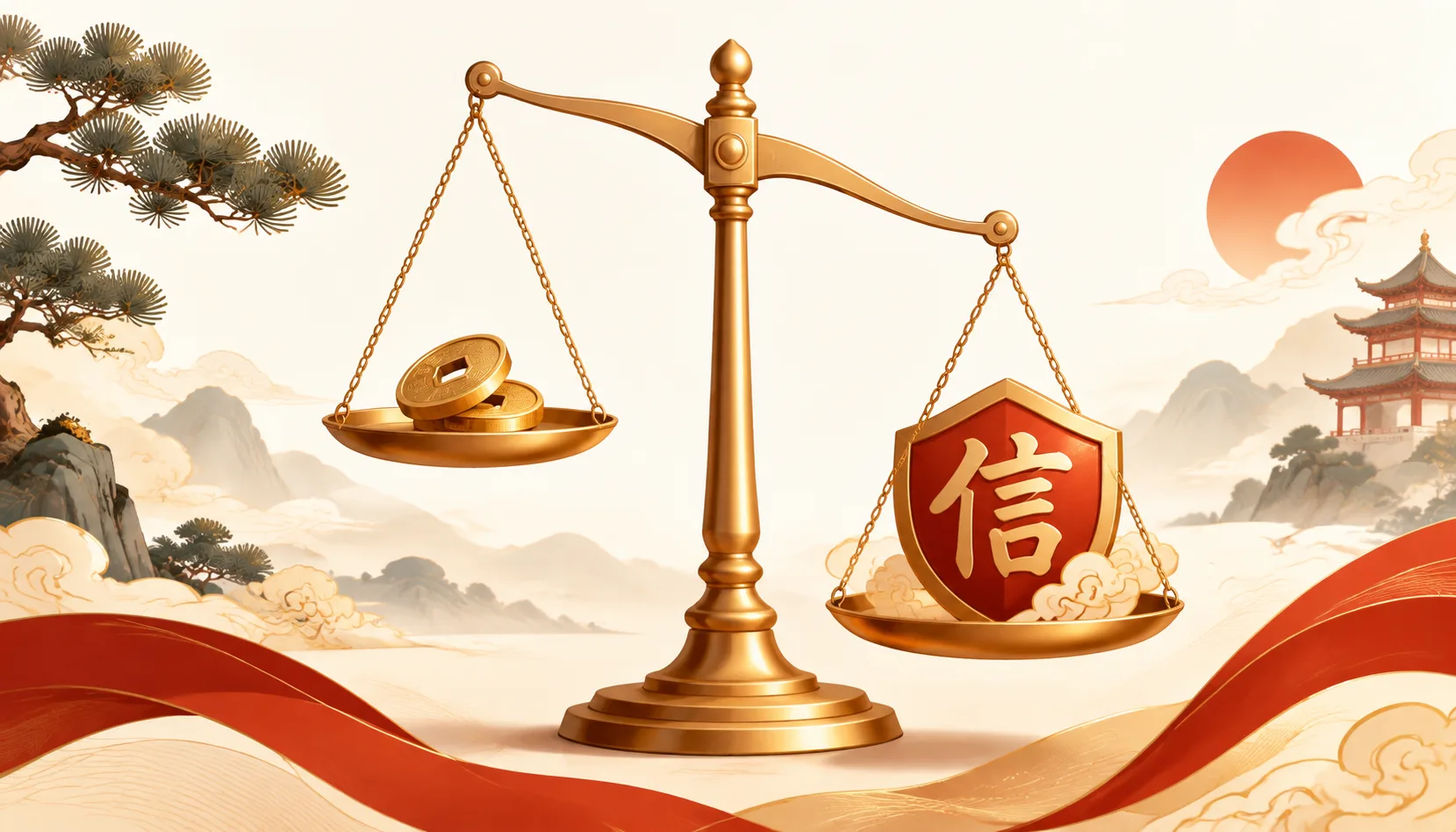
Quick answer
Yes. Habitually taking small advantages — extra samples, free extras, minor perks you didn't earn — is seen as a character flaw that reveals narrow thinking and poor values.
Why This Rule Matters
The Chinese proverb 'tān xiǎo biànyí chī dàkuī' (贪小便宜吃大亏, grasp for small advantages and suffer big losses) warns that petty opportunism destroys one's reputation. In business culture, a person who takes small advantages is assumed to be untrustworthy in larger matters.
What You Should Do
- Be honest about what you've taken or received
- Decline extras you haven't earned, especially in professional contexts
- When in doubt, pay your fair share — erring on the side of generosity is respected
What You Shouldn't Do
- Take extra portions, samples, or freebies when clearly not offered
- Accept something for free when you know you should pay
- Let small greediness accumulate into a reputation
Practical Tips for Foreigners
This rule applies in most social and formal settings across China. When in doubt, watch what your Chinese host or senior colleague does and follow their lead. Breaking this rule once is forgivable — breaking it repeatedly signals a lack of cultural awareness.
Where the Line Gets Blurry
The tricky part is figuring out what counts as 'small advantage' versus normal hospitality. In Beijing's business circles, a vendor offering you a branded pen or notebook at a trade fair is standard — taking it is fine. But in Chengdu's teahouse culture, grabbing the last free snack from the communal plate when you're not the host's main guest reads as greedy. The rule of thumb: if the offer is directed at you personally, it's yours; if it's sitting out for everyone and you've already had your share, leave it. When unsure, watch what locals do — in Shanghai's upscale malls, even if samples are out, most professionals won't take <a href="/business/chinese-business-banquet-etiquette/">more than</a> one unless explicitly encouraged.
Real Scenarios From the Field
- A British expat in Shenzhen joined a team lunch where the boss ordered a family-style hotpot. He grabbed the last few slices of premium beef for himself, assuming it was up for grabs. The boss smiled but later mentioned to a colleague that the foreigner 'doesn't know how to share' — the expat never got invited to client dinners again.
- An American teacher in Guangzhou brought reusable bags to a supermarket promotion where free eggs were handed out one per customer. She went through the line three times, bragging about it to her Chinese friend. The friend laughed it off publicly but privately told her it was embarrassing — in Guangdong, even elderly shoppers rarely do that unless truly desperate.
- At a wedding in Hangzhou, a Canadian guest took two favor boxes from the table 'for his wife who couldn't attend.' The bride's mother noticed and quietly replaced the missing box before other guests arrived. The Canadian never realized that in Zhejiang, favor boxes are counted exactly per guest — taking an extra signals you think the family is stingy.
- A German expat in Beijing was offered 'free tasting' at a tea shop. He spent 20 minutes sampling every tea, bought nothing, and left. The shop owner later told his Chinese colleague, 'Your friend has no face — he wasted our tea and time.' In China, sampling is an invitation to buy, not a buffet.
Regional Generational Divide
Be aware that reactions differ across China. In first-tier cities like Beijing, Shanghai, and Shenzhen, younger professionals (under 35) are more relaxed — they might shrug off small grabs as harmless, especially in casual settings with foreigners. But in older generations, or in smaller cities like Xiamen, Qingdao, or Chengdu's traditional neighborhoods, the judgment is harsher. For those over 50, especially from Fujian or Guangdong, taking unearned extras is a direct assault on 'face' (miànzi) — both yours and the giver's. They won't confront you, but they'll remember and quietly exclude you from future opportunities, deals, or social invitations. The cost isn't immediate — it's cumulative, and it surfaces when you least expect it, like when a landlord decides not to renew your lease or a colleague 'forgets' to loop you into a project.
The Unspoken Host Perspective
When you take small advantages, the Chinese host thinks but rarely says: 'This person is short-sighted. If they're grabbing for pennies now, how will they act when real money is on the table?' In business, this is lethal — trust is built through small gestures of restraint. A foreigner who declines an extra sample or insists on paying for their own coffee signals they understand reciprocity. That's the message you want to send, because in China, character is revealed in micro-moments, not grand declarations.
What Chinese People Actually Say
- 贪小便宜 | tān xiǎo piányi | being greedy for small advantages | Use when criticizing someone who pursues trivial gains at the expense of integrity.
- 捡芝麻丢西瓜 | jiǎn zhīma diū xīguā | picking up sesame seeds but losing watermelons | Use to warn against focusing on trifles while missing major opportunities.
- 因小失大 | yīn xiǎo shī dà | losing big because of small | Use when advising against compromising major interests for minor benefits.
2026 Reality Check
In 2026, the "don't take small advantages" rule is fading, especially in big cities. Gen Z, raised on flash deals and gig-economy perks, sees little shame in grabbing free samples, splitting bills to the penny, or gaming loyalty points. Older generations still mutter about "gaining small, losing big" — but many now shrug: "Why not?" when a discount is free for the taking.
Beijing and Shanghai have shifted toward transactional norms. Hustle culture celebrates smart savings. Smaller cities hold tighter to traditional etiquette — refusing a gift, splitting dinner evenly, refusing kickbacks still carries social weight. The gap isn't about age alone; it's about urban density and how much "small" adds up.
The rule survives as lip service. In practice, it's now: "Don't get caught taking too much."
Frequently asked questions
What does 'gaining small, losing big' mean in Chinese culture?
It means that focusing on small, unearned perks can damage your reputation and lead to bigger losses, like lost trust or business opportunities. In China, this behavior is seen as short-sighted and a sign of poor character.
Is it acceptable to take free samples or extra items offered by vendors in China?
Yes, if they are genuinely offered to you as a courtesy, but avoid asking for more or taking more than intended. Habitually pushing for extras beyond what's given is viewed as 'taking small advantages' and reflects poorly on you.
How do Chinese people react to someone who always seeks small advantages?
They may silently judge the person as untrustworthy or lacking in 'mianzi' (face), and may avoid doing business or building deeper relationships with them. Over time, this can lead to social exclusion or lost deals.
What are common examples of 'small advantages' to avoid in China?
Examples include haggling excessively for a tiny discount, taking extra food portions at buffets, using a friend's membership for personal gain, or accepting gifts without reciprocating. These actions are seen as petty and greedy.
Can refusing a small advantage ever be seen as rude in China?
No, politely declining an unearned perk is generally respected and shows integrity. However, if someone insists on offering a gift as a gesture of goodwill, accept it graciously to avoid offending them, but don't ask for more.
What should a foreigner do if they accidentally take a small advantage in China?
Apologize sincerely and offer to compensate or return the item if possible. This demonstrates awareness and respect for local values, which can help repair any negative impression.
Try our tools
Related guides
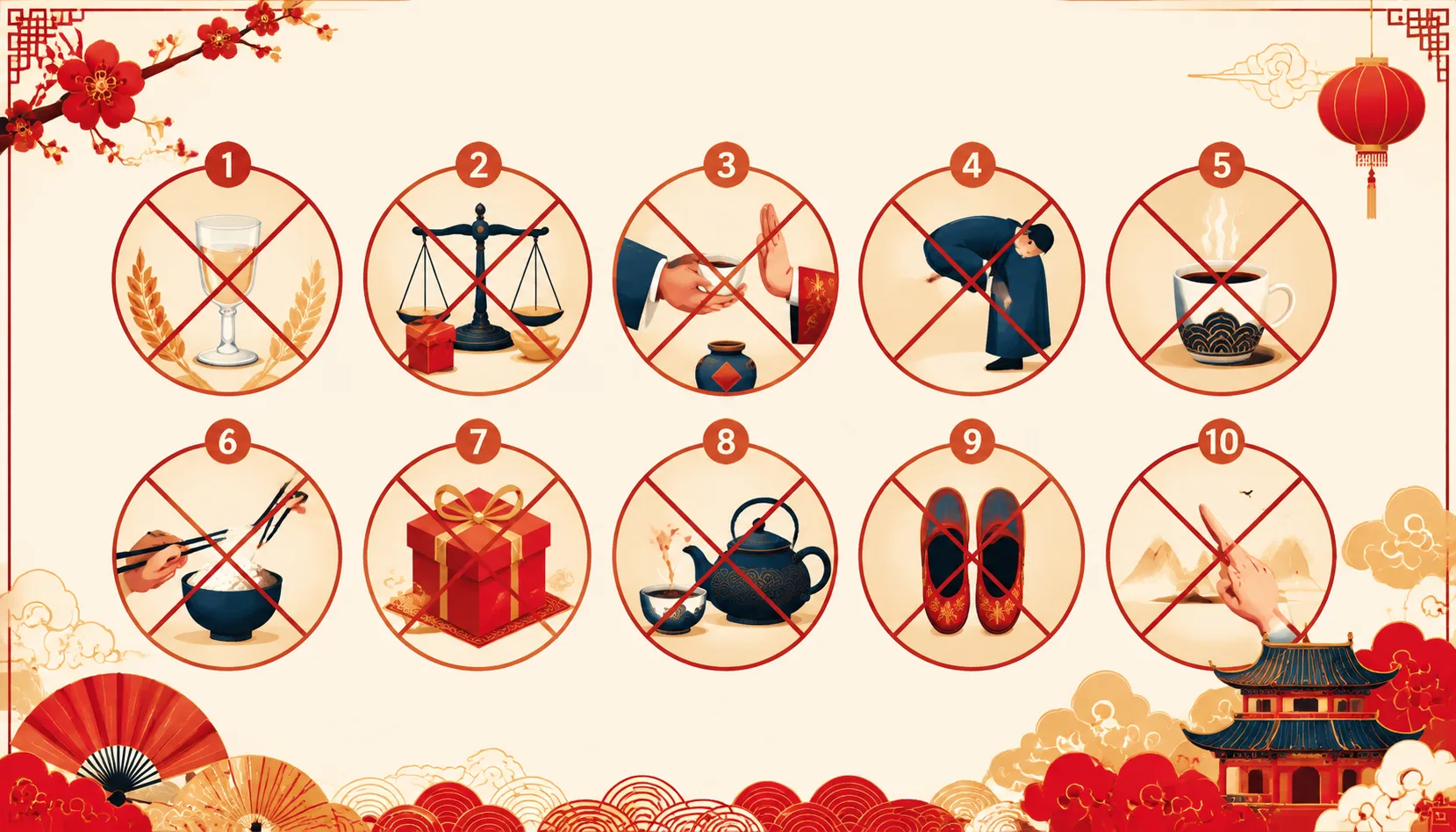
10 Chinese Social Myths — Debunked
Many widely circulated 'rules' about Chinese culture are oversimplified, outdated, or simply wrong. Chewing loudly is not a compliment everywhere. Baijiu does n…
Read the guide →
Chinese Face-Saving Language: Compliments, Refusals, and Farewells
Face-saving language in Chinese runs through compliments (always deflect, never accept directly), refusals (always indirect), and farewells (longer and more rit…
Read the guide →
Ancient Chinese Etiquette Rules: The Unwritten Code Every Foreigner Should Know
China has thousands of years of accumulated social rules — many of them "unwritten" but universally understood. These rules cover everything from how you sit, h…
Read the guide →