What do common Chinese business dinner phrases really mean, and how should you respond to navigate power dynamics and build trust?
Quick answer
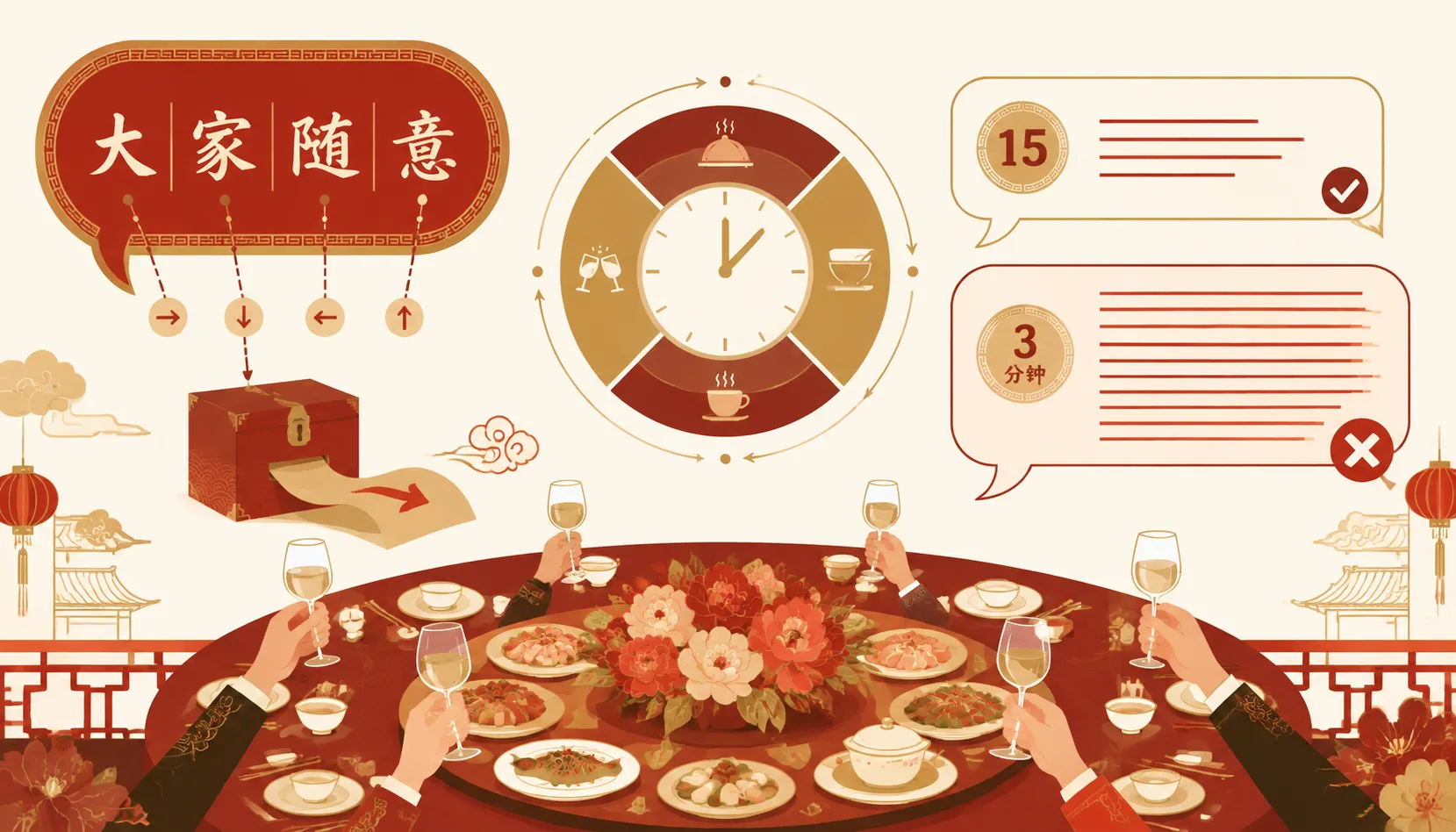
In Chinese business dinners, phrases like '大家随意' (be casual) and '我干了,您随意' (I'll drink, you do as you like) are not literal invitations to relax—they are power signals. Decode them as instructions to follow the leader's pace or to show respect, and always respond with calculated deference. Master the when-to-speak timetable: listen during cold dishes, contribute a precise 15-word insight when hot dishes arrive, and step back during the main course—your timing says more than your words.
The Real Meaning of '大家随意' (Be Casual)
When the host or senior leader raises their glass and says “大家随意” (dàjiā suíyì)—literally “everyone be casual”—your Western instinct is to relax and sip at your own pace. That is a mistake. In a power context, this phrase is not an invitation to do as you please; it is a polite command to follow my lead. The leader says this, then immediately drinks—often a full glass of baijiu. Failure to match their pace is a public signal that you are ignoring their face (miànzi).
Here is the tactical rule: when a senior says “随意,” treat it as “drink now, at my speed.” You do not have to drain your glass if they do, but you must take a substantial sip—enough to show alignment. If you are the most junior person at the table, match their volume exactly. If you are a peer, a half-glass is acceptable, but never a tiny sip.
Case example: A European sales director, Mark, was at a dinner with a state-owned enterprise chairman. The chairman said “大家随意” and downed his baijiu. Mark, thinking it was a casual invitation, took a small sip. The chairman noticed and made a subtle toast to “those who drink lightly.” Mark lost credibility instantly. The next dinner, Mark matched the chairman’s pace—and the deal moved forward.
| Chinese | Pinyin | Literal Meaning | Actual Signal |
|---|---|---|---|
| 大家随意 | dàjiā suíyì | Everyone be casual | Follow my lead—drink now |
Actionable tip: When you hear “随意” from a senior, watch their glass. If they empty it, you empty yours (or at least match 80%). If they sip, you sip. Mirroring is respect.
Decoding '我干了,您随意' (I'll Drink, You Do as You Like)
This phrase—“我干了,您随意” (wǒ gān le, nín suíyì)—is a masterclass in Chinese deference. When a junior says it to a senior, it means: “I am so loyal that I will drink my full glass, and I relieve you of any obligation to match me.” It is a gesture of total submission and respect. When a senior says it to you, the meaning flips: they are paying you respect by lowering themselves to your level. But here is the trap: if you take them literally and don’t drink, you are rejecting their gesture. You must still drink—even if they said “随意.”
The correct response when a leader says this to you: stand up, tip your glass lower than theirs (the rim should be below theirs), and drink your glass fully. Do not argue, do not say “no, no, let me drink more.” Just do it. This shows you understand the subtext: they gave you face, and you return it by honoring the gesture.
When you are the junior and want to say this upward, use it strategically. It works best when you want to show loyalty without putting the senior on the spot. But never say it to a peer—it implies you think you are above them.
| Chinese | Pinyin | Literal Meaning | Actual Signal |
|---|---|---|---|
| 我干了,您随意 | wǒ gān le, nín suíyì | I'll drink, you do as you like | Loyal deference (upward) / Respect gesture (downward) |
Actionable tip: If a leader says this to you, always stand and drink fully. If you are the junior, use this phrase only when you are certain the senior wants to be relieved of drinking pressure—e.g., if they have a health issue or have been drinking heavily.
The Hollow Promise: '这事我帮你问问' (Let Me Ask Around)
When a Chinese contact says “这事我帮你问问” (zhè shì wǒ bāng nǐ wèn wèn)—literally “let me ask around about this”—your Western brain hears a commitment. It is not. This phrase is a polite way of saying “I am interested, but I will not guarantee anything.” It is a soft no, a way to preserve face for both sides. The key difference between this and a real commitment is specificity. Real commitments come with a who, when, and how. For example: “I will call Director Zhang tomorrow at 10am and ask him directly. I’ll get back to you by Thursday.” That is a commitment. “Let me ask around” is a brush-off.
How to handle it: do not press for a firm answer at the dinner table. That would cause embarrassment. Instead, respond with gratitude and then, in the follow-up meeting (not at dinner), ask for specifics: “You mentioned you would ask around—who specifically would you talk to? Can I provide any materials to help?” This forces clarity without losing face.
Case example: An American manager, Sarah, asked her Chinese counterpart about a potential partnership. He said “这事我帮你问问” with a warm smile. Sarah assumed it was a yes and told her boss. Two weeks later, nothing had happened. She had misunderstood the signal. In the next meeting, she asked directly: “Who did you ask? What did they say?” The counterpart was forced to admit he hadn’t asked anyone—he was just being polite. Sarah learned to read the phrase as “not now, maybe never.”
| Chinese | Pinyin | Literal Meaning | Actual Signal |
|---|---|---|---|
| 这事我帮你问问 | zhè shì wǒ bāng nǐ wèn wèn | Let me ask around | Warm interest, no commitment |
Actionable tip: After hearing this phrase, do not follow up at dinner. Send a polite email the next day saying, “Thank you for offering to ask around—if you need any details, I’m happy to provide them.” This gives them an out and you a clear answer later.
The When-to-Speak Timetable: Mapping the Dinner's Power Flow
Chinese business dinners are choreographed. Each phase has a purpose, and your speaking role changes accordingly. Here is the insider timetable:
- Cold dishes + first round (appetizers, initial toasts): Listen only. Map the relationships. Who sits where? Who speaks first? Who defers to whom? Do not volunteer information. Your job is to absorb.
- Hot dishes arrive (main dishes begin): This is your window for a precise, short contribution—one sentence that builds on what the guest of honor just said. For example, if the guest mentions a market trend, you say: “That matches exactly what I saw in [X]—[Y] is the example.” That is 12 words, three jobs done: you show you were listening, you add value, and you connect to your expertise.
- Main course / peak dishes (the centerpiece, often a whole fish or expensive dish): Step back. This is the host-guest stage. The host will toast the guest, and the guest will respond. Do not interrupt, do not add commentary. Let them have the floor.
- Soup / main carb phase (noodles, rice, dumplings): This is your chance to tell your story or make your point. The formal toasts are done, the atmosphere is relaxed. Now you can speak for 2-3 minutes about your company, but keep it structured and humble.
Actionable tip: Before the dinner, prepare a 15-word sentence that you can deploy when hot dishes arrive. It should reference something the guest of honor is likely to say. If you cannot think of one, use a universal: “That is exactly the pattern I saw in [your market]—it is consistent.”
The 15-Word Contribution Rule: Quality Over Quantity
At a Chinese business dinner, a 15-word precise response is worth more than a 3-minute explanation of your company. The reason is face and attention. The guest of honor has just spoken; your job is to validate and extend their point, not to hijack the conversation. A short, sharp contribution shows you are a sharp operator who respects the hierarchy.
The formula: “That matches exactly what I saw in [X] — [Y] is the example.” That is 12 words. It does three things: (1) it flatters the speaker by agreeing, (2) it demonstrates your own expertise by referencing a specific case, and (3) it invites further dialogue without demanding the floor.
Avoid the common mistake of launching into a detailed story about your company’s achievements. That is seen as self-promotion and face-grabbing. Instead, use the 15-word rule to build a bridge. Then, when the soup phase arrives, you can expand—but even then, keep it to 2-3 minutes and always tie it back to the host’s or guest’s earlier comments.
Case example: A British engineer, James, was at a dinner with a potential client. The client mentioned a challenge with production delays. James said: “That matches exactly what I saw at our plant in Suzhou—the bottleneck was the supplier.” That was 14 words. The client nodded, impressed. Later, in the soup phase, James expanded on the solution. He won the contract. His colleague, who had given a 5-minute presentation on the company’s history, was ignored.
Actionable tip: Write down three 15-word sentences before the dinner, each referencing a different possible topic (market trends, production, logistics). Memorize them. Use them when hot dishes arrive.
Never Correct at the Table: Etiquette Trumps Accuracy
Imagine the guest of honor states a figure that you know is wrong—say, they claim your company has 500 employees when it has 1,200. Your instinct is to correct them. Resist it. At a Chinese business dinner, etiquette takes precedence over accuracy. Correcting someone publicly—especially a senior—is a direct attack on their face. It will be remembered long after the factual error is forgotten.
The rule: save corrections for the follow-up meeting. If the error is harmless, let it go entirely. If it is material (e.g., a wrong contract number), wait until the next day and address it privately: “I wanted to clarify the employee count—we actually have 1,200, which I think strengthens our case.” This way, you preserve the relationship and still ensure accuracy.
There is one exception: if the error could cause immediate harm (e.g., a safety issue), you may phrase it as a question, not a correction: “I’m curious—did you mean the total headcount including our joint venture?” This allows the speaker to self-correct without losing face.
Actionable tip: Before the dinner, identify any facts that might come up and are likely to be misstated. Prepare a gentle, question-based way to address them if absolutely necessary. Otherwise, plan to send a polite follow-up email.
Showcasing Yourself Without Stealing the Spotlight
You want to impress, but you must not outshine the host or the guest of honor. The art is to demonstrate your value while keeping the focus on others. Three techniques:
- Use questions that reveal your knowledge. Instead of stating your expertise, ask a question that implies it: “Wang Zong, regarding the production shift you mentioned—do you see it going Southeast Asia or back into central provinces?” This shows you understand the industry without claiming the floor.
- Credit the leader publicly for decisions that worked. If a project succeeded, say: “Thanks to Zhang Zong’s guidance, we avoided the pitfalls we saw in other markets.” This gives face and positions you as a team player.
- Be the person who fills silence and handles logistics gracefully. When the conversation lulls, have a prepared topic (e.g., a neutral industry trend). When the host needs a glass refilled, do it. These small acts build trust without words.
Case example: A Canadian consultant, Lisa, was at a dinner with a senior executive. Instead of talking about her firm’s credentials, she asked: “I noticed your company expanded into Vietnam—how did you handle the labor regulations?” The executive was impressed by her awareness and spent 10 minutes explaining. Later, she credited him in a follow-up email, and he became her champion.
Actionable tip: Prepare two thoughtful questions that show your knowledge, and one logistical gesture (like refilling a glass or ordering tea). Use them at the right moments—questions during hot dishes, gestures throughout.
What Chinese People Actually Say
- 干杯 | gān bēi | "Cheers" | Maintain eye contact and empty your glass when toasting with seniors.
- 我先敬您一杯 | wǒ xiān jìng nín yī bēi | "Allow me to toast you first" | Use when showing respect to a senior or client; wait for them to respond before drinking.
- 失陪一下 | shī péi yī xià | "Excuse me for a moment" | Polite phrase to leave the table; return promptly to show respect.
2026 Reality Check
2026 Reality Check: Traditional Chinese business dinner phrases still matter, but the formality has softened. The classic "Qing gan" (please try this dish) remains standard— elders still expect it, but younger hosts often say it casually without the old deference.
Gen Z vs. Older Generations: Boomers and Gen X still use full honorifics and toast formulas ("Gān bēi" - dry glass). Millennials mix traditional phrases with casual English. Gen Z? They often skip formal toasts entirely, preferring "Ya, yiqi gan yixia" (let's drink together). The 2026 shift: authenticity beats ritual.
Beijing/Shanghai vs. Smaller Cities: Tier-1 cities have gone more international—English phrases slip in, structured toasts feel optional. Second and third-tier cities? Still more traditional. The "face" concept remains, but younger professionals in Chengdu or Hangzhou now joke about it openly.
Bottom line: The phrases survive, but the stakes are lower. Know them—but don't over-perform.
Frequently asked questions
What does '大家随意' actually mean when the host says it at a Chinese business dinner?
It's not a literal invitation to relax. The host is setting a tone of casual authority—you should still follow their pace. Respond by staying observant, matching their drinking speed, and avoiding initiating toasts until they do. Acting too relaxed signals you missed the hierarchy cue.
How should I respond if a senior colleague says '我干了,您随意' to me?
This phrase is a respect signal, not a challenge. The senior is showing deference by drinking fully while excusing you. You should still finish your glass or at least take a significant sip, then nod and say '谢谢' or '您太客气了'—never actually drink less, as that could seem dismissive.
Can I politely decline alcohol at a Chinese business dinner without losing face?
Yes, but always frame it as a health or medical reason, like '医生说我不能喝酒' (my doctor says I can't drink). Say it early and consistently, then proactively toast with tea or water. This preserves both your dignity and the host's face—just never switch to alcohol later, or you'll lose all credibility.
Is it okay to speak during the cold dishes course, or should I stay silent?
During cold dishes, keep your contributions minimal—a brief greeting or compliment. This is the host's time to set the agenda. Speaking too much now is seen as overeager. Save your substantive insight for when hot dishes arrive, which signals you understand the dinner's rhythm and respect the leader's opening move.
What does it mean when the host keeps refilling your glass or plate without asking?
This is a deliberate power move—the host is showing control and generosity. Do not refuse repeatedly, as that creates friction. Instead, accept with a light '谢谢' and a slight bow of the head, then reciprocate later by refilling their tea. This subtle exchange builds trust and shows you understand reciprocal obligation.
Why do Chinese business partners often say '下次再说' (let's talk next time) about a deal?
It's rarely a dismissal—it's a face-saving way to say the timing isn't right or they need to consult superiors. Don't push for a commitment at the table. Instead, follow up within two days with a polite email referencing the dinner, and propose a concrete next step. This shows you read the signal without forcing a public decision.
Try our tools
Related guides
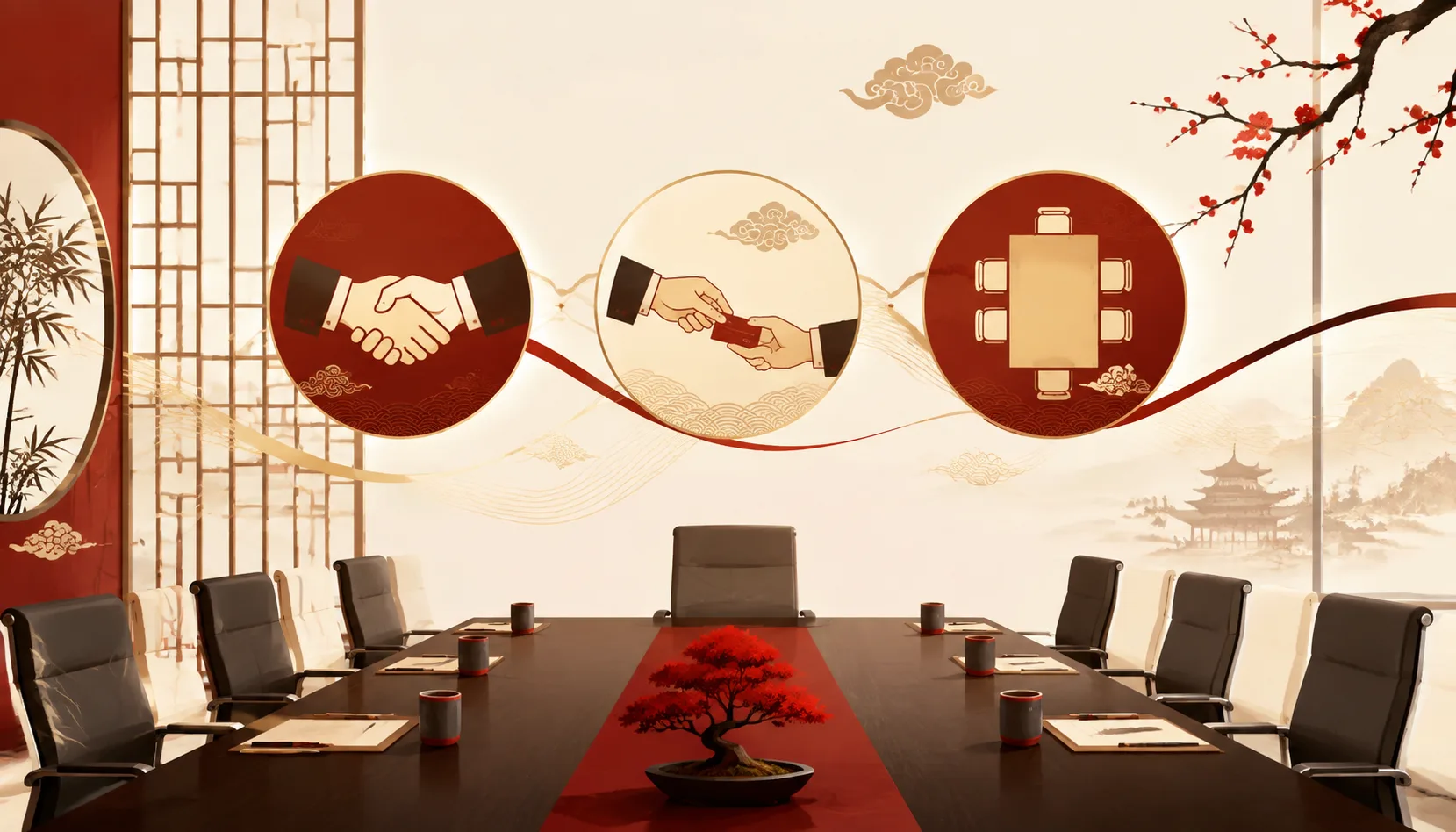
Chinese Business Etiquette Guide 2026: What Western Professionals Must Know
Chinese business culture runs on three invisible engines: Guanxi (relationships), Mianzi (face), and Hierarchy (rank order). Get these right and deals follow. G…
Read the guide →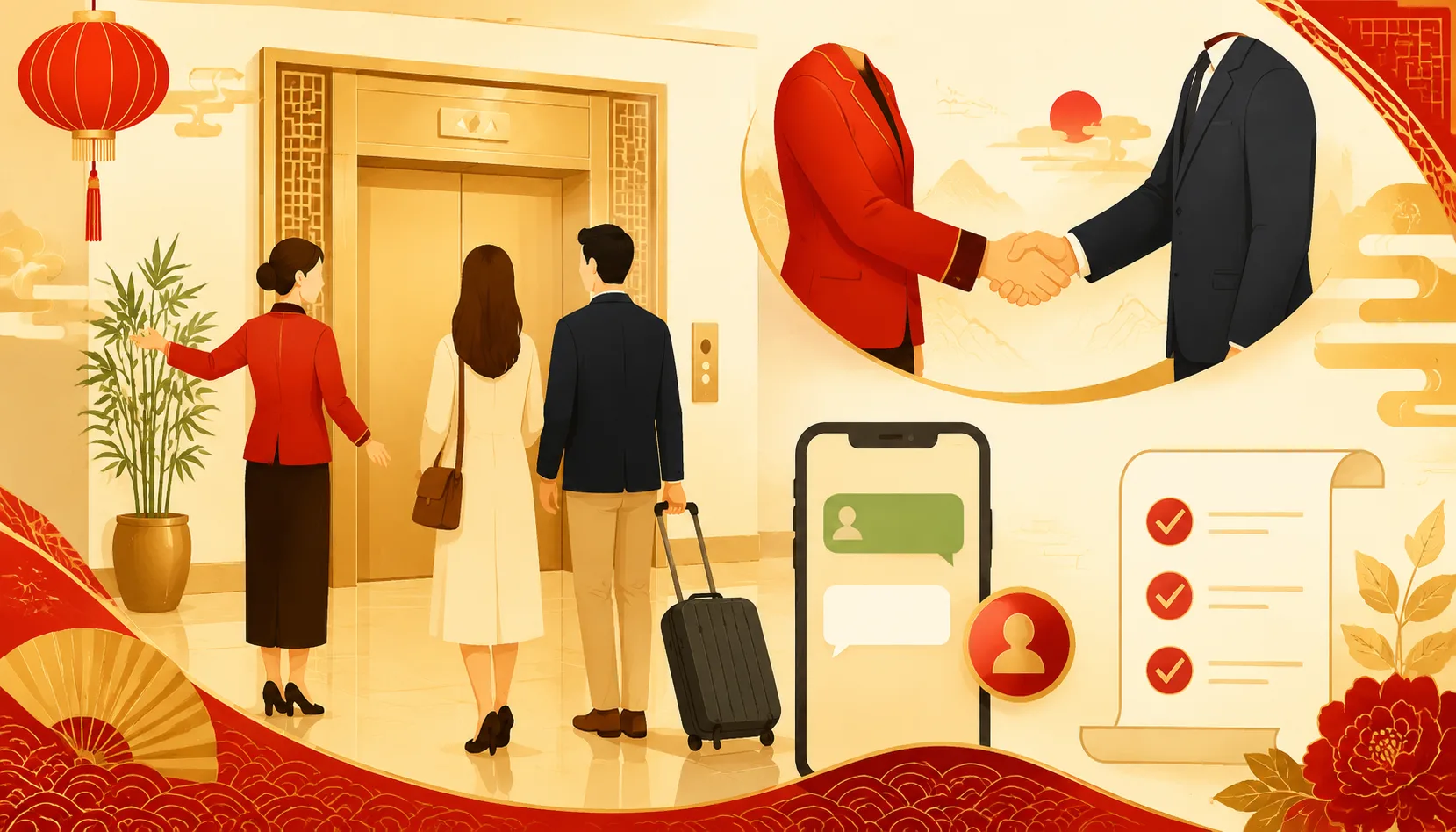
Chinese Business Dinner Exit: Farewell, Follow-Up & Recovery
The farewell is a final power play: let the most senior guest leave first, and never rush out — the host will walk you to the elevator or street, and that lobby…
Read the guide →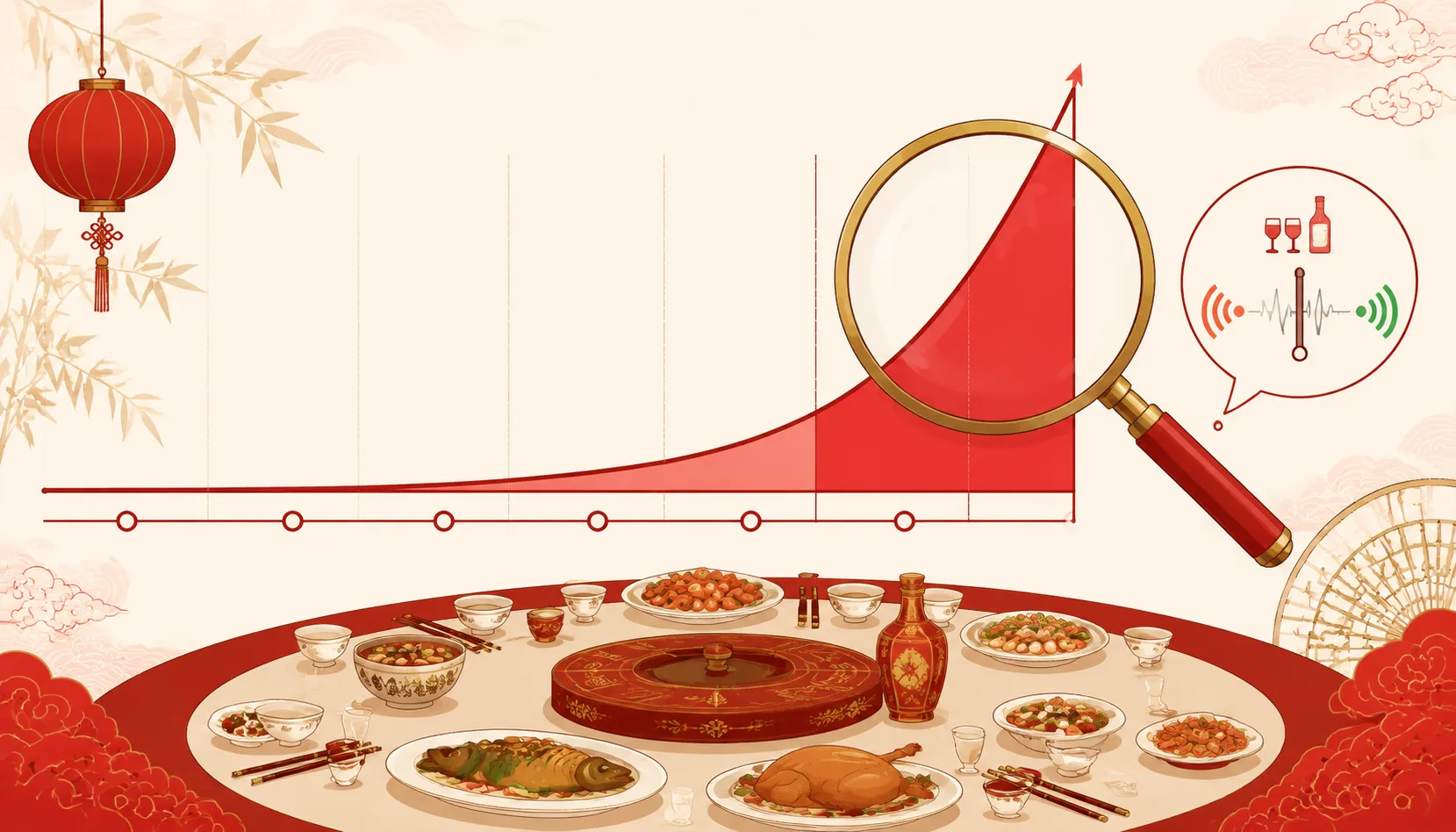
How to Extract Real Information from Chinese Business Dinners
Stay for the entire dinner—the last 45 minutes yield 90% of real information. Read the pre-dinner tea signal, decode drunk talk as leads (not conclusions), and …
Read the guide →