How do you properly exit a Chinese business dinner, follow up afterward, and recover if you drank too much?
Quick answer
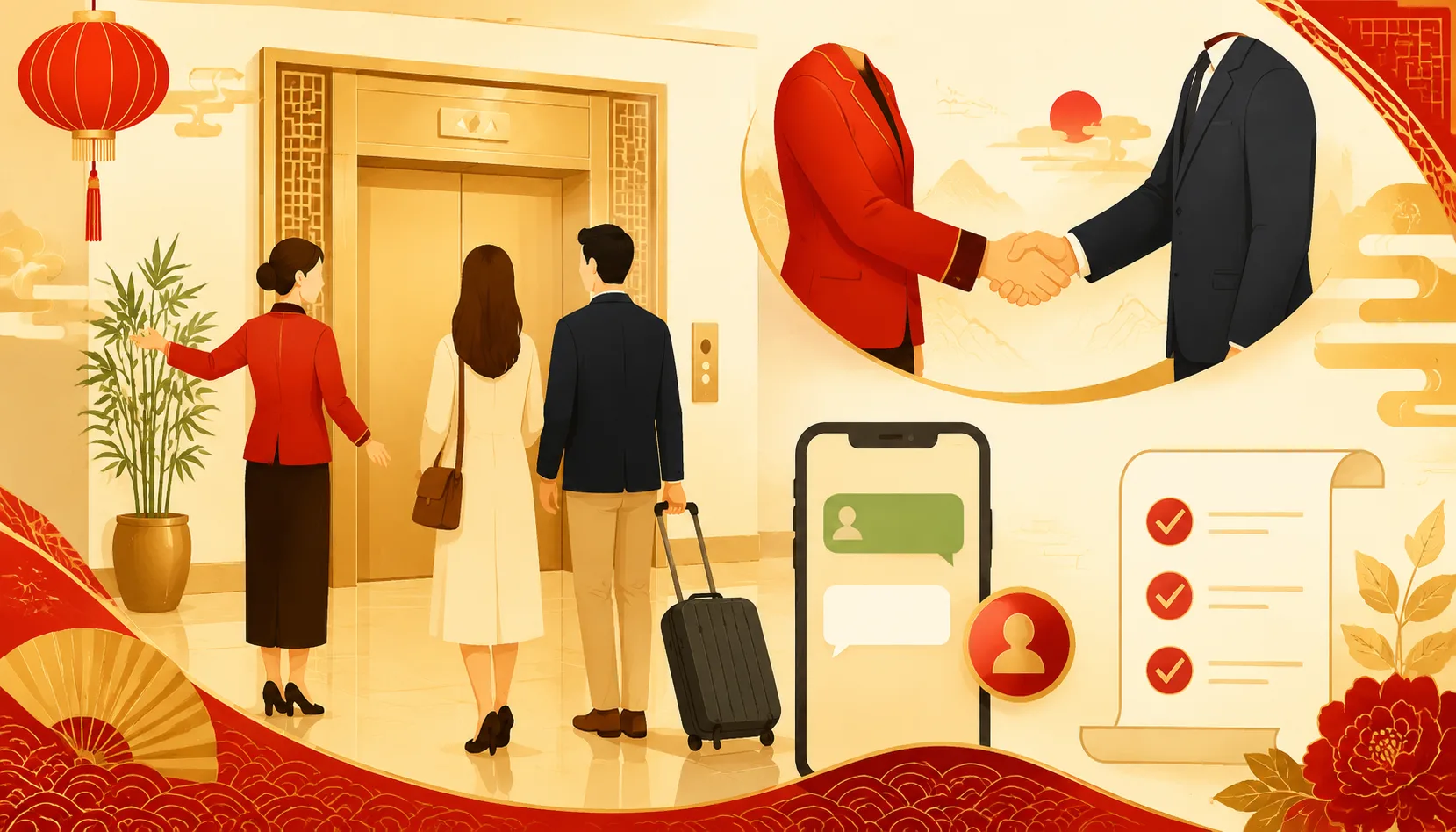
The farewell is a final power play: let the most senior guest leave first, and never rush out — the host will walk you to the elevator or street, and that lobby conversation often seals the deal. Send a WeChat thank-you the same night referencing one specific topic, and if you over-imbibed, send a brief apology the next morning, then over-deliver on business for two weeks.
Why the Farewell Is a Power Move
In China, the dinner’s final ten minutes are as loaded as the initial toast. The farewell is a public display of hierarchy and relationship temperature. The most senior guest leaves first — not the host, not the junior. If you’re the guest, you don’t jump up and bolt; you let the host orchestrate the exit. The host will walk you out — to the elevator, or even to the street — and that walk is where real business gets done.
Rushing out signals indifference. A host who doesn’t walk you out is sending a message: “This relationship isn’t worth my time.” Conversely, if the host lingers in the lobby, they’re investing in you. Treat the elevator lobby as an extension of the negotiation table.
Actionable tip: When the host starts moving toward the door, match their pace. If they pause in the lobby, pause with them. Use that moment to say something like, “I really appreciate tonight — let’s continue this conversation soon.” That single sentence can turn a dinner into a deal.
Who Leaves First, Who Walks Who Out
The choreography is precise: the most senior guest initiates the departure. If you’re the junior guest, wait for your boss or the senior counterpart to signal. The host then escorts the senior guest out, while other guests follow in loose order. The host will walk the key guest to the elevator, sometimes all the way to the street, and wait until the car door closes.
If you’re the guest of honor, never refuse the host’s escort. Even if you’re tired, let them walk you out. That walk is a gift — it’s the host saying, “You matter.” If you’re a junior guest, don’t hover; give the senior pair space, but don’t disappear either. A quick nod and a “Thank you, see you soon” to the host is enough.
Actionable tip: If the host walks you to the elevator, don’t press the button immediately. Let the conversation breathe. A 30-second pause in the lobby can be more valuable than the entire meal.
The Post-Dinner WeChat: Timing and Template
Within hours of the dinner — that night or early the next morning — send a WeChat message. Never wait three days. The message should be short, specific, and forward-looking. Reference one concrete topic from the evening to convert the social event into a tracked action item.
Here’s a template that works:
| Chinese | Pinyin | English |
|---|---|---|
| 王总,今晚非常感谢您的招待,聊得很愉快。关于XX,我这边整理好材料这周内发您。您慢走,好好休息。 | Wáng Zǒng, jīn wǎn fēicháng gǎnxiè nín de zhāodài, liáo dé hěn yúkuài. Guānyú XX, wǒ zhè biān zhěnglǐ hǎo cáiliào zhè zhōu nèi fā nín. Nín màn zǒu, hǎohǎo xiūxi. | Wang Zong, thank you very much for your hospitality tonight — the conversation was excellent. Regarding [topic], I’ll send you the materials within this week. Take care and rest well. |
Actionable tip: Personalize the template. Mention a specific dish you enjoyed or a personal detail they shared. That shows you were present, not just performing.
Three Signals the Dinner Was a Success
Not every dinner is a business win. Judge success by three signals:
- Signal 1: The other side proposed a specific next step — e.g., “Let’s have our teams meet next week.”
- Signal 2: Someone volunteered useful information in the back half — after the baijiu loosened tongues, a counterpart shared a market insight or internal update.
- Signal 3: The host showed “I want to keep this going” energy at farewell — lingering in the lobby, suggesting a follow-up, or introducing you to another colleague.
If none of those three happened, the dinner was a warm social, not a business advance. Don’t force it — but don’t mistake politeness for progress.
Actionable tip: After the dinner, write down which of the three signals occurred. If only the first happened, your follow-up should push that next step. If only the third, nurture the relationship before pitching business.
Recovery Protocol: You Drank Too Much and Said Something Wrong
It happens to the best. The next morning, send a brief, sincere message. Don’t over-explain, don’t make a big deal. Here’s a template:
| Chinese | Pinyin | English |
|---|---|---|
| 昨晚我状态不太好,如果有哪里说得不妥,请您多包涵。非常感谢您的招待。 | Zuówǎn wǒ zhuàngtài bú tài hǎo, rúguǒ yǒu nǎlǐ shuō dé bùtuǒ, qǐng nín duō bāohán. Fēicháng gǎnxiè nín de zhāodài. | Last night I wasn’t at my best. If anything came across wrong, please forgive me. Thank you very much for your hospitality. |
Then, let behavior replace the bad impression. Over the next two weeks, deliver on every commitment with extra professionalism. Send materials early, be punctual, be prepared. Don’t pretend it didn’t happen — they remember. But don’t reference specific things you said either; that draws more attention to the problem.
Actionable tip: If you said something particularly off-color, don’t apologize in detail. A general apology plus impeccable follow-up is the most effective repair.
Case Study: The Taxi That Cost a Deal
Sophie, a European sales director, attended a dinner with a potential Chinese partner. The meal went well — good toasts, laughter, and a promising discussion about a joint project. As the dinner wound down, Sophie glanced at her watch and realized she’d miss her last taxi if she didn’t leave immediately. She stood up, shook hands quickly, and said, “Sorry, I have to catch a taxi — great dinner, let’s talk soon.” She was out the door in under a minute.
The Chinese counterpart, Mr. Chen, had been about to mention a new project opportunity during what he expected would be a lobby conversation — a casual “by the way” that often precedes real deals. But Sophie’s abrupt exit killed that moment. Mr. Chen stayed quiet, and the project went to a competitor who had lingered for the full farewell.
The lesson: The lobby is where the real business happens. Sophie’s exit signaled indifference, and she lost a deal over a taxi. Always budget an extra 15 minutes for the farewell. If you must leave early, do it during a natural pause, apologize profusely, and suggest a specific follow-up — but never rush out.
Key Phrases for Farewell, Follow-Up, and Recovery
Here’s a cheat sheet of phrases to use in the farewell and follow-up phases:
| Chinese | Pinyin | English |
|---|---|---|
| 您慢走 | Nín màn zǒu | Take care (said to a departing guest) |
| 今天非常感谢 | Jīntiān fēicháng gǎnxiè | Thank you very much for today |
| 我们保持联系 | Wǒmen bǎochí liánxì | Let’s stay in touch |
| 关于XX,我下周发您 | Guānyú XX, wǒ xià zhōu fā nín | Regarding XX, I’ll send it to you next week |
| 昨晚失礼了,请见谅 | Zuówǎn shīlǐ le, qǐng jiànliàng | I was rude last night, please forgive me |
Actionable tip: Practice these phrases until they’re automatic. The farewell is not the time to fumble for words.
What Chinese People Actually Say
- 失陪了 | shī péi le | "Excuse me, I must leave" | Use when you need to exit temporarily or permanently; adds formality
- 先走一步 | xiān zǒu yí bù | "I'll go ahead first" | Common polite phrase for leaving; implies you'll meet again
- 改天再聚 | gǎi tiān zài jù | "Let's get together another day" | Use for follow-up; shows intent to maintain the business relationship
2026 Reality Check
2026 Reality Check: The traditional business dinner exit ritual—where the host sees guests to the door or elevator, insists on payment, and walks them to their car—is fading but not dead. It's now situational rather than mandatory.
Gen Z vs. Older Generations: Millennials and Gen Z in tier-1 cities often skip the prolonged farewell chase. A quick "I've paid, let's go" is acceptable. Older executives (50+) still expect the full send-off, especially with clients older than them. Refusing to walk someone out can still be seen as disrespectful by senior leaders.
Beijing/Shanghai vs. Smaller Cities: Tier-1 cities are more relaxed—younger professionals treat dinners as functional, not ceremonial. In second/third-tier cities and state-owned enterprise (SOE) contexts, the old etiquette remains strong. The rule survives where relationships and face still drive business.
Frequently asked questions
What should I do if the most senior guest stays seated when I try to leave the dinner?
If the senior guest remains seated, you are not leaving yet. Sit back down and continue the conversation. In China, the host signals the end of dinner, not the guest. Wait for the host to stand or give a clear verbal cue. Rushing out when the senior guest is still seated is seen as disrespectful and can damage the relationship.
How long should I wait after the dinner to send a WeChat thank-you message?
Send the WeChat thank-you message the same night, ideally within two hours of the dinner ending. Waiting until the next morning is acceptable but less impactful. Reference one specific topic from the meal—like a shared joke or a business point—to show you were fully engaged. A generic 'thanks for dinner' feels dismissive.
Can I skip the elevator or street farewell if I feel uncomfortable or need to leave quickly?
No, you should not skip it. The walk to the elevator or street is a critical bonding moment where hosts often share candid advice or final business signals. If you have a true emergency, apologize sincerely and explain briefly, but never fabricate an excuse. A rushed exit without this ritual can undo the goodwill built during the meal.
What is the best way to apologize the next morning if I drank too much at the dinner?
Send a brief, sincere WeChat message the next morning—no excuses, no over-explaining. Say something like: 'I apologize for my behavior last night; I over-imbibed and it was unprofessional. I value our relationship and will ensure it doesn't happen again.' Then, over-deliver on business commitments for the next two weeks to rebuild trust through actions, not words.
How do I know if the dinner was a success based on the farewell behavior?
Watch for three signals: the host walks you all the way to the street or car (not just the elevator), the host introduces you to other guests or staff during the farewell, or the host mentions a next meeting or 'let's talk soon' without a specific date. A firm handshake with both hands and a prolonged goodbye also indicate strong interest.
Is it okay to offer to pay for the taxi or car ride home after the dinner?
No, do not offer to pay for the host's transportation. In Chinese business culture, the host pays for everything during the meal, including transport. Offering to pay for a taxi can embarrass the host and imply they cannot afford their role. Simply thank them and accept their arrangement. If you are the guest, your only financial obligation is the follow-up gift or reciprocal meal later.
Try our tools
Related guides
Chinese Business Etiquette Guide 2026: What Western Professionals Must Know
Chinese business culture runs on three invisible engines: Guanxi (relationships), Mianzi (face), and Hierarchy (rank order). Get these right and deals follow. G…
Read the guide →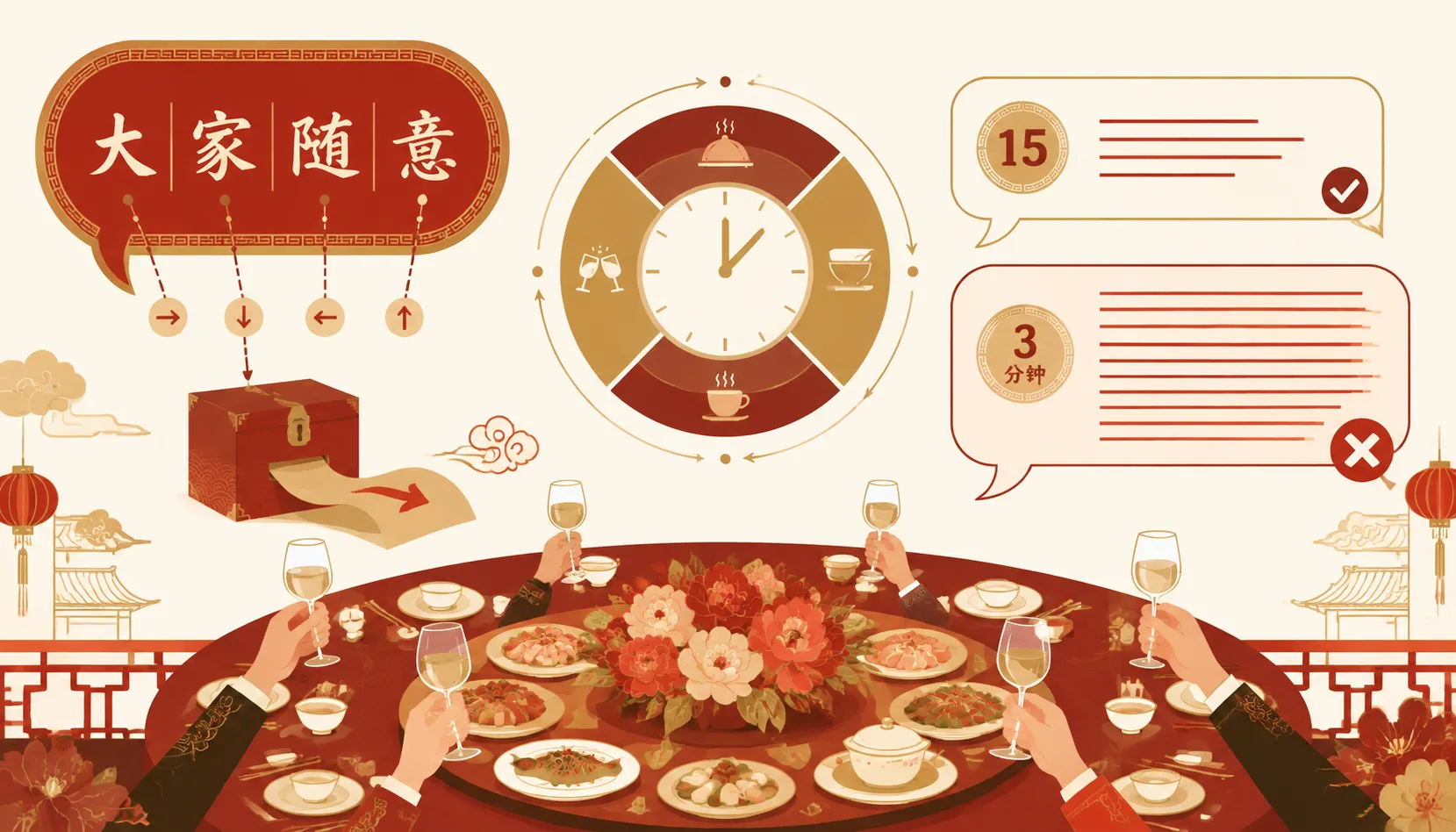
Chinese Business Dinner Phrases Decoded: What They Actually Mean
In Chinese business dinners, phrases like '大家随意' (be casual) and '我干了,您随意' (I'll drink, you do as you like) are not literal invitations to relax—they are power …
Read the guide →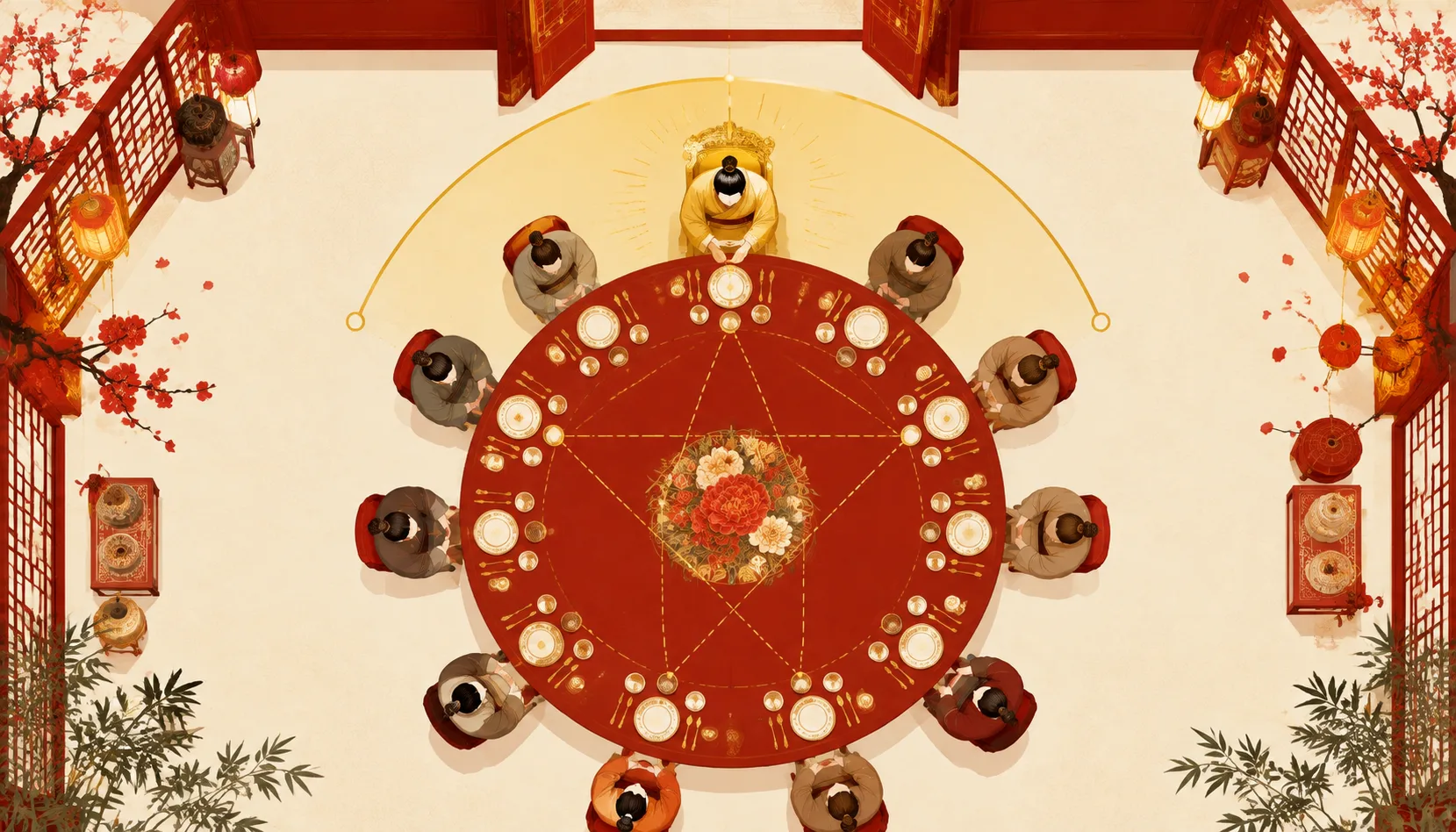
Reading the Power Map at a Chinese Business Dinner
Watch who the host seats within 90 degrees of their own chair, track who gets served and toasted first, and note any mid-dinner seat swaps. The seating chart is…
Read the guide →