Why is the Chinese business dinner so important, and how can Western professionals use it strategically to build trust and close deals?
Quick answer
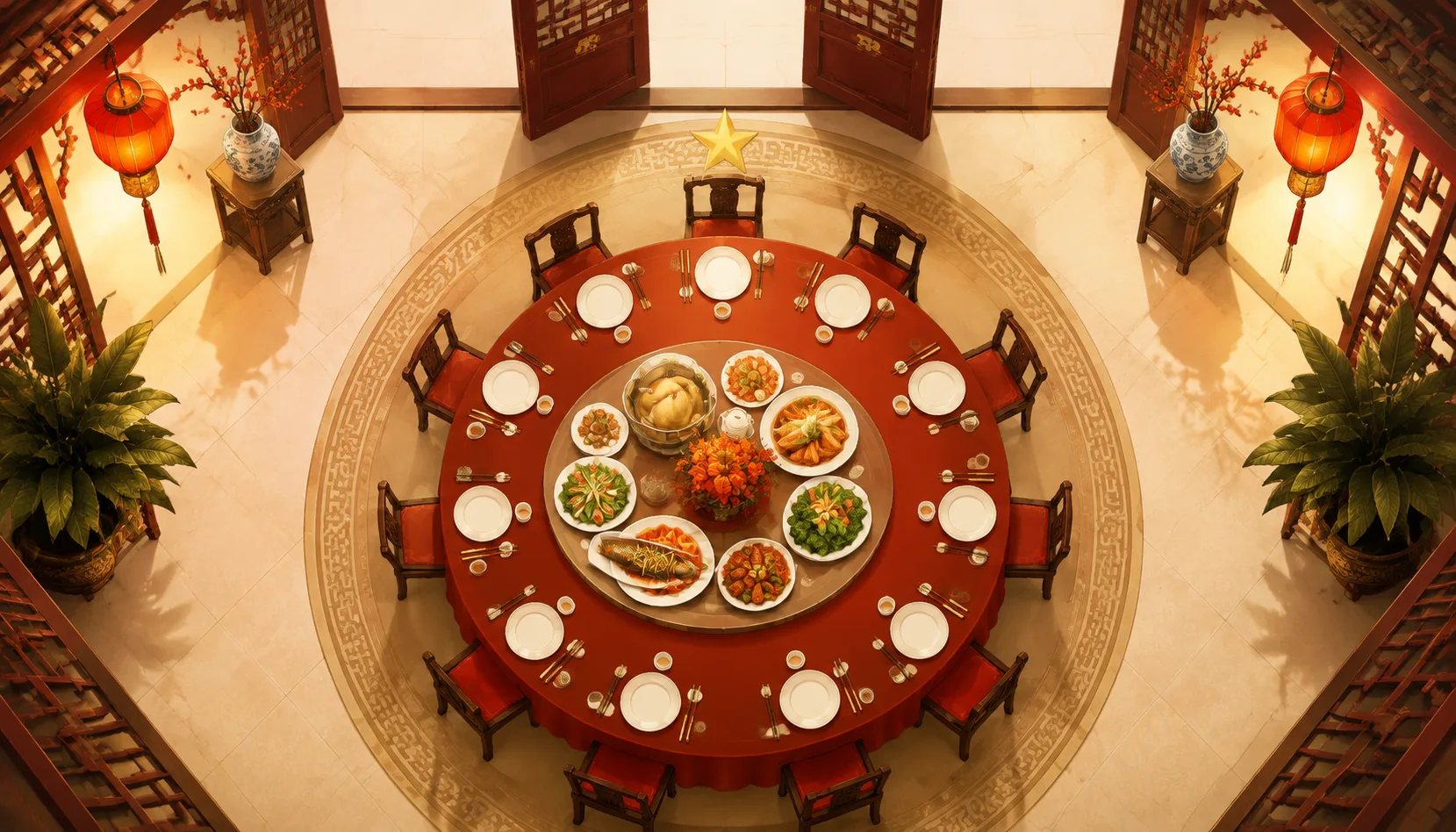
In China, the business dinner (饭局 fànjú) is not a social add-on—it's the primary arena for relationship building and character assessment. Treat it as a high-stakes event: master seating etiquette, handle toasts with grace, avoid business talk for the first hour, and always let the host pay. Your behavior at the table can make or break the deal.
The Dinner Table Is the Real Boardroom
In Western business culture, the conference room is where decisions happen; dinner is a casual follow-up. In China, it's the opposite. The meeting room is for legal and rational discussion—contracts, numbers, logistics. But the dinner table (饭局 fànjú) is where human nature comes out. Your Chinese counterparts are not just sharing a meal; they are conducting a deep, non-verbal assessment of your character, reliability, and trustworthiness.
Think of it this way: in the office, everyone wears a mask. At dinner, with alcohol flowing and guards lowered, your true self emerges. Chinese business culture places immense value on guanxi (关系, relationships), and the banquet is the crucible where that relationship is forged. If you only focus on the PowerPoint and ignore the dinner, you're missing the most critical part of the deal.
Key tactic: Treat every dinner invitation as a formal business meeting. Arrive on time, dress appropriately, and mentally prepare as if you were walking into a boardroom. Your performance at the table is as important as your performance in the office.
What Your Host Is Really Evaluating
During a Chinese business dinner, your host is not just making small talk—they are running a subtle, multi-layered evaluation. Here’s what they’re watching:
- How you treat wait staff: This reveals your character. If you are rude or dismissive to servers, your host will assume you treat subordinates poorly. Be polite, patient, and gracious.
- How you handle toasts: This reveals your reliability. Do you drink responsibly? Do you toast with sincerity? Do you know when to say no gracefully? Your approach to alcohol mirrors your approach to risk and commitment.
- How you talk: Are you humble or arrogant? Bragging about your achievements is a red flag. Chinese culture values humility (谦虚, qiānxū). Let your actions speak, and praise your team instead of yourself.
- Whether you reciprocate hospitality: If you accept their generosity without offering anything in return—whether it's a toast, a compliment, or a future invitation—you signal that you're a taker, not a giver.
Key tactic: Be consistently respectful to everyone, from the driver to the general manager. Your host is watching how you treat people who can't do anything for you—that's the real test.
Seating Hierarchy: Where You Sit Speaks Volumes
Seating at a Chinese business dinner is not random—it's a carefully choreographed display of hierarchy and respect. Getting it wrong can offend your host before the first dish arrives.
The basic rules:
- The host sits facing the door (the 'seat of honor' in feng shui terms). The most important guest sits to the host's right. The second most important guest sits to the host's left.
- If you're the guest, wait to be directed to your seat. Don't just plop down anywhere.
- If you're the host, always seat your guest of honor at your right, and make sure they have a good view of the room.
Here's a quick reference:
| Position | Who Sits There |
|---|---|
| Facing the door | Host |
| Host's right | Most important guest |
| Host's left | Second most important guest |
Key tactic: When you arrive, pause and let the host guide you. If you're unsure, ask politely: “Where would you like me to sit?” (我坐哪里?Wǒ zuò nǎlǐ?). This shows respect for their authority.
Mastering Toasts: Ganbei and the Art of Suíyì
Toasting is the heartbeat of the Chinese business dinner. It's how trust is built, respect is shown, and bonds are sealed. The most famous toast is 干杯 (gānbēi), meaning 'bottoms up.' But there's a nuanced art to it.
- Ganbei: When your host says 'gānbēi,' they expect you to drain your glass. But you don't have to do it every time. Use it for the first toast to show enthusiasm, then switch to sips.
- Suíyì (随意): This is your graceful opt-out. When someone says 'suíyì,' it means 'as you like'—you can drink a little or a lot. If you're not drinking alcohol, say: “我随意,您随意” (Wǒ suíyì, nín suíyì) — 'I'll do as I like, you do as you like.' This is polite and avoids pressure.
- Toasting etiquette: When you toast someone, your glass should be lower than theirs (especially if they are senior). This shows humility.
Here are key phrases:
| Chinese | Pinyin | English |
|---|---|---|
| 干杯 | gānbēi | Bottoms up |
| 随意 | suíyì | As you like (drink as much or little) |
| 我敬您 | wǒ jìng nín | I toast you (respectful) |
| 我随意,您随意 | wǒ suíyì, nín suíyì | I'll do as I like, you do as you like |
Key tactic: Never toast alone. Always make eye contact and say a short blessing or compliment, like “祝您身体健康” (Zhù nín shēntǐ jiànkāng) — 'Wishing you good health.'
What to Talk About (and What to Avoid)
The first hour of a Chinese business dinner is not for business. It's for building rapport. Your host is testing your social skills and your personality. Talk about:
- Industry trends: Show you're knowledgeable and forward-thinking, but don't get too technical.
- Travel stories: Share a funny or interesting experience—it humanizes you.
- Food appreciation: Compliment the dishes sincerely. This is a safe, positive topic.
Avoid: politics, religion, or any controversial topics. Also, don't brag about your company's success—it comes off as arrogant.
The timing rule: Never bring up business yourself during the first visit dinner. Let the host steer the conversation. If they want to talk business, they'll bring it up. If they don't, respect that. Rushing to business signals you're only interested in the deal, not the relationship.
Key tactic: Prepare three non-business stories before the dinner. This way, you'll never be at a loss for words, and you'll come across as well-rounded and approachable.
The Bill: Who Pays and How to Reciprocate
In Chinese business culture, the host pays—period. It's a sign of generosity and status. If you're the guest, do not fight over the bill. A dramatic struggle embarrasses the host and makes you look uncultured. A gentle “Let me get this one” (我来买单吧, Wǒ lái mǎidān ba) said once is enough. If they insist, let them pay gracefully.
But you must reciprocate—not by splitting the bill, but by issuing a reciprocal dinner invitation at the right time. Wait 2-4 weeks, not immediately (that would seem like you're trying to 'settle the debt'). Then say: “I'd like to invite you to dinner next week” (我想下周请您吃饭, Wǒ xiǎng xià zhōu qǐng nín chīfàn).
Case example: David from Germany insisted on going dutch at every dinner with his Chinese partner. After six months, he was puzzled why the relationship felt transactional. His Chinese counterpart had concluded David didn't know how to 'do' relationships—he was too focused on equality and not on building trust. Once David started accepting the host's generosity and reciprocating with his own invitations, the partnership flourished.
Key tactic: When you host, choose a restaurant that reflects the guest's taste. This shows you've paid attention to their preferences—a powerful relationship signal.
Case Study: The Dinner That Closed the Deal
Let's look at a success story. Sarah, a US-based software executive, was struggling to win a contract with a Chinese manufacturing firm. The first two meetings in the conference room were cordial but stuck on pricing. Then the Chinese CEO invited her to a banquet.
Sarah prepared: she learned a few toasts, brought a small gift (a branded pen), and wore conservative attire. At the dinner, she focused on listening, complimented the food, and shared a story about her trip to Xi'an. She didn't mention the contract once. When the CEO toasted her, she raised her glass slightly lower and said “祝您事业蒸蒸日上” (Zhù nín shìyè zhēngzhēng rìshàng) — 'Wishing your business flourishes.'
Two weeks later, she sent a thank-you note and invited the CEO to a dinner at a top Cantonese restaurant. At that dinner, the CEO brought up the contract himself and offered better terms than Sarah had expected. The deal was signed—not because of the PowerPoint, but because Sarah had proven she understood the unspoken rules of trust.
Key tactic: Treat every dinner as an investment. The ROI isn't immediate, but it compounds. Your goal is to make your Chinese counterparts feel respected and valued—then business naturally follows.
What Chinese People Actually Say
- 先干为敬 | xiān gān wéi jìng | "I drink first as a sign of respect" | Raise glass, empty it completely, then invite others to drink.
- 我敬您一杯 | wǒ jìng nín yī bēi | "I toast you" | Use when specifically honoring a senior or client; maintain eye contact.
- 买单 | mǎi dān | "The bill" / "I'll pay" | The host typically says this loudly to signal taking responsibility; avoid splitting bills.
2026 Reality Check
2026 Reality Check: The business dinner is still crucial, but the "meal as meeting" rule has softened. Younger Chinese executives now prefer quick coffee chats or WeChat voice calls for actual negotiations. Dinner is still where relationships are built, but the formal drinking culture has declined significantly—especially in Shanghai and among professionals who've worked with multinational companies.
Gen Z vs. Older Generations: Millennials and Gen Z see dinner as networking, not deal-closing. They're more likely to suggest split bills, skip baijiu rounds, or move talks to Zoom afterward. Boomers and older Gen X still view a lavish dinner as a sign of respect and trust. Refusing a dinner invitation can still damage a relationship with senior leaders.
Beijing/Shanghai vs. Smaller Cities: Tier-1 cities have adopted more Western, efficiency-focused meeting styles. Smaller cities and state-owned enterprise environments still heavily observe the "wining and dining" tradition. The rule isn't dead—it's evolving and location-dependent.
Frequently asked questions
Why is the Chinese business dinner considered the main event rather than a social add-on?
In China, the business dinner (饭局 fànjú) is where trust and character are assessed—deals often hinge on how you behave at the table, not in the boardroom. It's a cultural norm to build relationships first, so treat it as a high-stakes meeting.
What seating etiquette should I follow at a Chinese business dinner?
Wait for the host to guide you to your seat—the guest of honor typically sits facing the door or opposite the host. Never sit before the host does, and avoid the seat directly across from the door unless invited.
How should I handle toasts to show respect and build rapport?
Stand when toasting, hold your glass lower than the host's or elder's, and take at least a sip—never refuse a toast outright. Use toasts to praise the host or team, but keep them brief and sincere.
Is it okay to discuss business during the first hour of the dinner?
No—avoid business talk for the first hour; focus on casual topics like food, travel, or family. The host will signal when it's time to shift to business, so follow their lead.
Who should pay the bill, and what if I want to offer?
The host always pays—it's a sign of hospitality and status. If you want to reciprocate, offer politely once, but accept their refusal gracefully; you can invite them to a separate meal later.
What table behaviors could unintentionally harm my chances of closing a deal?
Avoid drinking excessively, eating before the host starts, or using chopsticks improperly (like sticking them upright in rice). Also, don't refuse dishes—taste a little even if unfamiliar—to show respect and flexibility.
Try our tools
Related guides
The 3 Layers of Chinese Face (Mianzi), Explained
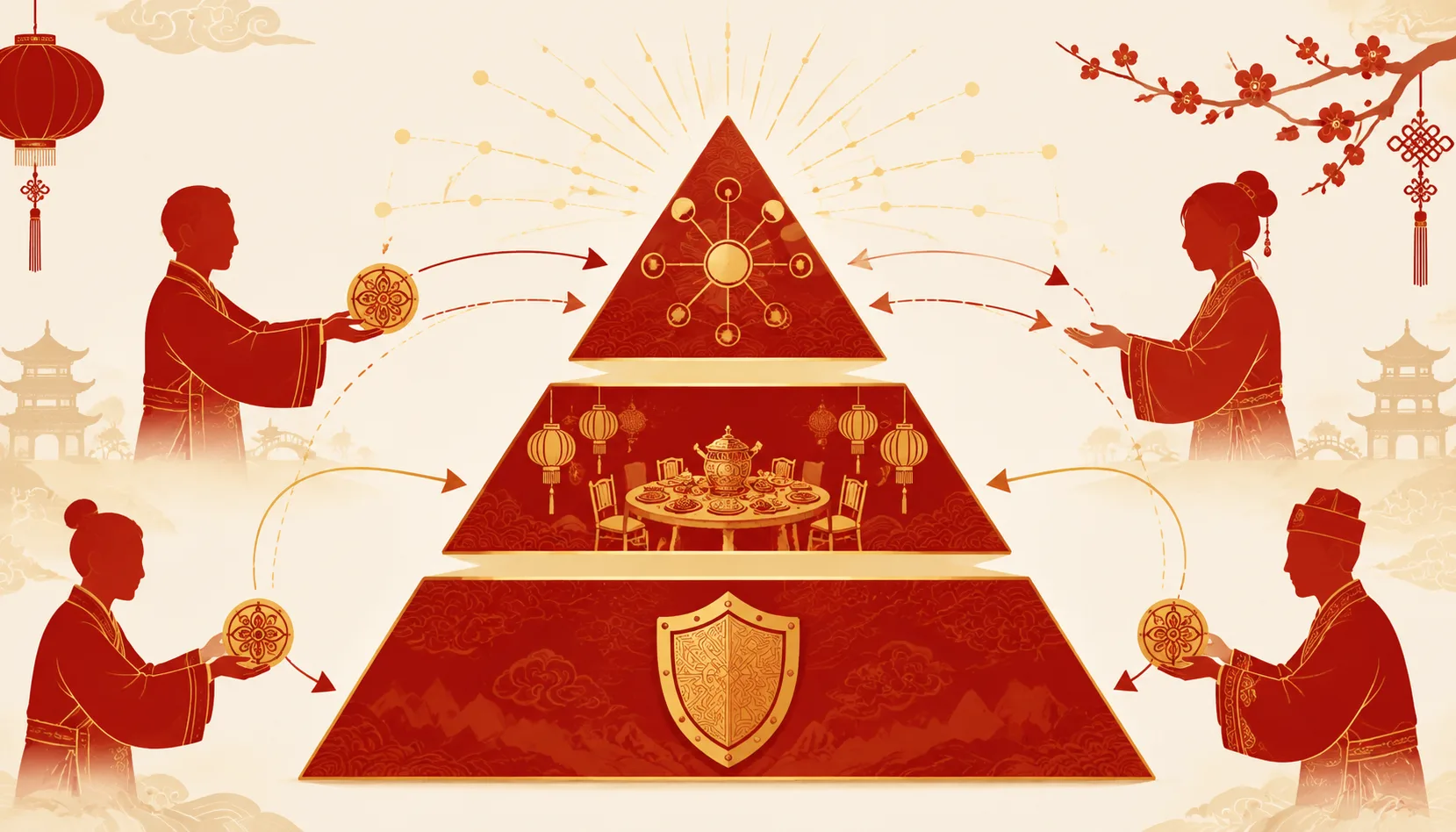
Chinese face operates on three levels: 尊严 (zūnyán, dignity) — the baseline right not to be humiliated; 排场 (páichǎng, social grandeur) — the display of respect t…
Read the guide →
Chinese Social Debt: How 人情 (Rénqíng) Actually Works
人情 is not a favor to be repaid quickly or equally; it's a long-term relational investment. To build trust, acknowledge the debt warmly, let it 'breathe' for wee…
Read the guide →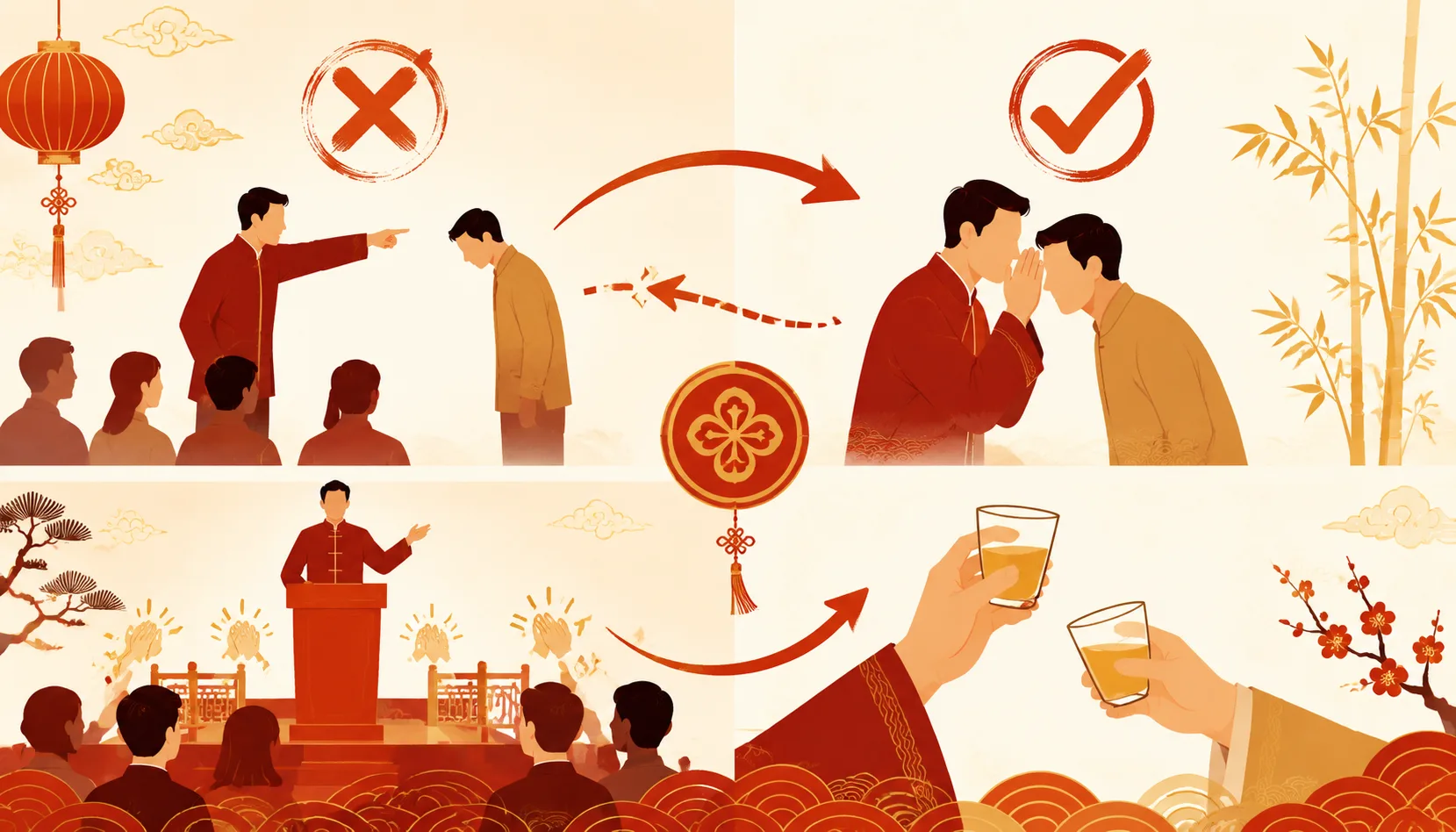
How to Give Face in China: Practical Guide for Foreigners
Giving face means proactively protecting or enhancing someone's social standing in front of others. Key moves: praise publicly, criticize privately; introduce b…
Read the guide →