Should I avoid pointing out faults when someone is going through a difficult time in China?
Quick answer
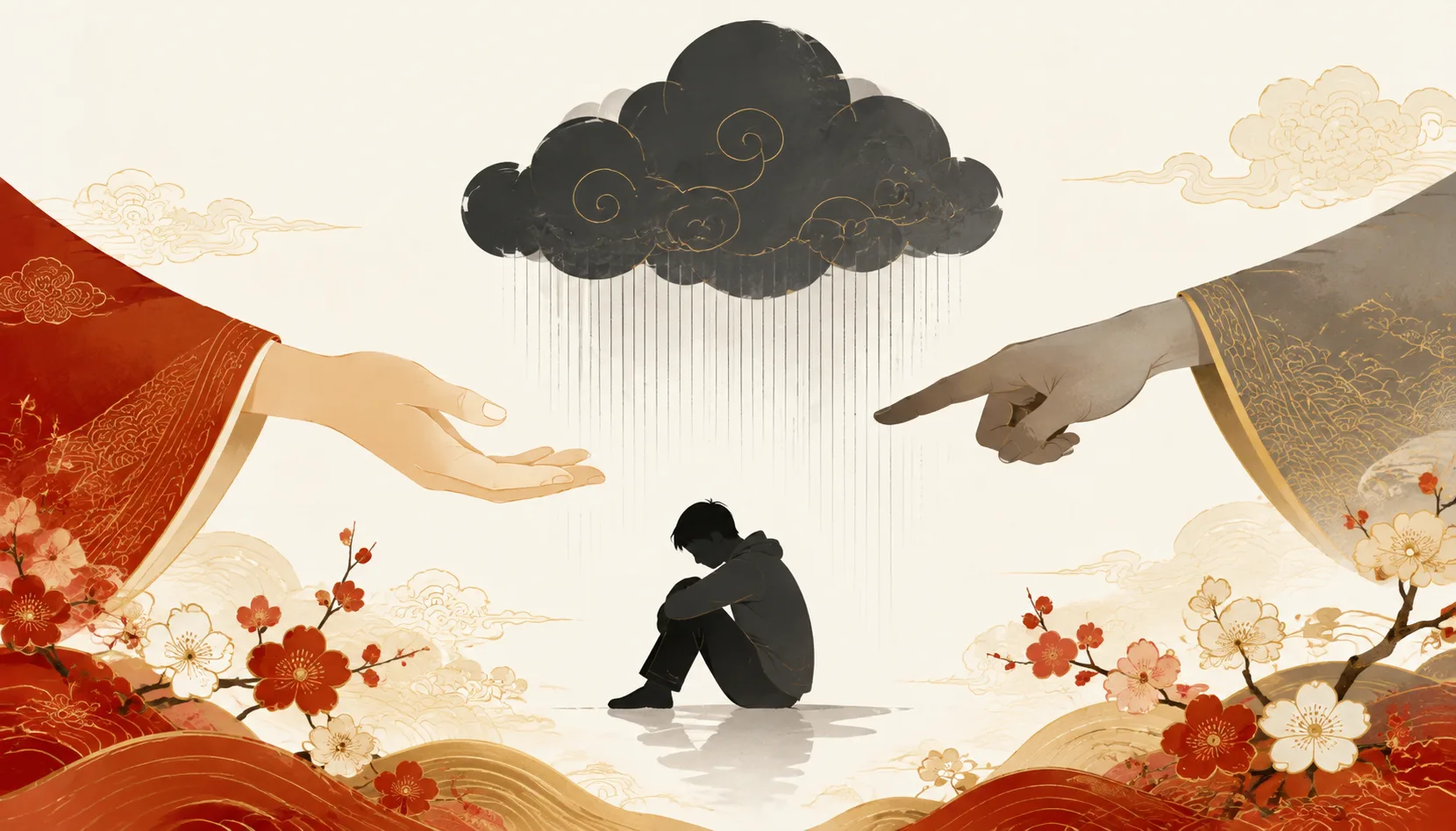
Yes. When someone is already struggling, piling on with criticism — even if deserved — is seen as heartless and cruel. The Chinese equivalent of 'kicking someone when they're down.'
Why This Rule Matters
The Chinese rule 'rén zài nánchù bù jiā yán' (人在难处不加言) — 'don't add words when someone is in difficulty' — comes from the principle of compassion (仁, rén). The companion saying is 'mǎ zài nánchù bù jiā biān' (马在难处不加鞭, don't whip a horse when it's already struggling). Criticism during crisis damages people and relationships.
What You Should Do
- Offer encouragement or practical help when someone is in hardship
- If you have criticism, save it for a time when the person is stable and can receive it well
- Acknowledge their difficulty before anything else
What You Shouldn't Do
- Point out mistakes or shortcomings when someone is visibly struggling
- Say 'I told you so' during someone's crisis
- Give unsolicited judgment without full knowledge of the situation
Practical Tips for Foreigners
This rule applies in most social and formal settings across China. When in doubt, watch what your Chinese host or senior colleague does and follow their lead. Breaking this rule once is forgivable — breaking it repeatedly signals a lack of cultural awareness.
How This Plays Out at Work
In Chinese workplaces, the rule is especially strict in state-owned enterprises and traditional industries like manufacturing or banking. If a colleague misses a deadline or botches a presentation, the manager might address it privately later — but never in the moment, and never in front of others. The unspoken logic: public criticism when someone is already down damages their 'face' permanently, and the team loses trust in both the person and the leader. In foreign-invested companies in Shanghai or Shenzhen, younger managers are more direct, but even they often soften feedback with a preface like 'I know you've been working hard on this.'
Real Scenarios You Might Face
- A German expat in Suzhou watched his Chinese project manager fumble a client presentation. Afterward, he listed three mistakes in front of the whole team. The manager said nothing, but two senior colleagues later told the expat he'd 'lost the room' — the team now saw him as harsh, not helpful.
- In Beijing, a foreign teacher's student failed a crucial exam. The teacher said, 'I told you not to skip classes.' The student's mother called the school the next day, upset — not about the exam, but that the teacher had 'humiliated' the child when they were already crying.
- An American in Guangzhou criticized her Chinese roommate for losing her phone — 'You're so careless, this is the third time.' The roommate stopped speaking to her for a week. A mutual friend explained: 'She needed comfort, not a lesson. You made her feel worse about something she already regretted.'
Regional Nuance: North vs. South
In northern cities like Beijing and Tianjin, people tend to be more blunt — a friend might say 'you screwed up' directly, but only if you're close. In southern regions like Guangdong and Fujian, the rule is stricter, especially among older generations. A Cantonese elder who sees a younger relative in trouble will often stay silent rather than risk adding pressure. In Shanghai, the style is more indirect: people change the subject, then later send a WeChat message with gentle advice. Knowing your region matters — but when in doubt, err on the side of silence and support.
The 'But I'm Just Honest' Trap
Many foreigners justify criticism with 'honesty' or 'being direct.' In China, this reads as lacking emotional intelligence — the ability to read the room and protect others' feelings. The host's inner thought: 'If you can't see they're already struggling, you're not smart, you're just rude.' Save your feedback for later, in private, framed as 'how can we fix this together' — not 'here's what you did wrong.'
What Chinese People Actually Say
- 落井下石 | luò jǐng xiā shí | "to hit someone when they're down" | Use to criticize those who worsen a troubled person's situation.
- 墙倒众人推 | qiáng dǎo zhòng rén tuī | "when the wall falls, everyone pushes" | Describes how people pile on criticism when someone is already failing.
- 趁火打劫 | chéng huǒ dǎ jié | "to loot during a fire" | Use when someone exploits another's misfortune for personal gain.
2026 Reality Check
2026 Reality Check: The rule still exists but is increasingly ignored, especially online. Cancel culture and public shaming have become common, with social media amplifying criticism rather than restraining it.
Gen Z vs. Older Generations: Younger Chinese are more likely to publicly criticize and "cancel" people they see as problematic. Older generations tend to follow the traditional view—that piling on someone already in trouble is morally wrong. However, even elders now join online pile-ons when issues touch national pride or family values.
Beijing/Shanghai vs. Smaller Cities: Tier-1 cities show mixed adherence—educated urbanites often practice restraint in personal settings but participate actively in online criticism. Smaller cities and rural areas remain more traditional; community pressure often discourages public criticism of those already facing consequences.
Frequently asked questions
Should I offer constructive criticism to a Chinese colleague who is already facing problems?
No, it's better to wait until the situation stabilizes. Offering criticism during their struggle is seen as adding insult to injury, which can damage your relationship permanently.
What should I say instead of pointing out faults when someone is in trouble in China?
Focus on empathy and practical support, such as asking how you can help or simply listening. A phrase like 'I'm here for you' is more appreciated than any critique.
Is it ever acceptable to point out mistakes to a Chinese friend who is upset?
Only if they explicitly ask for your opinion, and even then, frame it gently and privately. Unsolicited criticism during their low point is considered heartless.
How does 'kicking someone when they're down' translate in Chinese culture?
The concept is expressed as '落井下石' (luò jǐng xià shí), literally 'throwing stones at someone who has fallen into a well.' It's a strong social taboo.
Can I discuss the fault later after the person recovers from their trouble in China?
Yes, once they've resolved the issue and are in a better state, you can bring it up privately and constructively. Timing is key to maintaining trust.
What if the person's mistake is causing harm to others—should I still stay silent?
In such cases, address the harm indirectly by focusing on solutions, not blame. Suggest a team meeting or involve a neutral third party to avoid personal criticism.
Try our tools
Related guides

Chinese Face-Saving Language: Compliments, Refusals, and Farewells
Face-saving language in Chinese runs through compliments (always deflect, never accept directly), refusals (always indirect), and farewells (longer and more rit…
Read the guide →
Understanding Mianzi (Face) in China: The Rule Beneath All the Rules
Mianzi (面子) is social reputation and dignity — the invisible currency that governs Chinese social life. It can be given, lost, saved, or attacked. Almost every …
Read the guide →
Chinese Polite Phrases Decoded: What People Really Mean
Chinese social interaction is lubricated by ritual phrases (客套, kètào) that have specific social functions but often do not mean what they literally say. 'Have …
Read the guide →