Is speaking loudly considered rude in Chinese culture?
Quick answer
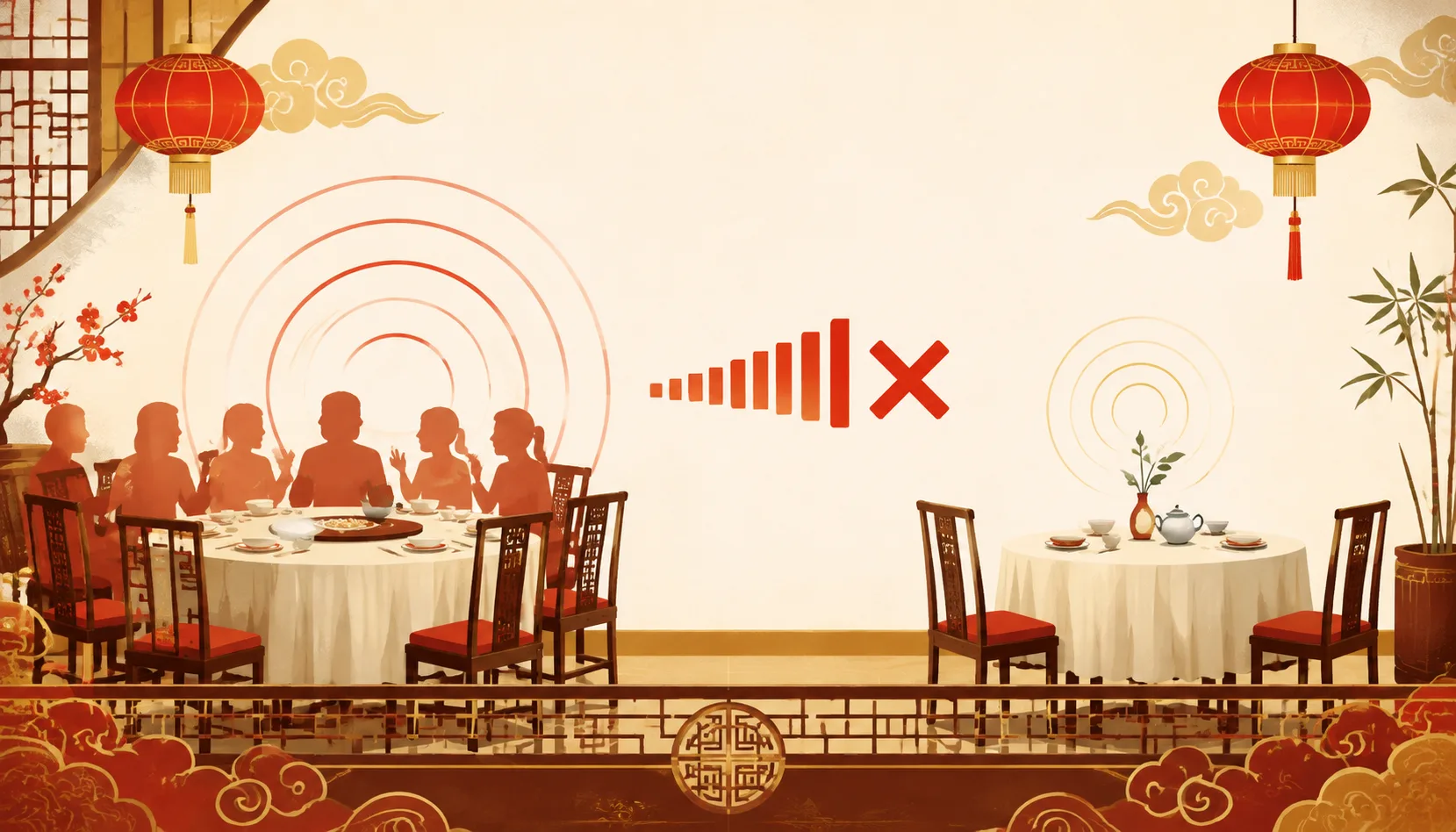
Yes. Talking at a high volume, fast pace, or loud pitch in social settings signals poor self-control and low refinement. Calm, measured speech is admired.
Why This Rule Matters
The Chinese saying 'hǎo huà bù zài duō shuō, yǒu lǐ bù zài gāo shēng' (好话不在多说,有理不在高声, good words don't need many, reason doesn't need a loud voice) captures this perfectly. In Chinese culture, someone who needs to shout is perceived as losing control — both of their argument and their emotions.
What You Should Do
- Speak at a conversational volume — loud enough to be heard, not loud enough to dominate a room
- Slow down and lower your voice when making an important point
- If someone doesn't hear you, step closer rather than speaking louder
What You Shouldn't Do
- Raise your voice when making a point or arguing — louder doesn't mean more right
- Speak at a high pitch or rapid pace when frustrated
- Talk loudly in restaurants, offices, or shared public spaces
Practical Tips for Foreigners
This rule applies in most social and formal settings across China. When in doubt, watch what your Chinese host or senior colleague does and follow their lead. Breaking this rule once is forgivable — breaking it repeatedly signals a lack of cultural awareness.
Why Loud Speech Feels Aggressive in China
In China, volume is often tied to emotional temperature. A raised voice — even if you're just excited or passionate — reads as anger or loss of control. Your Chinese counterpart will likely interpret it as a personal attack, not enthusiasm. This is especially true in the workplace, where maintaining 'mianzi' (face) for others is critical. Loud speech in a meeting can make a colleague lose face in front of their boss, which damages your relationship permanently. The cultural default is to keep emotions internal and express disagreement through tone and word choice, not decibel level.
Real Scenarios: Volume Miscalculations
- On the Beijing subway, a Canadian tourist enthusiastically recounted his Great Wall hike at full conversational volume. Nearby passengers physically shifted away, and an elderly woman shot him a look that made him lower his voice immediately.
- In a quiet Hangzhou teahouse, a German businessman took a call and spoke at his usual office volume. The entire room fell silent, and the server paused mid-pour until he stepped outside—he later realized the tea master had been visibly annoyed.
- At a Shanghai restaurant, an Australian couple laughed loudly across the table during a meal. A nearby family with children kept glancing over, and the waiter discreetly asked if they could 'enjoy the food more quietly'—a polite hint they didn't repeat.
- In a Xi'an museum, a French tourist explained an exhibit to his friend in a normal Western voice. A guard approached and gently pointed to the 'quiet please' sign, but the real message came from other visitors who had been glaring since the first sentence.
The Unspoken Judgment You Won't Hear
When you speak loudly in China, people rarely tell you directly. Instead, they make internal assessments: 'This person is not educated,' 'They lack self-cultivation,' or 'They don't respect us.' These judgments stick. In business, a loud foreign partner is seen as hard to negotiate with, someone who will 'lose their cool' under pressure. In social circles, you'll be invited fewer times — not because people dislike you, but because hosting a loud guest is stressful. The host thinks, 'If I invite him again, will he embarrass me in front of my other friends?' You never hear this, but it shapes every future invitation.
When Loud Is Acceptable (Rarely)
There are a few exceptions. At a lively KTV session in Shenzhen or a football match viewing in a bar, volume is expected — even encouraged. Street markets in Wuhan or Xi'an have vendors shouting, and it's fine to speak up there. But these are clearly casual, high-energy environments. The moment you step into an office, a restaurant, a family dinner, or even a taxi, drop your volume back to conversational. When in doubt, match the quietest person in the room — that's always safe.
What Chinese People Actually Say
- 轻声细语 | qīng shēng xì yǔ | speak in a gentle, soft voice | Use when describing polite, quiet conversation in formal settings.
- 小声说话 | xiǎo shēng shuō huà | speak quietly | Direct reminder to lower voice in libraries, offices, or meetings.
- 保持安静 | bǎo chí ān jìng | keep quiet | Use as a general request in public spaces like theaters or study areas.
2026 Reality Check
2026 Reality Check: The "no loud voice" rule is fading fast in urban China, especially among Gen Z.
Gen Z vs. Older Generations: Young people in Beijing and Shanghai now speak at volumes that would shock their grandparents. Coffee shops and co-working spaces buzz with animated conversations. Older generations still instinctively shush children in public, but many have adapted to the new normal.
Beijing/Shanghai vs. Smaller Cities: Tier-1 cities have embraced louder, more expressive communication—partly due to Western influence and open-plan office culture. Smaller cities and rural areas still hold tighter to traditional quiet etiquette, especially in formal settings like restaurants or family gatherings.
Bottom line: The rule survives in principle but is actively broken, particularly by youth in major cities. It's now about context—loud in casual spaces, quiet in meetings.
Frequently asked questions
Why is speaking loudly considered rude in Chinese culture?
In Chinese culture, a loud voice is often seen as a sign of poor self-control and lack of refinement, while calm, measured speech is admired as a mark of maturity and respect.
Are there any situations where speaking loudly is acceptable in China?
Yes, in casual or festive settings like markets, family gatherings, or lively restaurants, louder voices may be more tolerated, but in professional or formal settings, it's best to keep your volume moderate.
How can I adjust my speaking volume to fit Chinese social norms?
Observe the volume of those around you and match it. In meetings or formal dinners, speak softly and slowly, and avoid interrupting others, as this shows respect and self-discipline.
What does a loud voice signal about a person in Chinese professional settings?
It may signal poor emotional control or lack of professionalism, which could harm your credibility. Colleagues might perceive you as aggressive or untrustworthy, so keeping a steady, calm tone is key.
Is there a difference in acceptable volume between public and private settings in China?
Yes, in private settings like a close friend's home, you can be more relaxed, but in public places like offices, banks, or public transport, a lower volume is expected to maintain harmony and avoid drawing unwanted attention.
What should I do if I accidentally speak too loudly in China?
If you notice, simply lower your voice and apologize briefly, saying 'duì bu qǐ' (sorry). This shows awareness and respect, and most people will appreciate your effort to adapt.
Try our tools
Related guides

Public Behavior in China: What Is and Isn't Acceptable
Chinese cities have their own public behavior logic: noise levels are higher than Western norms in some contexts and strictly controlled in others, personal spa…
Read the guide →
China Subway and Bus Etiquette: The Unwritten Rules
Chinese metro culture has its own logic: people do queue at the painted lines (mostly), crowds at rush hour are extremely dense and this is accepted, phone spea…
Read the guide →
10 Social Mistakes Foreigners Commonly Make in China
The most common mistakes cluster around face (publicly correcting or disagreeing with someone), physical greeting norms (hugging or back-patting people who are …
Read the guide →