Is making noise in public considered rude in China?
Quick answer
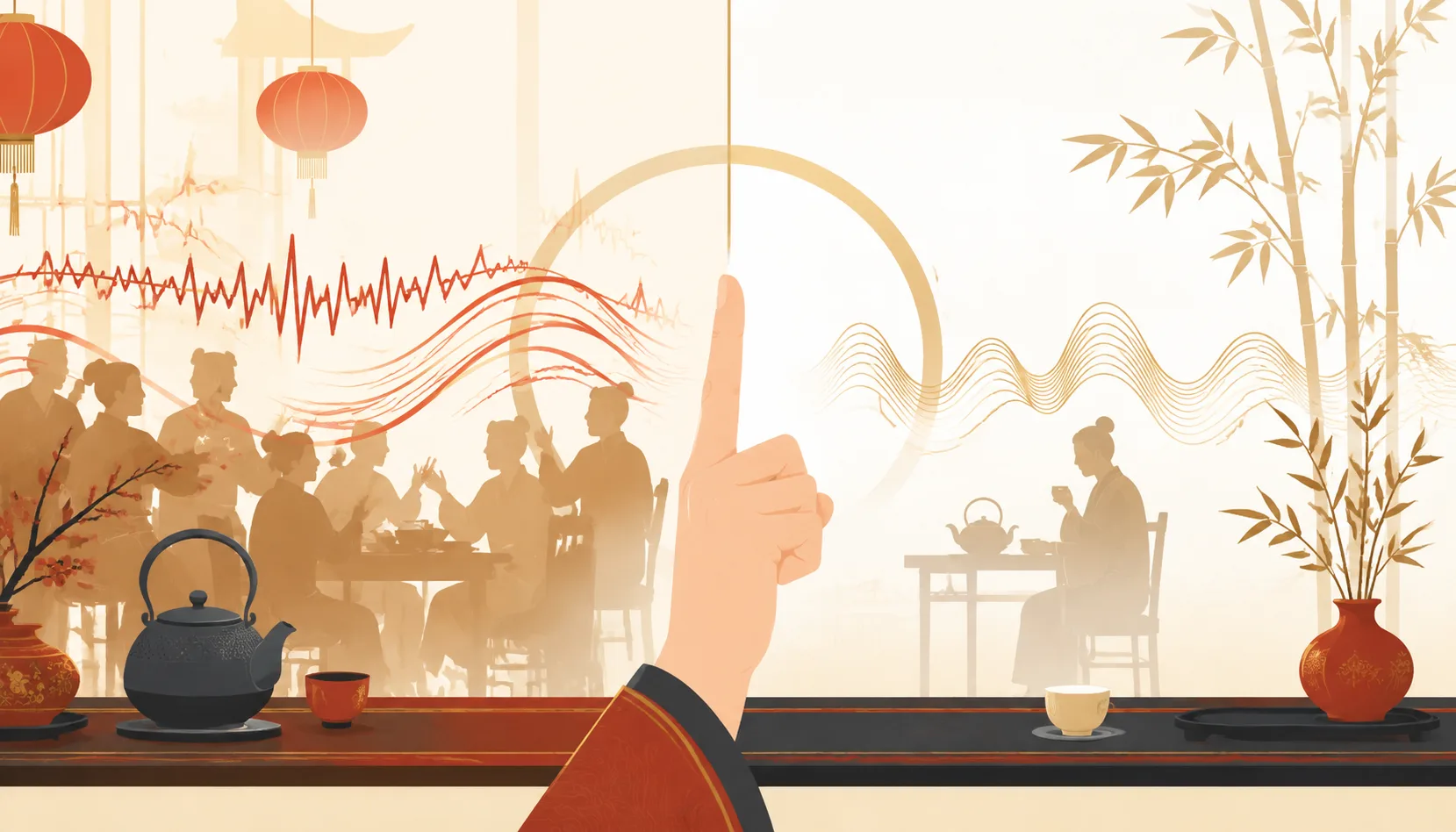
Yes. Talking loudly, playing music without earphones, or being generally boisterous in shared public spaces is inconsiderate and increasingly discouraged.
Why This Rule Matters
Chinese public life values 'gōnggòng wénmíng' (公共文明, public civilization). As China's cities modernize, behavioral standards in public spaces have become increasingly formal. Many subway systems have 'quiet carriage' norms, and loudness is a common complaint in urban social media discussions.
What You Should Do
- Use earphones when listening to audio in public
- Keep phone calls brief and quiet in enclosed public spaces (elevator, metro, café)
- Speak at a conversational volume in restaurants, waiting rooms, and public transport
What You Shouldn't Do
- Play videos or music through a phone speaker in quiet public spaces
- Have loud phone arguments in elevators or metro cars
- Let children run wild and scream in restaurants without intervention
Practical Tips for Foreigners
This rule applies in most social and formal settings across China. When in doubt, watch what your Chinese host or senior colleague does and follow their lead. Breaking this rule once is forgivable — breaking it repeatedly signals a lack of cultural awareness.
Why Quiet Matters More Than You Think
In China, public noise isn't just about manners — it's about social harmony (héxié). When you're loud on the metro in Beijing or in a Hangzhou teahouse, locals don't see an individual being rude; they see someone disrupting the collective calm that everyone is expected to maintain. This isn't about strict rules but about unspoken mutual respect. The Chinese host or colleague won't tell you to quiet down directly — that would be confrontational. Instead, they'll give subtle cues: a glance, a slight pause, or a change of topic. If you miss these, you risk being labeled 'méi sùzhì' (没素质, lacking quality) — a quiet judgment that can follow you in professional circles.
When Quiet Matters: Real Scenarios
- A British expat in Shanghai took a work call on speakerphone in a shared office kitchen. His Chinese colleagues didn't say a word, but the next day, the team lead quietly moved his desk away from the common area — a silent signal he only understood weeks later.
- An American teacher in Chengdu played music from her phone while waiting at a bus stop. An elderly woman nearby tutted loudly and moved several meters away. The teacher thought it was a coincidence, but it was a clear, non-verbal rebuke.
- In Guangzhou, a young Australian joined a business lunch and spoke loudly across the table to a colleague at the other end. The senior Chinese manager smiled but didn't engage. Later, the Australian learned he'd been seen as 'too aggressive' — and his proposal wasn't taken seriously.
- At a family dinner in a Beijing hútòng restaurant, a Canadian guest laughed loudly at a joke. The host's mother paused, then quietly asked if he was feeling unwell — a polite way of saying he was drawing too much attention.
Regional Differences: North vs. South
Not all of China is equally strict about volume. In northern cities like Beijing and Tianjin, locals are often more direct and louder themselves — a boisterous laugh at a dàpái dàng (street food stall) is common. But in southern hubs like Shanghai, Suzhou, and Shenzhen, especially among younger, white-collar professionals, quiet is the default. That said, don't mistake northern tolerance for permission. In any formal setting — a business meeting, a bank, or a hospital — volume is always moderated. The safest approach: match the quietest person in the room, not the loudest.
When Loud Is Actually Fine
There are exceptions. During festivals like <a href="/holidays/chinese-new-year-gifts/">Spring Festival</a> or at a hotpot dinner with friends, noise is welcomed — it's a sign of life and joy. In karaoke bars (KTV), shouting is expected. Also, in some older neighborhoods or markets, vendors and customers haggle at high volume; that's local color, not rudeness. The key is context: if everyone around you is loud, you're fine. If you're the only one making noise, dial it down. <a href="/holidays/minor-chinese-holidays-guide/">Foreigners often</a> err by assuming Chinese public spaces are uniformly quiet — they're not. But when in doubt, err on the side of quiet; it's always safer socially.
What Chinese People Actually Say
- 轻声细语 | qīng shēng xì yǔ | speak softly; talk in a gentle voice | Use when politely asking someone to lower their voice in public.
- 保持安静 | bǎo chí ān jìng | keep quiet; maintain silence | Common phrase on signs and in formal requests.
- 请勿喧哗 | qǐng wù xuān huá | please do not make noise | Formal expression seen in libraries, theaters, and public transport.
2026 Reality Check
2026 Reality Check: The "don't be loud in public" rule is fading but not dead. It's now more about context than blanket rule.
Gen Z vs. Older Generations: Young Chinese (18-25) care less about traditional "quiet" etiquette in casual spaces—loud dining, video calls in public, and music on speaker are normalized. Older generations (50+) still find this jarring and often comment. The cultural shift is real: younger people see public noise as social expression, not rudeness.
Beijing/Shanghai vs. Smaller Cities: Tier-1 cities show mixed behavior—subways and libraries stay quiet, but restaurants and bars are loud by design. Smaller cities and rural areas still hold stricter "keep noise down" norms, especially in shared spaces like elevators or courtyards.
Bottom line: The rule survives in structured spaces but collapses in social/leisure settings. It's now a spectrum, not a hard rule.
Frequently asked questions
Is talking loudly on the phone in a Chinese restaurant considered rude?
Yes, it's generally seen as inconsiderate. Keep your voice low and step outside for longer calls to avoid disturbing others.
Can I play music on my phone speaker while on public transport in China?
No, this is widely frowned upon. Always use earphones, and keep the volume low enough that only you can hear it.
What should I do if someone nearby is being very loud in a public space?
Politely ignore it or move to a quieter spot. Confrontation is uncommon; most people prefer to avoid direct conflict.
Are there specific quiet zones in Chinese cities where noise is prohibited?
Yes, libraries, hospitals, and some parks have designated quiet areas. Look for signs reading '安静' (quiet) and follow the local rules.
Is it okay to be loud at a street market or festival in China?
At lively events like markets or festivals, some noise is expected, but still keep your volume moderate and avoid shouting over others.
How can I politely ask a friend to lower their voice in public in China?
Use a gentle phrase like '小声一点' (speak softer) with a smile. This is direct but polite, and most people will comply without offense.
Try our tools
Related guides

Public Behavior in China: What Is and Isn't Acceptable
Chinese cities have their own public behavior logic: noise levels are higher than Western norms in some contexts and strictly controlled in others, personal spa…
Read the guide →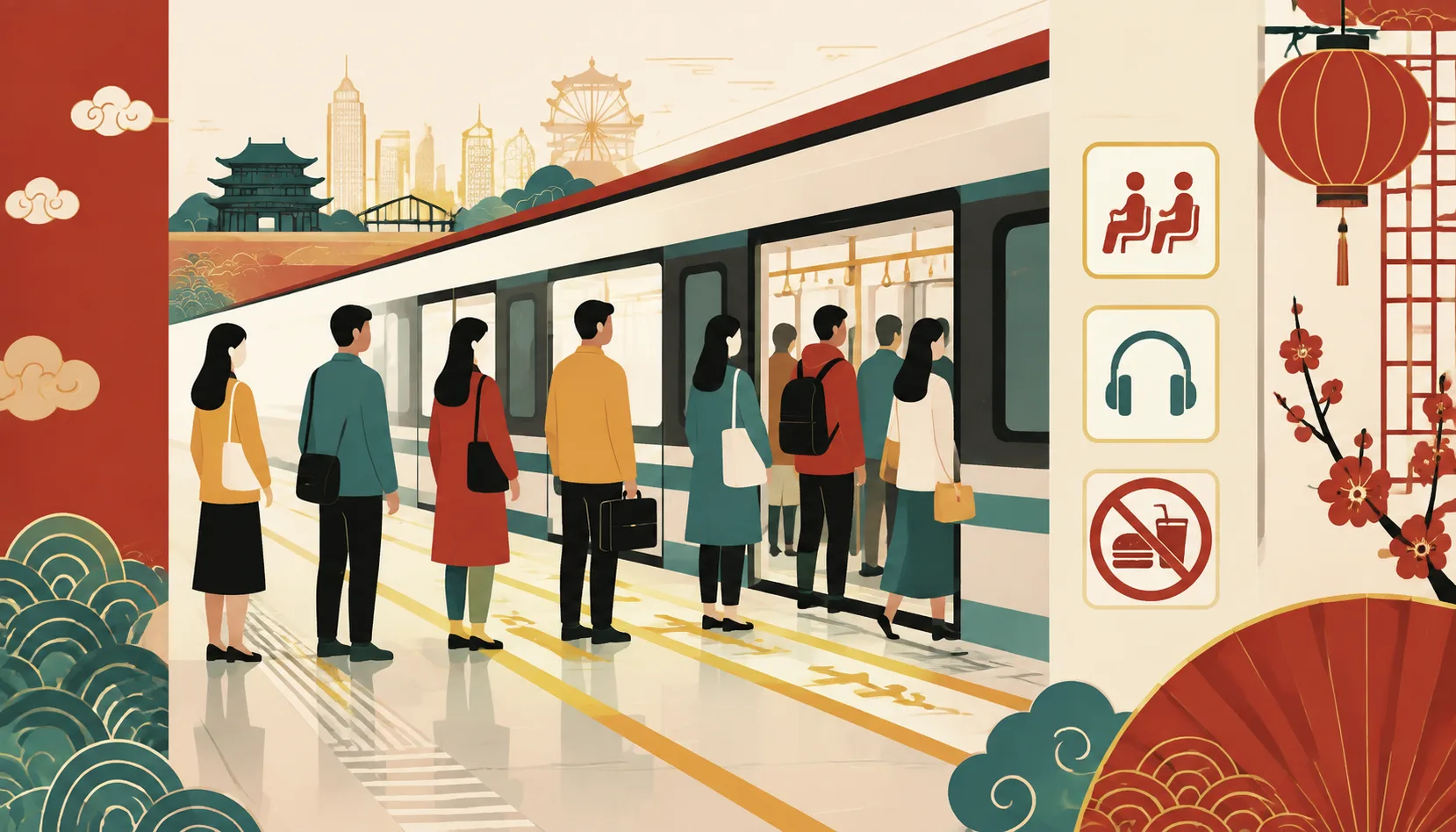
China Subway and Bus Etiquette: The Unwritten Rules
Chinese metro culture has its own logic: people do queue at the painted lines (mostly), crowds at rush hour are extremely dense and this is accepted, phone spea…
Read the guide →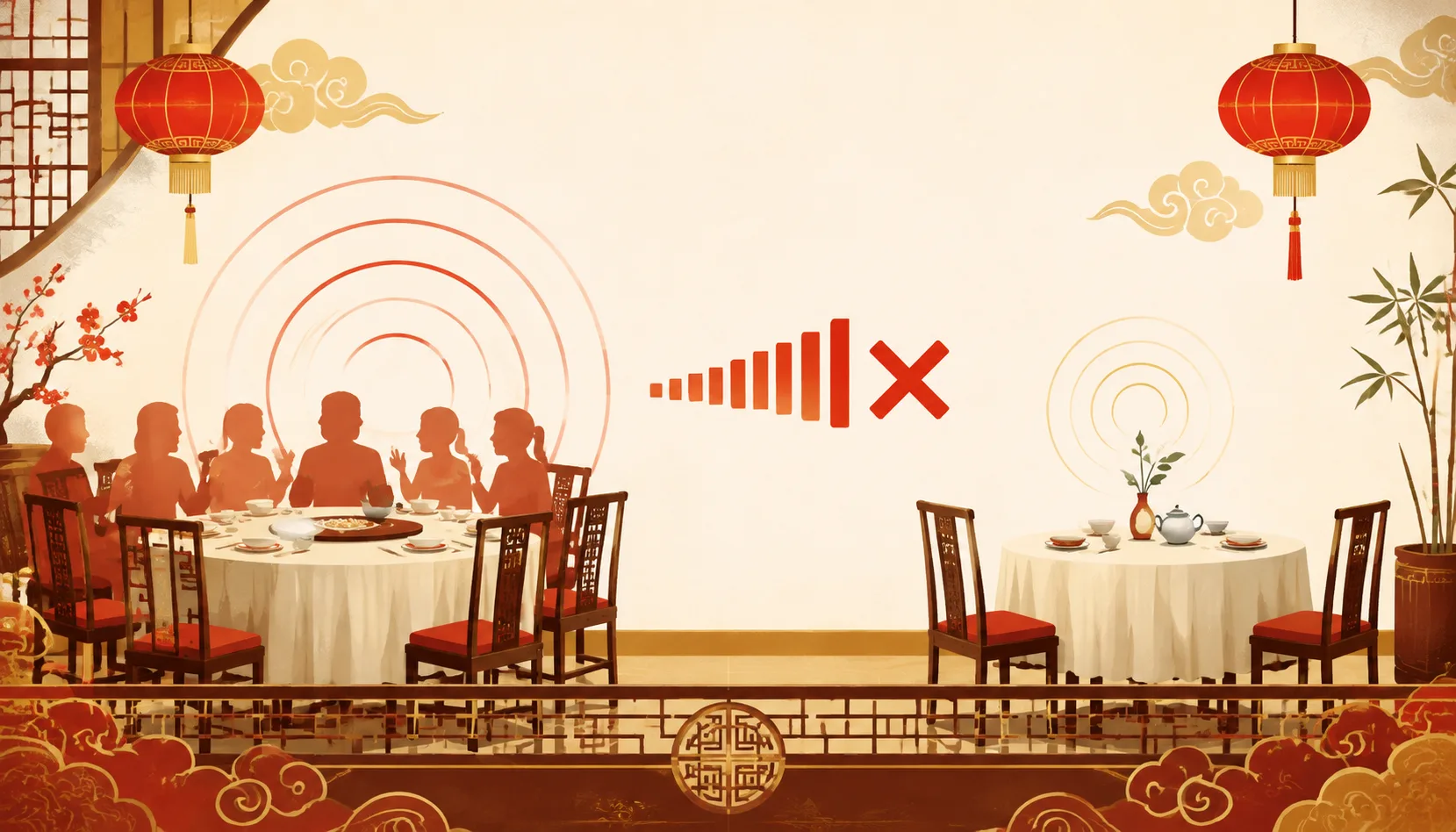
Don't Use a Loud Voice in Social and Professional Settings
Yes. Talking at a high volume, fast pace, or loud pitch in social settings signals poor self-control and low refinement. Calm, measured speech is admired.
Read the guide →