Is it rude to interrupt a conversation in China?
Quick answer
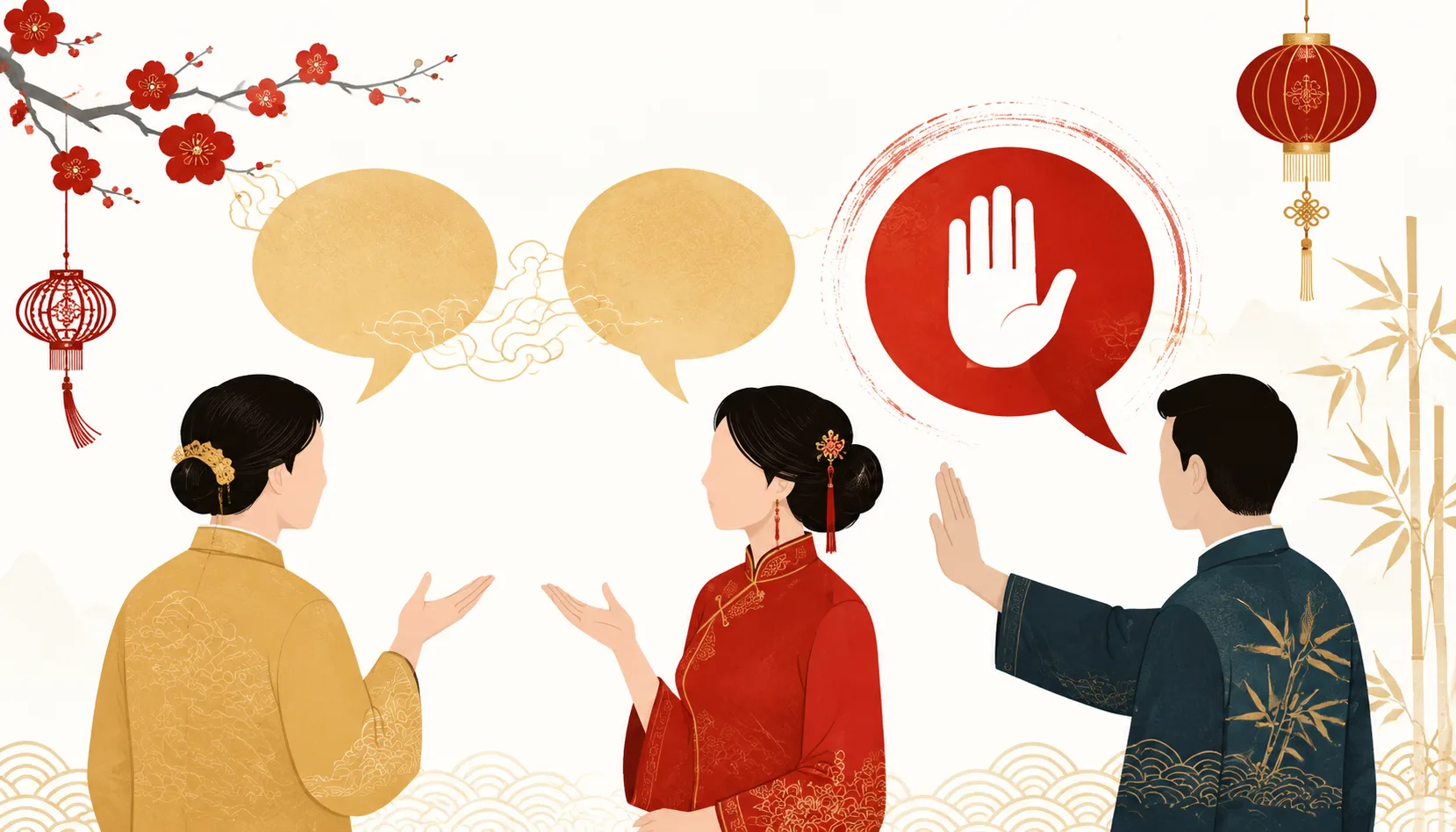
Yes. Cutting into a conversation someone else is having — even with something short — is considered a serious breach of manners. Wait until they finish before speaking.
Why This Rule Matters
This rule is taught to children early: '大人说话小孩儿别插话' (when adults speak, children don't interrupt). It applies equally to adults. Interrupting signals you think your words are more important than the speaker's — which is both arrogant and disrespectful of the ongoing conversation.
What You Should Do
- Wait until there is a natural pause before speaking
- If you have something urgent, catch the speaker's eye and wait to be acknowledged
- Apologize briefly if you must interrupt: '对不起,打扰一下'
What You Shouldn't Do
- Jump into a conversation without waiting for a pause
- Cut people off mid-sentence
- Raise your voice to override an ongoing conversation
- 'Steal' a conversation topic by talking over someone
Practical Tips for Foreigners
This rule holds firmly in formal and family settings across China, though casual settings — especially among younger people in major cities — are more relaxed. When in doubt, watch what your Chinese host or senior colleague does and follow their lead. Breaking this rule once is forgivable — breaking it repeatedly signals a lack of cultural awareness.
Why Patience Signals Respect, Not Weakness
In Chinese <a href="/business/chinese-workplace-culture-guide/">workplace culture</a>, especially in state-owned enterprises and older private firms in cities like Beijing or Shenyang, waiting your turn to speak isn't just polite — it signals that you respect the speaker's status and the group's hierarchy. Jumping in, even with a brilliant idea, can be read as challenging the person who holds the floor. Younger startups in Shenzhen or Shanghai are more relaxed, but the underlying principle stays: the person who speaks first controls the room, and interrupting that control is a subtle power play few will call out directly but everyone notices.
Real Scenes Where Interrupting Backfired
- A British expat in Shanghai once cut into his Chinese manager's phone call to ask a quick logistics question. The manager didn't react at the time, but the expat was excluded from the next three project meetings — no one ever told him why.
- At a family dinner in Chengdu, an American guest interrupted his host's uncle mid-story to compliment the food. The uncle stopped talking, smiled, and didn't speak again for the rest of the evening. The host later explained: the uncle felt his story wasn't worth finishing.
- In a Guangzhou trading company, a German employee interrupted a Cantonese colleague's explanation to a client. The colleague went quiet, and the client assumed the German was the real decision-maker — which damaged the colleague's face and the working relationship for months.
- A Canadian teacher in Hangzhou kept interrupting her Chinese teaching assistant during a parent meeting. The assistant never corrected her, but the parents complained to the principal that the foreign teacher seemed 'aggressive and disrespectful.'
The Unspoken Thought in Their Head
When you interrupt a Chinese colleague, friend, or elder, they rarely say 'please don't interrupt.' Instead, they think: 'This foreigner doesn't respect our way of talking' or 'They think their words are more important than mine.' In more hierarchical settings, they may also interpret it as a public challenge to their authority — which can quietly close doors for you in business and social circles. The silence after your interruption isn't agreement; it's them waiting for you to realize you overstepped.
Regional Generational Differences You'll Meet
You may meet stricter expectations in some northern cities like Beijing and Xi'an, where many older people still follow traditional conversational norms. In southern hubs like Shenzhen or Hangzhou, younger professionals — especially those under 35 who've worked with multinational teams — are more tolerant and may even signal you to jump in if the pause drags. But don't mistake that tolerance for universal acceptance: in the same room, a 55-year-old client from Shandong will still judge you harshly for speaking over his colleague. Read the room generation by generation, not just by city.
What Chinese People Actually Say
- 不要插嘴 | bù yào chā zuǐ | Don't interrupt | Use when telling someone not to cut in while others are speaking
- 让人把话说完 | ràng rén bǎ huà shuō wán | Let someone finish speaking | Polite way to ask others to wait their turn
- 洗耳恭听 | xǐ ěr gōng tīng | Listen attentively | Formal expression meaning "ready to listen respectfully"
2026 Reality Check
2026 Reality Check: The "don't interrupt" rule is weakening, especially in urban areas. It's now more about context than absolute rule.
Gen Z vs Older Generations: Younger Chinese (under 25) are far more likely to interrupt, especially in casual settings or digital conversations. They see it as "passionate" or "engaged." Older generations (50+) still value the traditional approach—interrupting is considered rude, particularly in formal or family settings.
Beijing/Shanghai vs Smaller Cities: Tier-1 cities show the biggest shift. Fast-paced business culture in Beijing and Shanghai normalizes interrupting during meetings. Smaller cities and rural areas still hold the traditional rule more firmly—respect for elders means waiting your turn.
Bottom Line: The rule persists in formal and family contexts, but casual settings—especially among young people in major cities—have relaxed significantly.
Frequently asked questions
Is it considered rude to interrupt a conversation in China?
Yes, interrupting someone mid-conversation is seen as a serious breach of manners in China. Always wait until the speakers have finished before you add anything.
What should I do if I need to say something urgent while others are talking?
Wait for a natural pause or the end of the conversation. If it's truly urgent, apologize briefly and ask permission to interject, but keep it minimal.
Can I interrupt if I have a short question or comment?
No, even short interruptions are considered impolite. Let the current speakers finish their thought completely before you speak.
How do I politely get someone's attention if they are in a conversation?
Stand nearby and wait, or make eye contact with one speaker to signal you'd like to speak. They will usually acknowledge you when they're ready.
Are there any situations where interrupting is acceptable in China?
In very informal settings among close friends, brief interjections might be tolerated, but it's safer to follow the same rule of waiting. In business or formal settings, never interrupt.
What is the best way to apologize if I accidentally interrupt someone?
Say 'duì bù qǐ' (sorry) immediately and gesture for them to continue. Then wait for them to finish before you speak again.
Try our tools
Related guides
Chinese Business Communication Style: Indirect Signals
Chinese business communication is high-context: what matters is often what's not said — the tone, the timing, who said it, and what was conspicuously omitted. W…
Read the guide →
Chinese Polite Phrases Decoded: What People Really Mean
Chinese social interaction is lubricated by ritual phrases (客套, kètào) that have specific social functions but often do not mean what they literally say. 'Have …
Read the guide →
Chinese Face-Saving Language: Compliments, Refusals & More
Face-saving language in Chinese runs through compliments (always deflect, never accept directly), refusals (always indirect), and farewells (longer and more rit…
Read the guide →