How can foreigners use WeChat strategically to maintain guanxi (relationships) in China without coming across as spammy or desperate?

Quick answer
Treat WeChat as a hybrid personal-professional space: engage with Moments thoughtfully (not obsessively), message with a purpose and no immediate ask, and follow a contact-level rhythm—quarterly for casual contacts, monthly for stronger ties. Always add value before requesting anything.
Why WeChat Is Not LinkedIn
When you first start doing business in China, it's tempting to treat WeChat like a professional networking tool—posting industry insights, sending connection requests, and pitching ideas. That's a mistake. WeChat is your digital identity in China, blending personal life, social life, and work into one feed. Your Chinese contacts see everything you post, and they are absolutely judging your behavior.
Unlike LinkedIn, where a 'like' is a polite nod, on WeChat a like or comment carries social weight. It signals that you remember someone, that you care about their life, and that you're present in their network. But overdoing it—liking every post, commenting on everything—makes you look desperate or, worse, like a bot. Chinese users are savvy; they know when engagement is genuine and when it's performative.
Here's the golden rule: use WeChat to stay present without demanding attention. Your goal is to be remembered warmly, not to be the person who floods their feed with business promotions or empty likes.
Actionable tip: Audit your own Moments right now. If a Chinese colleague scrolled through your last 10 posts, what would they think? If it's all business, diversify. If it's all personal, add some professional substance. Aim for a mix that shows you're a real human with interests beyond the boardroom.
The Art of WeChat Moments Interaction
WeChat Moments (朋友圈 péngyǒuquān) is where relationships are nurtured or neglected. The rules are subtle but crucial:
- Don't like every post. It looks robotic and insincere. Only engage with content that genuinely resonates with you—a family photo, a work achievement, a travel shot.
- Leave thoughtful comments on major personal posts. If a contact posts about their child's graduation or a new job, a specific comment like 'Congratulations! Your daughter must be so proud' is a high-value guanxi signal. It shows you pay attention.
- Never ignore Moments entirely. Even if you're busy, occasionally liking or commenting keeps you 'alive' in their network. Aim for at least one interaction per contact every few months.
Consider this scenario: You're a European supplier who met a Chinese distributor at a trade fair. You add each other on WeChat, but you're not sure how to stay on their radar. If you like every post they make, they'll think you're monitoring them. Instead, wait for a meaningful post—maybe they share a photo of their team at a factory—and comment: 'Great to see your team in action! Hope all is well.' That's memorable and genuine.
Actionable tip: Set a weekly reminder to scroll through your key contacts' Moments. Spend 5 minutes engaging with 2-3 posts that feel authentic. Consistency beats intensity.
Messaging Etiquette: Don't Be That Person
Nothing kills a budding guanxi faster than a cold message that says: 'Hello, long time no see, I have a business proposal.' This is the WeChat equivalent of LinkedIn spam—and it's even worse because WeChat feels more personal. Chinese professionals receive dozens of such messages daily; yours will be deleted in seconds.
Instead, follow the principle of value before ask. If you haven't spoken in months, don't pitch. Send something useful first. For example, if you read an industry report relevant to their sector, forward it with a short note:
| Chinese | Pinyin | English |
|---|---|---|
| 刘总,我看到这份关于您行业的报告,想到您,希望您一切顺利。 | Liú zǒng, wǒ kàndào zhè fèn guānyú nín hángyè de bàogào, xiǎngdào nín, xīwàng nín yīqiè shùnlì. | Mr. Liu, I saw this report about your industry and thought of you. Hope you're well. |
This approach does two things: it shows you remember their work, and it gives without asking. They'll likely reply with a thank-you, and the door stays open for future conversations.
Actionable tip: Before sending any message to a contact you haven't spoken to in over a month, ask yourself: 'What am I giving them?' If the answer is 'nothing,' don't send it. Wait until you have something to share.
The Right Contact Rhythm by Relationship Level
Not all WeChat contacts are equal. Your guanxi network has layers, and each layer requires a different cadence of communication. Here's a practical guide:
| Contact Level | Frequency | Example |
|---|---|---|
| Level 2 (casual acquaintance) | Once per quarter | Holiday greetings (Mid-Autumn, Chinese New Year) |
| Level 3 (regular business contact) | Once every 1-2 months | Share an article, ask a question, or comment on a post |
| Level 4+ (strong partner or friend) | Regular informal contact | Weekly check-ins, casual chats, maybe voice messages |
For Level 2 contacts, a simple holiday greeting is enough. For Level 3, make it more personal—reference something specific from their life or work. For Level 4, you can be more relaxed; a quick 'How's your week going?' is fine.
Actionable tip: Create a WeChat contact label (标签 biāoqiān) for each level. This way, you can filter your Moments and send targeted greetings without forgetting anyone. It's a small effort that pays off in relationship maintenance.
How to Re-Warm a Cold Relationship
We all have contacts who've gone quiet—maybe you met at a conference two years ago, or you worked together on a project that ended. Re-establishing contact on WeChat is delicate. You don't want to seem like you're only reaching out because you need something.
The best tactic is to send a value-add message with no ask attached. Find something relevant to their industry, their company, or their personal interests. It could be a news article, a market report, or even a video. The key is to make it clear you thought of them specifically.
For example, if you know a contact works in renewable energy, send them a link to a new policy update with a note: 'Thought this might be useful for your work. Hope you're doing well.' This reopens the conversation without pressure.
Here's a phrase you can use:
| Chinese | Pinyin | English |
|---|---|---|
| 最近看到这个,觉得对您可能有帮助,祝好。 | Zuìjìn kàndào zhège, juéde duì nín kěnéng yǒu bāngzhù, zhù hǎo. | Saw this recently and thought it might be helpful for you. Best wishes. |
Actionable tip: Set a goal to re-warm one cold contact per month. Keep a list of your top 20 dormant contacts and note their interests. When you spot something relevant, send it. Over time, you'll rebuild the bridge.
What Your Moments Should Look Like
Your Moments are your personal brand in China. Chinese contacts will scroll through them to form an impression of you. If they see a wall of business promotions, they'll think you're a salesperson. If they see a balanced mix of professional life and genuine personal interests, they'll see a trustworthy, well-rounded person.
Here's what works:
- Professional achievements (e.g., a project milestone, a speaking engagement) — shows competence.
- Personal interests (e.g., hiking, cooking, family time) — shows you're human.
- Cultural curiosity (e.g., trying Chinese food, visiting a temple, learning a few phrases) — this performs especially well with Chinese contacts; it shows respect for their culture.
Avoid constant business promotion. If you're selling a product, don't post about it every day. Instead, share behind-the-scenes stories or customer successes that add value.
Consider this real-life case: Sophie, a European consultant, moved back to Germany after five years in Shanghai. She kept her WeChat active, posting about her new life—not business pitches. She liked major life events of her Chinese contacts, like weddings and promotions. Every Mid-Autumn, she sent personalized greetings to 15 key contacts, mentioning something specific about each person. Two years later, when she decided to re-enter the China market, those contacts remembered her warmly and opened doors for her. That's the power of consistent, thoughtful digital presence.
Actionable tip: Post at least once a week, but never more than once a day. Mix 70% professional/personal balance and 30% cultural curiosity. And always respond to comments on your own posts—engagement begets engagement.
Group Chat Etiquette and the Red Packet
WeChat group chats are a minefield for foreigners. They can be chaotic, with dozens of messages per hour. But they're also a place where guanxi is reinforced. Here are the unwritten rules:
- Don't send voice messages to large groups. It's considered intrusive and lazy. Text is fine, but voice is for close friends only.
- Respond promptly to direct messages. In Chinese business culture, a delayed response can be seen as disrespect. Aim to reply within a few hours, even if it's just 'I'll get back to you.'
- Use the red packet (红包 hóngbāo) strategically. Sending a small red packet in a group during festivals or after a successful deal is a warmth signal. It doesn't need to be big—a few yuan is enough to show goodwill.
For example, if you're in a group with your Chinese suppliers and they share good news about a shipment, you could send a red packet with a note: 'Thanks for the hard work!' This small gesture goes a long way in building loyalty.
Actionable tip: In any group chat, observe for a week before participating. Learn the tone and the key players. Then, engage with thoughtful comments or a red packet when appropriate. Never spam the group with your own content.
What Chinese People Actually Say
- 有空常联系 | yǒu kòng cháng liánxì | "Contact me when you're free" | Use to end conversations warmly without pressure
- 改天聊 | gài tiān liáo | "Let's talk another day" | Polite way to exit chat without outright ignoring
- 先忙 | xiān máng | "I'm busy first" | Soft excuse to pause conversation without being rude
2026 Reality Check
2026 Reality Check: The "don't over-message" rule is half-dead. WeChat has become so embedded in work and life that boundaries have blurred. Most people now expect quick replies, especially in work groups.
Gen Z vs. Older Generations: Gen Z treats WeChat like a utility—minimal small talk, heavy use of "han" (read receipts), and quick voice messages. Older generations (40+) still send lengthy morning greetings, forwarded "blessings," and long voice notes. They see it as politeness; Gen Z sees it as noise.
Beijing/Shanghai vs. Smaller Cities: Tier-1 cities are more transactional—messages are short, purposeful, and often work-related. Smaller cities and provinces still value the "guanxi" warmth: daily check-ins, holiday greetings, and family group chats that never stop. The etiquette gap is widening.
Frequently asked questions
How often should I message a casual WeChat contact to maintain guanxi without being annoying?
Aim for once every 3 months with a light, purposeful message—like sharing a relevant article or asking about a recent trip. Avoid daily check-ins, as that feels pushy; let the relationship breathe.
What is the best way to engage with a contact's Moments (posts) to strengthen the relationship?
Like or comment on posts that genuinely interest you, but limit to 1-2 interactions per week per person. Add a specific, positive comment—like 'That hike looks amazing, where is it?'—instead of a generic emoji, to show you pay attention.
How can I send a WeChat message that adds value without asking for a favor?
Share something useful, like a local event, a business tip, or a photo that reminds you of them, with a simple note like 'Saw this and thought of you.' Keep it short and end with an open question, but never include a request in the same message.
What is an appropriate opening message after a long silence with a business contact?
Start with a warm, non-transactional greeting, such as 'Hi [Name], hope your month is going well—I just saw [topic] and wanted to say hi.' Mention a shared memory or interest, then wait for their reply before bringing up any business matter.
Should I send WeChat red packets (hongbao) to maintain guanxi, and if so, when?
Yes, but sparingly—send small amounts (like 8.88 or 18.88 yuan) on Chinese holidays like Spring Festival or Mid-Autumn, or to congratulate a milestone. Never send a red packet with a business request attached; treat it purely as a goodwill gesture.
How do I politely decline a WeChat request without damaging the relationship?
Reply quickly with a friendly but firm message, like 'I'd love to help, but I'm tied up this month—can we revisit in a few weeks?' Offer an alternative, such as a suggestion or a contact, to show you care, and follow up later to keep the door open.
Try our tools
Related guides

WeChat Guide for Foreigners: It's Not Just a Messaging App
WeChat (微信 Wēixìn) is China's operating system for daily life — not a messaging app. It handles payments, work coordination, social media, news, ride-hailing, r…
Read the guide →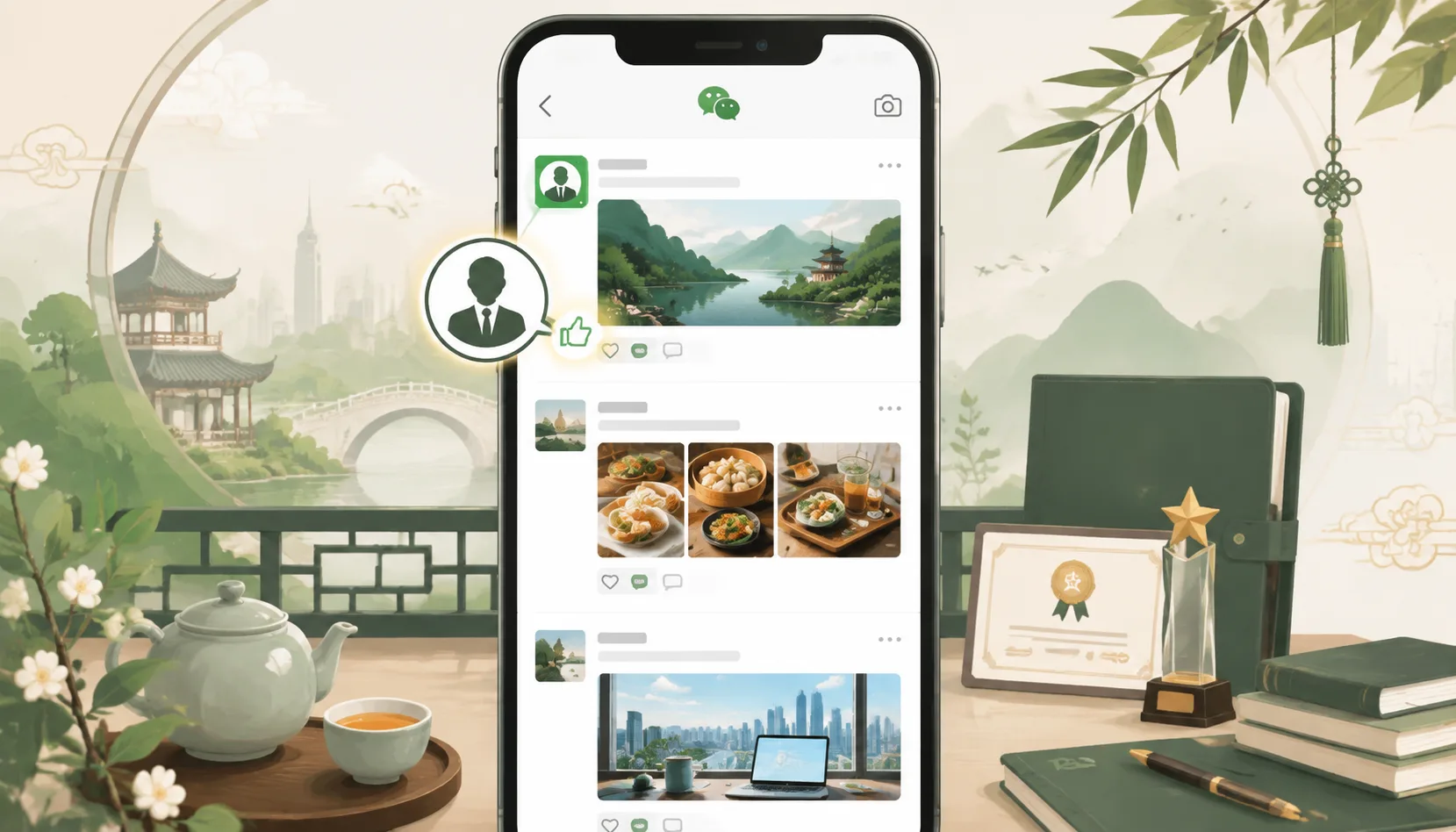
WeChat Moments Etiquette: What Foreigners Should Know
WeChat Moments (朋友圈) is more like a professional-personal hybrid than a pure social feed — your boss, clients, and family all see the same posts. Post 1-3 times…
Read the guide →
How to Revive a Dormant Relationship in China: Practical Guanxi Recovery Guide
In China, guanxi never truly dies—it just hibernates. To revive it, send a WeChat greeting tied to a shared memory or festival, then follow with a small gift li…
Read the guide →