What are the essential rules of Chinese tea etiquette that foreigners must know to avoid social faux pas?
Quick answer
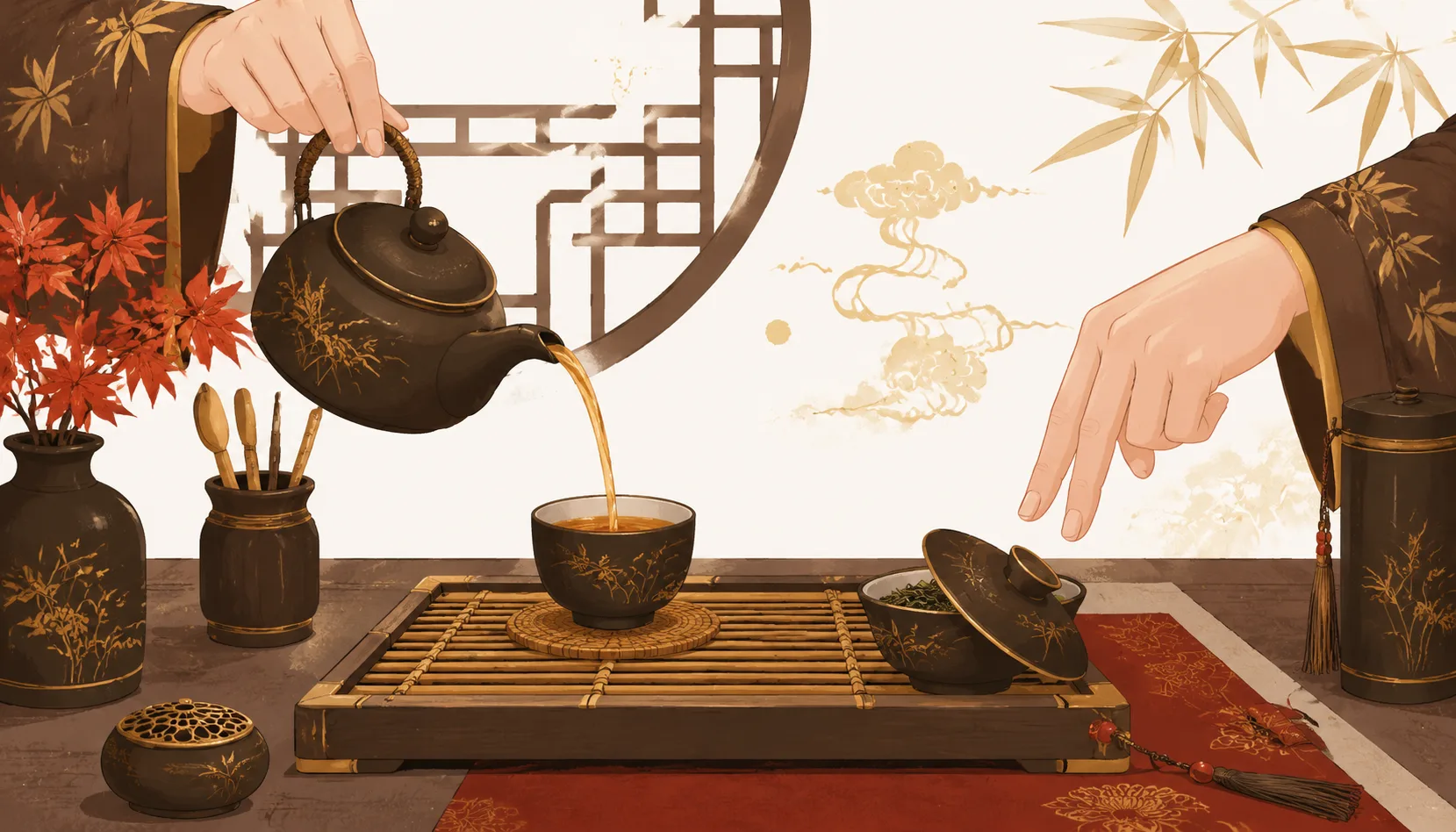
When someone pours your tea, tap the table with two fingers (index and middle) to say thanks. Always pour for others before yourself, and keep their cups filled. In business settings, tea is a sign of respect and negotiation, while baijiu is for toasting and celebration. To decline tea politely, say 'thank you' and gesture with an open palm over your cup.
The Two-Finger Knuckle Tap: A Silent 'Thank You'
When someone pours tea for you, especially an elder or a host, you should tap the table with your index and middle fingers (bent together) two or three times. This is a traditional gesture of gratitude that dates back to the Qing Dynasty. Legend says the emperor, traveling incognito, once poured tea for his servants, who couldn't kneel to thank him without revealing his identity. Instead, they tapped their fingers to symbolize bowing.
Today, the tap is a quick, light knock on the table near your cup. It's especially important when the pourer is of higher status or older. If you're sitting at a formal dinner, use your right hand. Don't overdo it—a couple of taps suffice. This small gesture shows you understand Chinese customs and will be greatly appreciated.
If you are the one pouring, watch for the tap. If someone taps, acknowledge with a slight nod. If they don't tap, it's not a big deal—many younger Chinese are less strict, but it's still polite to do it yourself.
Pouring for Others Before Yourself: The Golden Rule
In Chinese tea culture, the host traditionally pours tea for guests, and the guest usually waits rather than pouring for themselves. When you are at a gathering, always fill others' cups before your own. This applies to any beverage, but especially tea. The order matters: pour for the eldest or most senior person first, then the rest, and finally yourself. If you are the host, you should personally pour for each guest, starting with the most honored.
When pouring, hold the teapot with your right hand and lightly support the lid with your left hand. Fill the cup to about 70-80% full—never to the brim, as that would be like pouring hot oil in Chinese saying. A full cup signals disrespect or a desire to end the conversation.
If you are a guest and the host pours for you, you should not pour for yourself unless the host insists. If you need more tea, simply place your cup near the edge of the table or ask politely, 'Can I have more tea, please?' (Qǐng wèn, néng zài jiā yīdiǎn chá ma?).
What Different Teas Signal at Different Occasions
Tea is not just a drink in China—it carries social meaning. Here are common teas and their signals:
- Green tea (lǜchá) – The most common everyday tea. Served casually at home or in offices. It signals friendliness and welcome.
- Oolong tea (wūlóng) – Often served at business meetings or formal gatherings. Its complex flavor suggests respect and a desire for serious discussion.
- Pu'er tea (pǔ'ěr) – A fermented tea that is aged. Serving pu'er is a high honor, often reserved for distinguished guests or important negotiations. It implies trust and long-term relationship.
- Jasmine tea (mòlìhuā chá) – Floral and light, often served to welcome visitors in southern China, like Fujian. It conveys warmth and hospitality.
- Chrysanthemum tea (júhuā chá) – Herbal, served in hot weather or after a heavy meal. It signals care for the guest's health.
If you are offered a specific tea, it's a clue about the occasion's formality. At a business dinner, if the host serves pu'er, they are likely serious about a deal. If they serve green tea casually, it's more of a social meeting.
Tea vs. Baijiu at Business Dinners: Know the Difference
At Chinese business dinners, both tea and baijiu (a strong grain liquor) play roles, but they are used differently. Tea is the constant companion—it's served throughout the meal, signaling politeness and a calm atmosphere. When you first sit down, the host will pour tea for everyone. This is a moment to relax and build rapport. Drinking tea is also a way to pace yourself during toasts.
Baijiu, on the other hand, is for toasts and celebration. It's a high-proof liquor (typically 40-60% alcohol) and is often drunk in small glasses. Toasting with baijiu is a sign of respect and camaraderie. The key difference: tea is for conversation and negotiation, while baijiu is for sealing deals and showing loyalty.
If you don't drink alcohol, you can politely decline baijiu and stick to tea. Say, 'Wǒ bù hē jiǔ, dàn wǒ yǐ chá dài jiǔ' (I don't drink alcohol, but I'll toast with tea). This is acceptable, especially if you explain health reasons. However, be aware that in some high-stakes business settings, refusing baijiu might be seen as a lack of commitment. In that case, you can take a small sip and let the host know you're not a drinker.
How to Accept or Decline Tea Politely
Accepting tea is easy: just let the host pour and give a knuckle tap. But if you don't want more tea, you need to signal clearly without offending. The polite way to decline is to place your hand over the cup (palm down) or gently tap the rim with your fingers. You can also say, 'Xièxiè, wǒ yǒu le' (Thank you, I have enough). If you want to stop being served, simply leave your cup full or turn it upside down—but only at informal settings.
When the host insists on pouring, it's often polite to accept a little even if you don't want it, to show respect. You can take a small sip and leave the rest. If you really must decline, use a warm tone and a smile: 'Zhēn de bù yòng le, xièxiè' (Really, no need, thank you).
At a tea ceremony, declining is more formal. You might bow slightly and say 'Bù hǎo yìsi, wǒ bù hē chá' (Sorry, I don't drink tea). But it's rare to decline at a ceremony—better to accept and sip slowly.
Basic Tea Ceremony Awareness: What to Expect
If you're invited to a formal tea ceremony (gōngfu chá), it's a sign of deep respect. Here's what to expect:
- Setting: A low table with a tea tray, small clay teapot, and tiny cups. The host performs the ceremony with precise movements.
- Rituals: The host will rinse the cups and teapot with hot water, then place tea leaves in the pot. The first steep is often poured away (to 'clean' the leaves). The second steep is served.
- Your role: Sit upright, watch the host, and when you receive a cup, hold it with both hands (or one hand supporting the bottom). Smell the aroma, then take small sips. You can compliment the tea: 'Hǎo chá' (Good tea).
- Duration: A ceremony can last 30 minutes to an hour. Don't rush; it's about mindfulness.
You don't need to know all the steps, but showing appreciation and patience is key. Never gulp the tea, and never ask for sugar or milk—that's considered ruining the tea's purity. If you're unsure, just follow the host's lead.
Common Mistakes to Avoid as a Foreigner
Here are practical pitfalls to sidestep:
- Pouring for yourself first: Always pour for others before yourself. Even if you're thirsty, wait.
- Filling the cup to the brim: Leave room—70-80% full is perfect.
- Ignoring the knuckle tap: If someone pours for you, tap. It's a small but powerful sign of respect.
- Using the wrong hand: In formal settings, use your right hand for pouring and holding the cup. Left hand can support the bottom.
- Adding milk or sugar: In traditional Chinese tea, these are not used. If you need them, it's better to politely decline the tea and ask for water.
- Drinking too fast: Tea is meant to be savored. Sip slowly and engage in conversation.
- Refusing tea too abruptly: Always soften your refusal with a smile and a polite phrase.
By following these guidelines, you'll show that you respect Chinese customs, which goes a long way in building trust and friendship.
What Chinese People Actually Say
- 叩指礼 | kòu zhǐ lǐ | knuckle tap gesture | Tap 2-3 fingers on the table to show gratitude when tea is poured for you
- 茶七饭八酒十分 | chá qī fàn bā jiǔ shí fēn | tea 70%, rice 80%, wine 100% | Pour tea only 70% full; a full cup suggests you're eager to leave
- 双手奉茶 | shuāng shǒu fèng chá | offering tea with both hands | Use both hands when serving tea to elders or business partners as a sign of respect
2026 Reality Check
Knuckle Tap (叩指礼): Still widely practiced in formal business dinners and with older generations. Gen Z mostly does it as a joke or doesn't know it—many think it's just "weird hand movements." Urban millennials use it selectively with elders or clients.
Pouring Rules: Tea etiquette persists in restaurants and family gatherings. Younger people in Beijing/Shanghai often ignore it completely, preferring to pour for themselves. Smaller cities and rural areas still observe the "never fill your own cup" rule more strictly.
Business Signals: Still a real thing in formal meetings—pouring tea for a client signals respect. However, many young professionals in major cities now see it as performative. In smaller cities and state-owned enterprises, it's considered essential and expected.
Verdict: The etiquette is fading fast among Gen Z in major cities but remains alive in business contexts and smaller cities. It's becoming a "respect signal" rather than a universal custom.
Frequently asked questions
Why do Chinese people tap the table with two fingers when tea is poured?
The two-finger tap is a silent 'thank you' rooted in a Qing Dynasty legend. When the emperor poured tea for his servants, they couldn't kneel to bow, so they bent two fingers to mimic kneeling. Today, use your index and middle fingers (or a fist for elders) to tap the table twice or three times when someone refills your cup.
What is the correct order for pouring tea at a Chinese business meeting?
Always pour for the most senior or oldest person first, then work down by rank or age. Pour for others before yourself, and never let anyone's cup sit empty. If you're the host, pour for all guests first; if you're a guest, offer to pour for the host and others as a sign of respect.
Can I decline tea without causing offense in China?
Yes, but do it politely. When someone offers to pour, place your open palm over your cup or gently wave your hand and say 'xièxiè, bú yòng' (thank you, no need). This signals you're not thirsty, not rejecting the person. Avoid covering the cup with your hand in a fist, which can seem aggressive.
Is it rude to drink tea before the host takes the first sip?
In formal settings, wait for the host to lift their cup first, then follow. In casual situations, this rule relaxes, but it's safer to observe. If you're the guest of honor, the host may explicitly invite you to drink first—acknowledge with a nod or a small tap of your cup on the table.
How is tea different from baijiu at a Chinese business dinner?
Tea is for building rapport, showing respect, and negotiating—it's the calm, continuous beverage. Baijiu is for toasts, celebrations, and sealing deals with emotion. If you're offered tea, it's a sign the host values conversation; if baijiu comes out, expect toasts and a more raucous atmosphere. Never mix the two rituals.
What should I do if I'm the one pouring tea for others?
Hold the teapot with your right hand and lightly support the lid with your left. Pour for others first, filling their cups to about 70-80% full—never to the brim, as that's a sign of disrespect. After pouring, set the pot down with the spout pointing away from anyone, and finish by pouring for yourself last.
Try our tools
Related guides
Chopstick Rules in China: What to Do and What to Avoid
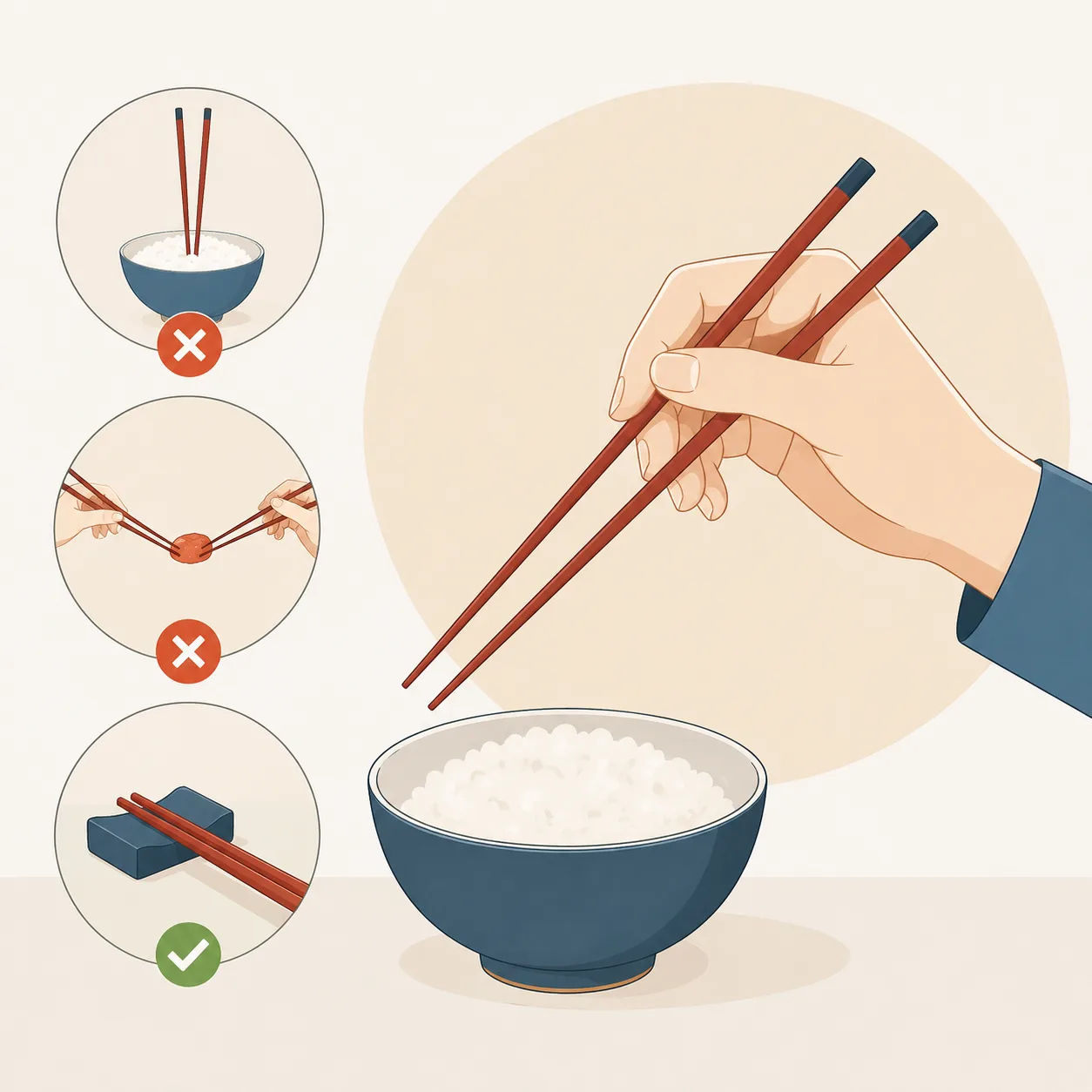
The three biggest chopstick taboos in China: never stand them upright in a bowl of rice, never tap your bowl with them, and never dig through shared dishes. Kee…
Read the guide →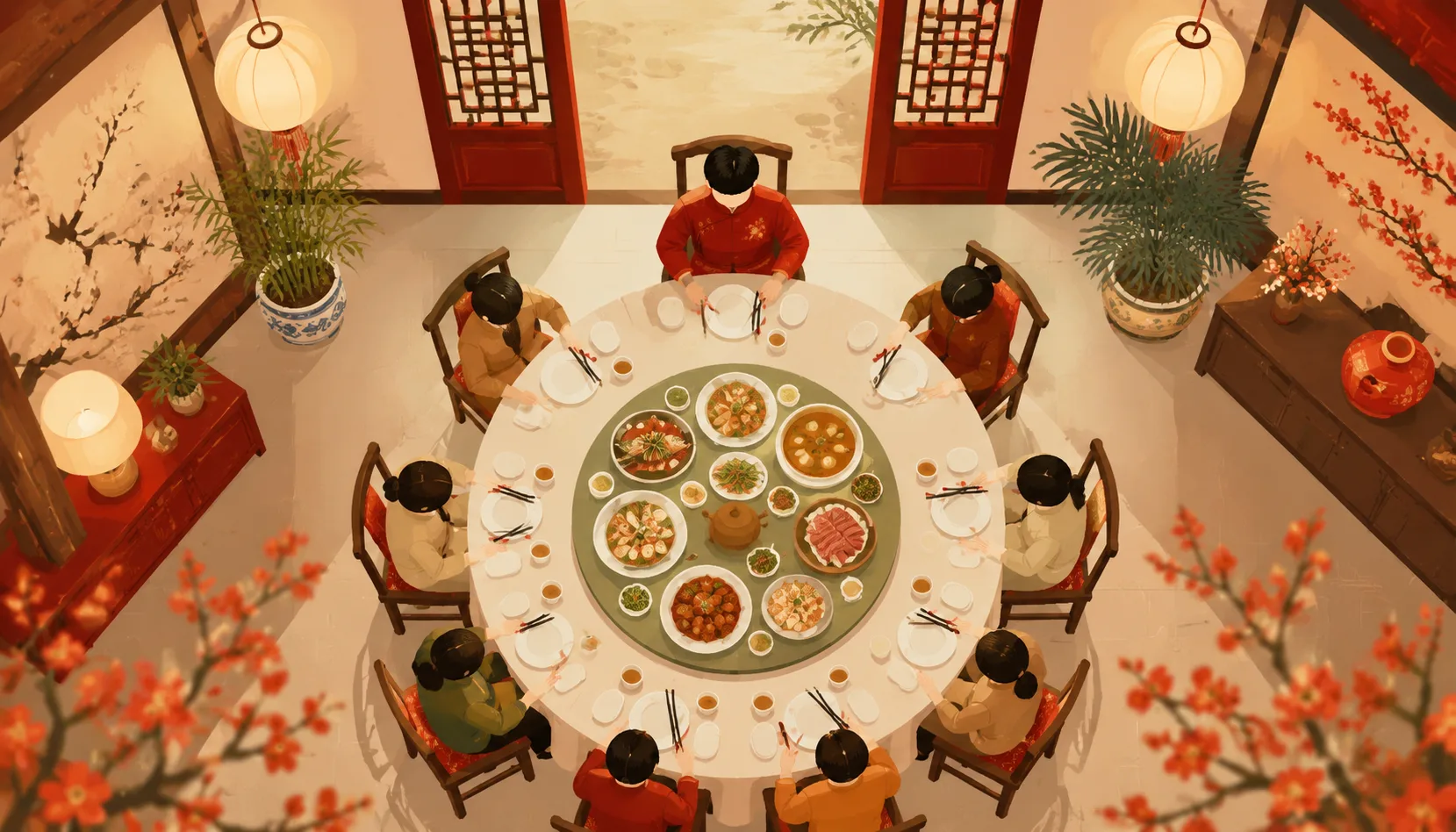
Ordering Food at a Chinese Restaurant: The Unwritten Rules
Chinese restaurant culture has specific rules foreigners often miss: seating is hierarchical (best seat faces the door), the host or senior person typically ord…
Read the guide →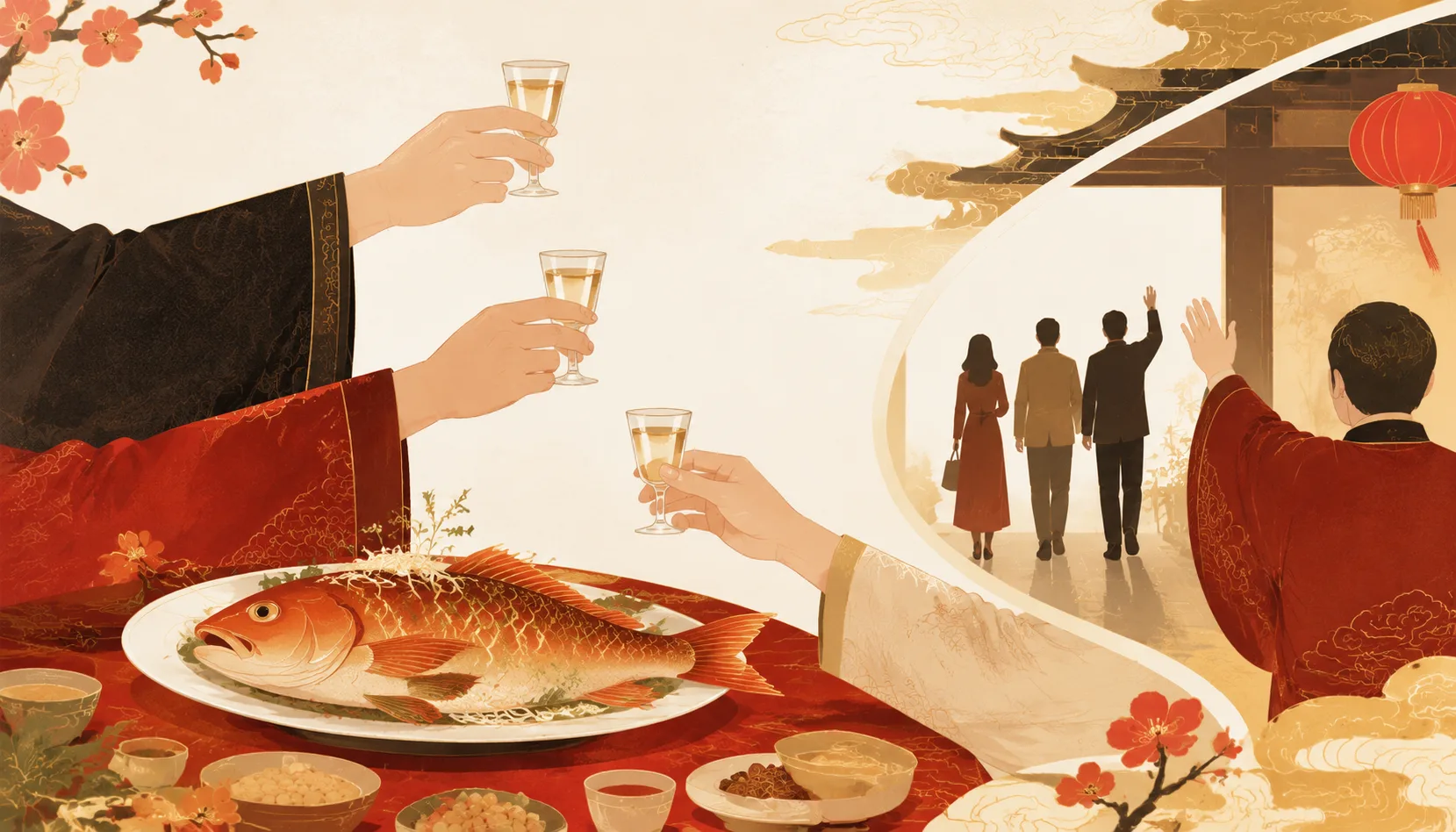
Chinese Restaurant Dining Etiquette: During and After
During a Chinese meal: wait for the host to signal the start, toast with the host before drinking, serve others before yourself, and never leave without a prope…
Read the guide →