What are the rules for ordering and seating at a Chinese restaurant that foreigners usually get wrong?
Quick answer
Chinese restaurant culture has specific rules foreigners often miss: seating is hierarchical (best seat faces the door), the host or senior person typically orders for the group, dishes are shared not individual, the number and variety of dishes is a hospitality signal, and splitting the bill at a hosted meal is considered offensive.
Before You Sit Down: Entry and Seating
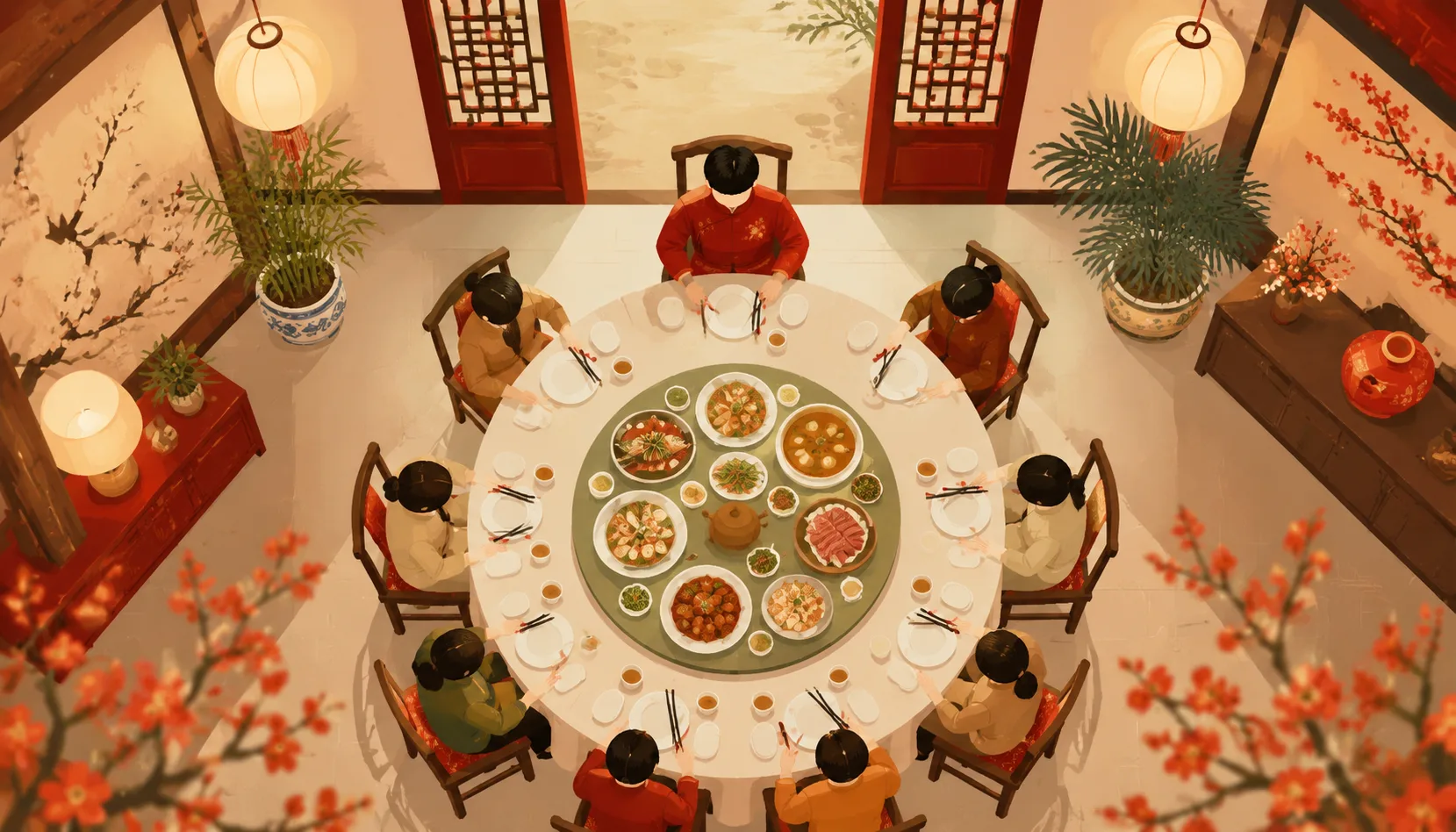
Walking into a Chinese restaurant and sitting wherever you like is the first mistake. Seating at a Chinese restaurant — especially at a round table for a group meal — follows hierarchy.
The seat of honor faces the entrance or the most prominent part of the room. This seat is for the guest of honor, the most senior person, or the host's most important attendee. Do not sit there unless directed.
Private rooms (包厢, bāoxiāng): Many Chinese restaurants have enclosed private dining rooms, popular for business meals, family gatherings, and any occasion requiring privacy. If your host has booked a private room, it signals the meal is significant. Private rooms usually have a minimum spend. Inside, the same seating hierarchy applies — the seat facing the door is the guest position.
Arriving before your host: If you arrive first, do not sit. Wait near the entrance or at the table — standing — until your host arrives to direct seating. Sitting down first and claiming a seat can inadvertently put you in the wrong position.
Who Orders, and How Much to Order
At a hosted Chinese meal, the host orders — not the guests. This is not an oversight. The host selects dishes based on their knowledge of the guests' preferences, what the restaurant does well, and the social message they want to send through the meal's quality and variety.
As a guest, you may be asked for your preferences or allergies — share these, but do not take over the ordering unless specifically asked.
How many dishes to order: The guideline is one dish per person, plus one extra. A table of six should have approximately seven dishes. Ordering fewer feels stingy. Ordering the exact minimum signals calculation rather than generosity. At business meals or formal occasions, the calculation leans toward more.
Dish variety logic: A well-ordered Chinese meal balances:
• Cold and hot dishes
• Light and rich dishes
• Meat, seafood, and vegetables
• One or two prestige items ("硬菜" hàng cài — the showstopper dishes, like a whole fish or expensive seafood)
If the menu is Chinese only: Ask your host to recommend their favorites. A simple "我不太懂,你推荐吧" (wǒ bù tài dǒng, nǐ tuījiàn ba — I'm not familiar, please recommend) is appropriate and actually welcomed.
Navigating the Meal: Serving and Sharing
Chinese dining is communal — all dishes are placed at the center of the table (often on a rotating lazy Susan) and shared by everyone. There is no individual entrée.
Serving order: Serve elders and guests of honor before yourself. At a large group meal, the lazy Susan rotates to bring each dish around — pay attention to who is reaching for what and do not spin it while someone else is serving themselves.
Serving chopsticks: At formal meals, shared serving chopsticks may be provided for communal dishes. If they are there, use them rather than your personal chopsticks to take from shared plates. At casual family meals, this is less strictly observed.
Fish: The whole fish is a prestige dish. The cheek meat is considered the best part and is often offered to the most honored guest. The fish should not be flipped — instead, the bones are exposed by eating from the top side and the meat underneath is accessed by lifting with chopsticks. Flipping the fish is considered bad luck in coastal traditions.
Soup: Soup typically comes toward the end of the meal in most Chinese dining contexts — not at the beginning as in Western restaurants. Do not be surprised when it arrives late.
Who Pays — and How the Bill Works
At a Chinese hosted meal, the bill is settled by the host — not split between participants. If someone has invited you, they are paying. Reaching for the bill, arguing to split, or trying to calculate your share is considered offensive at a formal or hosted meal — it suggests the host has not fulfilled their role adequately, which is an embarrassing signal.
What to do instead: Thank the host genuinely and enthusiastically. The social understanding is that the obligation will be reciprocated — you will host them next time, or return the favor in another way.
The bill-grab ritual: At less formal gatherings among peers, there is often a theatrical argument over who pays — multiple hands reaching for the check. The person who invited or who is most senior typically wins. If you want to contribute, insist once warmly, accept defeat graciously, and reciprocate with the next meal.
Splitting among friends: Younger Chinese people — especially urban professionals — increasingly split bills via WeChat Pay and find this completely natural. The hosted meal rules apply to formal contexts, not every casual lunch with colleagues.
What Chinese People Actually Say
- 点菜 | diǎn cài | to order dishes | Use when you're ready to order: "服务员,点菜" (Waiter, we'd like to order)
- 买单 | mǎi dān | to request the bill | Say at end of meal: "买单,谢谢" (The bill, please)
- 招牌菜 | zhāo pái cài | signature dish | Ask waiter: "有什么招牌菜?" (What are your signature dishes?)
2026 Reality Check
Rule: Let the host order. Still strong in smaller cities and with older generations. Gen Z in Beijing/Shanghai often split bills and order together via apps—nobody cares who's "host."
Rule: Don't flip fish. Largely fading. Younger crowds in major cities see it as superstition. Older diners in provincial areas still observe it, especially at formal banquets.
Rule: Leave some food on the plate. Declining everywhere. Gen Z views it as wasteful. Older generations in smaller cities still consider it polite—empty plate implies the host didn't provide enough.
Rule: Wait for eldest to eat first. Weakening fast in urban areas. Gen Z starts eating immediately. In traditional households and smaller cities, this rule still carries weight.
Bottom line: Etiquette is relaxing in cosmopolitan areas and among young people. Traditional rules persist where older generations dominate or where cultural conservatism remains strong.
Frequently asked questions
How do I know which seat to take at a Chinese restaurant when I'm a guest?
Never sit down first. Wait for the host to direct you. The seat facing the door is the 'seat of honor' and is reserved for the oldest or most senior guest. If you're the guest, you'll likely be guided there—accept it gracefully. The seat closest to the door is for the host or the person paying, so they can handle service and interruptions.
What should I do if I have a food allergy or dietary restriction at a Chinese restaurant?
Don't assume dishes are safe—many contain hidden pork, shrimp paste, or MSG. Tell your host clearly before ordering, and consider writing the allergy in Chinese on your phone to show the waiter. In a group setting, order one or two dishes specifically for yourself and let others share the rest. Avoid cross-contamination by using your own serving chopsticks.
Can I order my own individual dish instead of sharing family-style?
Technically yes, but it's culturally awkward. Chinese meals are built around shared dishes placed in the center. Ordering a personal dish signals you don't trust the group's choices. If you have a strong preference, quietly mention it to the host before they order. Most hosts will happily add a dish you like—that's seen as thoughtful, not rude.
Why does the number of dishes matter so much in Chinese restaurant dining?
The dish count is a direct reflection of the host's generosity and face. For a table of 4-6 people, expect at least 4-6 dishes, plus soup and rice. An even number of dishes is traditional for celebrations, but avoid 4 dishes total—the word 'four' sounds like 'death' in Chinese. If you're the host, ordering one or two extra dishes shows you're generous.
What's the proper way to handle the bill when I'm invited to a Chinese meal?
If you're the guest, do not offer to split the bill—it's seen as insulting to the host's hospitality. Simply say 'xièxiè' (thank you) and offer to host next time. If you're the host, it's customary to discreetly pay the bill before the meal ends, or grab it quickly when it arrives. Never argue publicly over the bill, but a brief, polite tug-of-war is expected among friends.
Is it rude to use the menu to order in a private room or at a fancy banquet?
At formal banquets, the host usually pre-orders the entire meal, and menus may not even be offered. If you're handed a menu, it's a sign you're being asked for input—but keep it modest. Don't pick the most expensive item. For a private room, the minimum spend often dictates the set menu, so don't be surprised if you have no choice. Just relax and enjoy the flow.
Try our tools
Related guides
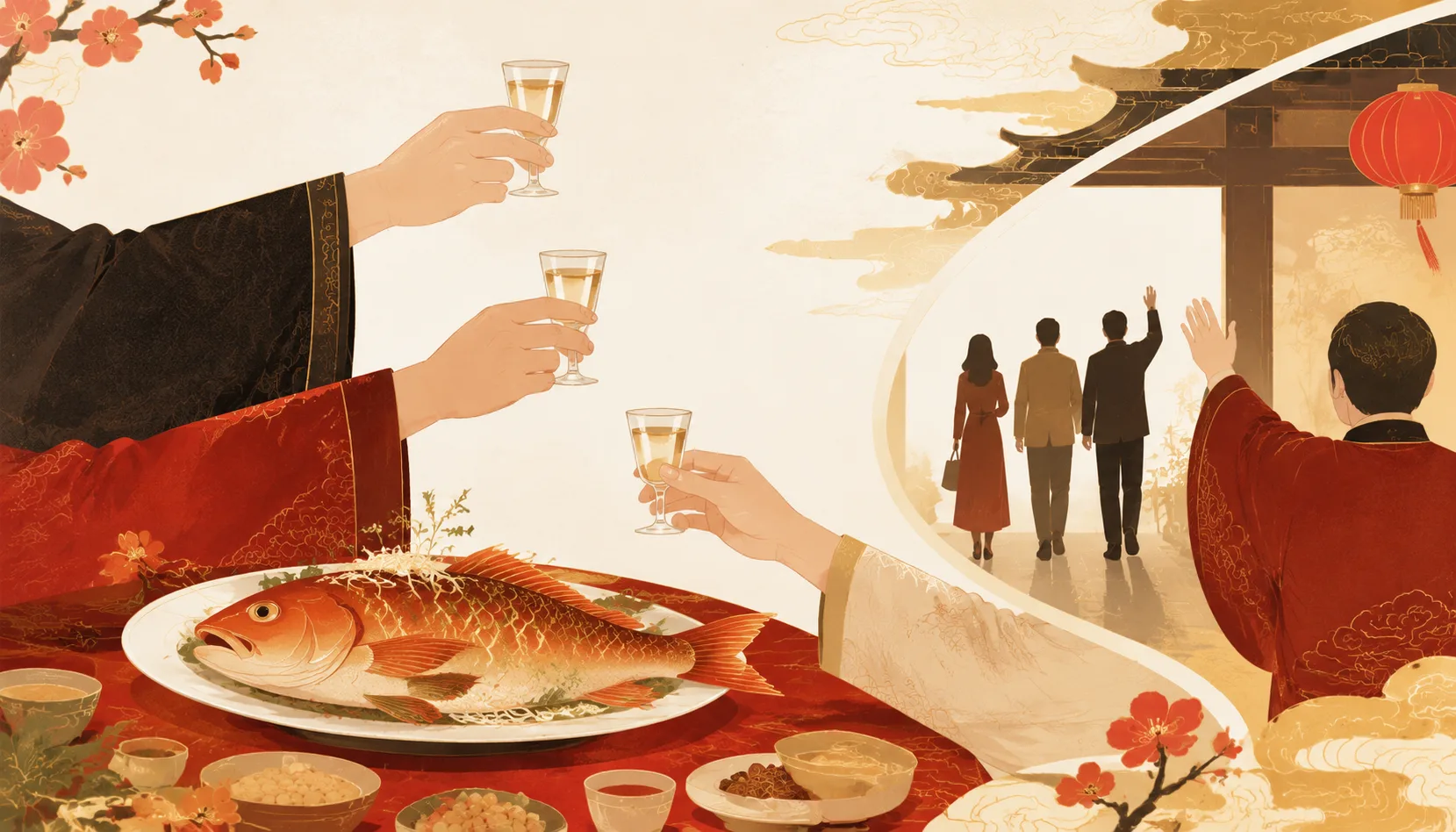
Chinese Restaurant Dining Etiquette: During the Meal and Beyond
During a Chinese meal: wait for the host to signal the start, toast with the host before drinking, serve others before yourself, and never leave without a prope…
Read the guide →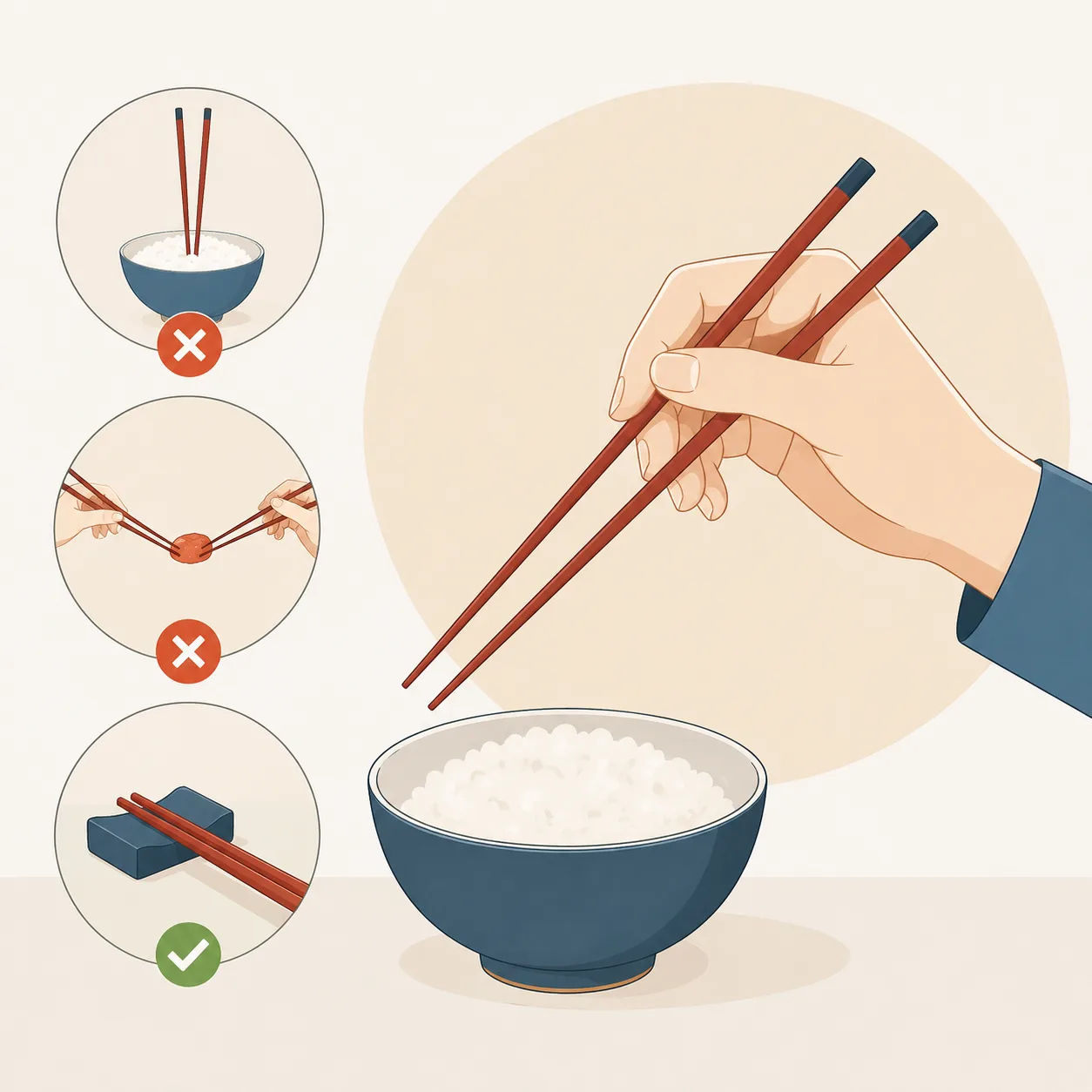
Chopstick Rules in China: What to Do and What to Avoid
The three biggest chopstick taboos in China: never stand them upright in a bowl of rice, never tap your bowl with them, and never dig through shared dishes. Kee…
Read the guide →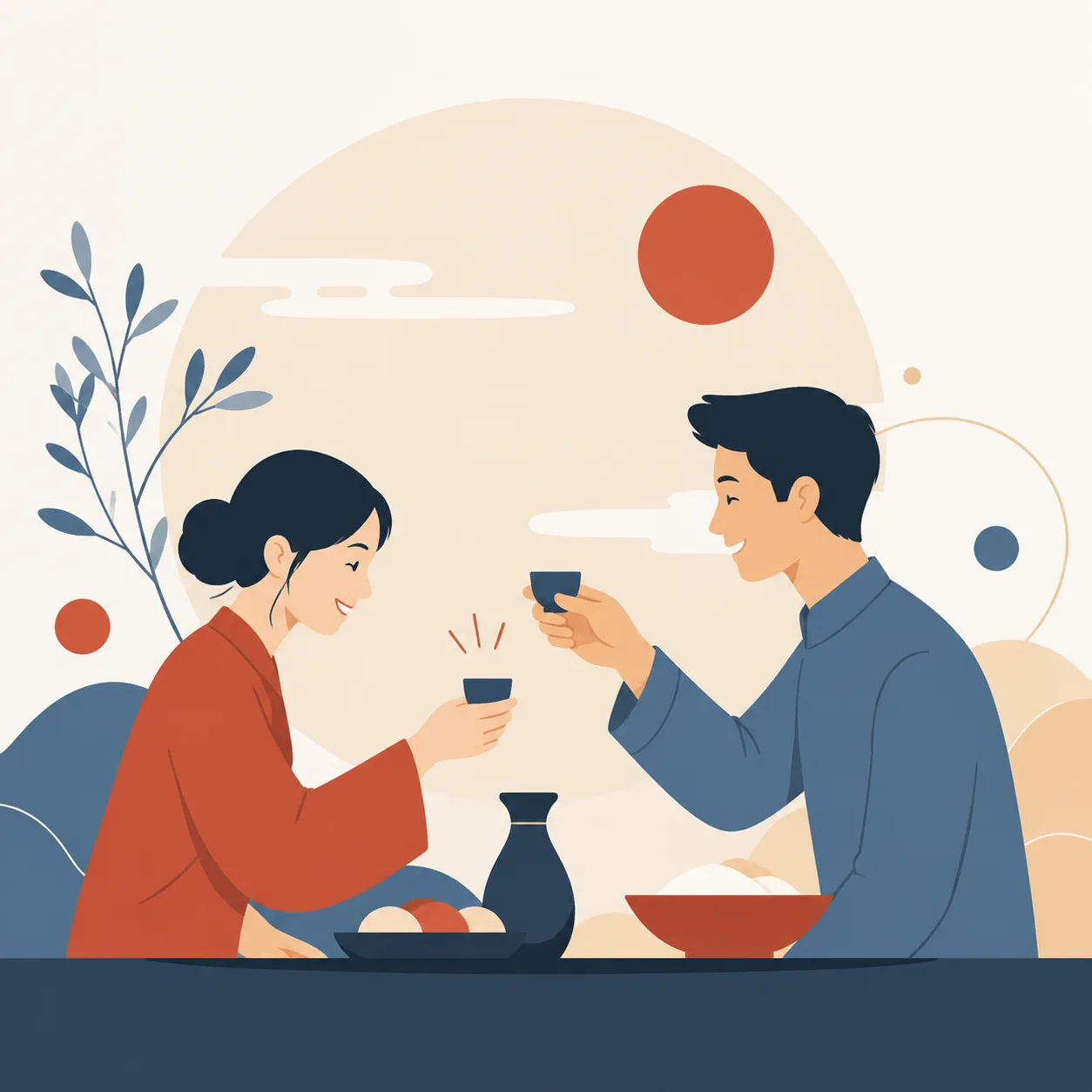
How Ganbei Works in China: Toasting Guide for Foreigners
Ganbei (干杯, gānbēi) means "empty the cup." When someone says it to you directly, finish your drink. When proposing a toast, always hold your cup lower than the …
Read the guide →