How Ganbei Works in China: Toasting Guide for Foreigners
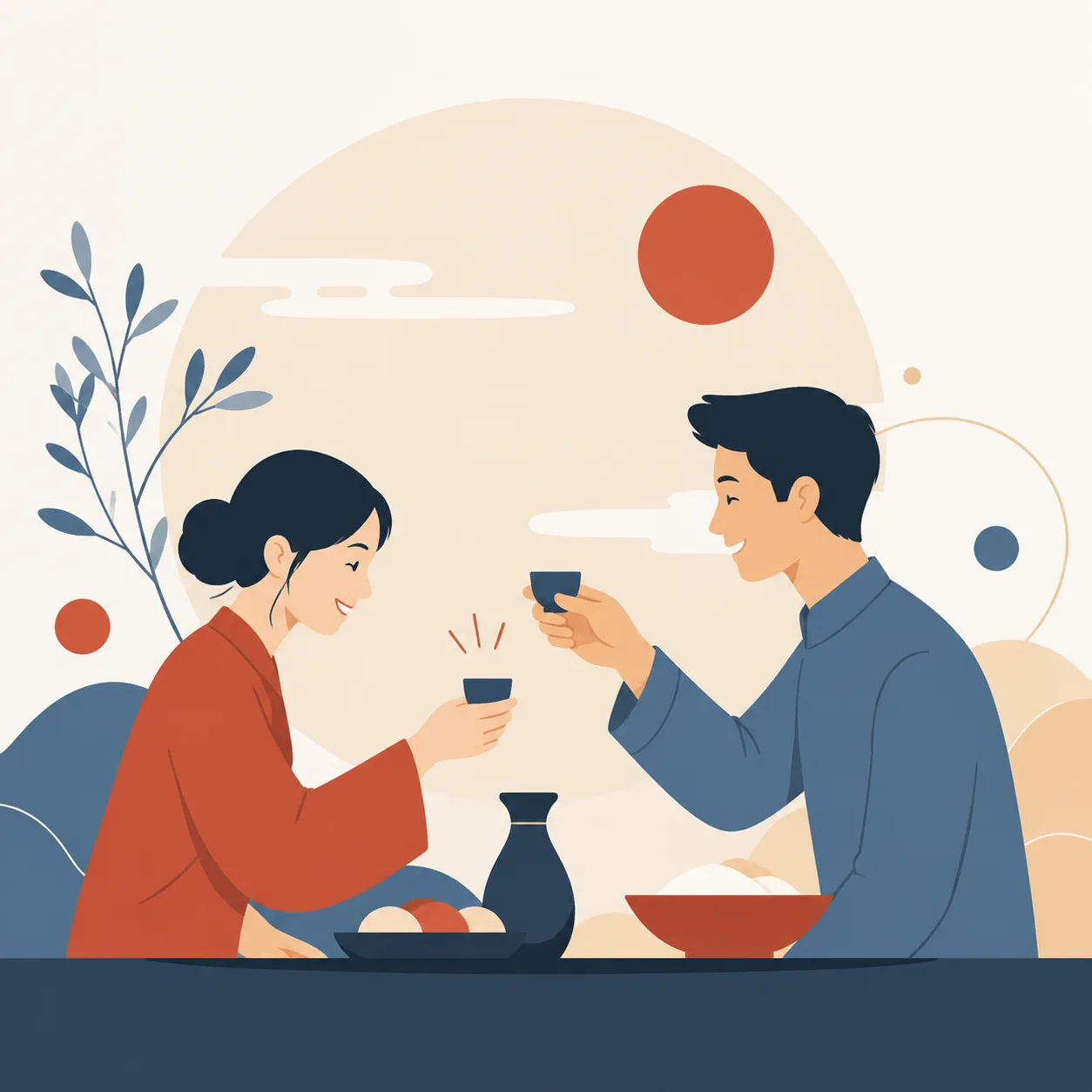
Quick answer
Ganbei (干杯, gānbēi) means "empty the cup." When someone says it to you directly, finish your drink. When proposing a toast, always hold your cup lower than the person you're toasting, say a few words of respect, and drink first to honor them. The sequence matters: wait for the host, follow seniority, and never jump the queue.
Quick Answer
Ganbei (干杯, gānbēi) means "empty the cup." When someone says it to you directly, finish your drink. When proposing a toast, always hold your cup lower than the person you're toasting, say a few words of respect, and drink first to honor them. The sequence matters: wait for the host, follow seniority, and never jump the queue.
DO
- Hold your cup visibly lower than the person you're toasting — the gap should be obvious
- Use both hands on the cup: right hand holding, left hand supporting the base
- Say something before clinking — even a simple "Thank you for having me" in English is appreciated
- Wait for the first three rounds (host leads), then you may initiate toasts
- When you can't finish the whole cup, at least take a substantial sip — not a token sip
- Learn the phrase "我干了,您随意" (wǒ gān le, nín suíyì) — "I'll finish mine, you drink freely" — use it when toasting a senior
- Make eye contact when clinking glasses
- Clink your glass lower — if you both lower at the same time, one of you must stop first
DON'T
- Don't hold your cup higher than the person you're toasting — this says "I outrank you"
- Don't initiate a toast before the host has done the first round
- Don't clink just the rim of the glass — make solid contact
- Don't say ganbei and then take a tiny sip — it's an insult to the toast
- Don't propose a toast to the whole table before the host does (first three rounds belong to the host)
- Don't stay seated when someone proposes a table-wide toast — stand up
- Don't rush to drain your cup before others finish clinking
WHY Cup Height Matters
The height of your cup is one of the most visible status signals at a Chinese table. When you lower your cup below someone else's, you're performing a small act of submission and respect — the same logic as a slight bow. The person whose cup is higher has been visually acknowledged as superior in this moment.
This is so deeply embedded that people sometimes get into unspoken competitions trying to lower their cup further, chasing each other's cup down toward the table surface. It's almost comedic — but it means both parties are trying to show respect to the other. If you're the guest, you should win this race and keep your cup lowest.
The rule has a practical asymmetry: if you are the host or the most senior person, don't lower your cup too much — it makes your guests feel awkward because they can't go lower than you. A host who holds their cup at mid-chest height is giving their guests room to show proper respect.
The Toast Sequence at a Chinese Banquet
Understanding the order prevents embarrassing moments:
Round 1: Host stands, proposes a toast to the entire table. Everyone stands and drinks together. This is the official start.
Round 2: Host toasts the most important guest individually (one-on-one ganbei).
Round 3: Host toasts the second most important guest, and so on.
Round 4: The most important guest returns the toast to the host.
Round 5+: Other guests begin one-on-one toasts, generally moving from senior to junior. Juniors may toast seniors at any point.
Free round: Once the formal rounds are done, anyone can toast anyone. This is when you should toast the people you want to connect with.
Key rule: Never toast someone significantly more senior than you before they've initiated with you. Wait for them to toast you first, then you may return the toast.
What to Say When Toasting
You don't need to memorize Chinese toasting speeches. The effort matters more than the vocabulary. Here are templates ranked by relationship:
Business (client or senior colleague):
- "Thank you for making time for this dinner. I'm grateful for the opportunity to work together."
- Chinese equivalent: "感谢您的款待,希望我们合作顺利!" (Gǎnxiè nín de kuǎndài, xīwàng wǒmen hézuò shùnlì!)
Friend or peer:
- "To good friends and good times. Ganbei!"
- Chinese: "好久不见,感情深厚,干杯!"
Host (thanking them for the meal):
- "This has been a wonderful evening. Thank you for everything."
- Chinese: "今天太开心了,感谢您的盛情款待!"
The magic phrase (toast a senior): "我干了,您随意" (Wǒ gān le, nín suíyì)
- Meaning: "I'll finish mine, you drink as much as you like."
- Effect: You sacrifice your own drinking capacity to give the senior person freedom. This is the most face-giving toast formula you can use toward a superior.
Ganbei vs. Suíyì — Know the Difference
| Phrase | Meaning | When used |
|---|---|---|
| 干杯 (Gānbēi) | Bottoms up — finish the cup | Full commitment toast, peer to peer |
| 随意 (Suíyì) | As you please | Giving the other person freedom — used when toasting upward |
| 半杯 (Bànbēi) | Half cup | A mercy option — offered when you want to let someone off easy |
| 抿一口 (Mǐn yī kǒu) | Just a sip | Allowed in relaxed settings, less formal |
When someone says "我干了,您随意" to you, you're not obligated to finish your cup. But taking at least half shows appreciation for their gesture.
Real-Life Examples
- A foreign engineer in Shenzhen was at his first business dinner. When the first toast came, he clinked glasses with his cup clearly higher than the host's. The host didn't say anything, but after dinner his Chinese colleague quietly told him: "Your cup should go lower than theirs — always." He never made that mistake again.
- At a Shandong business banquet, a visiting American executive was asked to propose a toast mid-dinner. He stood, raised his glass, and said in halting Chinese: "Wǒ gān le, nín suíyì!" — then downed his baijiu. The table erupted in applause. His Chinese counterpart later said it was the best impression a foreign guest had ever made.
- A French woman working in Chengdu learned that saying "I don't do ganbei" every time she was toasted was slowly isolating her from her team. A colleague suggested she try the two-finger tap and raise her cup for every toast, even if she only sipped. Within two weeks, team dinners felt different — she was included, not observed.
FAQ
Q: What if I can't finish the whole cup? A: Take a substantial sip — at least half. Then quietly say "我今天不太能喝" (I can't drink much today). If you've already declared before the meal that you can't drink, raising your cup and taking a symbolic sip is completely accepted.
Q: Can I toast someone more senior than me first? A: Yes, but timing matters. Wait until after the host has finished the formal opening rounds. Then you can propose a toast to seniors — just use the "我干了,您随意" formula, which signals you're honoring them, not competing with them.
Q: Is it okay to toast with tea or water? A: Yes. Say "以茶代酒" (yǐ chá dài jiǔ) — "I'm substituting tea for wine." This is a recognized, graceful way to participate without alcohol. Do it from the start, not after you've already been drinking, or it looks like a selective escape.
Q: Someone proposed a toast to the whole table. Do I have to stand? A: Yes, stand up. Staying seated when everyone else rises is visibly rude. If you're physically unable to stand, a slight incline forward and raising your cup is acceptable.
Q: What if I accidentally toast out of order? A: Don't panic. If you accidentally toast someone before a more senior person, acknowledge it with a quick "Sorry, let me also toast [senior person] properly" and immediately do a respectful toast to the senior. Awareness and adjustment are always appreciated.
What Chinese People Actually Say
- 干杯 | gān bēi | "Cheers!" (literally "dry glass") | Say when raising glasses to toast; both parties drink completely.
- 我敬你 | wǒ jìng nǐ | "I toast you" (show respect) | Use when honoring a senior or important person; follow by drinking first.
- 感情深,一口闷 | gǎn qíng shēn, yī kǒu mèn | "If our feelings are deep, drain the glass in one gulp" | Said to encourage finishing the entire drink as a sign of sincerity.
2026 Reality Check
2026 Reality Check: Ganbei culture is fading but far from dead. It's now optional in most urban professional settings, especially among younger Chinese.
Gen Z vs. Older Generations: Young professionals (25-35) treat ganbei as a social nicety, not a mandate. Many skip the full glass or toast silently. Boomers and business elders still expect it—refusing can still damage relationships in formal dinners.
Beijing/Shanghai vs. Smaller Cities: Tier-1 cities have embraced more relaxed drinking norms. Business meetings often include non-alcoholic options. In second/third-tier cities and rural areas, traditional ganbei expectations remain stronger—refusing can still be seen as disrespectful.
Bottom line: It's now acceptable to decline in urban China, but reading the room still matters. Don't assume it's dead, but don't assume it's mandatory either.
Reading the room gets easier once you know the deeper etiquette behind the glass, from cup height to round order—the Chinese drinking and toasting etiquette guide fills in those unwritten moves.
Frequently asked questions
What should I do if I can't finish my drink when someone says ganbei to me?
You can explain politely that you have a low alcohol tolerance, or ask for a smaller pour. Saying 'wǒ bù néng hē' (I can't drink) with a smile usually works. Alternatively, sip slowly and let others toast each other first. Never fake drinking—it's noticed. In many cities, especially Shanghai, people accept a symbolic sip if you're clearly struggling.
Is it rude to toast someone before the host makes the first toast?
Yes, jumping the queue is considered disrespectful. The host opens the drinking session, usually after the first dishes arrive. Follow their lead, then toast in order of seniority or age. If you're unsure, wait until two or three toasts have happened, then join naturally. When in doubt, mirror what the most senior person at the table does.
Can I toast with water or tea instead of alcohol?
Technically yes, but it may raise eyebrows. In formal settings, substituting water can seem like you're rejecting the group's spirit. If you must, announce it upfront: 'I'm on medication, so I'll toast with tea.' In casual dinners, especially in southern China, tea is accepted. Just never toast with an empty glass—that's a serious insult.
What does it mean when someone taps the table with two fingers during a ganbei?
That's the 'finger kowtow'—a silent thank-you gesture, common in Guangdong and Hong Kong. When someone pours your drink, tap two fingers (index and middle) on the table twice to show gratitude without interrupting conversation. It's a subtle, respectful alternative to saying 'thank you' aloud, and it's appreciated but not mandatory for foreigners.
How do I handle a ganbei when I'm the most senior person at the table?
As the senior, you set the pace. You can toast first, but you're not obligated to empty your glass every time. When juniors toast you, you may sip while they finish theirs—that's your privilege. However, if you propose a ganbei to someone younger, you should drink fully to show respect. Moderation is key; over-drinking as a senior loses face.
Is there a difference between ganbei and just saying 'cheers' in China?
Yes, 'cheers' (or 'gānbēi' said casually) can mean a light clink and sip, especially among friends. A formal ganbei means empty your cup completely—no exceptions. In business dinners, the distinction matters: a casual cheers is fine for group moments, but a directed ganbei to a specific person demands full consumption. Watch the speaker's tone and eye contact to gauge seriousness.
Try our tools
Related guides
How to Extract Real Information at Chinese Business Dinners
Stay for the entire dinner—the last 45 minutes yield 90% of real information. Read the pre-dinner tea signal, decode drunk talk as leads (not conclusions), and …
Read the guide →
Chinese Business Dinner Exit: Farewell, Follow-Up & Recovery
The farewell is a final power play: let the most senior guest leave first, and never rush out — the host will walk you to the elevator or street, and that lobby…
Read the guide →
Hosting Chinese Business Visitors: Complete Etiquette Guide
Host Chinese visitors with senior-level attention: arrange airport pickup by an equally senior colleague, book a top-brand hotel, host a welcome dinner with Chi…
Read the guide →