Can I put food back in the communal dish after picking it up with my chopsticks?
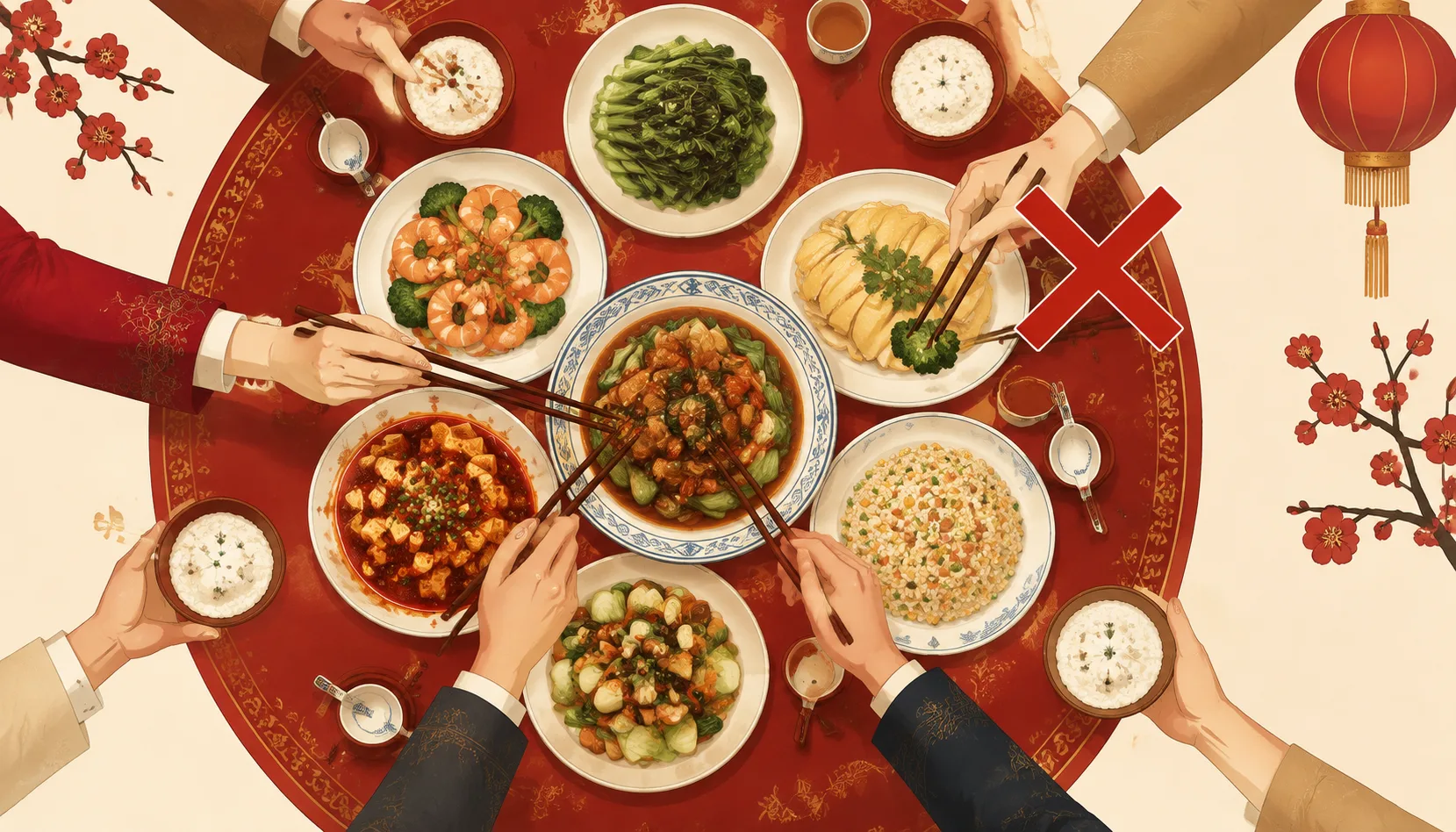
Quick answer
No. Once you pick up food with your chopsticks, it goes on your plate or in your mouth — never back into the shared dish.
Why This Rule Matters
This is called 'bàntú kuài' (半途筷, halfway chopsticks) and is considered highly unhygienic. Everyone at the table shares from the same dishes — returning food you've touched with saliva-coated chopsticks contaminates the entire dish. It also signals indecisiveness and bad manners.
What You Should Do
- Place unwanted food on your own plate or bowl
- Use serving chopsticks (公筷) if provided to avoid this situation
- Decide what you want before touching it with your chopsticks
What You Shouldn't Do
- Put food back into a shared dish after touching it
- Rummage through a shared dish with your chopsticks looking for the best piece
- Transfer food from your plate back to the communal dish
Practical Tips for Foreigners
This rule still matters in many formal and family settings across China. When in doubt, watch what your Chinese host or senior colleague does and follow their lead. Breaking this rule once is forgivable — breaking it repeatedly signals a lack of cultural awareness.
Why It's Not Just About Hygiene
<a href="/holidays/minor-chinese-holidays-guide/">Foreigners often</a> assume the rule is purely about germs. It's not — it's about face (miànzi). Returning food signals you rejected it, insulting the host's generosity. In <a href="/business/chinese-dinner-information-gathering/">business dinners</a>, this can cost you a deal. Your host thinks: 'Is my food not good enough for him?' but says nothing. The silence after your chopsticks hover back to the dish is the room's quiet verdict.
Regional Differences You'll Encounter
In Shanghai and Beijing's younger corporate crowd, rules have loosened — colleagues may laugh it off if you slip. But in Guangdong, especially among older Cantonese families, or in Fujian's tea-culture circles, the rule is ironclad. In Chengdu's hotpot scene, communal dipping is common, but returning food is still taboo. When in doubt, watch your host's chopstick habits and mirror them.
Real Scenarios Foreigners Face
- A British expat in Shanghai picked up a slippery mushroom, dropped it, then grabbed it again and put it back — the table went quiet until the hostess quietly moved the dish away.
- An American in Guangzhou, at a family dinner, returned a piece of pork she found too fatty. The grandmother frowned but said nothing; later the host told her privately it was a sign of disrespect.
- In Beijing, a German manager at a business lunch used his own chopsticks to serve food to a client's plate. His Chinese counterpart smiled but never invited him back — the gesture was read as overstepping hierarchy.
If You Already Made the Mistake
Don't panic. Apologize lightly with 'duìbuqǐ, wǒ méi zhùyì' (sorry, I didn't notice) and move on. Over-apologizing draws more attention. In most cities, one slip is forgiven — repeated mistakes aren't. Learn from it, and next time use serving chopsticks or ask for a separate small plate if you're unsure about a dish.
What Chinese People Actually Say
- 夹起来的菜不放回去 | jiá qǐ lái de cài bù fàng huí qù | Don't put picked-up food back | Common etiquette phrase; emphasizes the completed action
- 不能再放回盘里 | bù néng zài fàng huí pán lǐ | Cannot put it back in the plate | Direct warning; emphasizes prohibition
- 放回去不礼貌 | fàng huí qù bù lǐ mào | Putting it back is impolite | Explains the social reason; useful for explaining to children
2026 Reality Check
2026 Reality Check: The rule still exists but enforcement has softened. Most Chinese still consider it polite, but strict adherence is fading.
Gen Z vs. Older Generations: Boomers and Gen X still wince if someone returns a dumpling. Millennials shrug. Many in Gen Z treat the rule more loosely in casual settings, though this still varies a lot by upbringing and region. They're more about "your germs, your choice."
Big Cities vs. Smaller Cities: Beijing and Shanghai diners are relaxed—international exposure and fast-paced dining make the rule feel dated. Smaller cities and family gatherings? Still matters, especially among elders. The pressure to conform is stronger where traditional norms hold sway.
Bottom line: It's now a "preferred" behavior, not a hard rule. Violate it and you might get a raised eyebrow, not a lecture. Etiquette evolves.
Frequently asked questions
What should I do if I accidentally pick up food I don't want from a shared dish?
Keep it on your own plate or bowl. Do not return it to the communal dish, as this is considered unhygienic and disrespectful to other diners.
Is it okay to use serving chopsticks to pick food for myself and then put it back?
No, even with serving chopsticks, once you've picked up food for yourself, it should go directly to your plate. Returning it to the shared dish is still not acceptable.
What if I pick up a piece of food and realize it's too large or I don't like it?
Place it on your own plate and leave it there. You can eat it later or leave it uneaten, but never put it back into the shared dish.
Are there any exceptions, like when dining with close friends or family?
Even with close friends or family, the same rule generally applies. It's best to follow this practice to avoid any awkwardness or hygiene concerns.
What is the proper way to take food from a shared dish?
Use the serving chopsticks or the opposite end of your own chopsticks to pick food directly onto your plate. Take only what you intend to eat in one go.
If I drop food from the shared dish onto the table, what should I do?
Leave it on the table or move it to a napkin or your own plate. Do not pick it up and put it back into the communal dish, as it may be contaminated.
Try our tools
Related guides
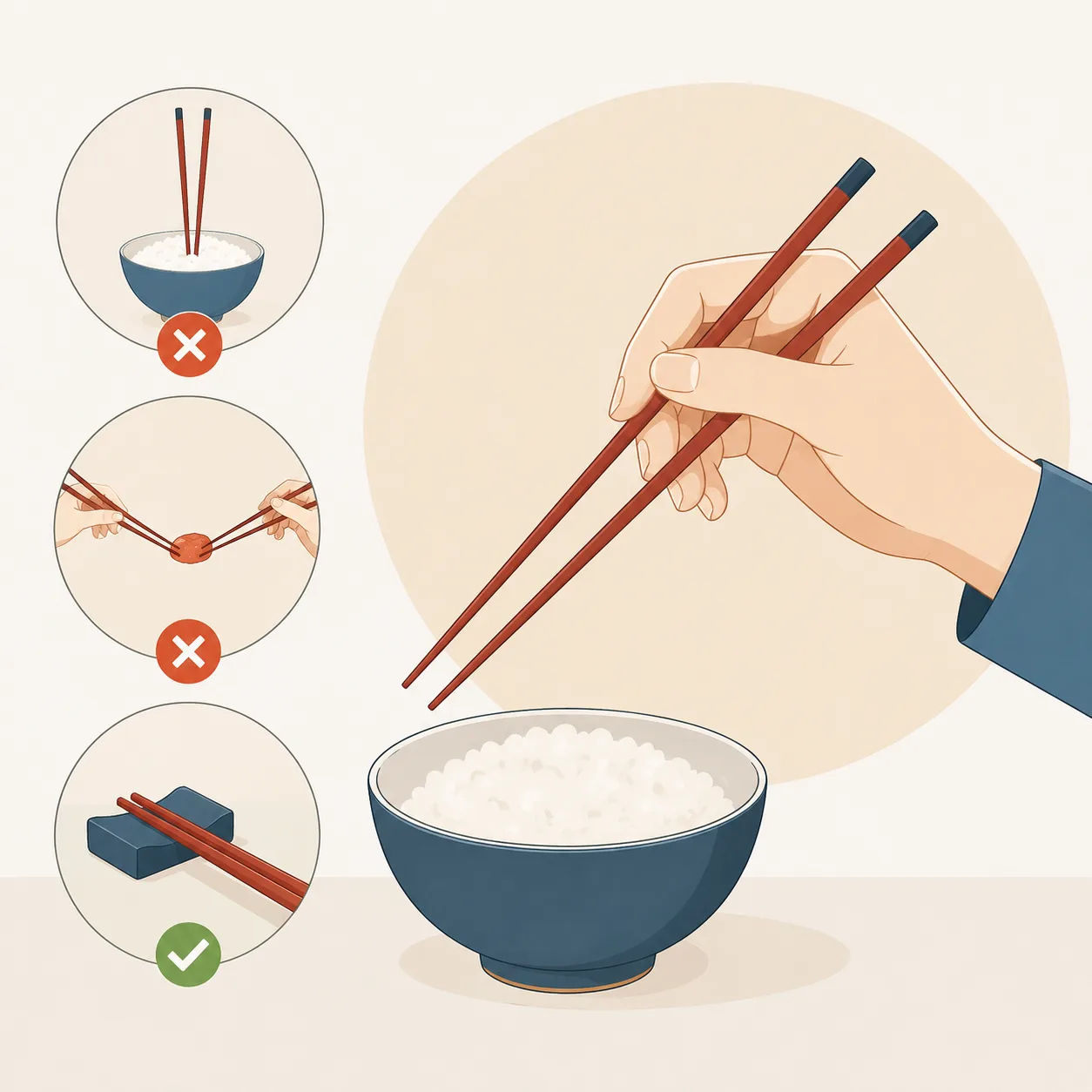
Chopstick Rules in China: What to Do and What to Avoid
The three biggest chopstick taboos in China: never stand them upright in a bowl of rice, never tap your bowl with them, and never dig through shared dishes. Kee…
Read the guide →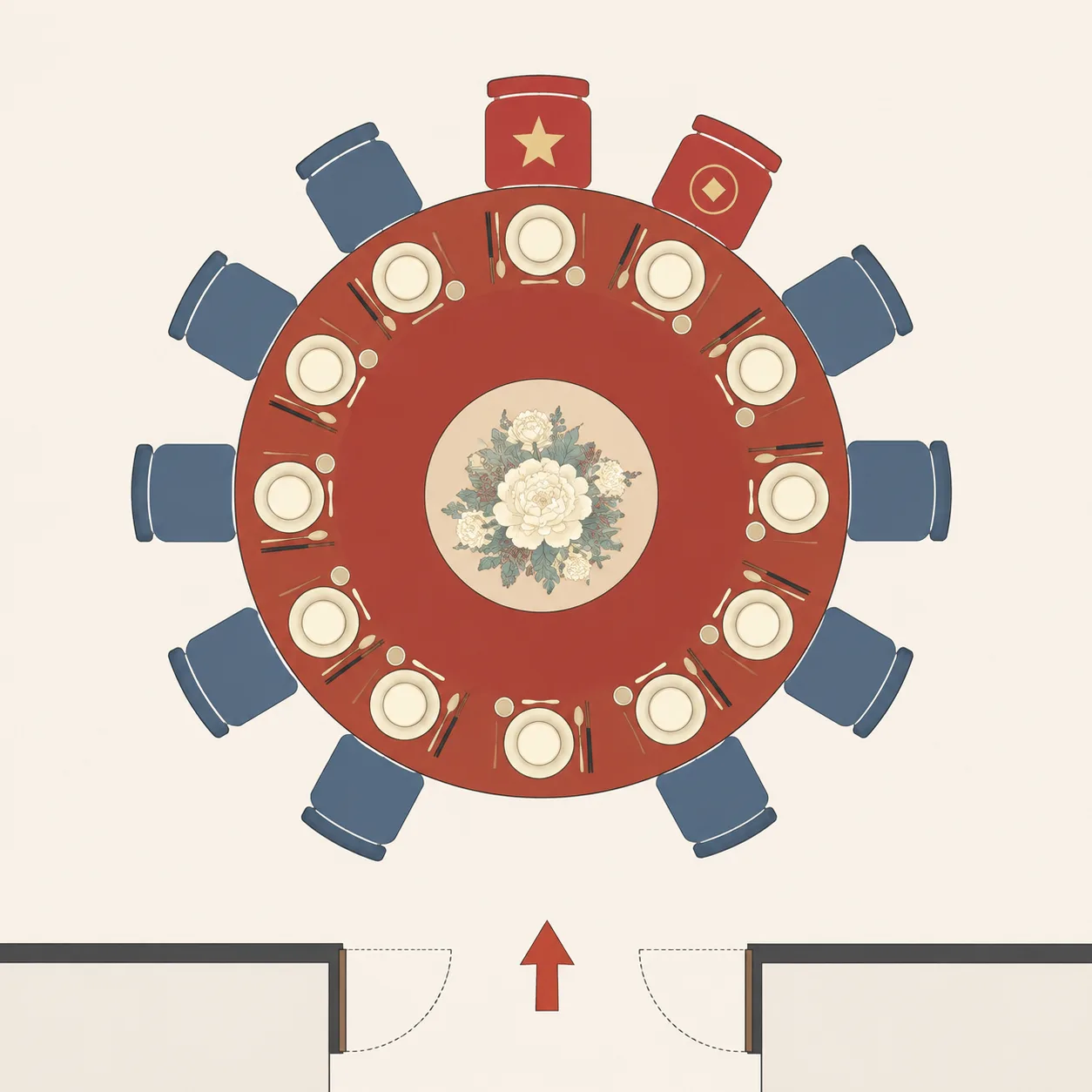
Chinese Banquet Seating: Where to Sit and What It Means
At a Chinese banquet, the seat of honor faces the door and belongs to the host or most senior person. The most important guest sits to the host's right. Everyon…
Read the guide →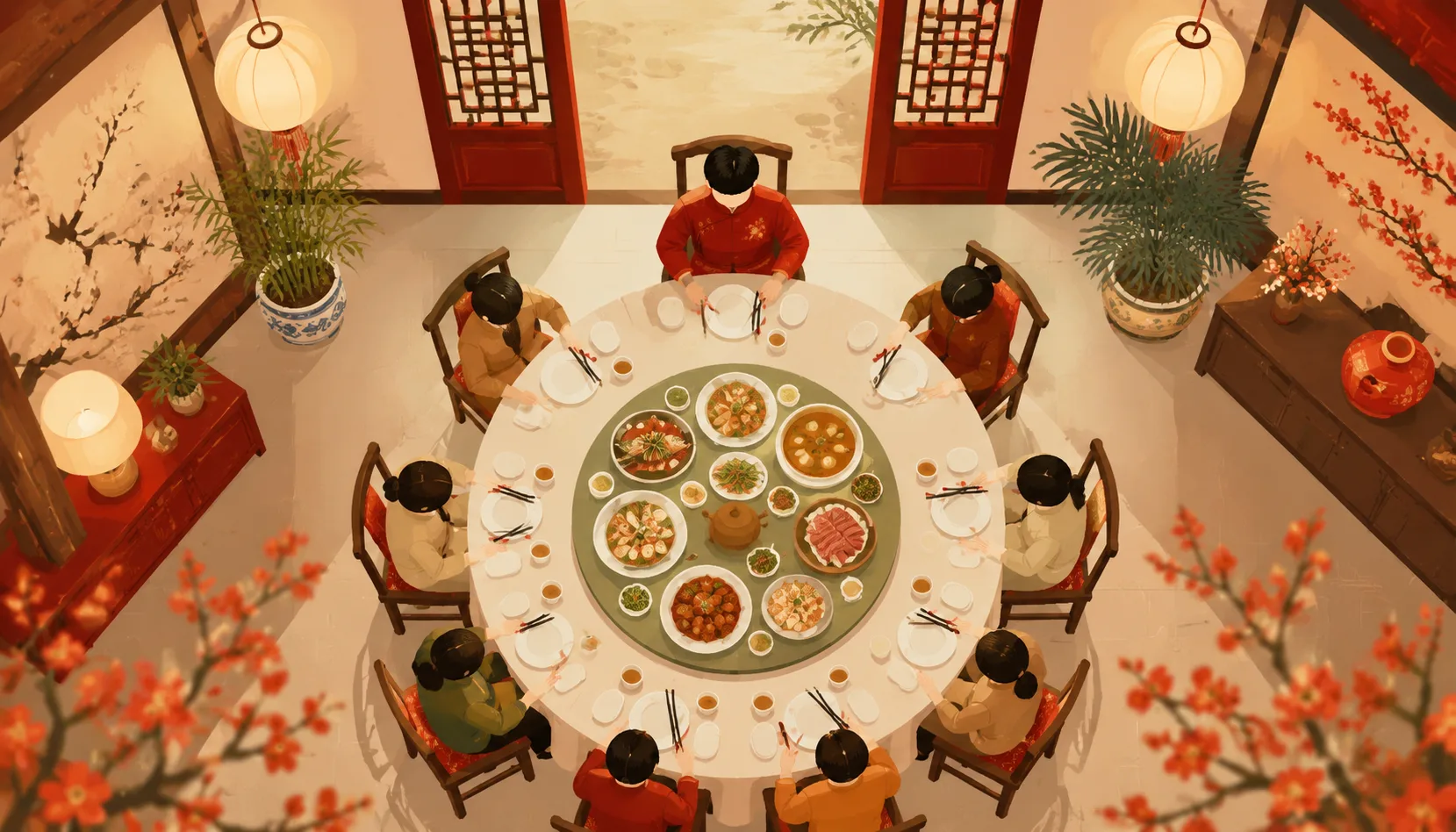
Ordering Food at a Chinese Restaurant: The Unwritten Rules
Chinese restaurant culture has specific rules foreigners often miss: seating is hierarchical (best seat faces the door), the host or senior person typically ord…
Read the guide →