Chinese Banquet Seating Explained: Where to Sit and What It Means
Quick answer
At a Chinese banquet, the seat of honor faces the door and belongs to the host or most senior person. The most important guest sits to the host's right. Everyone else is arranged by seniority, moving outward from the host position. Never sit down before the host — stand by your chair and wait to be guided.
Quick Answer
At a Chinese banquet, the seat of honor faces the door and belongs to the host or most senior person. The most important guest sits to the host's right. Everyone else is arranged by seniority, moving outward from the host position. Never sit down before the host — stand by your chair and wait to be guided.
DO
- Stand near your chair and wait — let the host guide you to your seat
- If you're the guest of honor, accept the VIP seat with grace — don't over-refuse
- Enter your chair from the left side — this is traditional Chinese protocol
- Wait until the host or most senior person sits first, then follow
- Keep your phone silent and face-down during the meal — looking at your phone is rude
- Wait for the host to signal the start (usually by picking up chopsticks or proposing the first toast) before eating
DON'T
- Don't sit down before the host or most senior person
- Don't randomly choose any seat — always wait to be directed
- Don't sit in the seat directly facing the door if you're a guest (that's the host's seat)
- Don't check your phone during the meal — it signals disinterest
- Don't start eating before the host initiates
The Seating Map
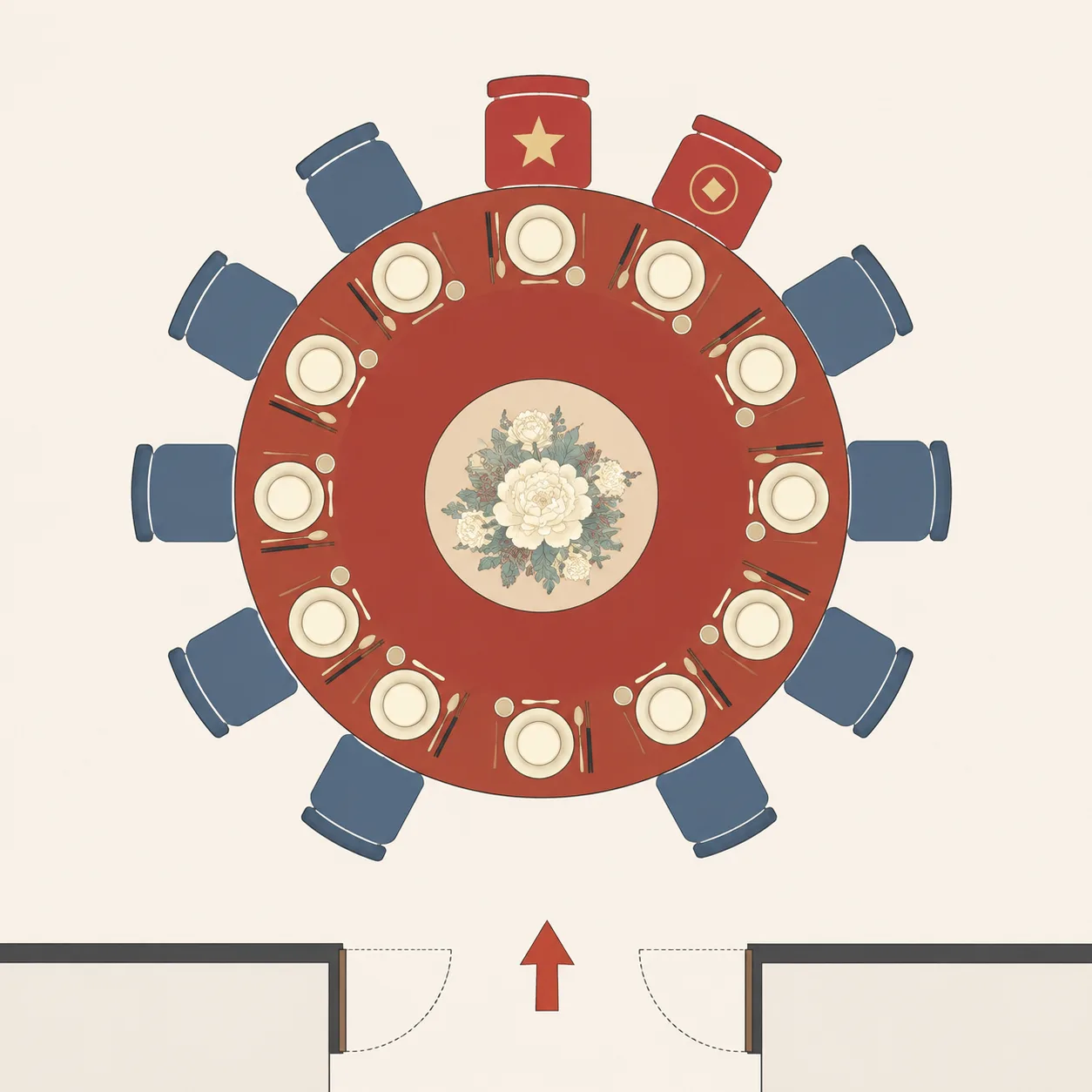
Chinese banquets typically use a round table with a lazy Susan (rotating center). The seating positions follow a clear hierarchy:
           [DOOR]
              ↑
    ┌─────────────────────┐
    │  ○   ○   ○   ○   ○  │
    │ ○                 ○ │
    │ ○   HOST (主位)   ○ │  ← Faces door, back to wall
    │ ○                 ○ │
    │  ○   ○   ○   ○   ○  │
    └─────────────────────┘
         ↑
    Co-host / Service seat
    (faces HOST, back to door)
Positions:
| Position | Chinese Name | Who sits here |
|---|---|---|
| Facing the door, back to wall | 主位 (Zhǔwèi) — Seat of Honor | Host, or most senior/important person |
| Right of host | 主宾位 (Zhǔbīnwèi) | Most important guest |
| Left of host | 副宾位 (Fùbīnwèi) | Second most important guest |
| Facing host, back to door | 副陪位 (Fùpéiwèi) | Host's assistant / most junior staff |
| All other seats | 陪客位 | Other guests, in rough seniority order |
How to identify the seat of honor:
- It's the seat with the clearest view of the entire room
- Back against the wall, not exposed from behind
- In a private room, directly opposite the entrance
- Sometimes marked: the napkin may be folded into a bird shape with the beak pointing toward the seat of honor
WHY Seating Reflects Social Order
In Confucian thought, social harmony depends on everyone knowing their position. The physical arrangement of people around a table is a concrete, visible expression of respect relationships.
The host chooses the position closest to danger (the door, traditionally) — showing they're protecting their guests. The most honored guest is given the safest, most comfortable position. Junior members take the service position near the door because they'll be the ones getting up to communicate with waiters, refill drinks, and handle logistics.
When you accept the seat you're guided to — without excessive false modesty or jostling for a different seat — you're respecting this system. Over-refusing the guest of honor seat ("No no, I couldn't possibly...") can create awkwardness if repeated too many times. One modest refusal is polite. Three refusals is stubborn.
Seating in Different Contexts
Business banquet (most formal):
- Strict hierarchy — the most senior person from each company is placed symmetrically
- The host company's boss faces the door; the guest company's most senior person sits to their right
- Personal assistants sit at the service position
Friends gathering (informal):
- Usually whoever organized the dinner sits in the main position
- Or the oldest person
- Younger friends fill in anywhere — this is flexible
Family dinner:
- The most senior elder sits at the head
- Parents sit near the elder
- Children sit wherever — though traditionally boys on one side, girls on the other in some families
Wedding banquet:
- Fixed seating charts are typically provided
- The couple's parents have the seat of honor at the main table
- Guest tables are arranged by closeness to the couple
Real-Life Examples
- A British executive was hosting a dinner in Beijing and sat in the first available seat — which happened to be the seat of honor facing the door. His Chinese counterpart, who was actually the most senior person present, was then awkwardly placed in a secondary position. The meal was friendly, but the seating error subtly communicated that the British executive considered himself the highest-ranking person in the room. His Chinese colleague mentioned it later — politely, but it had been noticed.
- A foreign teacher in Shanghai was invited to a student's family dinner. She stood near the table, unsure where to go. The grandmother immediately came over, smiled, and led her to the seat to the right of the grandfather. She understood she was being treated as the honored guest and accepted graciously with a slight nod. The family was visibly pleased.
- A new foreign employee at a Chinese company went to a team lunch and, wanting to be humble, sat at the service seat facing the door. His manager gently said "Come sit over here" and gestured toward a higher-ranking seat. He moved without question — correct response. Later his colleague explained that sitting at the service position when you're a guest signals you're either too self-effacing or don't know the rules.
FAQ
Q: What if no one tells me where to sit? A: Stand near a seat and wait a moment. In most settings someone will guide you. If nobody does after 30 seconds, ask the person next to you: "Where should I sit?" They'll direct you.
Q: What if the host insists I sit in the seat of honor but I'm clearly junior? A: Accept it warmly — they're honoring you as the guest. In Chinese culture, the host takes responsibility for the seating; your job is to receive their decision gracefully.
Q: Is it okay to swap seats during the meal? A: No. Once seated, stay in your place for the entire meal. Moving seats mid-dinner is seen as restless or strange.
Q: What about the lazy Susan — who controls it? A: The host controls the lazy Susan. They turn it to present dishes to the guest of honor first. Never spin the lazy Susan while someone else is taking food from it, and never spin it counterclockwise. Wait for the senior person to take food before you reach for the same dish.
Q: Should I enter my chair from a specific side? A: Traditionally, enter from the left side of the chair. This is an old protocol that many modern Chinese have forgotten, but in formal or traditional settings, it's worth doing correctly.
If seating already feels like a map of the room, the banquet playbook explains what the rest of the evening is silently asking of you.
What Chinese People Actually Say
- 上座 | shàng zuò | seat of honor | The most prestigious seat, usually facing the door or with best view; offer to the most senior guest.
- 主位 | zhǔ wèì | host's position | The seat facing the entrance; the host typically sits here to greet guests.
- 客位 | kè wèì | guest's position | The seating area for guests; elders and honored guests sit closest to the host.
2026 Reality Check
Chinese banquet seating etiquette remains culturally significant in 2026, but adherence varies widely. The host still sits facing the door, with guests of honor to their right—this rule holds strong in formal business dinners and family gatherings, especially among older generations.
Gen Z vs Older Generations: Boomers and Gen X still observe these rules closely. Many Gen Z view them as outdated formalities, though they comply when elders are present. Urban young professionals often skip rigid seating in casual settings but revert to tradition during important dinners or with traditional family members.
Beijing/Shanghai vs Smaller Cities: Major cities show more flexibility—younger crowds in Shanghai and Beijing frequently ignore traditional seating in trendy restaurants. Smaller cities and family-run establishments maintain stricter adherence. Business banquets in all regions still largely honor the hierarchy, as professional reputation remains tied to proper etiquette.
Business banquets still honor the hierarchy, but that hierarchy doesn't stop at the chair—the Chinese business banquet playbook shows how the same logic runs through the toasts and the rest of the evening.
Frequently asked questions
What happens if I accidentally sit in the seat of honor at a Chinese banquet?
Don't panic. Casually stand up and say '不好意思' (excuse me), then move to a less prominent seat. The host will usually correct you quickly anyway. In most cases, the seat of honor is clearly indicated by the host or the person guiding you, so this mistake is rare. Just show humility and follow the re-arrangement.
Can I choose my own seat if I arrive early to a Chinese banquet?
No, never sit down before the host or until you're directed. Arrive 10-15 minutes early, stand by a chair, and wait for the host to guide you. If you're the first guest, stand near the entrance and greet others as they arrive. Sitting early, especially in a senior position, signals arrogance and disrespect.
How do I know which side is the seat of honor if the table is round?
The seat of honor is the one facing the entrance door, regardless of table shape. If the room has no visible door, look for the seat facing the main walkway or the most prominent wall decoration. When in doubt, ask a staff member or discreetly watch where the host stands before sitting.
Is the seating rule different for a business banquet versus a family celebration?
Yes. At business banquets, seating strictly follows rank and title — the highest-ranking guest sits at the host's right. At family celebrations like weddings, age and generational seniority matter more than job titles. Elders sit closest to the host, while younger family members sit farther away. In both cases, the right side of the host is always the most prestigious.
What should I do if the host tells me to sit in a seat that seems too important for me?
Humorously decline once or twice by saying '我坐这里不合适' (I'm not worthy of this seat), then accept if the host insists. This polite push-and-pull shows humility and respect. Refusing too many times can seem rude or cause awkwardness. Always follow the host's final decision — they know the social dynamics better than you do.
Does the seating rule change if I'm dining in southern China, like in Guangzhou or Hong Kong?
The core rule is the same, but Cantonese banquets often place the seat of honor facing the door and slightly to the left of the host's position. In northern China, the right side is more strictly emphasized. In Hong Kong, Western-style seating is common at formal events, but traditional Chinese rules still apply at family gatherings. Always observe the host's actions to confirm.
Try our tools
Related guides
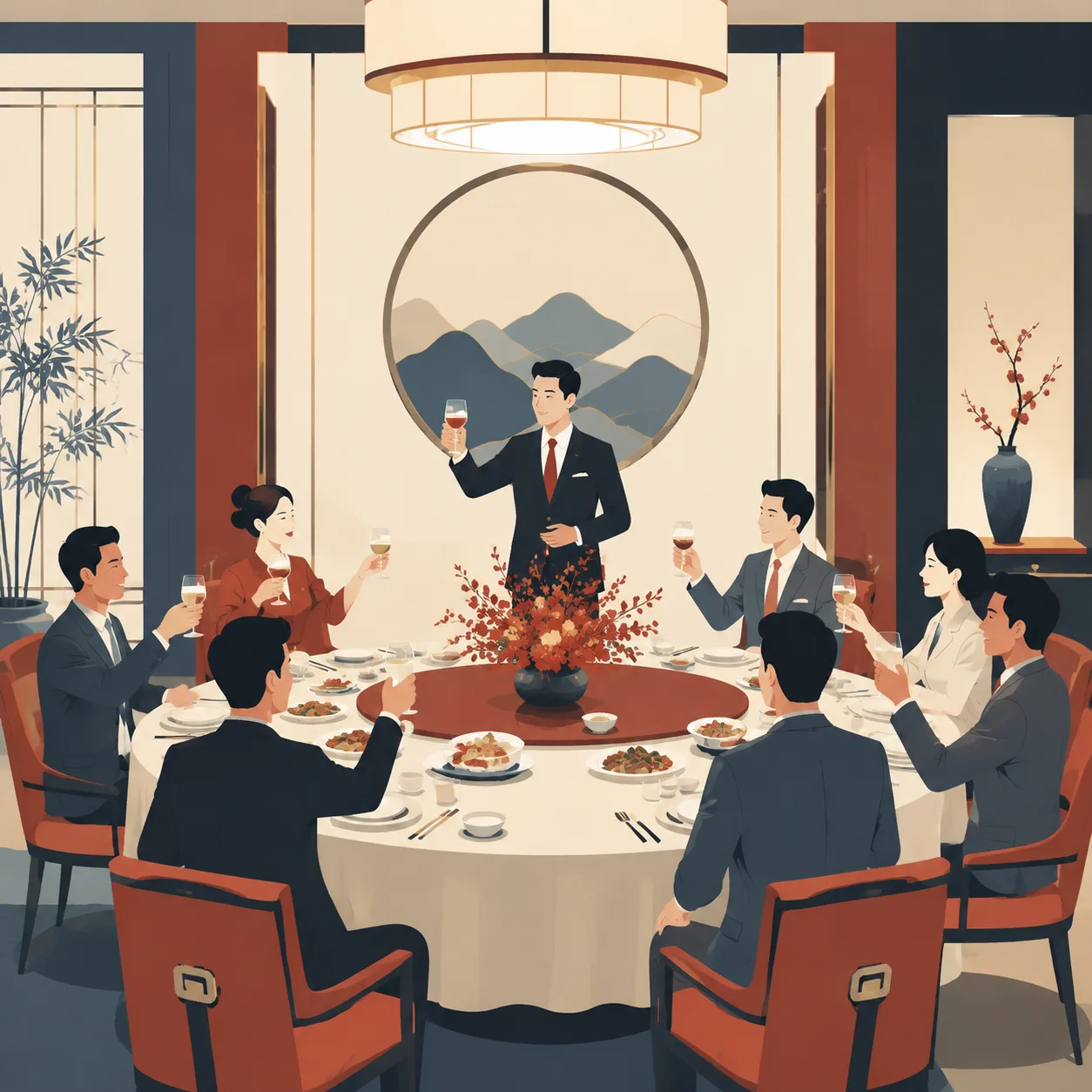
Chinese Business Banquet Protocol: Rules & What Not to Do
A Chinese business banquet is not a meal — it's a trust-building ceremony disguised as dinner. The food is secondary. The goal is to establish that you are a re…
Read the guide →
How to Extract Real Information at Chinese Business Dinners
Stay for the entire dinner—the last 45 minutes yield 90% of real information. Read the pre-dinner tea signal, decode drunk talk as leads (not conclusions), and …
Read the guide →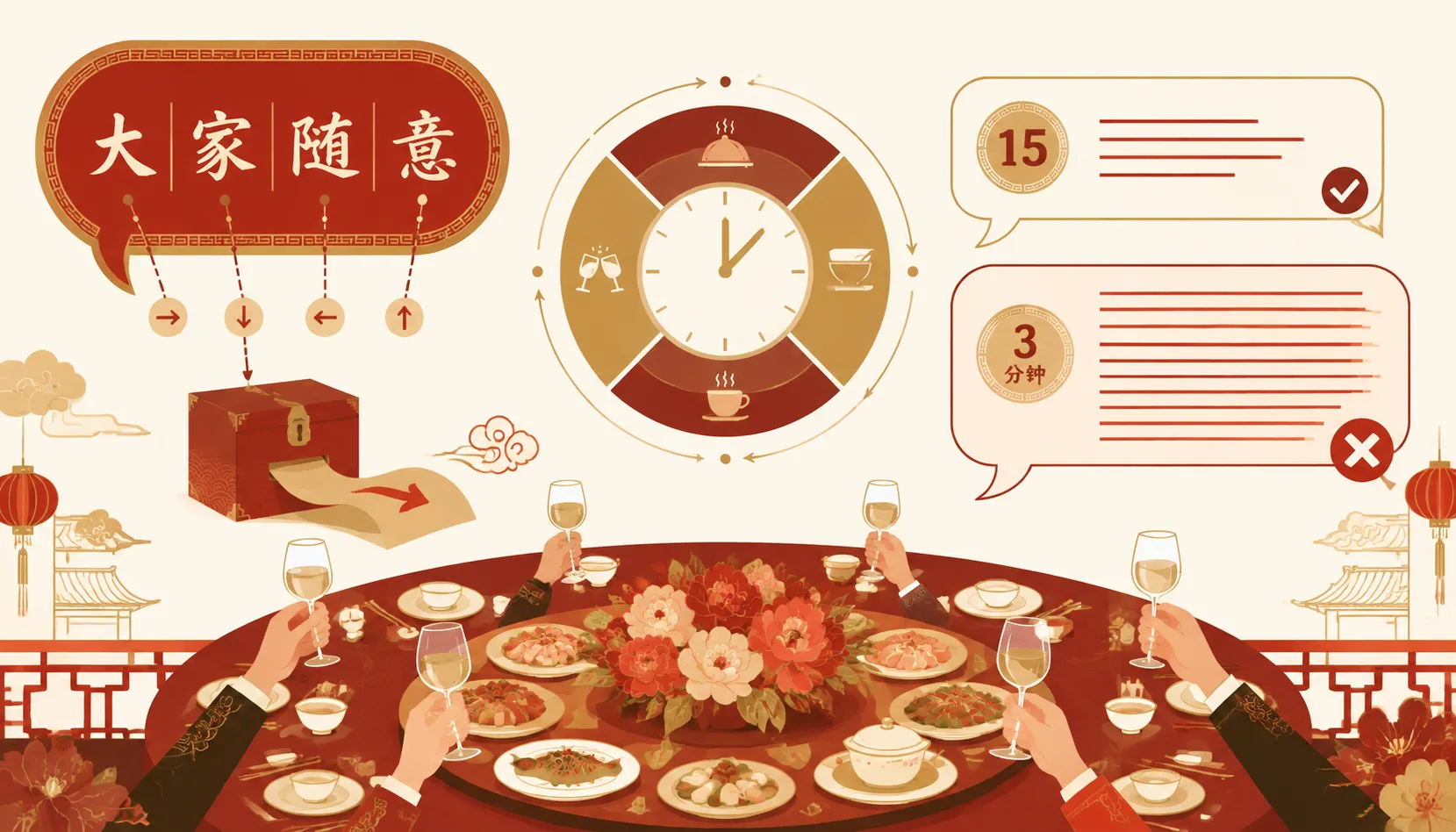
Chinese Business Dinner Phrases: What They Really Mean
In Chinese business dinners, phrases like '大家随意' (be casual) and '我干了,您随意' (I'll drink, you do as you like) are not literal invitations to relax—they are power …
Read the guide →