Do Chinese people expect everyone to wash hands before a meal?
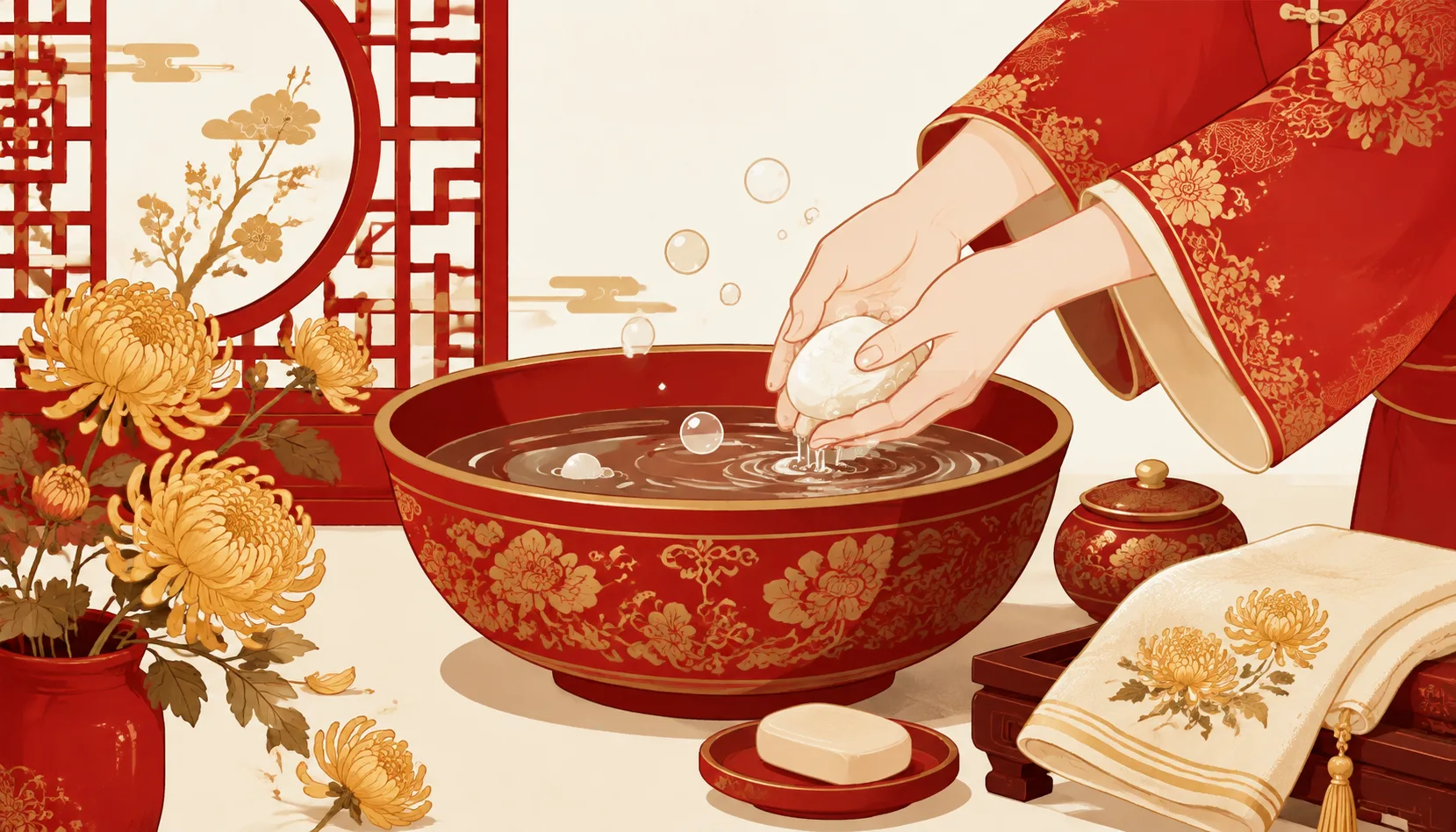
Quick answer
Yes. Washing hands before meals is standard hygiene in Chinese households. Many hosts will point guests to the bathroom before sitting down for a meal.
Why This Rule Matters
Chinese medicine and modern science both recognize the hands as a major disease transmission route. Studies show a single hand can carry 40,000 to 400,000 bacteria. The Chinese saying 'fàn qián biàn hòu yào xǐ shǒu' (饭前便后要洗手) — 'wash hands before meals and after using the toilet' — is taught to children as a basic life rule.
What You Should Do
- Wash your hands before sitting down to eat
- Ask where the bathroom is when you arrive at someone's home for a meal
- Wash your hands after using the toilet, even if you are mid-meal
What You Shouldn't Do
- Sit down to eat without washing your hands
- Skip handwashing after visiting the bathroom during a meal
- Assume this is optional — it is considered basic hygiene
Practical Tips for Foreigners
This rule comes up in many social and formal settings, though how strictly it applies varies by region and generation. When in doubt, watch what your Chinese host or senior colleague does and follow their lead. Breaking this rule once is forgivable — breaking it repeatedly signals a lack of cultural awareness.
Why Chinese Hosts Care More Than You Think
In China, handwashing before a meal isn't just about germs — it's a visible sign of respect for the food and the people who prepared it. When a host points you to the bathroom, they're not doubting your hygiene; they're giving you a chance to show you value their effort. Skip it, and they'll notice — even if they say nothing. In <a href="/etiquette/use-communal-chopsticks/">formal dinners</a>, especially with older generations in cities like Beijing or Chengdu, not washing up can be read as arrogance. Younger urbanites in Shanghai or Shenzhen might shrug it off, but the older you go, the more it matters. The unspoken thought: 'If he won't wash for my cooking, what else doesn't he respect?'
Real Scenarios From the Field
- A British expat in Guangzhou walked straight to the table at a family banquet. The grandmother quietly moved his chopsticks to a side plate and didn't speak to him for the rest of the meal. He never figured out why.
- In a Shenzhen startup, a Canadian developer sat down for hotpot without washing up. His Chinese colleagues laughed and joked about 'foreign germs,' but the founder later told HR that expats need 'basic cultural training.'
- An American teacher in Xi'an always washed her hands but never dried them properly. Her host's mother started leaving a fresh towel by the sink each visit — a silent hint that dripping hands were still seen as sloppy.
- At a wedding banquet in Hangzhou, a German manager excused himself to wash up before eating. The bride's father later praised him to the whole table — one small gesture earned him more goodwill than a year of business meetings.
Regional and Generational Differences
The rule's strictness varies. In northern cities like Beijing and Tianjin, older hosts may verbally remind you to wash up — consider it a warm nudge, not an insult. In the south, especially Guangdong and Fujian, people are more indirect; they'll leave the bathroom door open or place a towel nearby as a hint. Among professionals under 35 in first-tier cities, the rule is more relaxed — many will wave off handwashing if you're just grabbing a quick bite. But in rural areas or when dining with elders, treat it as non-negotiable. When in doubt, wash. It costs you 30 seconds and buys you a reputation of being considerate.
What Chinese Hosts Think But Won't Say
If you skip handwashing, your Chinese host won't call you out — that would be rude. Instead, they'll file it away. They might think: 'Did his parents not teach him?' or 'Is he always this careless?' In business contexts, this small lapse can subtly shift how they view your professionalism. Conversely, when you wash up <a href="/social/chinese-wechat-guanxi-maintenance/">without being</a> asked, hosts often feel a quiet relief and respect. It signals that you've absorbed local norms, which matters <a href="/business/chinese-business-banquet-etiquette/">more than</a> any <a href="/business/business-card-etiquette-china/">business card</a>. In a country where relationship-building is everything, a 30-second handwash is one of the cheapest investments you can make in your reputation.
What Chinese People Actually Say
- 饭前便后要洗手 | fàn qián biàn hòu yào xǐ shǒu | Wash hands before eating and after using the toilet | Common children's teaching rhyme
- 洗手再吃饭 | xǐ shǒu zài chī fàn | Wash hands before eating | Direct instruction, polite request
- 把手洗干净 | bǎ shǒu xǐ gān jìng | Wash your hands clean | Emphasizes thoroughness
2026 Reality Check
2026 Reality Check: Hand-washing before meals remains standard etiquette in China, but adherence varies significantly.
Gen Z vs. Older Generations: Younger Chinese (under 25) are actually more consistent about this—they grew up post-COVID with heightened hygiene awareness. Millennials and Gen X generally maintain the habit from upbringing. Seniors (60+) are most rigorous, often insisting grandchildren wash hands before every meal.
Beijing/Shanghai vs. Smaller Cities: First-tier cities show near-universal compliance in restaurants and homes. In tier-2/3 cities and rural areas, the rule is still taught but less consistently enforced—particularly in informal settings or among younger children.
Bottom Line: The rule hasn't disappeared. It's deeply embedded in Chinese food culture. But like everywhere, convenience sometimes wins—especially among busy urban youth eating on the go.
Frequently asked questions
Is it considered rude if I forget to wash my hands before a meal in China?
It's not usually considered rude, but it may be noticed. Most hosts will politely remind you or point you to the bathroom, so it's best to wash up to show respect for hygiene and the meal.
Do I need to wash my hands even if I use chopsticks instead of my hands?
Yes, washing hands is still expected because you may touch shared serving dishes or your mouth area. It's a standard hygiene practice regardless of eating utensils.
Are there any specific times besides before meals when hand-washing is expected in China?
Yes, washing hands after using the restroom, before preparing food, and after touching raw meat or fish is also standard. In many homes, you'll also find hand sanitizer available for quick use.
What should I do if I'm at a restaurant and there's no obvious sink or bathroom nearby?
Politely ask the host or server where the restroom is, or use hand sanitizer if provided. In most restaurants, there are facilities, so it's fine to ask without causing offense.
Is it common for Chinese hosts to provide soap and clean towels for guests to wash hands?
Yes, most households have soap and clean towels or paper towels in the bathroom. Some may also have a small hand-washing station near the dining area for convenience.
Can I skip washing hands if I'm eating alone or in a very casual setting?
It's still recommended for your own health, but no one will judge you if you're alone. In casual settings, hand sanitizer is an acceptable alternative if water isn't available.
Try our tools
Related guides
Chinese Restaurant Dining Etiquette: During and After
During a Chinese meal: wait for the host to signal the start, toast with the host before drinking, serve others before yourself, and never leave without a prope…
Read the guide →
Visiting a Chinese Home: Etiquette Guide for Foreigners
Bring a small gift, arrive 5 minutes late (never early), remove shoes at the door, wait for the host to assign your seat, and let the eldest eat first. Follow t…
Read the guide →
Chopstick Rules in China: What to Do and What to Avoid
The three biggest chopstick taboos in China: never stand them upright in a bowl of rice, never tap your bowl with them, and never dig through shared dishes. Kee…
Read the guide →