What are the etiquette rules during a Chinese meal — drinking, toasting, leaving gracefully, and common mistakes to avoid?
Quick answer
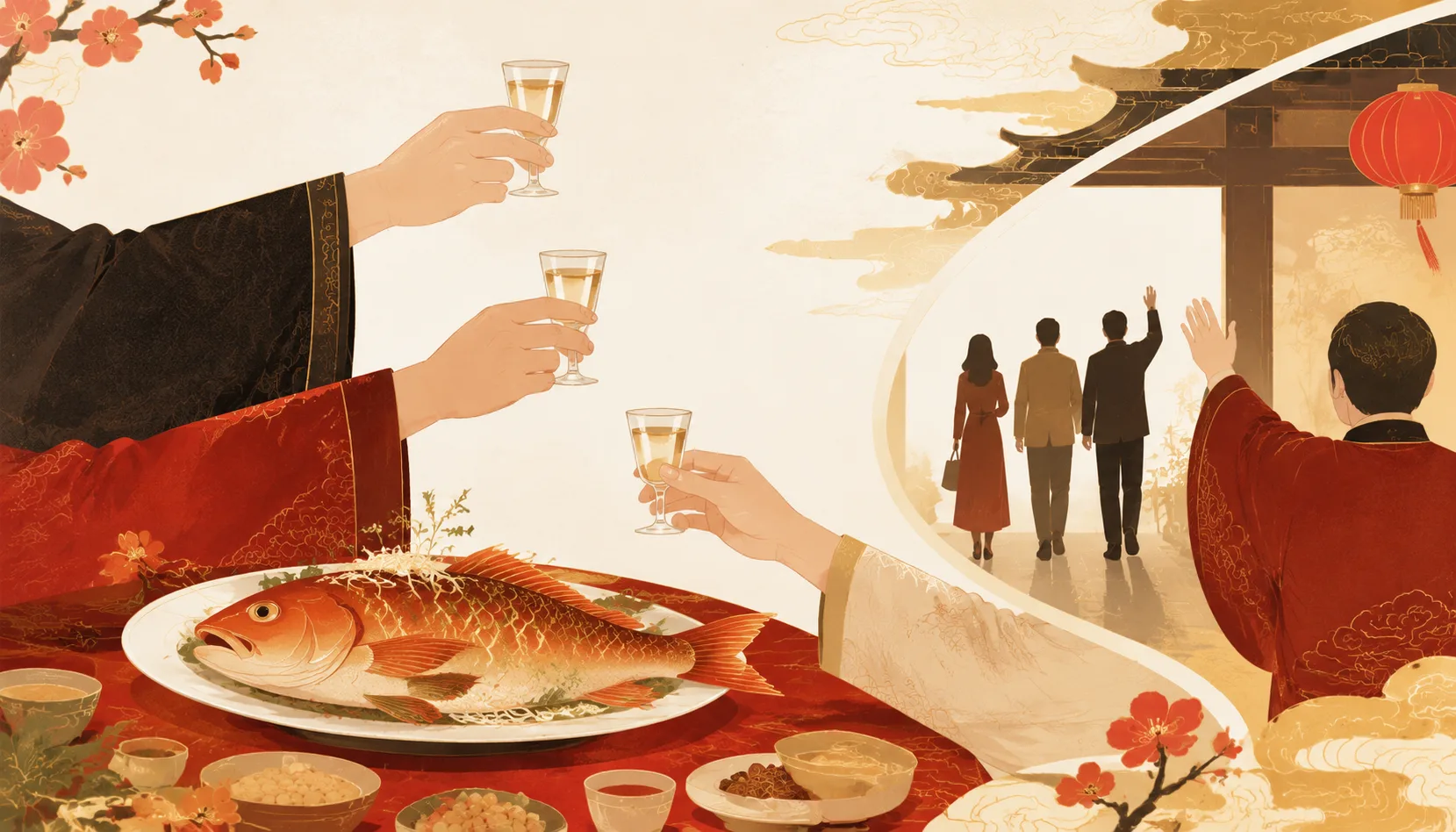
During a Chinese meal: wait for the host to signal the start, toast with the host before drinking, serve others before yourself, and never leave without a proper farewell and genuine thanks. The quality of your behavior at the table is a direct signal of your character, relationship intentions, and cultural intelligence.
Starting the Meal: Wait for the Signal
A Chinese meal does not begin when the food arrives. It begins when the host signals the start — usually by lifting their chopsticks, saying 开始吧 (kāishǐ ba — let's begin), or by raising a glass for the first toast. Picking up your chopsticks and eating immediately after the first dish arrives signals impatience and social unawareness.
At formal meals with toasting: the host makes a welcoming speech and raises a glass first. Everyone toasts together — this is the official start of the meal. At casual family dinners, the signal is more relaxed, often just 吃吧 (chī ba — eat!) but still comes from the host or most senior person.
If you are seated and the host is encouraging everyone to eat while continuing to speak — they mean it. Eating while conversation continues is entirely normal. You do not need to pause between bites for spoken exchanges the way Western etiquette sometimes suggests.
Toasting: The Social Ritual of the Table
Toasting at a Chinese meal is not just drinking — it is the primary mechanism for expressing respect, cementing relationships, and marking social hierarchy.
How a group toast works:
1. The host raises their glass and makes a brief welcoming remark
2. Everyone raises glasses
3. 干杯 (gānbēi — cheers) is said together
4. Drink (the extent depends on the context — casual sip to full glass)
5. The glass may be shown empty as confirmation
One-on-one toasting: Individuals may toast specific people during the meal — to thank them, honor them, or express something personal. When toasting a more senior person, hold your glass with both hands and position its rim slightly below the rim of their glass.
If you cannot or do not drink alcohol: Say so warmly at the beginning of the meal. "I don't drink alcohol, but I'll toast with tea sincerely" — 我以茶代酒,真诚敬您 (wǒ yǐ chá dài jiǔ, zhēnchéng jìng nín) — is entirely acceptable and shows awareness. Do not silently avoid toasts or act as if you are not participating.
Handling Food You Cannot Eat
Chinese hosts show care through food — they will offer dishes, place items on your plate, and repeatedly encourage you to eat. Navigating food you cannot or do not want to eat requires some care:
- Genuine allergies or dietary restrictions: Mention these before the meal, ideally when the invitation is made. This allows the host to plan accordingly. Revealing an allergy mid-meal puts them in an awkward position.
- Dislike, not restriction: If something is placed on your plate that you simply don't like, take a small portion, move it around, and eat around it if possible. You do not need to eat everything. What matters is the acceptance of the gesture, not clean plates.
- Strong dietary restrictions (vegetarian, halal, etc.): Communicate these clearly in advance. Chinese cuisine is extraordinarily varied and any host can accommodate given notice — but the notice is important.
Ending the Meal and Leaving Gracefully
The end of a Chinese meal is a ritual in itself. The host typically signals it — sometimes by ordering fruit or dessert as a close, sometimes simply by standing. Do not stand to leave before the host has indicated the meal is finished.
The farewell:
- Thank the host directly and specifically: 今天的饭太好吃了,谢谢你的款待 (jīntiān de fàn tài hǎochī le, xièxiè nǐ de kuǎndài — today's food was wonderful, thank you for your hospitality).
- The host will walk you to the door, and often to the elevator or street. Do not rush this farewell sequence.
- The departing phrase you will hear: 慢走 (màn zǒu — walk slowly / take care). Respond with 再见 or 拜拜.
Follow-up: Sending a short thank-you message (via WeChat, usually) within a few hours of the meal is increasingly standard — especially for business meals or first-time hosted dinners. It does not need to be long: "Today's dinner was wonderful, thank you so much" is sufficient and very well received.
For the full arc — arrival, toasts, payment, farewell — the Complete Guide connects these during-the-meal rules to the rest of the dinner.
What Chinese People Actually Say
- 干杯 | gān bēi | Cheers | Say when raising glass; complete the drink to show respect
- 慢用 | màn yòng | Enjoy your meal | Said by host to guests after food is served
- 买单 | mǎi dān | Bill, please | Used to request the check; the person inviting typically pays
2026 Reality Check
Turning the Lazy Susan: Still standard practice in formal settings. Older generations enforce it strictly; Gen Z often ignores it, preferring to ask for dishes directly. Beijing/Shanghai: more relaxed; smaller cities: still expected.
Pouring tea: Younger diners rarely pour for elders unless reminded. Tier-1 cities see more casual behavior; provincial restaurants still expect the ritual.
Toasting: "Gan bei" remains universal, though Gen Z skips formal rounds in casual spots. Business dinners still demand traditional protocols everywhere.
Leaving food: "Bu chi le" (I can't eat more) still common among elders to show satisfaction. Gen Z increasingly finishes plates—food waste awareness is rising.
Paying the bill: The "dao fu" (抢着买单) tradition survives but weakens. Splitting bills (AA制) is now normal among young urbanites, even with elders present.
Verdict: Core etiquette persists in formal/business contexts. Casual dining, especially among Gen Z in large cities, has loosened significantly. Smaller cities and older generations remain more traditional.
Frequently asked questions
What should I do if I don't drink alcohol during a Chinese business dinner?
You can politely decline by saying 'wǒ bù hē jiǔ' (I don't drink) and raise your tea or a soft drink when toasting. Never make a big scene—just smile and participate in the toast gesture. In many circles, it's acceptable to sip tea instead, but always toast with your beverage when others toast you.
How do I properly toast someone at a Chinese banquet without offending them?
Hold your glass lower than the person you're toasting, especially if they're older or more senior. Use both hands when raising your glass. Say 'gān bēi' (bottoms up) only if you intend to finish the drink. For casual sips, say 'suí yì' (as you wish). Eye contact during the toast shows sincerity.
Is it rude to leave a Chinese restaurant meal before everyone else finishes?
Yes, leaving early is generally frowned upon unless absolutely necessary. If you must go, stand up, apologize sincerely, and toast everyone at the table before leaving. Offer a brief explanation like 'I have an urgent matter' and thank the host personally. Never just slip away unnoticed—that's considered very impolite.
What should I do if I'm served a dish I can't eat due to allergies or dietary restrictions?
Politely decline by saying 'duì bù qǐ, wǒ bù néng chī zhè ge' (sorry, I can't eat this). Don't make a fuss or ask for substitutions. Instead, focus on eating other dishes and compliment the host on the meal. If allergies are severe, inform the host privately before the meal begins to avoid awkwardness at the table.
Can I use my own chopsticks to pick food from shared plates in China?
No—always use the serving chopsticks or the reverse ends of your own chopsticks to take food from shared dishes. Using your personal chopsticks directly is seen as unhygienic and disrespectful. If no serving utensils are provided, use the thicker ends of your chopsticks to transfer food to your bowl first.
How do I know when the meal is officially over so I can leave gracefully?
The meal ends when the host signals it's over—often by putting down their chopsticks, offering fruit or tea, or saying 'chī bǎo le ma?' (are you full?). Don't rush to leave immediately after finishing your food. Wait for the host's cue, then thank them sincerely and say 'xiè xiè' (thank you) before heading out.
Try our tools
Related guides
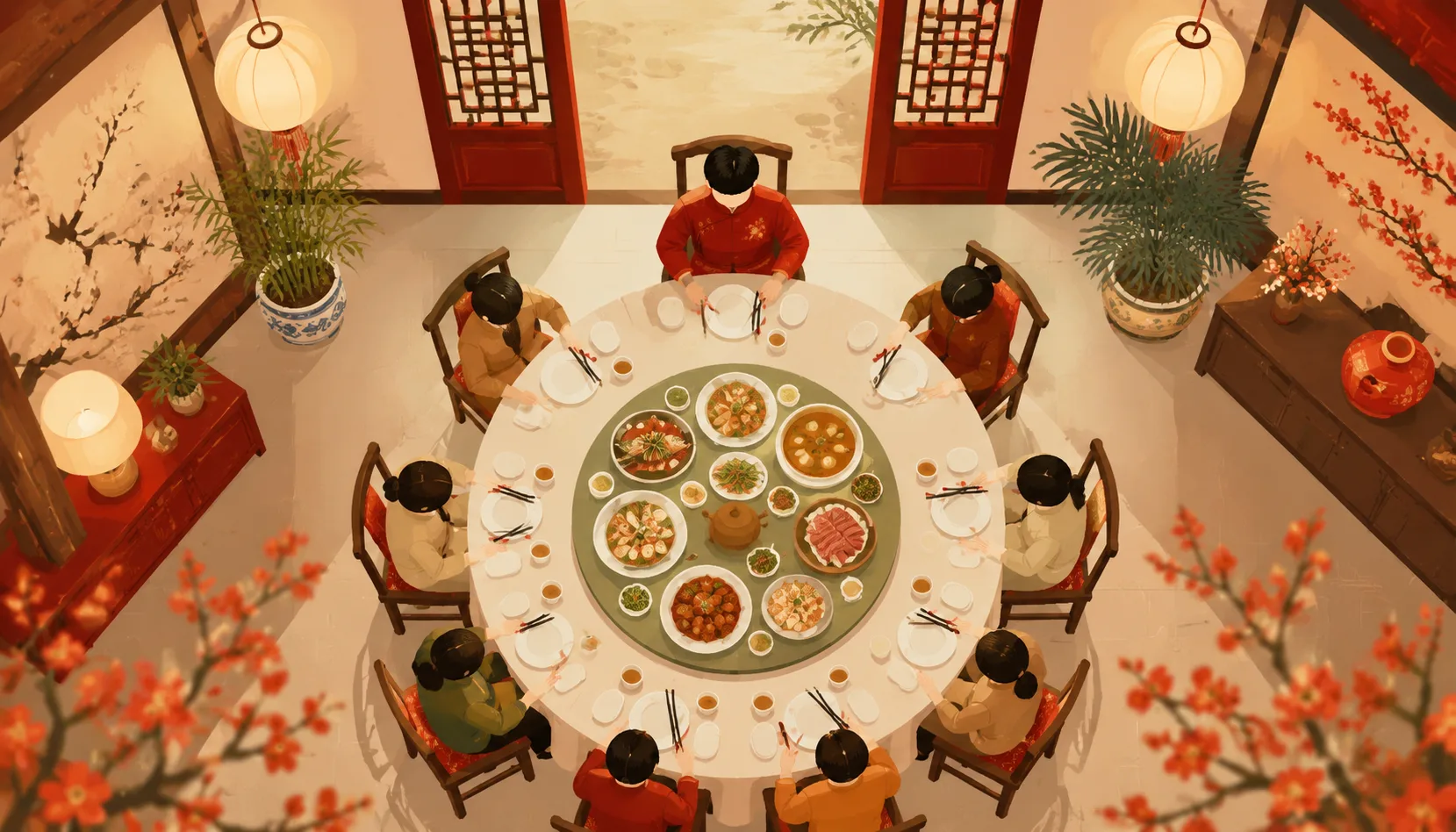
Ordering Food at a Chinese Restaurant: The Unwritten Rules
Chinese restaurant culture has specific rules foreigners often miss: seating is hierarchical (best seat faces the door), the host or senior person typically ord…
Read the guide →
How Ganbei Works in China: Toasting Guide for Foreigners
Ganbei (干杯, gānbēi) means "empty the cup." When someone says it to you directly, finish your drink. When proposing a toast, always hold your cup lower than the …
Read the guide →
Chinese Drinking Culture: A Foreigner's Survival Guide
Chinese drinking culture is a structured social ritual, not just a meal. The table becomes a live map of relationships, respect, and trust — and knowing the unw…
Read the guide →