The Complete Guide to Chinese Business Dinner Etiquette
A Situation You May Recognize
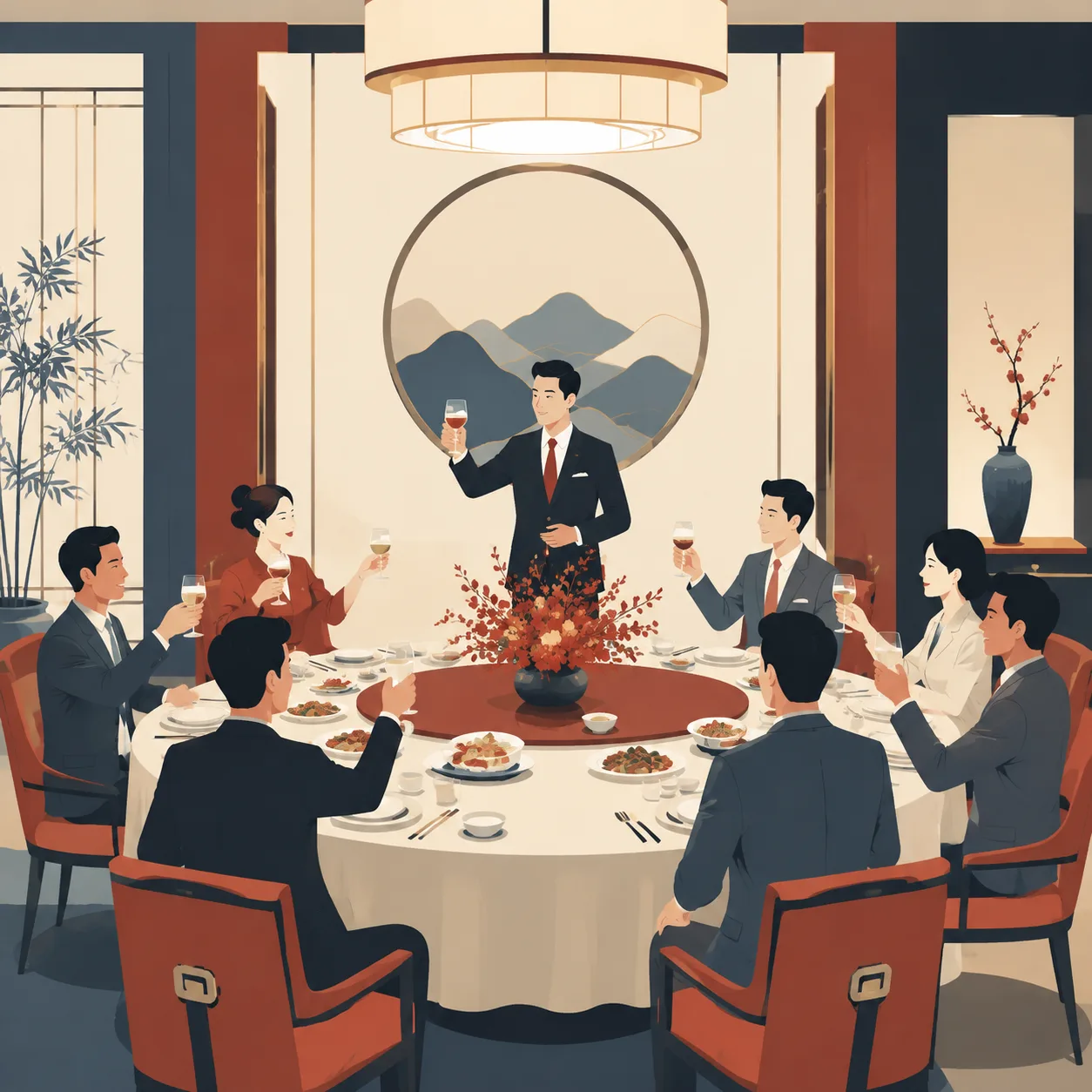
A Chicago procurement director walks into a private dining room in Shanghai. The client’s chairman has not arrived, every empty chair looks the same, and a server is already pouring baijiu. He sits, starts discussing the contract, and offers to split the bill because that feels polite back home. Nothing he does is outrageous. Yet by dessert, the atmosphere has changed.
Which small decision shifted the evening—and what should he have noticed before making it?
A practical field guide to seating, ordering, eating, toasting, drinking, paying, and leaving without making an awkward mistake
A Chinese business dinner can look relaxed.
People are talking. Dishes keep arriving. Someone pours tea. Someone pours alcohol. People laugh, toast one another, move dishes around the table, and occasionally insist that you eat more.
But underneath that apparently casual dinner is often a quiet structure.
Who invited whom?
Who is the host?
Who is the most senior guest?
Who should sit where?
Who speaks first?
Who makes the first toast?
Who orders?
When should business be discussed?
Who pays?
None of these questions necessarily matters at an ordinary dinner with young friends.
At a formal business dinner, however, noticing them can make the evening much easier.
The good news is that you do not need to memorize fifty mysterious Chinese rules.
You need to understand one principle:
At a Chinese business dinner, pay attention to the host, the guest of honor, and the group before focusing on yourself.
Once you understand that, many seemingly complicated customs start making sense.
Before You Go: Find Out What Kind of Dinner This Is
There is no single thing called “the Chinese dinner.”
A casual dinner with a 28-year-old startup founder in Shenzhen may feel completely different from a banquet hosted by a traditional manufacturer, a state-owned enterprise, a local association, or a group of senior executives.
Before the dinner, try to understand three things.
First, ask yourself how formal the event is.
Second, understand who is hosting.
Third, know who the most senior people are.
You do not need everyone's complete résumé.
It is enough to know:
“Ms. Chen is our client’s CEO.”
“Mr. Wang owns the factory.”
“David is the head of our delegation.”
That little bit of information helps you understand almost everything that follows.
Arriving: Being Early Is Better Than Being Dramatically Early
For an important business dinner, arriving a little early is usually safer than arriving late.
If you are the host, arrive before your guests.
If you are the guest, do not walk into the private dining room and immediately choose the most impressive-looking seat.
Chinese banquet seating often reflects the relationship between host and guest.
If someone says:
“Please sit here.”
The easiest response is simply to accept after a small amount of politeness.
Foreign guests sometimes make a different mistake: they refuse the offered seat again and again because they think this shows humility.
One polite hesitation can be gracious.
Five minutes of fighting over a chair is not.
Continue Reading — VIP Only
The rest of this article — real patterns, recognition signals, and step-by-step guidance for foreign executives — is available for a one-time unlock.
- ✓ Full article, including every example and action step
- ✓ Written for foreign professionals, managers & business owners
- ✓ Long-term access on this browser
Article preselected · One-time payment · Instant unlock
Try our tools
Related guides
Chinese Drinking and Toasting Etiquette
Chinese toasts can express respect and goodwill, but drinking alcohol is optional. Watch the host, offer a short sincere toast, and state your limits clearly. T…
Read the guide →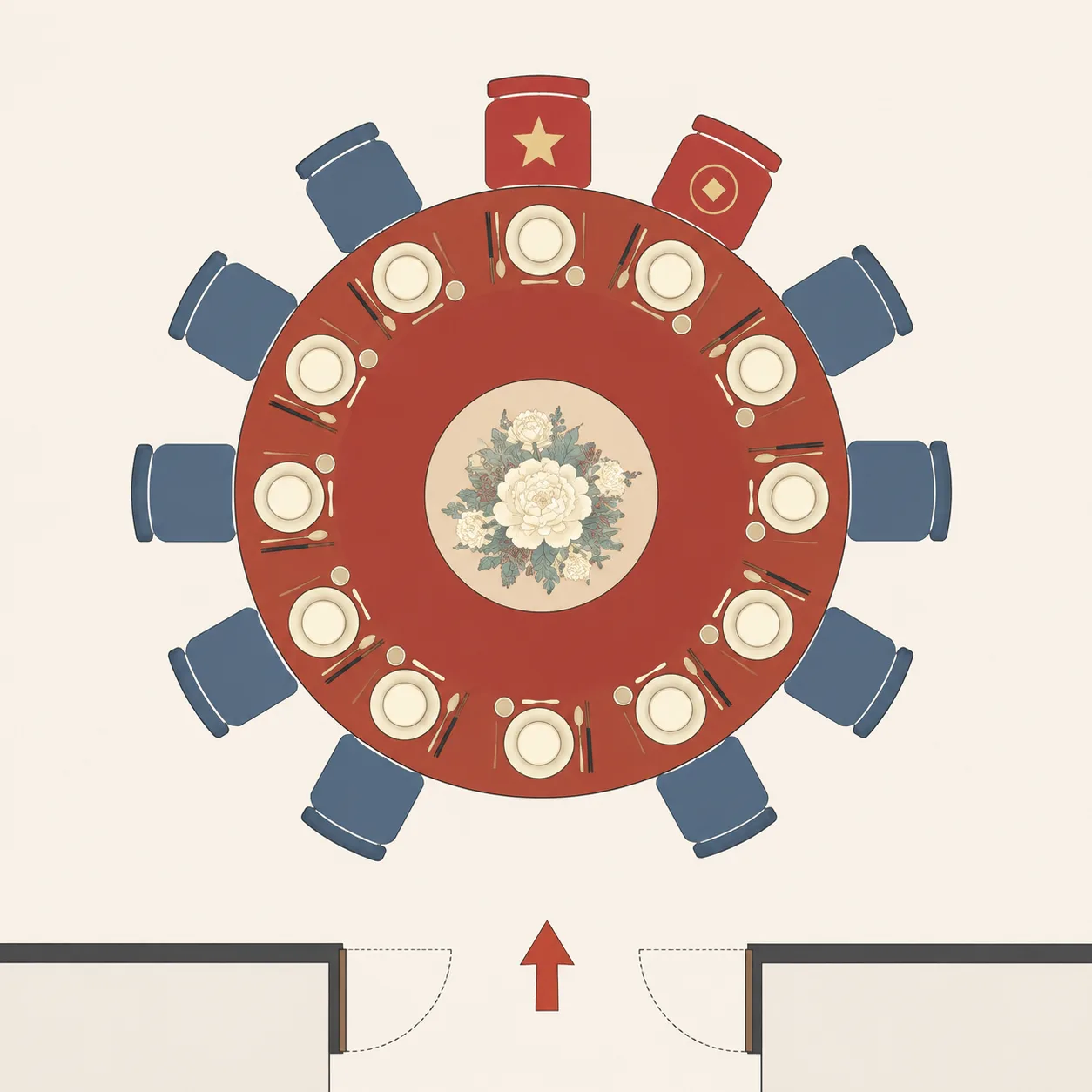
Where Do I Sit? The Chinese Business Banquet Playbook
Ask the host where to sit instead of relying on a fixed seating diagram. Follow the room’s cues for ordering, tea, shared dishes, payment, and departure. Practi…
Read the guide →
Chinese Business Etiquette Guide 2026: What You Must Know
Chinese business etiquette is easier to navigate when you watch three recurring patterns: relationship-building (guanxi), protecting dignity in public (mianzi),…
Read the guide →More in Dinner, Drinking & Gifts
Why Chinese Business Dinners Are About So Much More Than Food
The private dining room on the fourth floor of a Hefei hotel seats fourteen, and Daniel Brooks, a thirty-four-year-old procurement director …
Read Preview →🔒 VIPChinese Drinking and Toasting Etiquette
Chinese toasts can express respect and goodwill, but drinking alcohol is optional. Watch the host, offer a short sincere toast, and state yo…
Read Preview →🔒 VIPWhere Do I Sit? The Chinese Business Banquet Playbook
Ask the host where to sit instead of relying on a fixed seating diagram. Follow the room’s cues for ordering, tea, shared dishes, payment, a…
Read Preview →