Chinese Drinking and Toasting Etiquette
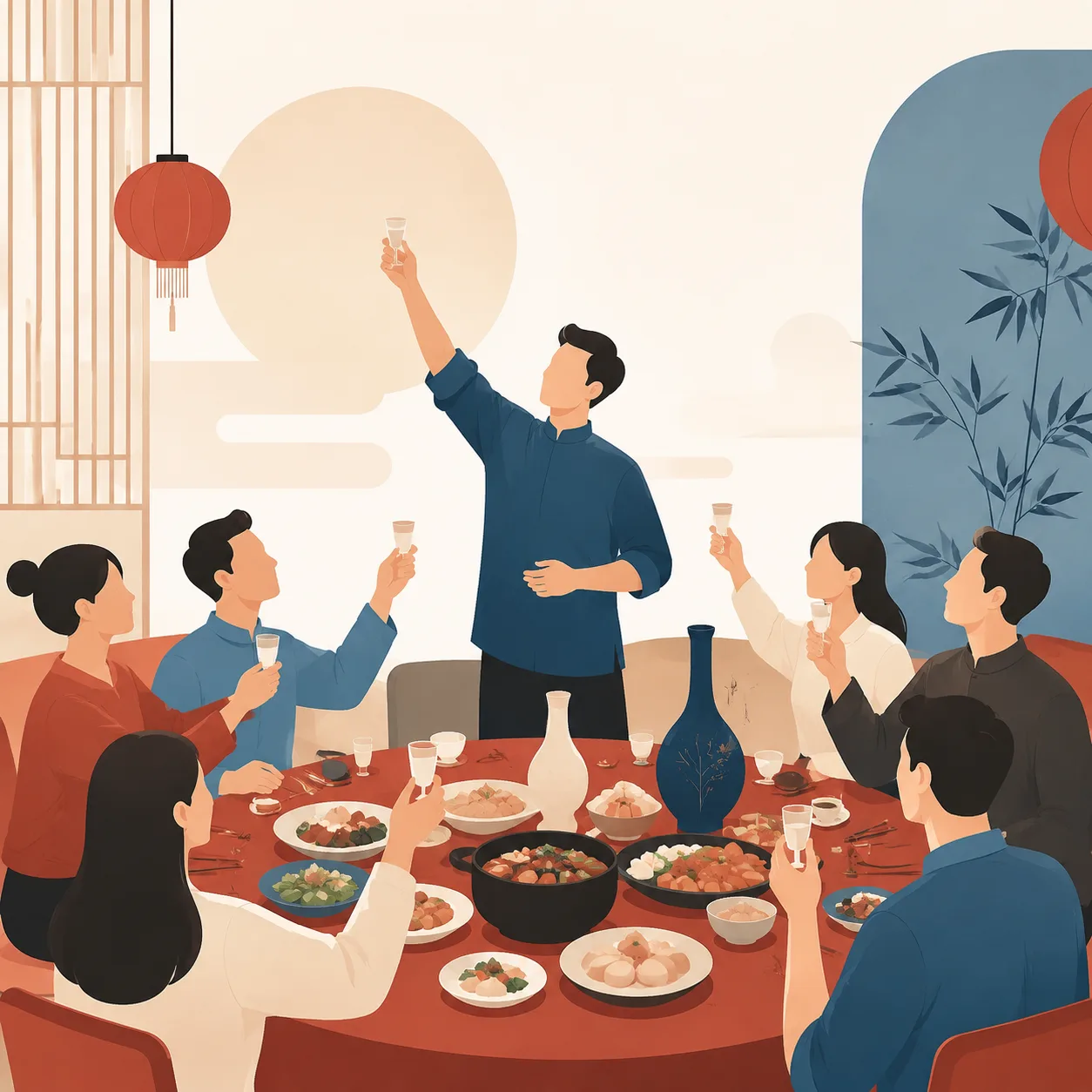
A Situation You May Recognize
A German engineer has told her Chinese host that she does not drink. At dinner, a senior client stands, raises a tiny glass, and says, “Ganbei.” Everyone turns toward her. She wants to protect her health without rejecting the relationship, but she cannot tell whether a sip, an empty glass, or tea would send the right message.
The difficult part is not the alcohol. It is responding in a way the whole table can understand.
How to toast, say ganbei, refuse alcohol politely, survive baijiu, and handle a Chinese business dinner without embarrassing yourself
You are sitting at a round table in China.
Someone stands up with a tiny glass.
Everyone looks toward you.
You hear:
“Ganbei!”
You do not know whether this means:
“Take a sip.”
“Finish the glass.”
“Drink because I am your client.”
Or:
“You now have ten seconds to destroy your liver in the name of international friendship.”
Relax.
Chinese drinking culture can be confusing, but the social logic behind it is easier to understand than it first appears.
This guide will show you what to do.
More importantly, it will show you what not to do.
First: A Toast Is Not Really About Alcohol
The mistake many foreign visitors make is focusing entirely on the liquid.
Chinese toasting is often more about the relationship.
A toast may communicate respect, gratitude, welcome, congratulations, friendship, hierarchy, or the hope of future cooperation.
That is why a thoughtful sentence plus a modest drink can sometimes carry more meaning than silently emptying a large glass.
Think of a toast as a tiny speech with a drink attached.
What Does “Ganbei” Actually Mean?
干杯 — gānbēi
Literally, the characters mean something close to “dry the cup.”
So yes, traditionally, ganbei can mean finishing what is in your glass.
But real life is more flexible than a dictionary.
The expectation depends on what you are drinking, how large the glass is, how formal the dinner is, and what kind of group you are with.
A tiny baijiu glass is different from a large glass of beer.
A traditional banquet is different from dinner with younger colleagues.
The safest strategy is simple:
Watch what everyone else does.
Do not assume every “ganbei” is a legally binding command to finish everything in front of you.
The Difference Between “Ganbei” and “Cheers”
Foreign visitors sometimes use “ganbei” every time they lift a drink.
That can unintentionally increase the intensity of the evening.
If you simply want to toast someone without emphasizing “bottoms up,” you can say:
敬您一杯。 Jìng nín yì bēi.
“I’d like to offer you a toast.”
Or simply:
谢谢您的招待。 Xièxie nín de zhāodài.
“Thank you for your hospitality.”
The relationship matters more than showing off your Chinese vocabulary.
Continue Reading — VIP Only
The rest of this article — real patterns, recognition signals, and step-by-step guidance for foreign executives — is available for a one-time unlock.
- ✓ Full article, including every example and action step
- ✓ Written for foreign professionals, managers & business owners
- ✓ Long-term access on this browser
Article preselected · One-time payment · Instant unlock
Try our tools
Related guides
The Complete Guide to Chinese Business Dinner Etiquette
At a formal Chinese business dinner, follow the host’s lead, wait for seating guidance, include everyone in conversation, and respect your own drinking limits. …
Read the guide →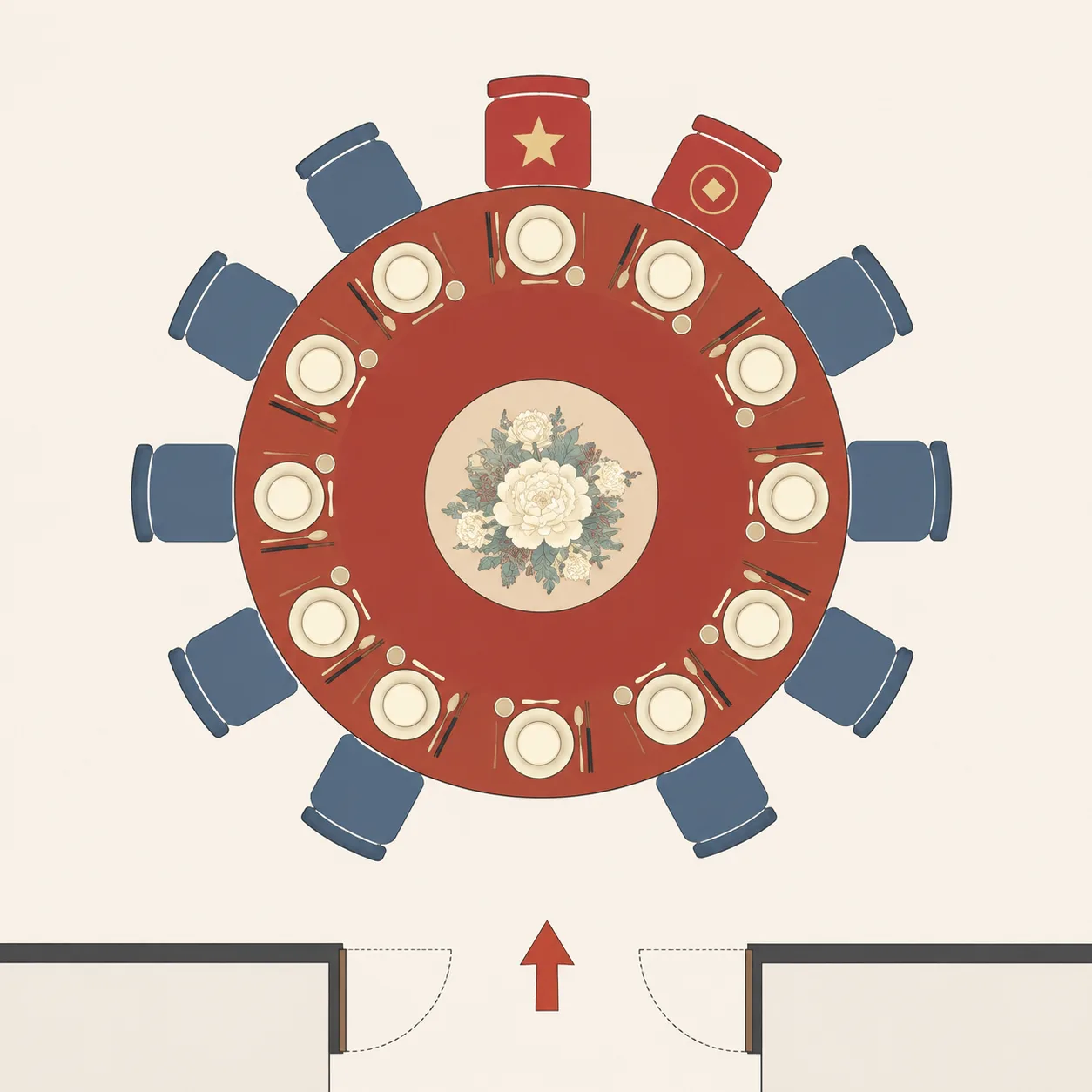
Where Do I Sit? The Chinese Business Banquet Playbook
Ask the host where to sit instead of relying on a fixed seating diagram. Follow the room’s cues for ordering, tea, shared dishes, payment, and departure. Practi…
Read the guide →
Chinese Business Etiquette Guide 2026: What You Must Know
Chinese business etiquette is easier to navigate when you watch three recurring patterns: relationship-building (guanxi), protecting dignity in public (mianzi),…
Read the guide →More in Dinner, Drinking & Gifts
Why Chinese Business Dinners Are About So Much More Than Food
The private dining room on the fourth floor of a Hefei hotel seats fourteen, and Daniel Brooks, a thirty-four-year-old procurement director …
Read Preview →🔒 VIPThe Complete Guide to Chinese Business Dinner Etiquette
At a formal Chinese business dinner, follow the host’s lead, wait for seating guidance, include everyone in conversation, and respect your o…
Read Preview →🔒 VIPWhere Do I Sit? The Chinese Business Banquet Playbook
Ask the host where to sit instead of relying on a fixed seating diagram. Follow the room’s cues for ordering, tea, shared dishes, payment, a…
Read Preview →