Are there special chopsticks for serving food at Chinese dinners?
Quick answer
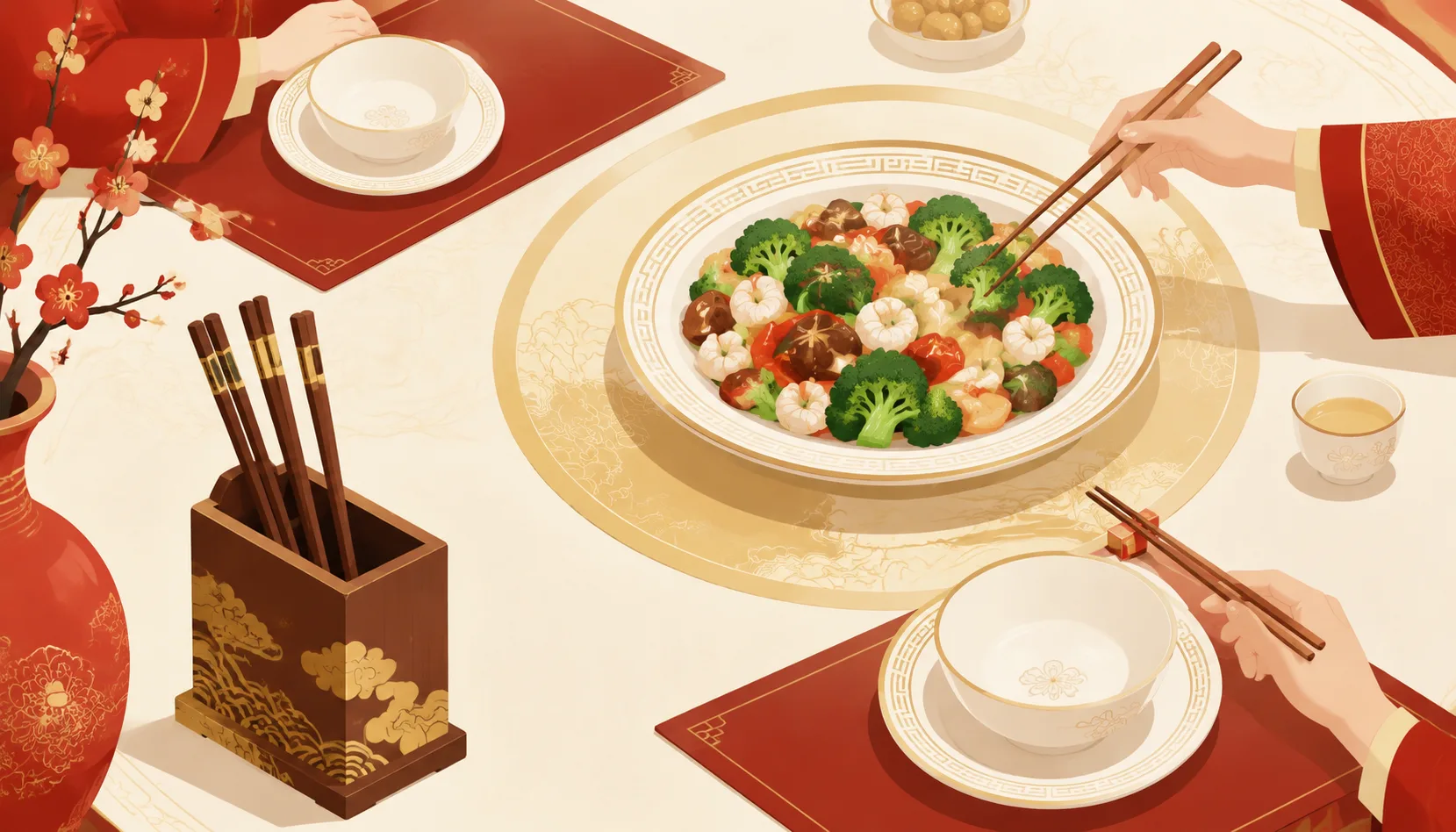
Yes. At formal meals, a separate pair of serving chopsticks (公筷, gōng kuài) is placed on the table for taking food from shared dishes. Never use your personal chopsticks to serve yourself from a communal dish at a formal banquet.
Why This Rule Matters
Communal chopsticks prevent the spread of bacteria. China has a high rate of H. pylori (stomach bacteria) transmission in families, largely attributed to shared eating without serving utensils. Their use became widespread after public health campaigns and is now standard at formal meals.
What You Should Do
- Look for the longer or differently colored serving chopsticks on the table
- Use serving chopsticks to transfer food from the shared dish to your own bowl
- Return serving chopsticks to the rest position after use
What You Shouldn't Do
- Use your own personal chopsticks to serve from shared dishes at a formal meal
- Lick your chopsticks and then reach into a communal dish
- Mix up personal and serving chopsticks
Practical Tips for Foreigners
This rule is most consistently observed at formal banquets, business dinners, and meals with elders, but enforcement varies by region and generation—it is looser in smaller cities and casual settings. When in doubt, watch what your Chinese host or senior colleague does and follow their lead. Breaking this rule once is forgivable — breaking it repeatedly signals a lack of cultural awareness.
Regional and Generational Differences
The serving chopsticks rule is not uniform across China. In northern cities like Beijing and Tianjin, formal banquets almost always enforce it, especially when elders are present. In southern Guangdong and Hong Kong, the practice is deeply ingrained—many locals won't even touch a <a href="/etiquette/dont-put-food-back-in-dish/">shared dish</a> without first picking up the communal spoon or chopsticks. However, in smaller cities and rural areas of Sichuan or Hunan, enforcement is looser, and younger professionals often wave it off. The generational split is stark: your Chinese colleagues in their 20s might laugh and say 'it's fine,' but their parents or grandparents will silently judge you. When in doubt, follow the eldest person's lead—if they skip the serving chopsticks, you can relax too.
Real Scenarios: Using Communal Chopsticks
- At a family dinner in Chengdu, German guest Markus used his own chopsticks to pick up a piece of mapo tofu from the shared bowl, and the host's elderly mother visibly paused and then silently moved the dish further from him for the rest of the meal.
- During a business lunch in Shanghai, French executive Claire reached with her personal chopsticks to grab a dumpling from the center plate, and her Chinese colleague gently but firmly stopped her hand, saying 'Let me help you,' while serving her with the communal spoon instead.
- At a hotpot restaurant in Beijing, Australian tourist Ben used his own chopsticks to stir the boiling pot, and the waiter immediately brought over a fresh pair of long-handled chopsticks, explaining in English that using personal ones in the shared pot is considered unhygienic and disrespectful to other diners.
- At a wedding banquet in Guangzhou, Canadian guest Sarah used the communal chopsticks to serve herself but then absentmindedly licked them before placing them back, causing the woman next to her to gasp and signal the server to replace the entire set of communal utensils.
What Your Host Thinks But Won't Say
When you use your personal chopsticks at a formal dinner, your Chinese host won't scold you—that would be rude. Instead, they'll think: 'Doesn't he know basic hygiene?' or 'Is he deliberately ignoring our customs?' In their mind, it's not just about germs; it's about respect for the group. By using serving chopsticks, you show you care about the health and comfort of everyone at the table. If you forget, they might assume you're careless or that your culture doesn't value communal harmony. They'll likely say nothing, but the memory lingers. <a href="/business/chinese-workplace-relationships-building/">Over time</a>, this can affect business relationships—a Chinese partner might view you as 'someone who doesn't respect our ways' and become less willing to trust you in negotiations.
Quick Check Before You Sit Down
Before a formal meal, scan the table: if you see serving chopsticks or spoons on every shared dish, use them without exception. If the table only has personal chopsticks, wait—someone will usually bring out the communal pair. When in doubt, ask: '我们要用公筷吗?' (Do we use serving chopsticks?)—this shows you care and the host will appreciate the question. Remember, the rule is stricter at banquets with elders, business dinners, and weddings. At casual meals with close friends, feel free to loosen up, but always start formal and relax only if your Chinese companions do first.
What Chinese People Actually Say
- 公筷 | gōng kuài | serving chopsticks | Use when taking food from shared dishes to show hygiene awareness
- 請用公筷 | qǐng yòng gōng kuài | please use the serving chopsticks | Polite phrase hosts say to remind guests
- 夾菜 | jiā cài | to pick up/grip food with chopsticks | Use when transferring food from shared plate to your bowl
2026 Reality Check
公筷 usage in 2026 shows a mixed picture. In upscale restaurants and corporate dinners, it's still standard—many venues actively provide serving spoons and chopsticks. However, casual family gatherings see declining compliance.
Generation gap: Gen Z (born after 1997) shows less strict adherence. Many view it as overly formal or "for show." Older generations (40+) generally maintain the practice, especially in professional settings. That said, younger Chinese are more health-conscious overall—just prefer individual servings over shared dishes entirely.
Geographic divide: Beijing and Shanghai still observe the rule more consistently, particularly in business contexts. Smaller cities and rural areas show resistance—many find it inconvenient or feel it disrupts the communal dining atmosphere. The 2020s push for "civilized dining" had impact in tier-1 cities but less so elsewhere.
Bottom line:公筷 remains alive but not universal. It's now more about venue type and context than a hard cultural rule.
Frequently asked questions
What are serving chopsticks (公筷) and why are they used at Chinese dinners?
Serving chopsticks are a separate pair of chopsticks placed on the table for transferring food from shared dishes to your own bowl or plate. They are used to maintain hygiene and show respect to others, as using personal chopsticks in communal dishes is considered impolite at formal meals.
How can I identify the serving chopsticks on the table?
Serving chopsticks are usually longer than regular chopsticks and may be placed on a dedicated rest or holder, often near the center of the table. When in doubt, watch your host or other guests—they will typically use the serving chopsticks first.
What should I do if there are no serving chopsticks provided at a formal dinner?
If no serving chopsticks are available, politely ask the host for a pair or use the reverse end of your personal chopsticks to pick up food. Avoid using the end that touches your mouth to serve yourself from shared dishes.
Can I use serving chopsticks to pick food for others at the table?
Yes, at formal dinners it is a polite gesture to use the serving chopsticks to place food into others' bowls, especially for elders or guests of honor. This shows care and respect, but always do so only if you are comfortable and the recipient is receptive.
Is it acceptable to use my personal chopsticks if I'm eating with family or close friends?
In casual settings with family or close friends, using personal chopsticks in shared dishes is often tolerated. However, at formal dinners or when dining with new acquaintances, always default to using the serving chopsticks to avoid any faux pas.
What are the common mistakes to avoid with serving chopsticks?
Avoid using serving chopsticks to eat directly from them, mixing them with your personal chopsticks, or placing them back into a dish after touching your mouth. Also, never use them to point at people or gesture, as this is considered rude.
Try our tools
Related guides
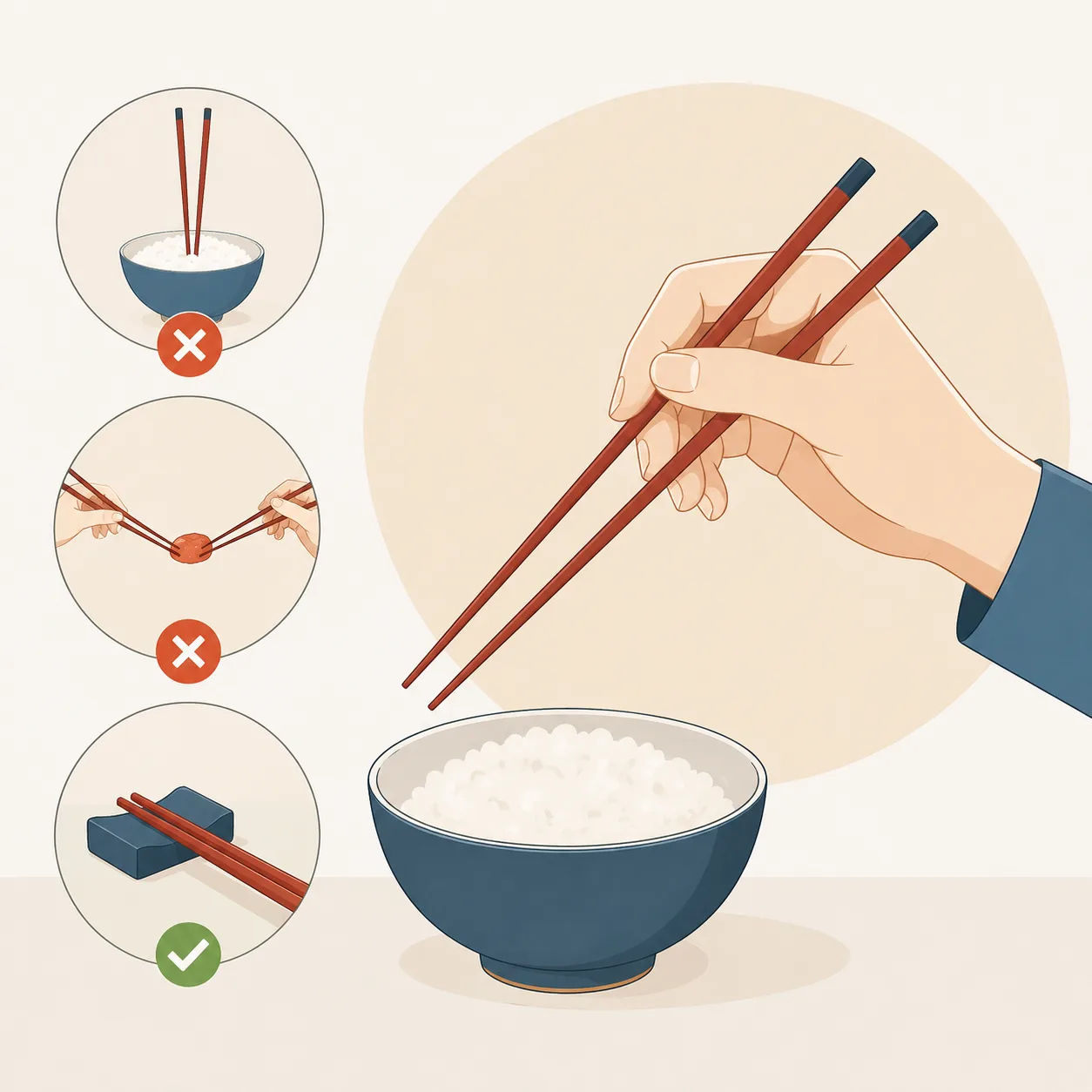
Chopstick Rules in China: What to Do and What to Avoid
The three biggest chopstick taboos in China: never stand them upright in a bowl of rice, never tap your bowl with them, and never dig through shared dishes. Kee…
Read the guide →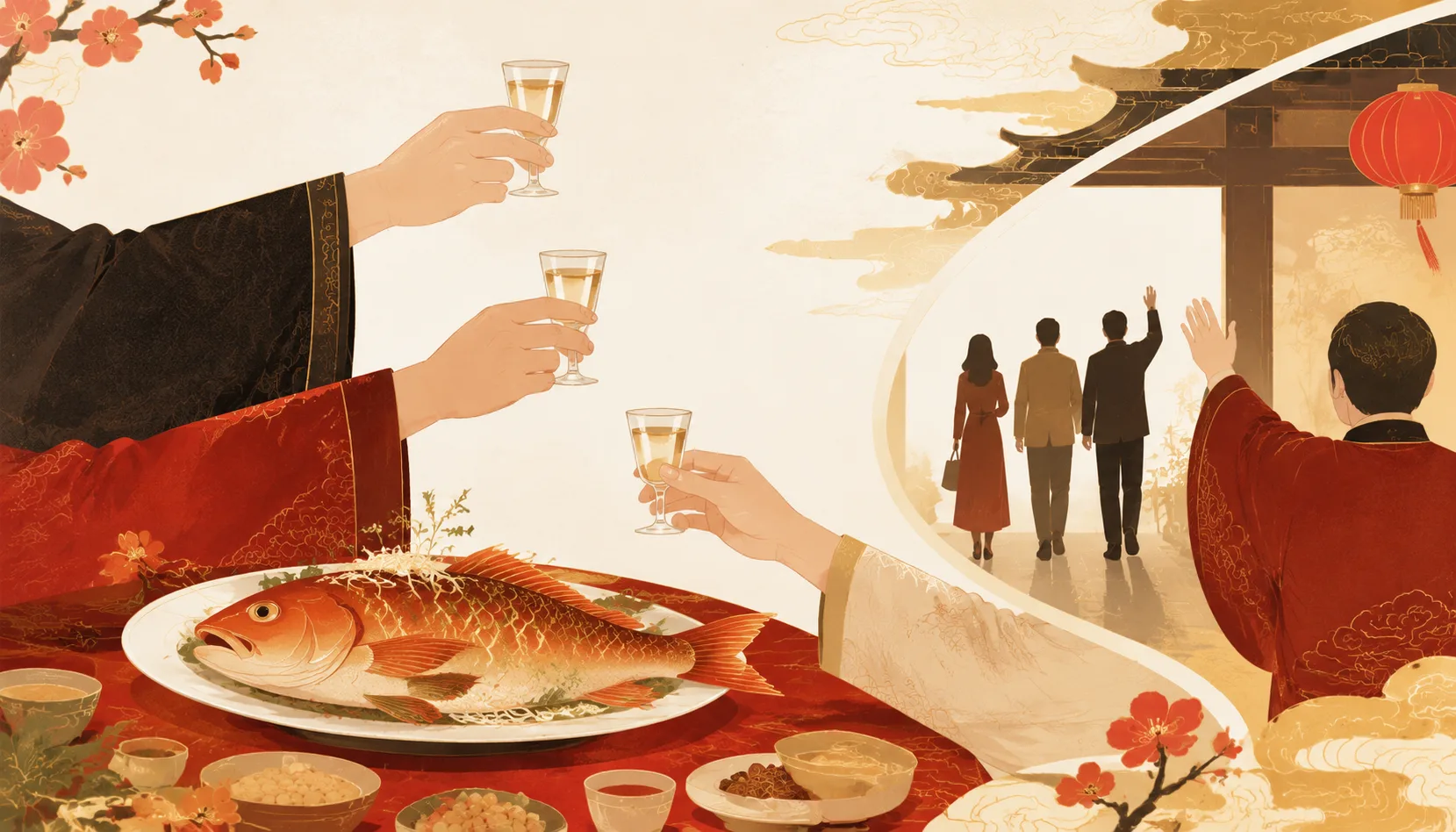
Chinese Restaurant Dining Etiquette: During and After
During a Chinese meal: wait for the host to signal the start, toast with the host before drinking, serve others before yourself, and never leave without a prope…
Read the guide →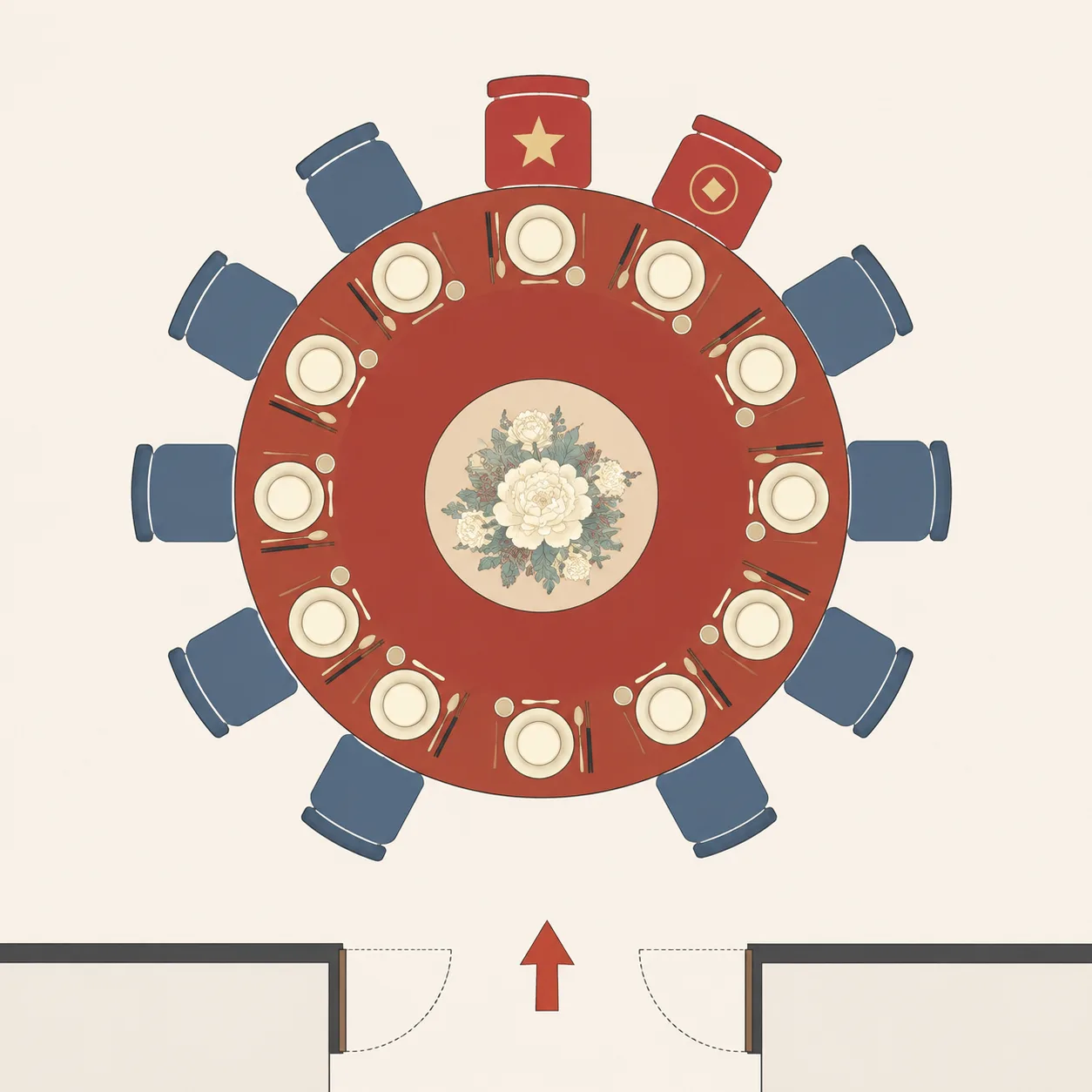
Chinese Banquet Seating: Where to Sit and What It Means
At a Chinese banquet, the seat of honor faces the door and belongs to the host or most senior person. The most important guest sits to the host's right. Everyon…
Read the guide →