How should I host Chinese business visitors to build trust and respect?
Quick answer
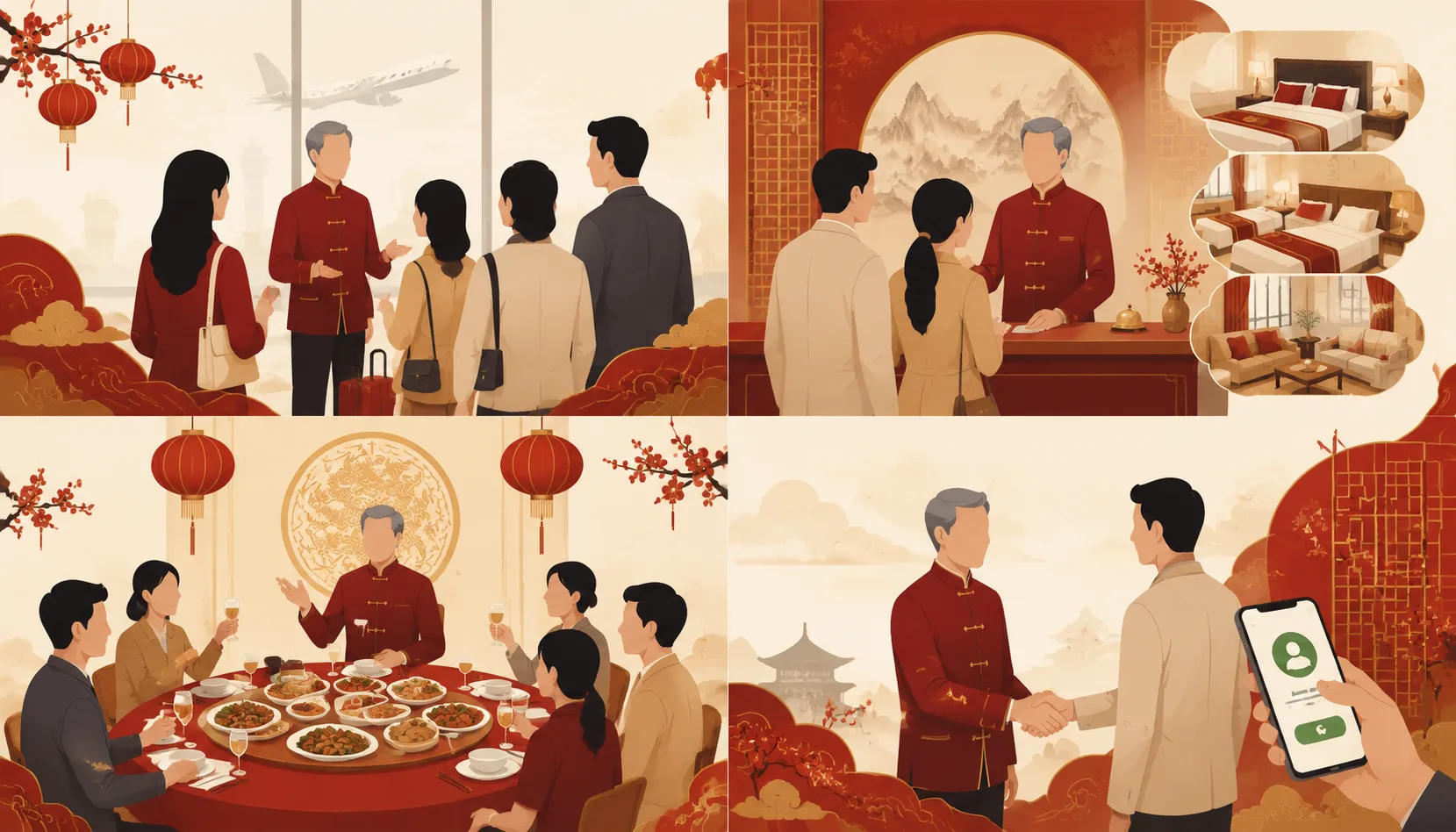
Host Chinese visitors with senior-level attention: arrange airport pickup by an equally senior colleague, book a top-brand hotel, host a welcome dinner with Chinese cuisine, and seat the senior guest facing the door. Follow up with a WeChat thank-you message. These gestures show respect (面子, miànzi) and set a positive tone for negotiations.
Why Hosting Etiquette Matters in Chinese Business Culture
In Chinese business culture, the way you host a visitor is a direct reflection of how much you value the relationship. The concept of 面子 (miànzi, face) is central: giving face through respectful treatment builds trust, while unintentional slights can damage negotiations before they begin. Hosting is not just logistics—it's a form of communication.
When your Chinese partners or clients visit your city, they are observing everything: who picks them up, where they stay, how you treat them at dinner. These details signal your commitment to the partnership. A well-hosted visit can accelerate deals; a poorly hosted one can stall them.
This guide walks you through each step—from airport pickup to farewell—with practical tips and Chinese phrases to help you navigate the cultural nuances confidently.
Airport Pickup: Send Someone Senior Enough
Your first impression is made at the airport. In Chinese business culture, the seniority of the person greeting a visitor is a direct measure of respect. Never send a junior assistant to collect a senior Chinese executive. This signals that the visitor is not important to you.
Match the rank: if the visiting delegation is led by a VP or director, send your own VP or director. If it's a CEO, you or your top executive should be there. This is called 对等接待 (duìděng jiēdài, equivalent-level reception).
Practical tips:
- Arrive early—delays reflect poorly on you.
- Hold a sign with the visitor's name in both English and Chinese (e.g., 王总, Wáng Zǒng, for General Manager Wang).
- Greet with a handshake and a slight nod—avoid overly enthusiastic gestures.
- Help with luggage, but let them lead the way to the car.
If you cannot be there, explain in advance and send a senior colleague with a clear apology: 非常抱歉,我临时有急事,所以派我们的副总来接您 (Fēicháng bàoqiàn, wǒ línshí yǒu jíshì, suǒyǐ pài wǒmen de fùzǒng lái jiē nín) — “I’m very sorry, something urgent came up, so our VP is here to pick you up.” This shows you care enough to explain.
Choosing the Hotel: Location, Brand, and Face
The hotel you book for your Chinese visitors is more than a place to sleep—it's a statement of how much you value them. In Chinese business culture, hotel quality directly affects 面子 (miànzi, face). A budget hotel can be seen as disrespectful, even if the visitor is modest.
Choose a hotel that is:
- Well-known international brand (e.g., Hilton, Marriott, Shangri-La) or a top local five-star.
- Centrally located, near your office or key meeting venues.
- Clean and modern, with good reviews.
When you inform them of the booking, highlight the hotel's credentials. For example: 我们为您订了市中心的香格里拉酒店,这是本市最好的酒店之一 (Wǒmen wèi nín dìng le shìzhōngxīn de Xiānggélǐlā jiǔdiàn, zhè shì běnshì zuì hǎo de jiǔdiàn zhī yī) — “We booked you at the Shangri-La in the city center; it’s one of the best hotels in our city.”
This verbal reinforcement shows you put thought into their comfort. Also, ask about preferences (e.g., smoking floor, high floor) in advance—small details matter.
The Welcome Dinner: Timing and Restaurant Selection
Hosting a welcome dinner on the evening of arrival is a must. It serves two purposes: it establishes warmth and gives your guests time to recover from travel before formal business. Never schedule business meetings on the same day as arrival—jet lag and fatigue can harm negotiations.
For the restaurant, Chinese cuisine is always a safe choice, even in a foreign city. Research a reputable Chinese restaurant near the hotel. This shows thoughtfulness and familiarity with their tastes. If you choose local or Western food, brief them in advance so they know what to expect.
Here’s a quick comparison:
| Option | Pros | Cons |
|---|---|---|
| Chinese restaurant | Familiar, safe, shows cultural awareness | May be less adventurous |
| Local cuisine | Unique experience, memorable | Risk of unfamiliarity or dietary issues |
| Western fine dining | Impresses with sophistication | May not suit their palate |
If you go local, say: 这家餐厅是我们当地的特色菜,希望您喜欢 (Zhè jiā cāntīng shì wǒmen dāngdì de tèsè cài, xīwàng nín xǐhuān) — “This restaurant serves our local specialty; I hope you enjoy it.” Always ask about dietary restrictions (e.g., halal, vegetarian) before booking.
Seating Hierarchy: The Face-Door Position
Seating at a business dinner follows strict hierarchy in Chinese culture. The most senior guest must sit in the seat facing the door—this is the position of honor, symbolizing authority and respect. The host sits opposite, with the door at their back.
Here’s the standard layout:
| Position | Who Sits There | Why |
|---|---|---|
| Facing the door | Most senior guest | Position of honor (主宾, zhǔbīn) |
| Back to the door | Host | Shows humility, controls service |
| Right of guest | Second-highest guest | Right side is more prestigious |
| Left of guest | Second-highest host | Supports conversation |
If you’re unsure, ask discreetly: 请问哪位是贵方领导? (Qǐngwèn nǎ wèi shì guìfāng lǐngdǎo?) — “May I ask who is your leader?” Then guide them to the honored seat.
During the meal, let the senior guest start eating first—do not dive into your plate before them. This is a subtle but powerful sign of respect.
The Agenda: Balance Business and Personal Time
Chinese visitors often want to shop for specific items or brands—especially if they’re in a new country. Build buffer time into the schedule to accommodate this. A packed agenda with no free time can feel rigid and inhospitable.
When presenting the agenda, be clear but flexible: 这是我们为您安排的日程,您看是否合适? (Zhè shì wǒmen wèi nín ānpái de rìchéng, nín kàn shìfǒu héshì?) — “This is the schedule we arranged for you; does it work?” This invites input and shows you value their preferences.
Offer to help with shopping: 如果您想买一些当地特产,我可以陪您去 (Rúguǒ nín xiǎng mǎi yīxiē dāngdì tèchǎn, wǒ kěyǐ péi nín qù) — “If you’d like to buy some local specialties, I can accompany you.” This is a great relationship-builder.
During meals and downtime, avoid diving straight into business. Instead, ask about their journey, their family, or their city. This personal connection is the foundation of trust in Chinese business culture.
What NOT to Do: Common Mistakes to Avoid
Even with good intentions, small missteps can cause offense. Here are the top pitfalls to avoid:
- Don’t overload the schedule—leave time for rest and personal errands.
- Don’t serve alcohol without asking—some visitors don’t drink for health or religious reasons. Ask: 您喝点什么? (Nín hē diǎn shénme?) — “What would you like to drink?”
- Don’t have junior staff host senior visitors—this is a direct insult to their status.
- Don’t rush the farewell—the goodbye is as important as the welcome.
If you’re unsure about alcohol, offer tea or juice first. If you do serve alcohol, follow the host’s lead—never pressure anyone to drink.
Also, avoid controversial topics like politics or religion. Stick to safe subjects: travel, food, family, and business achievements.
The Farewell: Personal Send-Off and WeChat Follow-Up
In Chinese culture, the end of a visit is as significant as the beginning. See them off personally—or send someone of equal seniority—to the airport or train station. This closes the loop on the relationship.
During the send-off, express gratitude: 非常感谢您这次来访,希望我们合作愉快 (Fēicháng gǎnxiè nín zhè cì láifǎng, xīwàng wǒmen hézuò yúkuài) — “Thank you very much for visiting; I hope we have a pleasant cooperation.”
After they leave, send a WeChat follow-up within 24 hours. This is a critical step in Chinese business culture. A simple message like:
王总,感谢您今天的来访,我们已经开始准备合作方案,期待下次见面! (Wáng Zǒng, gǎnxiè nín jīntiān de láifǎng, wǒmen yǐjīng kāishǐ zhǔnbèi hézuò fāng'àn, qīdài xià cì jiànmiàn!) — “General Manager Wang, thank you for your visit today. We’ve already started preparing the cooperation plan. Looking forward to meeting again!”
This shows professionalism and keeps the relationship warm. Remember, in China, business is built on relationships—and hosting is the first brick.
What Chinese People Actually Say
What Chinese People Actually Say: Host Chinese visitors with senior-level attention: arrange airport pickup by an equally senior colleague, book a top-brand hotel, host a welcome dinner with Chinese cuisine, and seat the senior guest.
- 欢迎光临 (huān yíng guāng lín) – "Welcome, please come in." Used when greeting a senior guest at the airport or hotel.
- 请坐 (qǐng zuò) – "Please sit." Used when guiding the senior guest to the head of the table.
- 祝您旅途愉快 (zhù nǐ lǚ tú yú kuài) – "Wish you a pleasant trip." Used after the welcome dinner or when seeing them off.
- 谢谢您的光临 (xiè xiè nín de guāng lín) – "Thank you for your visit." Used at the end of the meeting or dinner.
2026 Reality Check
2026 Reality Check: Gen Z Chinese visitors (born after 1997) now make up over 30 % of business trips. They favour instant messaging, video calls, and QR‑code exchanges over formal printed cards. Expect a more casual dress code, a preference for sustainability‑focused venues, and a willingness to negotiate on the spot. In contrast, senior executives (50+) still value face‑to‑face rapport, elaborate banquets, and symbolic gifts. Tier‑1 city delegates (Beijing, Shanghai, Guangzhou) are tech‑savvy, data‑privacy conscious, and expect seamless digital onboarding; they often schedule back‑to‑back meetings. Tier‑2/3 city visitors (Chengdu, Xi’an, Nanjing) tend to prioritize relationship‑building, slower decision cycles, and local hospitality customs. Hosts should tailor their agenda: blend quick digital touchpoints for Gen Z with traditional dinner ceremonies for older guests, and match the city’s pace and expectations.
Frequently asked questions
What should I do if my Chinese guest insists on paying for the welcome dinner?
Let them pay once, but insist gently on the next meal. This is a face (miànzi) exchange, not a financial one. A simple 'You are our guest, next time is on us' works well. Refusing too hard can cause embarrassment. The goal is mutual respect, not a battle over the bill.
Is it okay to host Chinese visitors at a Western restaurant instead of a Chinese one?
Yes, if you ask in advance or the visitor expresses preference. Many Chinese business travelers enjoy trying local cuisine. However, a Chinese restaurant signals cultural awareness and effort. If you choose Western, pick a high-end, quiet venue with private seating. Avoid noisy or overly casual spots, as formality matters.
How do I handle a Chinese visitor who arrives with a gift I wasn't expecting?
Accept it with both hands, thank them sincerely, and do not open it immediately. This is standard gift etiquette. You should reciprocate later with a gift of similar value, ideally from your home country. Avoid giving clocks, umbrellas, or white flowers, as these carry negative connotations in Chinese culture.
Can I skip the airport pickup if my office is far from the airport?
Skipping it is risky. Airport pickup by a senior colleague is a key sign of respect. If distance is a problem, arrange a professional car service with a driver holding a welcome sign, and have a senior manager call to greet them upon arrival. Never send a junior staff member alone.
What is the correct seating arrangement if there are multiple Chinese guests of different seniority?
Rank your guests by title and age. The most senior guest sits facing the door (the 'seat of honor'), with your most senior host directly opposite. Arrange others by descending rank, alternating Chinese and your team. If unsure, ask the guest's assistant beforehand. Getting this wrong can cause silent offense.
Why is a WeChat follow-up message more important than an email after the visit?
WeChat is the primary business communication tool in China. A quick message within 24 hours—thanking them, referencing a shared moment, and offering next steps—shows you value the relationship. Emails feel formal and slow. WeChat messages are personal and immediate, reinforcing trust and keeping the door open for negotiations.
Try our tools
Related guides
Chinese Business Banquet Protocol: Rules & What Not to Do
A Chinese business banquet is not a meal — it's a trust-building ceremony disguised as dinner. The food is secondary. The goal is to establish that you are a re…
Read the guide →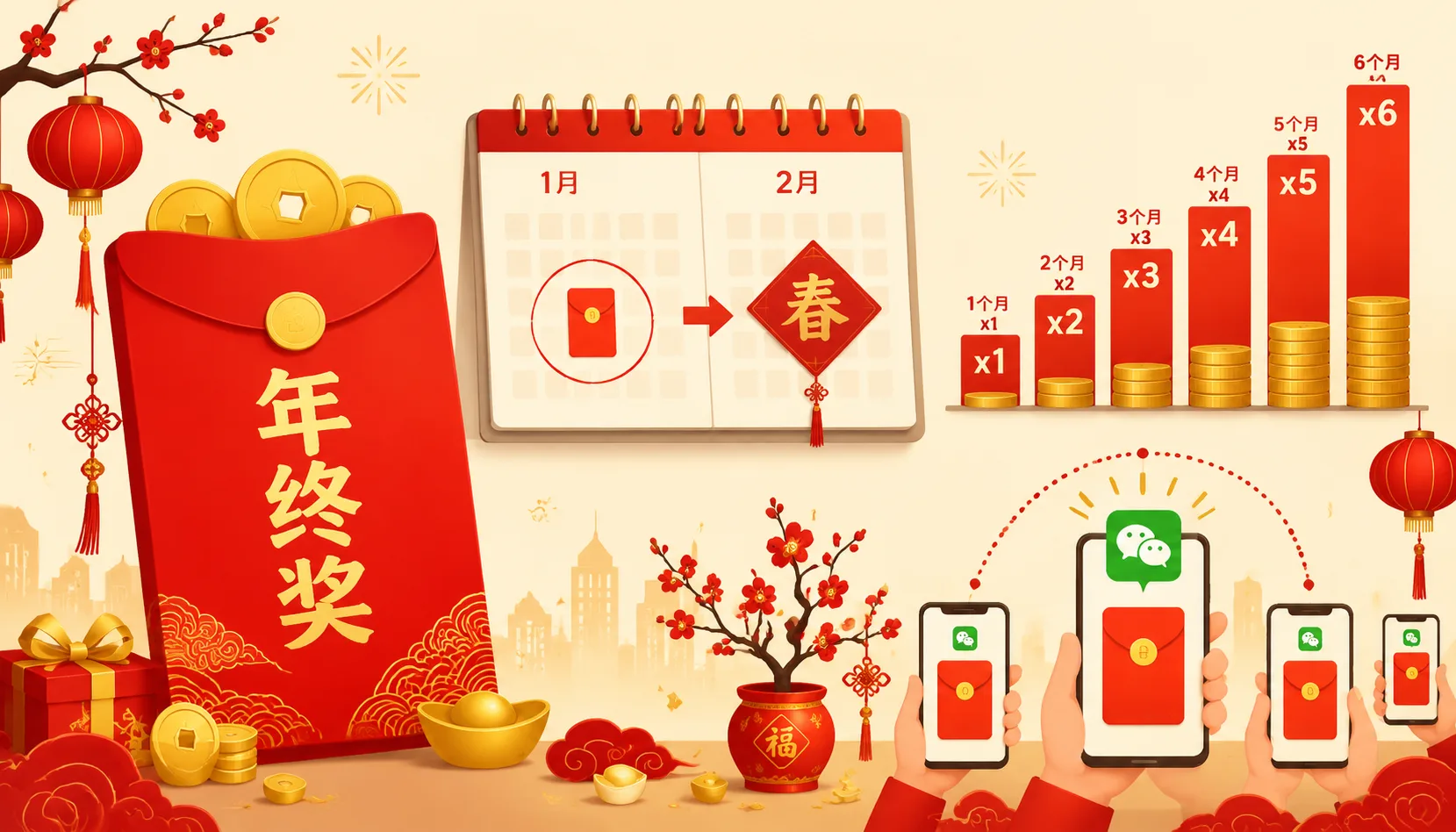
Chinese Annual Bonus (年终奖) Culture: What You Need to Know
The 年终奖 (niánzhōng jiǎng) is a culturally significant year-end bonus paid before Chinese New Year, often worth 1-6 months' salary. For expats, negotiate it in y…
Read the guide →
Why Long Hours Are a Statement as Much as a Schedule in China
It is 8:40 on a Tuesday evening on the twenty-third floor of a Hangzhou office tower, and Li Meng finished her work two hours ago. The quarterly report has been…
Read the guide →