Is it bad luck to flip a fish over when eating it at a Chinese dinner?
Quick answer
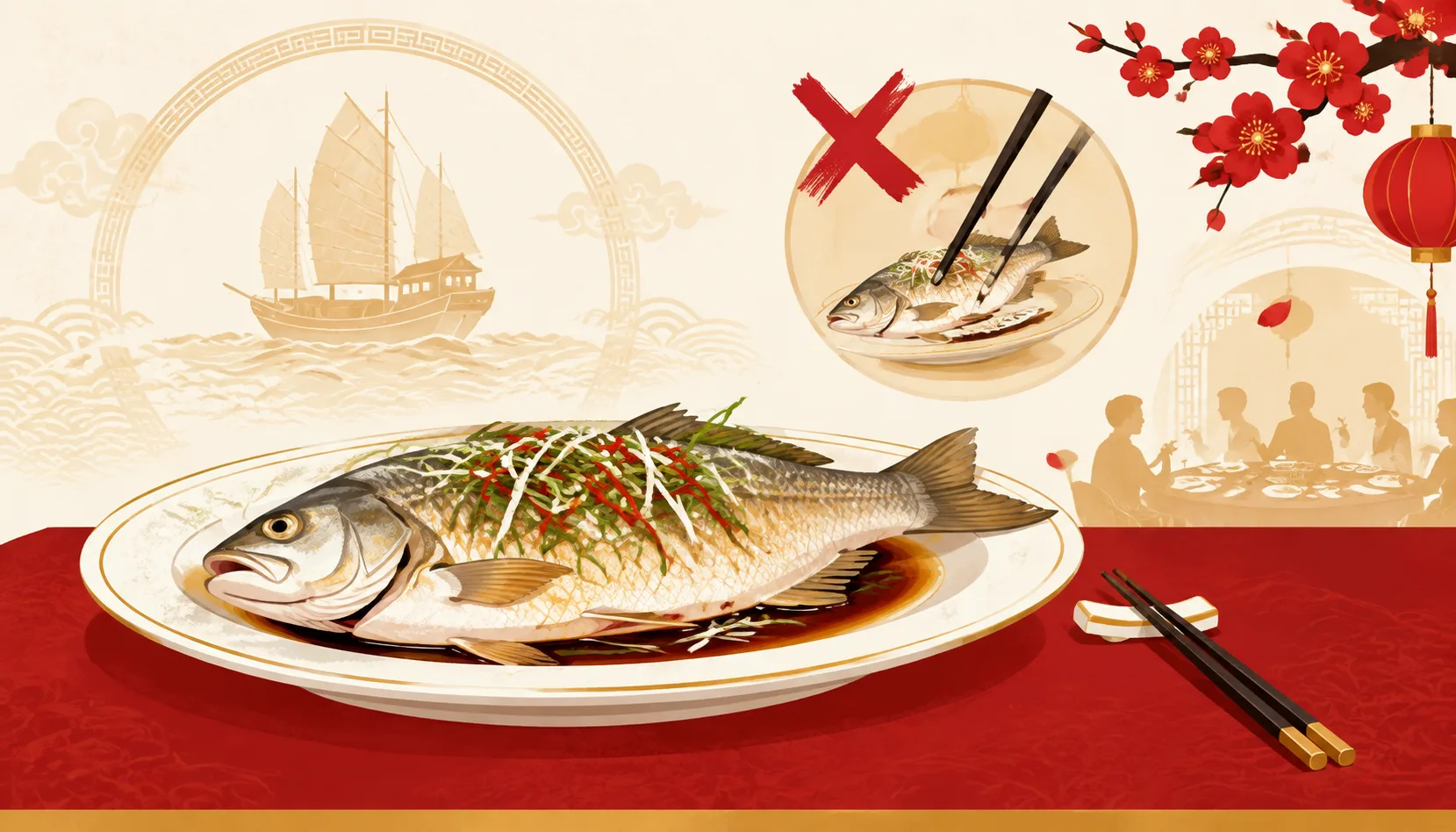
Yes. When eating a whole fish, never flip it upside down or say the word 'flip' (翻, fān). This is considered bad luck, especially in coastal communities where it symbolizes a capsizing boat.
Why This Rule Matters
This taboo originated in coastal fishing communities where '翻' (flip) was associated with a boat capsizing. A whole fish on the plate resembles a boat — flipping it symbolizes sinking. The superstition spread inland and remains common across China. In coastal regions, the rule 'guests don't flip the fish' (客不翻鱼) is still observed.
What You Should Do
- Eat the top side of the fish first
- When you reach the bone, use chopsticks to lift the bone away and eat the bottom side without turning the fish over
- Say '掉头' (diào tóu, turn the head) instead of 'flip' if you need to reference the action
What You Shouldn't Do
- Flip the fish upside down on the plate
- Say the word '翻' (fān, flip/turn over) while eating fish
- Turn the fish as a guest — the host should handle this if needed
Practical Tips for Foreigners
This rule applies in most social and formal settings across China. When in doubt, watch what your Chinese host or senior colleague does and follow their lead. Breaking this rule once is forgivable — breaking it repeatedly signals a lack of cultural awareness.
Regional Differences and Generational Shifts
The fish-flipping taboo is strongest in southern coastal provinces — Guangdong, Fujian, and Zhejiang — where fishing traditions run deep. In Shanghai, older business hosts still observe it strictly, but younger urban professionals often wave it off. In Beijing and inland cities, the rule is much softer; many locals don't even know it exists. Meanwhile, in Hong Kong and parts of Guangdong, saying '翻' at a banquet table is considered genuinely offensive, not just superstitious. If you're in a formal dinner with older colleagues from these regions, treat the rule as ironclad.
Real Scenarios: What Happens When You Flip
- A British expat in Shanghai attended a seafood banquet with his client's family. After finishing the top half of the fish, he cheerfully said, 'Let's flip it over!' The client's 70-year-old father put down his chopsticks and didn't speak for the rest of the meal. The client later explained that his father saw it as an omen of a fishing boat capsizing — his family had been fishermen for three generations.
- In Guangzhou, an American manager at a Christmas party flipped a whole steamed bass at the table, laughing it off as 'silly superstition.' A Chinese colleague from Fujian quietly left the room. The manager later learned that the colleague's uncle had died at sea — the gesture felt like mocking a real family tragedy.
- A German engineer in Qingdao, a major fishing port, asked the waitress to 'turn the fish' at a company dinner. The waitress hesitated, then brought a new fish without flipping the old one. The engineer's local boss pulled him aside: 'Here, you just don't say that word. It's like saying "break a leg" to a pilot.'
What Your Chinese Host Thinks
When a foreigner flips the fish, the Chinese host rarely says anything directly — that would be rude. Instead, they may silently signal the waiter to change the dish, or they'll quickly pivot the conversation to something else. Inside, they're thinking: 'This person hasn't learned our customs — what else might they do carelessly?' In business contexts, this can subtly shift trust. It's not about anger; it's about reading you as someone who doesn't respect local ways. A host who likes you will quietly correct you later. One who doesn't will just let it slide and remember.
The Word 'Fan' Extends Beyond Fish
The taboo on '翻' isn't limited to fish. In Cantonese and Hokkien-speaking regions, saying '翻' in contexts of reversal or overturning — like '翻工' (rework) or '翻车' (car crash) — is avoided during festive meals and Chinese New Year. On the mainland, you may hear '反' used instead of '翻' for flipping objects in these settings. If you need to refer to turning something over, say '换个面' (change the side) or '反过来' (turn it over) — both are neutral and safe. In coastal <a href="/business/chinese-dinner-information-gathering/">business dinners</a>, even the word '倒' (pour out, overturn) is sometimes softened to '满' (fill).
What Chinese People Actually Say
- 翻鱼 | fān yú | "turning the fish over" | Taboo—eat the top side only, then lift the bone to reveal the bottom; never say "fān" (flip)
- 翻 | fān | "flip/turn over" | Avoid saying this word while eating fish; it sounds like "fān chuán" (boat capsizing)
- 鱼头朝客 | yú tóu cháo kè | "fish head faces the guest" | Fish head should point toward the guest of honor as a sign of respect
2026 Reality Check
2026 Reality Check: The "don't flip the fish" rule is fading but not dead. It's now more about showing manners in formal settings than strict etiquette.
Gen Z vs Older Generations: Most younger Chinese (under 30) either don't know this rule or find it outdated. They see it as unnecessary formality. Boomers and seniors still observe it—especially in rural areas and family dinners.
Beijing/Shanghai vs Smaller Cities: In tier-1 cities, this rule is mostly ignored at casual restaurants. Younger diners openly flip fish without shame. In smaller cities and traditional households, elders still side-eye anyone who turns a fish over—it's considered disrespectful to the host.
Bottom line: The rule survives mostly in formal banquets and older generations' homes. It's becoming a "nice to have" gesture, not a must-follow rule.
Frequently asked questions
Why is flipping a fish considered bad luck in China?
Flipping a whole fish symbolizes a boat capsizing, which is a major fear for coastal fishing communities. It's believed to bring misfortune or bad luck to the meal and those present.
What should I do instead of flipping a whole fish at a Chinese dinner?
If you need to access the other side of the fish, use chopsticks to gently lift the top fillet and eat the meat from underneath without turning the fish over. Alternatively, ask the host or server to debone it for you.
Is it also forbidden to say the word 'flip' (翻, fān) during a meal?
Yes, avoid saying 'flip' or any phrase that includes 'fān' at the table, as it's considered a verbal jinx. Use alternative words like 'turn over' or simply point to what you need.
Does this rule apply to all types of fish in China?
It mainly applies to whole fish served on a plate, especially in coastal regions or during festive meals. For filleted or pre-cut fish, the rule is less strict, but it's still polite to avoid flipping any food.
What if I accidentally flip a fish at a Chinese dinner?
If it happens, apologize briefly and don't make a fuss. You can say '不好意思' (sorry) and continue eating. Most hosts will understand it's an honest mistake, especially if you're a foreigner.
Are there other similar food taboos I should know at a Chinese table?
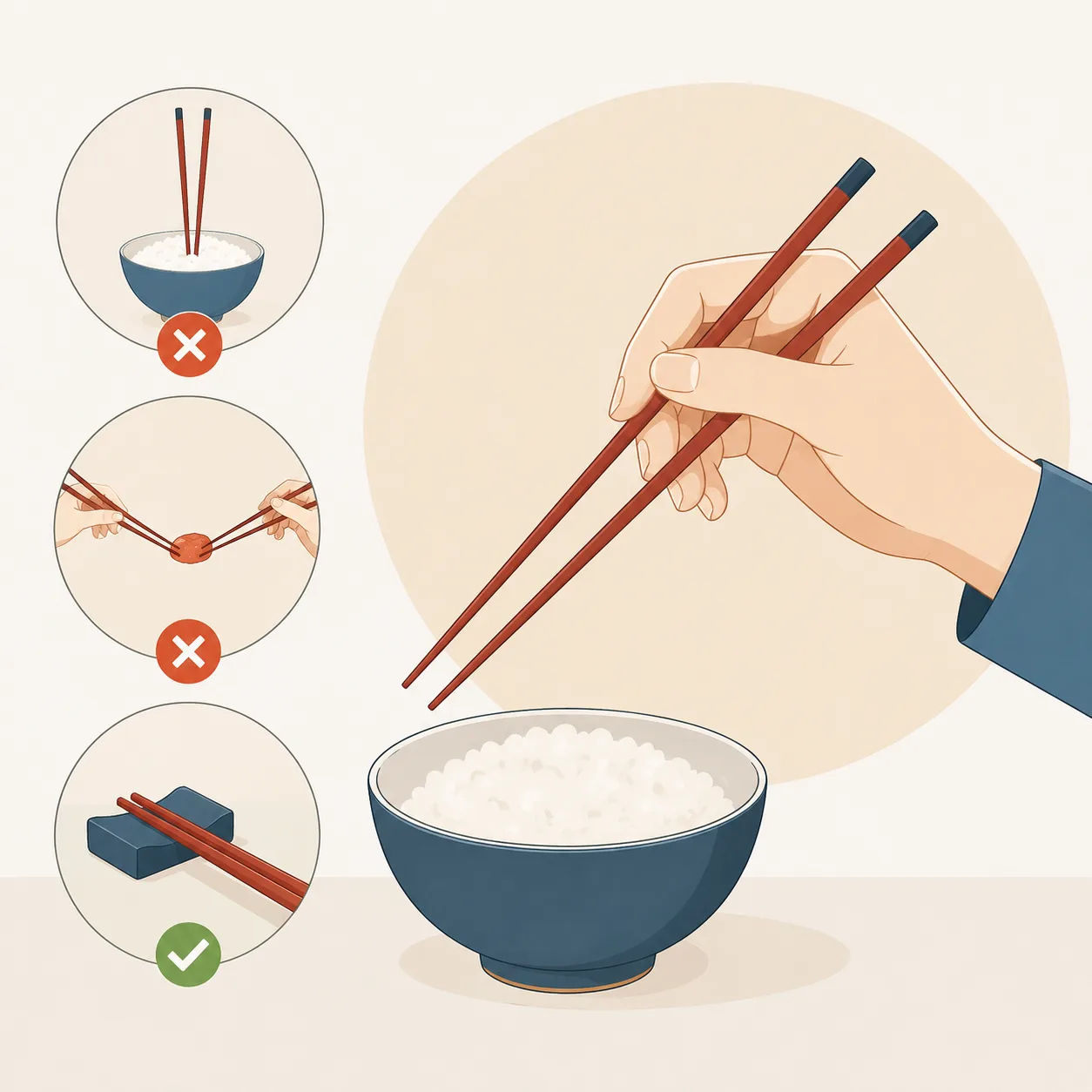
Yes, avoid sticking chopsticks upright in a bowl of rice (resembles incense at a funeral), don't point with chopsticks, and never tap your bowl with chopsticks. Also, avoid saying 'death' or 'loss' during meals, as these words are considered unlucky.
Try our tools
Related guides
Chopstick Rules in China: What to Do and What to Avoid
The three biggest chopstick taboos in China: never stand them upright in a bowl of rice, never tap your bowl with them, and never dig through shared dishes. Kee…
Read the guide →
Chinese Restaurant Dining Etiquette: During the Meal and Beyond
During a Chinese meal: wait for the host to signal the start, toast with the host before drinking, serve others before yourself, and never leave without a prope…
Read the guide →
Ordering Food at a Chinese Restaurant: The Unwritten Rules
Chinese restaurant culture has specific rules foreigners often miss: seating is hierarchical (best seat faces the door), the host or senior person typically ord…
Read the guide →