What do lucky foods in China symbolize and how should foreigners respond when they appear?
Quick answer
In China, certain foods carry deep symbolic meanings—fish for surplus, dumplings for wealth, long noodles for longevity, and more. When these foods appear, it's a sign of goodwill and celebration; you should accept them graciously, avoid cutting long noodles, and reciprocate with compliments or a small toast.
Why Food Symbolism Matters in China
Food in China is never just about taste—it's a language of wishes and blessings. The Chinese word for 'fish' (鱼, yú) sounds like 'surplus' (余, yú), so serving fish at a meal expresses a wish for abundance. This phonetic wordplay (谐音, xiéyīn) drives much of Chinese food symbolism. Understanding these meanings helps you see the intention behind every dish and respond with cultural awareness.
When a host serves these symbolic foods, they are extending a blessing to you. Recognizing the symbolism and acknowledging it with a simple comment like '好寓意' (hǎo yùyì, good meaning) shows respect and appreciation. Ignoring the symbolism isn't offensive, but engaging with it elevates your cultural credibility.
This guide covers the most common lucky foods you'll encounter at banquets, festivals, and family meals—what they signal, and how to respond appropriately.
Fish (鱼) – Surplus and Abundance
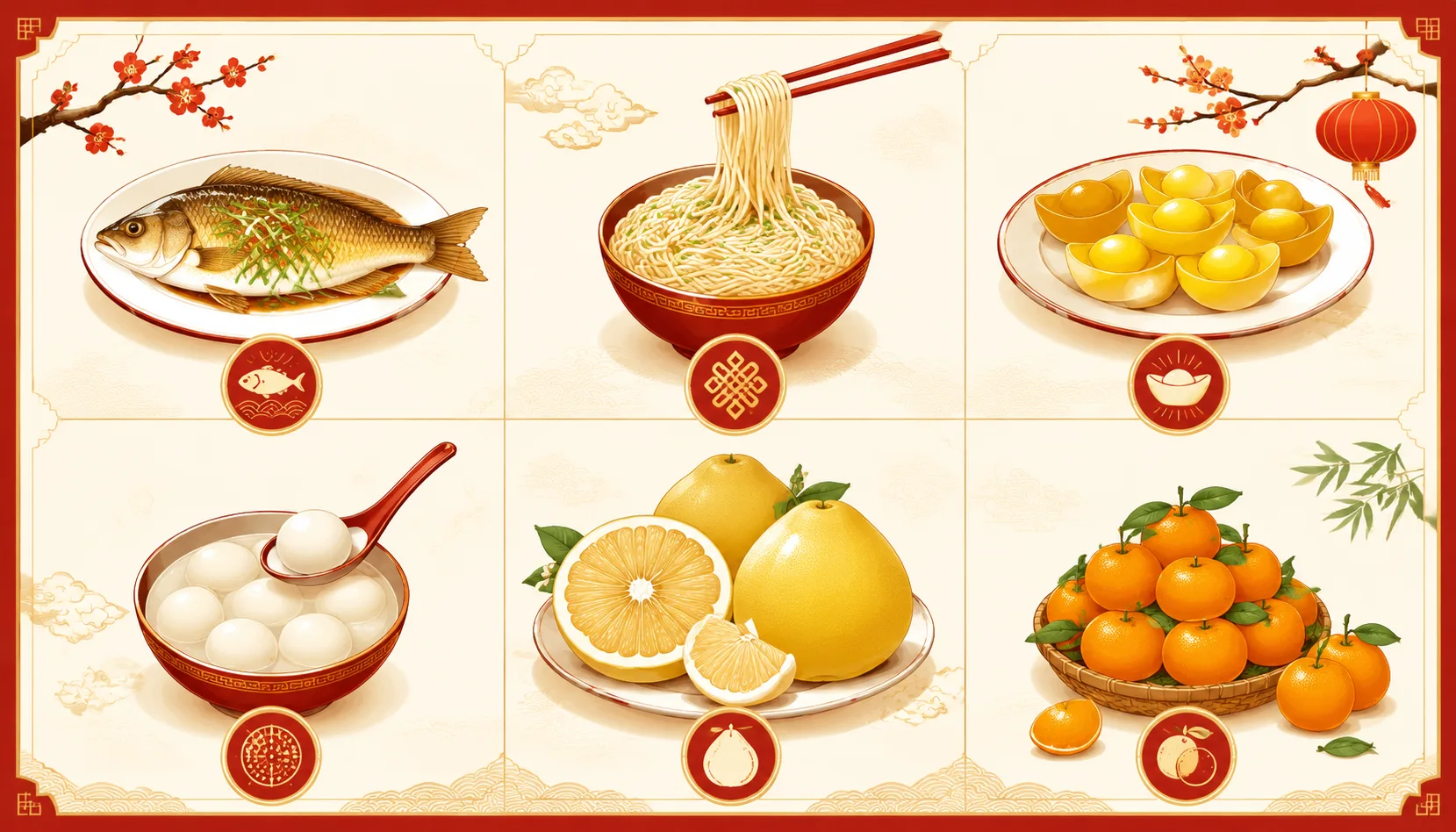
Fish is a staple at Chinese New Year and celebratory banquets. Its symbolism comes from the homophone with 'surplus.' Serving a whole fish—head and tail intact—represents a good beginning and end for the year, and the wish for surplus in wealth and health.
Key etiquette: The fish is usually placed with the head pointing toward the guest of honor. The host may use chopsticks to pick the first piece for you. Do not flip the fish over—turning it symbolizes a boat capsizing or bad luck. Instead, lift the spine to access the meat underneath.
When you see fish, it's a signal that the host wishes you abundance. Respond by complimenting the freshness and thanking the host. If you're the guest of honor, you might take the first bite after the host offers it. Avoid saying 'I don't like fish'—instead, take a small portion to show respect.
Dumplings (饺子) – Wealth and Gold Ingots
Dumplings (饺子, jiǎozi) are the quintessential Chinese New Year food, especially in northern China. Their shape resembles ancient Chinese gold ingots (元宝, yuánbǎo), symbolizing wealth and prosperity. Families often hide a coin in one dumpling—whoever finds it will have good luck in the new year.
At a meal, dumplings signal a wish for financial success. They're often served at midnight on New Year's Eve, marking the transition to the new year. If you're offered dumplings, accept them enthusiastically—it's a sign you're part of the family's good fortune.
Etiquette tips: Don't cut a dumpling with a knife; eat it whole. Dip in vinegar or soy sauce as the host does. If you find the coin, it's customary to announce it happily—it's a moment of shared joy. If you're not hungry, still take one or two to show participation.
Long Noodles (长寿面) – Longevity
Long noodles (长寿面, chángshòu miàn) are served at birthdays and New Year celebrations to symbolize a long, healthy life. The longer the noodle, the better—never cut them, as cutting represents severing your life span. This is one of the most important rules to remember.
When long noodles are served, it's often a signal that someone is celebrating a birthday or a milestone. If you're the guest of honor, you should slurp the noodles without breaking them, using your chopsticks to guide them into your mouth. It's acceptable to bite if they're too long, but avoid using a knife or scissors.
Respond by wishing the person a long life: '祝你长寿' (zhù nǐ chángshòu, wish you longevity). If you're the one being served, show appreciation. Don't comment on the difficulty of eating them—just enjoy the gesture.
Whole Chicken (整鸡) – Completeness and Unity
A whole chicken (整鸡, zhěng jī) served with head and feet intact symbolizes completeness, unity, and family togetherness. It often appears at weddings, New Year dinners, and ancestral offerings. The chicken is usually placed in the center of the table as a centerpiece.
This dish signals that the gathering is meant to reinforce bonds. The host may carve the chicken and offer you a piece—often the breast or a leg, as a sign of respect. Accept it graciously, even if you prefer dark meat.
Etiquette: Don't ask for a specific part unless the host offers. If you're given a chicken foot, it's considered a delicacy and a sign of high honor—don't refuse it outright. You can politely say '谢谢' and take a small bite. The act of sharing the chicken reinforces the communal spirit of the meal.
Glutinous Rice Balls (汤圆) – Family Unity
Glutinous rice balls (汤圆, tāngyuán) are round, sweet dumplings served during the Lantern Festival (元宵节, Yuánxiāojié) and Winter Solstice. Their round shape symbolizes family unity and togetherness. The name 'tāngyuán' sounds like '团圆' (tuányuán, reunion), reinforcing the meaning.
These are often served in a sweet soup, sometimes with fillings like sesame or red bean paste. When they appear, it signals a wish for harmony and reunion. At family gatherings, eating them together is a way to strengthen bonds.
Respond by enjoying them and commenting on their sweetness. If you're at a Lantern Festival celebration, you might say '祝您阖家团圆' (zhù nín héjiā tuányuán, wishing your family reunion). Don't bite into a rice ball if it's too hot—wait for it to cool, as eating it whole is traditional.
Fruits and Other Symbolic Foods
Fruits also carry strong symbolism. Mandarin oranges (橘子, júzi) and pomelos (柚子, yòuzi) are common during Lunar New Year. Oranges sound like 'luck' (吉, jí) and their gold color represents wealth. Pomelos sound like 'to have' (有, yǒu) and symbolize abundance. Red eggs (红蛋, hóngdàn) are served at births and birthdays to celebrate new life and good fortune.
When these appear, they're often given as gifts or offered at the table. Accept them with both hands as a sign of respect. For red eggs, you might be given one as a blessing—eat it or take it home; it's considered very auspicious.
Mooncakes (月饼, yuèbǐng) appear during the Mid-Autumn Festival, symbolizing reunion. They're dense and rich—cut them into small wedges to share. When offered, take a small piece and compliment the filling. This is a time to acknowledge family bonds and the beauty of the full moon.
What Chinese People Actually Say
- 年年有余 | nián nián yǒu yú | "may you have surplus every year" | say when serving fish during Chinese New Year dinner
- 恭喜发财 | gōng xǐ fá cái | "wishing you wealth and prosperity" | say when giving or receiving red envelopes
- 团团圆圆 | tuán tuán yuán yuán | "family reunion and completeness" | say when eating yuanxiao or dumplings together
2026 Reality Check
Is the rule still followed? Yes, but loosely. Eating lucky foods during Chinese New Year remains common, but the strict symbolism has faded. Most people still eat fish and dumplings for luck, but fewer know the exact meanings behind each dish.
Gen Z vs Older Generations: Gen Z largely treats lucky foods as fun traditions rather than meaningful rituals. They post about dumplings on social media for aesthetics. Older generations (50+) still observe the symbolism seriously—refusing certain dishes feels unlucky to them.
Beijing/Shanghai vs Smaller Cities: Tier-1 cities show the biggest drop in strict observance. Young professionals often skip traditional meals due to busy schedules. Smaller cities and rural areas maintain stronger adherence—grandmothers still insist on fish (representing surplus) and longevity noodles.
2026 Verdict: The etiquette survives as cultural flavor, not religious practice. It's becoming optional, not obligatory.
Frequently asked questions
Why is fish served whole at Chinese New Year dinners and can I eat the head?
Fish symbolizes surplus and abundance because the Chinese word for fish (yu) sounds like 'extra.' It's traditionally served whole, head and tail intact, to represent a good beginning and end. You can eat the head—it's considered a delicacy—but avoid flipping the fish over, as that symbolizes bad luck for boaters and fishermen.
What should I do if I'm served a whole fish at a business dinner in China?
At a business dinner, the host typically points the fish head toward the guest of honor. If that's you, take the first bite and compliment the dish. Don't fillet the fish yourself; let the host or server portion it. Leaving some fish uneaten is polite, as it shows there's surplus for the future.
Is it rude to cut long noodles that symbolize longevity?
Yes, cutting long noodles—especially at birthday celebrations—is considered bad luck because they represent a long life. Instead, lift the noodles with chopsticks and slurp them whole. If they're too long, bite them off discreetly rather than cutting them with a knife or scissors. This shows respect for the birthday person's wishes.
Can I refuse a lucky food if I'm allergic or don't like it?
You can politely decline, but do so tactfully. Say 'I'm allergic' or 'I can't eat this for health reasons' with a smile and a slight bow. The host will understand. Offering to try a small piece or compensating by eating more of another dish helps maintain harmony. Never make a fuss or criticize the food's symbolism.
When are dumplings eaten for luck and what's the etiquette for eating them?
Dumplings are traditionally eaten at midnight on Chinese New Year's Eve, symbolizing wealth because their shape resembles ancient gold ingots. Some families hide a coin in one dumpling—finding it brings extra luck. Eat them with vinegar or soy sauce, but don't bite into them too quickly if a coin might be inside. Chew carefully!
How do lucky food traditions differ between northern and southern China?
Northern China favors dumplings and noodles for luck, while southern regions emphasize fish, rice cakes (niangao), and sweet glutinous rice balls (tangyuan). In the south, tangyuan symbolize family unity and are eaten during Lantern Festival. If you're a guest, just follow the host's lead—regional customs vary, but the underlying goodwill is universal.
Try our tools
Related guides
Chinese Tea Etiquette: Knuckle Tap, Pouring Rules & Business Signals
When someone pours your tea, tap the table with two fingers (index and middle) to say thanks. Always pour for others before yourself, and keep their cups filled…
Read the guide →
Chinese Superstitions in Everyday Life: What Foreigners Should Know
Several Chinese superstitions remain genuinely active in modern life — especially around gifts (clocks, pears, green hats), numbers (4 = death, 8 = prosperity),…
Read the guide →
Chinese Lucky and Unlucky Numbers: Why 8 is Gold and 4 is Catastrophic
In China, 8 is the luckiest number (sounds like 'prosper'), 6 means smooth sailing, and 9 means longevity. The number 4 is avoided like death — because it sound…
Read the guide →