What is the correct way to sneeze in Chinese public settings?
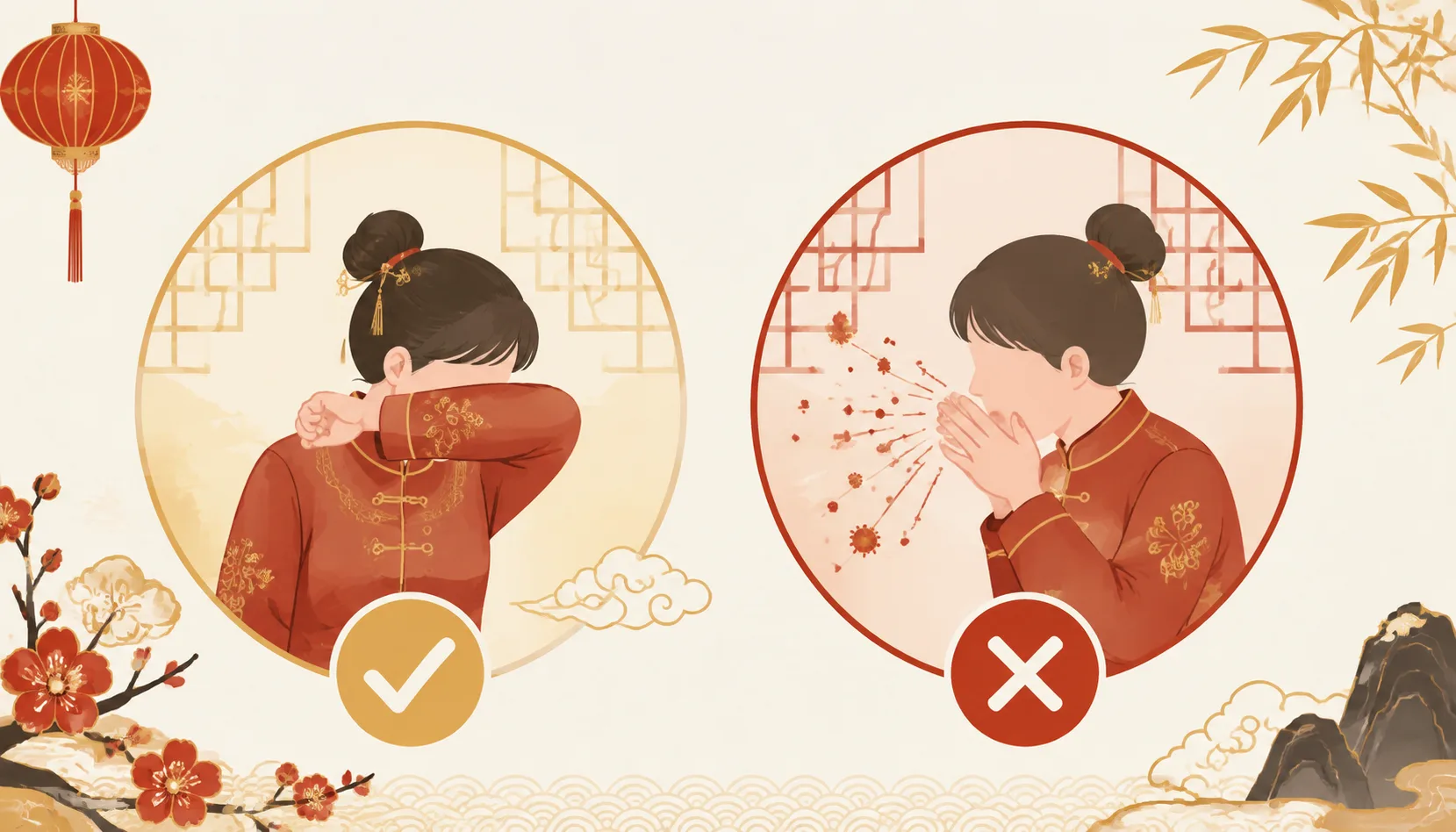
Quick answer
Cover your mouth and nose with a tissue or your inner elbow, and turn away from people. Never sneeze openly toward others.
Why This Rule Matters
Open sneezing is one of the fastest ways to spread respiratory viruses. China's experience with SARS in 2003 and COVID-19 dramatically accelerated public awareness of respiratory hygiene norms. Sneezing on people is now considered both rude and a genuine public health hazard.
What You Should Do
- Carry tissues for sneezing in public
- Use the inner elbow method if you have no tissue
- Turn away from people before sneezing
- Wash your hands after sneezing
What You Shouldn't Do
- Sneeze openly toward other people
- Tilt your head back and sneeze upward without covering
- Sneeze into your hands and then touch shared surfaces or shake hands
Practical Tips for Foreigners
This rule is still promoted in public health messaging and enforced more strictly in formal settings like government offices, though compliance varies by generation and region. When in doubt, watch what your Chinese host or senior colleague does and follow their lead. Breaking this rule once is forgivable — breaking it repeatedly signals a lack of cultural awareness.
The Unspoken Judgment Behind a Bare Sneeze
In China, an uncovered sneeze isn't just a health misstep — it's read as a lack of self-discipline and consideration. Your Chinese colleague won't say anything directly, but you may notice a subtle shift: people angle their chairs away, stop offering you tea, or avoid your desk for the rest of the day. The message is clear: you didn't just spray germs, you broadcasted that you don't care about their well-being. In a culture where harmony (héxié) is prized, a sneeze is a moment of chaos you're expected to control completely.
How Generations and Regions Differ
Expect different reactions depending on where you are. In Beijing and Shanghai, younger professionals in their 20s and 30s — especially those who've worked in multinational companies — will likely shrug it off or even joke about it. But in Guangzhou or among Fujianese elders, especially those over 60, an uncovered sneeze can be seen as disrespectful, almost like a minor curse. In formal settings like government offices or state-owned enterprises, the standard is stricter: you're expected to excuse yourself or at least turn fully away before letting it out.
Real Scenarios: Covering When You Sneeze
- At a business lunch in Shanghai, a Canadian consultant sneezes directly into the air over the shared hot pot. His Chinese clients subtly slide their bowls away and exchange glances, and the deal talk cools noticeably for the rest of the meal.
- During a tea ceremony at a traditional home in Chengdu, a German visitor lets out a sneeze without covering his nose. The hostess pauses, hands him a tissue with a tight smile, and the warm, relaxed atmosphere turns stiff for the next ten minutes.
- In a crowded Guangzhou metro, a French tourist sneezes open-faced onto the shoulder of a local commuter. The commuter flinches, wipes his jacket with a tissue, and mutters under his breath; two other passengers move to different carriages, and the tourist feels the icy stares but doesn't understand why.
- At a family dinner in Hangzhou, an Australian exchange student sneezes directly onto the dinner table while reaching for a dish. The grandmother immediately stops serving and quietly places a napkin over her own plate, and the student's host parents later explain that covering your mouth is the first lesson of being a respectful guest.
What Your Host Thinks But Won't Say
When you sneeze openly, your Chinese host or colleague is thinking: 'Doesn't he know basic hygiene?' or 'Does he think so little of us?' But they'll never voice it — that would cause you to lose face. Instead, they'll quietly distance themselves. Over time, this can cost you trust and opportunities. The fix is simple: always carry a tissue, use your inner elbow, and say 'bù hǎoyìsi' (sorry) afterward. It's a tiny effort that signals you respect their space and health.
What Chinese People Actually Say
- 打喷嚏时掩住口 | dǎ pēntì shí yǎn zhù kǒu | Cover your mouth when sneezing | Say before or during sneezing
- 请把头转过去 | qǐng bǎ tóu zhuǎn guò qù | Please turn your head away | Polite reminder to others
- 不好意思 | bù hǎo yì si | Excuse me | Said after sneezing to apologize for the sound
2026 Reality Check
2026 Reality Check: The rule still exists in public health messaging but actual compliance has dropped significantly, especially post-pandemic when mask-wearing normalized.
Gen Z vs Older Generations: Younger Chinese (under 25) are noticeably less strict about this etiquette. Many view it as outdated "old people stuff." Older generations (50+) still practice it consistently and often criticize younger people for the lapse.
Beijing/Shanghai vs Smaller Cities: Tier-1 cities show mixed results—educated young professionals often cover up from habit or hygiene awareness, while public behavior varies. Smaller cities and rural areas see the weakest compliance; many people sneeze openly without apology.
Bottom Line: It's no longer a universal social rule. Public health campaigns still promote it, but cultural enforcement has faded, particularly among Gen Z and outside major urban areas.
Frequently asked questions
What is the correct way to sneeze in Chinese public settings?
Cover your mouth and nose with a tissue or your inner elbow, and turn away from people. Never sneeze openly toward others.
Should I use a tissue or my hand when sneezing in China?
Use a tissue if available, but if not, use your inner elbow rather than your hand. This avoids spreading germs to surfaces you touch.
Is it considered rude to sneeze without covering in China?
Yes, sneezing openly without covering is seen as disrespectful and unhygienic. Always cover your mouth and turn away to show consideration for others.
What should I do if I don't have a tissue when I need to sneeze?
Use your inner elbow to cover your mouth and nose, then turn away from people. Dispose of any tissue properly and wash your hands if you used them.
Are there any specific customs about sneezing in crowded places like subways or buses?
In crowded places, always cover with a tissue or elbow, turn away, and try to minimize noise. Avoid sneezing directly toward others, and if possible, step aside slightly.
Do I need to apologize after sneezing in China?
A brief 'excuse me' (duì bù qǐ) is polite, but not always required. Covering properly is more important than apologizing, as it shows you care about others' comfort.
Try our tools
Related guides

Public Behavior in China: What Is and Isn't Acceptable
Chinese cities have their own public behavior logic: noise levels are higher than Western norms in some contexts and strictly controlled in others, personal spa…
Read the guide →
10 Social Mistakes Foreigners Commonly Make in China
The most common mistakes cluster around face (publicly correcting or disagreeing with someone), physical greeting norms (hugging or back-patting people who are …
Read the guide →
Ancient Chinese Etiquette Rules: What Foreigners Must Know
China has thousands of years of accumulated social rules — many of them "unwritten" but universally understood. These rules cover everything from how you sit, h…
Read the guide →