What is the Chinese Winter Solstice (Dongzhi) and how should foreigners celebrate or acknowledge it in China?
Quick answer
Dongzhi (冬至), the Chinese Winter Solstice, falls around December 21-22 and is a major traditional festival emphasizing family reunion and special foods. Northerners eat dumplings (饺子), southerners eat tangyuan (汤圆), and many workplaces give a half-day off or host dumpling-making activities. If invited to a family dinner, bring fruit or wine and be ready to join in making dumplings.
What Is Dongzhi? The Chinese Winter Solstice Explained
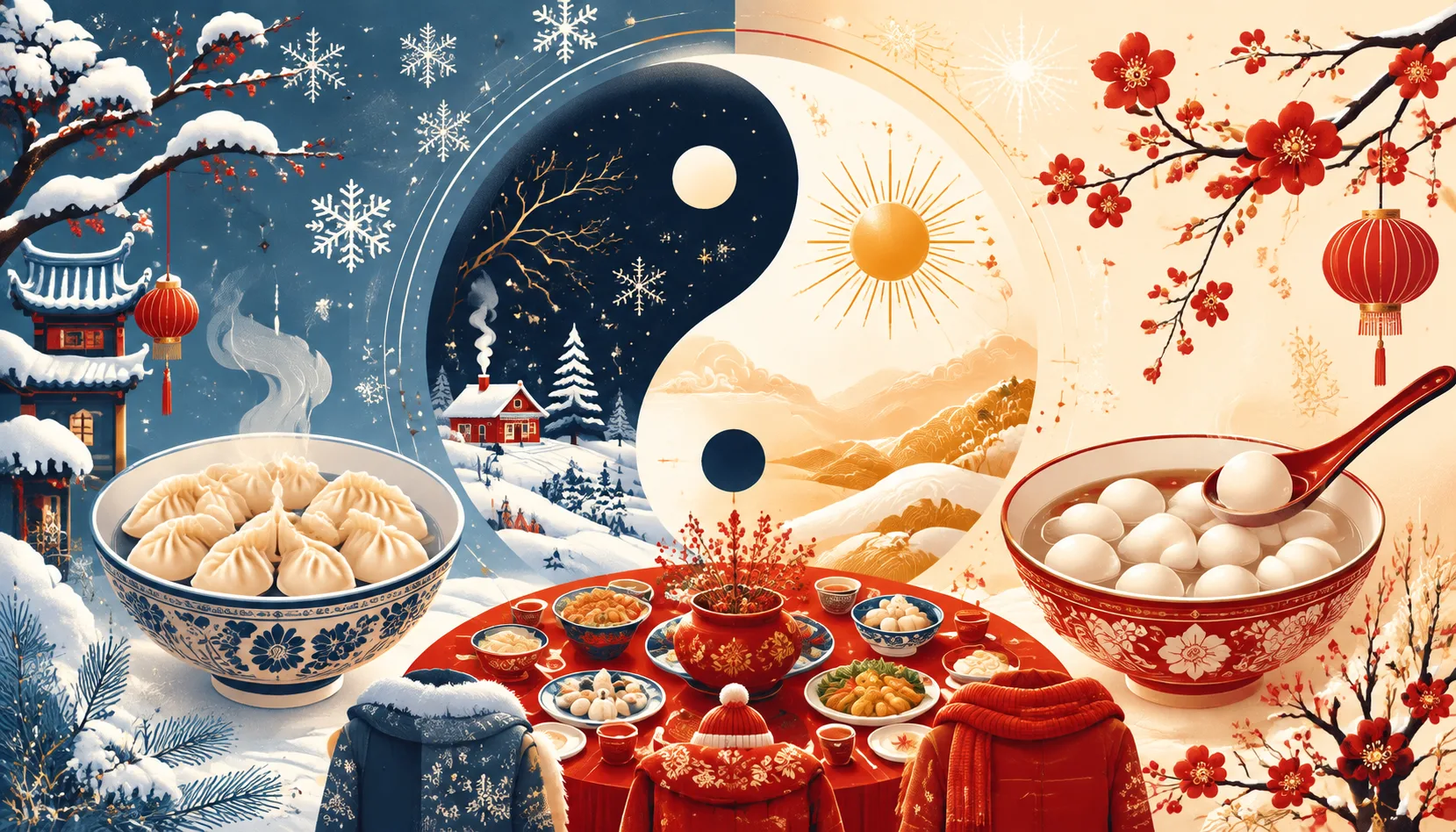
Dongzhi (冬至 Dōngzhì), literally 'Winter's Extreme,' is one of the most important traditional Chinese festivals. Falling around December 21-22, it marks the shortest day and longest night of the year. In Chinese cosmology, this is the moment when yin (阴, dark/cold) reaches its peak and yang (阳, light/warmth) begins to rise again. This turning point symbolizes hope and renewal.
Historically, Dongzhi was even more significant than Chinese New Year in some regions. Ancient Chinese considered it the 'beginning of the new year' — a time for family reunions, ancestor worship, and feasting. The saying '冬至大如年' (Dōngzhì dà rú nián) means 'Dongzhi is as big as the New Year.'
For foreigners, understanding Dongzhi helps you connect with Chinese colleagues and friends during the holiday season. It often overlaps with Christmas, so you may find yourself juggling both celebrations. Knowing a few key customs will make you a welcome guest and a culturally savvy expat.
Regional Food Traditions: Dumplings vs. Tangyuan
The heart of Dongzhi is food, and what you eat depends on where you are in China. The most famous tradition is eating dumplings (饺子 jiǎozi) in the north. Legend says that Zhang Zhongjing, a Han dynasty physician, made dumplings filled with mutton and herbs to warm people's ears during a harsh winter. Hence the saying: '冬至不端饺子碗,冻掉耳朵没人管' (If you don't eat dumplings on Dongzhi, your ears will freeze off).
In southern China, families eat tangyuan (汤圆 tāngyuán) — sweet glutinous rice balls served in warm syrup. Their round shape symbolizes family reunion and completeness. In Fujian and Cantonese regions, you might also find glutinous rice cakes (糯米糕 nuòmǐ gāo) or other regional specialties.
| Region | Food | Meaning |
|---|---|---|
| Northern China | Dumplings (饺子) | Prevents frostbite, symbolizes wealth |
| Southern China | Tangyuan (汤圆) | Family reunion, togetherness |
| Fujian/Cantonese | Glutinous rice cakes | Good luck, prosperity |
If you're invited to a Dongzhi meal, embrace whatever is served — it's a gesture of inclusion.
Dongzhi at Work: What to Expect in a Chinese Office
Dongzhi is not a public holiday in China, but many companies acknowledge it in meaningful ways. Some give employees a half-day off to spend with family, especially in the afternoon. Others organize team-building activities like dumpling-making parties (包饺子活动 bāo jiǎozi huódòng) in the office kitchen. This is a great opportunity to bond with colleagues.
If your workplace hosts a dumpling event, participate enthusiastically. It's a hands-on tradition where everyone rolls dough, fills wrappers, and boils pots of dumplings together. Even if your dumplings look lopsided, your effort will be appreciated. You might also receive a small gift or bonus — some companies give a 'holiday allowance' (过节费 guòjié fèi).
As a foreigner, acknowledging Dongzhi at work shows cultural respect. You can say to colleagues: '冬至快乐! (Dōngzhì kuàilè!)' — Happy Winter Solstice. If you're a manager, consider organizing a small celebration or simply allowing flexibility. It's a low-cost way to boost morale during the darkest days of winter.
Gift-Giving and Family Visits: What to Bring
Unlike Christmas, Dongzhi is not a major gift-giving holiday. The focus is on family togetherness and food, not presents. However, visiting elderly relatives is an important custom. If you're invited to a Chinese family's Dongzhi dinner, it's polite to bring a small gift.
Good options include fruit (水果 shuǐguǒ), especially apples (苹果 píngguǒ) which symbolize peace, or a bottle of wine (葡萄酒 pútáojiǔ). Avoid clocks (送钟 sòng zhōng) — it sounds like 'attending a funeral' — and sharp objects like knives. If you want to be extra thoughtful, bring a box of tangyuan or a high-quality tea.
When you arrive, greet the elders first with a warm '冬至快乐.' Expect a generous home-cooked meal with multiple dishes. The host will likely insist you eat more — it's a sign of hospitality. Accept with gratitude, and don't be shy about asking for seconds. Your appreciation will be deeply valued.
How to Participate in Dumpling-Making Like a Local
Dumpling-making is a participatory tradition — you're expected to join in, not just watch. Here's a quick primer: the dough is rolled into small circles, filled with a mixture of minced pork, cabbage, and seasonings, then folded into crescent shapes. The trick is to seal the edges tightly so they don't burst during boiling.
Don't worry about perfection. Chinese hosts often joke that 'ugly dumplings taste just as good.' The point is the shared activity — it's a bonding ritual. You'll find that your clumsy attempts become a source of laughter and connection.
If you're hosting your own Dongzhi gathering, you can buy pre-made wrappers (饺子皮 jiǎozi pí) at any supermarket. Fill them with your choice of meat or vegetables. Boil them for about 5 minutes until they float to the surface. Serve with a dipping sauce of black vinegar (香醋 xiāngcù) and chili oil (辣椒油 làjiāo yóu). This simple meal will earn you respect among Chinese friends.
Key Phrases to Know for Dongzhi
Learning a few phrases will help you navigate Dongzhi conversations and show respect for the culture. Here are the essentials:
| Chinese | Pinyin | English |
|---|---|---|
| 冬至快乐 | Dōngzhì kuàilè | Happy Winter Solstice |
| 吃饺子 | Chī jiǎozi | Eat dumplings |
| 吃汤圆 | Chī tāngyuán | Eat tangyuan |
| 团圆 | Tuányuán | Reunion |
| 冬至大如年 | Dōngzhì dà rú nián | Dongzhi is as big as New Year |
Use these naturally — for example, when greeting colleagues in the morning: 'Dōngzhì kuàilè! Jīntiān chī jiǎozi ma?' (Happy Winter Solstice! Are you eating dumplings today?). This will spark friendly conversations and demonstrate your cultural awareness.
Why Dongzhi Matters for Foreigners: Overlap with Christmas
Dongzhi falls in late December, often just days before Christmas. For foreigners in China, this creates a unique cultural intersection. While your Chinese colleagues may not celebrate Christmas, they are aware of it. Acknowledging both holidays shows cultural intelligence.
In the workplace, you might say: 'Happy Dongzhi! And if you celebrate, Merry Christmas too.' This bridges the gap and fosters goodwill. Many Chinese companies also decorate for Christmas, so you'll see a mix of festive elements — dumplings and Santa Claus side by side.
Understanding Dongzhi also helps you avoid awkward moments. If a Chinese friend invites you to a 'winter solstice dinner,' don't assume it's a Christmas party. It's a distinct tradition with deep roots. By participating, you're not just attending a meal — you're honoring a festival that predates the Gregorian calendar and carries millennia of cultural meaning.
So embrace the season: eat dumplings, try tangyuan, and wish everyone 'Dōngzhì kuàilè.' You'll find that the warmth of the gathering more than compensates for the cold outside.
What Chinese People Actually Say
What Chinese People Actually Say
- “冬至吃饺子,暖暖和和” – pinyin: Dōngzhì chī jiǎozi, nuǎn nuǎn hé hé – literal: “Eat dumplings on Dongzhi, warm and cozy” – usage: Said by northern families gathering for the festival.
- “冬至吃汤圆,团团圆圆” – pinyin: Dōngzhì chī tāngyuán, tuán tuán yuán yuán – literal: “Eat sweet rice balls on Dongzhi, round and harmonious” – usage: Common in southern China to symbolize family reunion.
- “冬至到了,记得回家吃饭” – pinyin: Dōngzhì dào le, jìde huíjiā chīfàn – literal: “Dongzhi is here, remember to go home for dinner” – usage: A reminder for relatives to return home.
- “过了冬至,天更冷了” – pinyin: Guòle dōngzhì, tiān gèng lěng le – literal: “After Dongzhi, the weather gets colder” – usage: A seasonal observation after the solstice.
2026 Reality Check
2026 Reality Check: In 2026, Gen Z in China celebrates Dongzhi with a mix of tradition and tech. Younger revelers share short videos of tangyuan-making, join online virtual family reunions, and some prefer quick‑serve dumpling kits over labor‑intensive home cooking. Older generations still gather for the classic dinner of dumplings, lotus root soup, and the symbolic eating of “winter solstice rice cakes,” but many now use WeChat to send holiday greetings rather than paper cards.
In tier‑1 cities like Shanghai and Shenzhen, the holiday is a short public break with crowded train stations and city‑wide light installations. In tier‑2 and tier‑3 towns, Dongzhi remains a community‑focused event: local markets sell seasonal produce, elderly neighbors teach the younger set how to make traditional “jiaozi,” and village halls host folk performances. The gap is narrowing as high‑speed rail makes hometown visits easier, yet the cultural flavor stays more authentic in smaller cities.
Frequently asked questions
Why do northern Chinese eat dumplings on Dongzhi and what does it symbolize?
Northerners eat dumplings (jiaozi) because legend says the physician Zhang Zhongjing made ear-shaped dumplings to prevent frostbite in winter. Eating them on Dongzhi symbolizes warmth and protection against the cold. Some say the more dumplings you eat, the less likely your ears will freeze. Expect coworkers to insist you eat plenty—declining is seen as bad luck.
Can I skip Dongzhi celebrations if I'm not Chinese or don't understand the customs?
You can skip it, but you'll miss a great cultural experience. Dongzhi is less formal than Spring Festival—there's no pressure to give red envelopes or follow strict rituals. Simply joining coworkers for lunch or accepting a dumpling is enough. If invited to a family home, showing up with fruit or wine and a smile makes you a welcome guest, even as a foreigner.
What is the difference between tangyuan and dumplings on Dongzhi?
Tangyuan are sweet glutinous rice balls served in warm soup, popular in southern China (especially Guangdong, Fujian, and Shanghai). They symbolize family unity and togetherness—the round shape represents completeness. Dumplings are savory and northern. If you're in the south, expect tangyuan; in the north, dumplings. Some regions eat both, and modern cities mix traditions freely.
Is Dongzhi a public holiday in China and will banks or offices be closed?
Dongzhi is not an official public holiday, so banks, offices, and schools stay open. However, many employers give a half-day off in the afternoon, especially in northern cities, to let staff prepare dumplings at home. If you work for a Chinese company, ask your manager—some teams organize a group dumpling-making session instead of a day off.
What should I bring if a Chinese friend invites me to their home for Dongzhi dinner?
Bring a small gift: fruit (apples or oranges are safe), a bottle of wine, or boxed tea. Avoid clocks, pears, or anything in sets of four—these have negative connotations. Don't bring flowers; they're for hospitals and funerals. Arrive on time, and be ready to help make dumplings if offered. Accepting food enthusiastically is the best compliment.
Are there any regional variations in Dongzhi food I should know about if traveling in China?
Yes—beyond dumplings and tangyuan, Sichuan eats mutton soup to warm the body, Zhejiang serves glutinous rice cakes, and parts of Hunan eat red bean porridge. In some areas, people drink rice wine or eat wontons. If you're traveling, ask locals what their family eats; they'll appreciate your curiosity. The unifying theme is warm, hearty food shared with family.
Try our tools
Related guides
Chinese New Year Survival Guide for Foreigners (2026)
Spring Festival is China’s biggest holiday, a family reunion that dwarfs Western celebrations. If invited to New Year’s Eve dinner, arrive early, bring fruit or…
Read the guide →
Mid-Autumn Festival 2026: Mooncakes & Gift Etiquette Guide
Mid-Autumn Festival is China’s second-biggest gift-giving event, blending Thanksgiving’s warmth with Christmas’s pressure around a full moon. Expect three days …
Read the guide →
Dragon Boat Festival China 2026: Zongzi & What to Know
Dragon Boat Festival (端午节, Duānwǔ Jié) falls on the 5th day of the 5th lunar month. Eat zongzi (sticky rice dumplings wrapped in bamboo leaves), watch or join d…
Read the guide →