Is there a correct way to hand someone scissors or a knife in China?
Quick answer
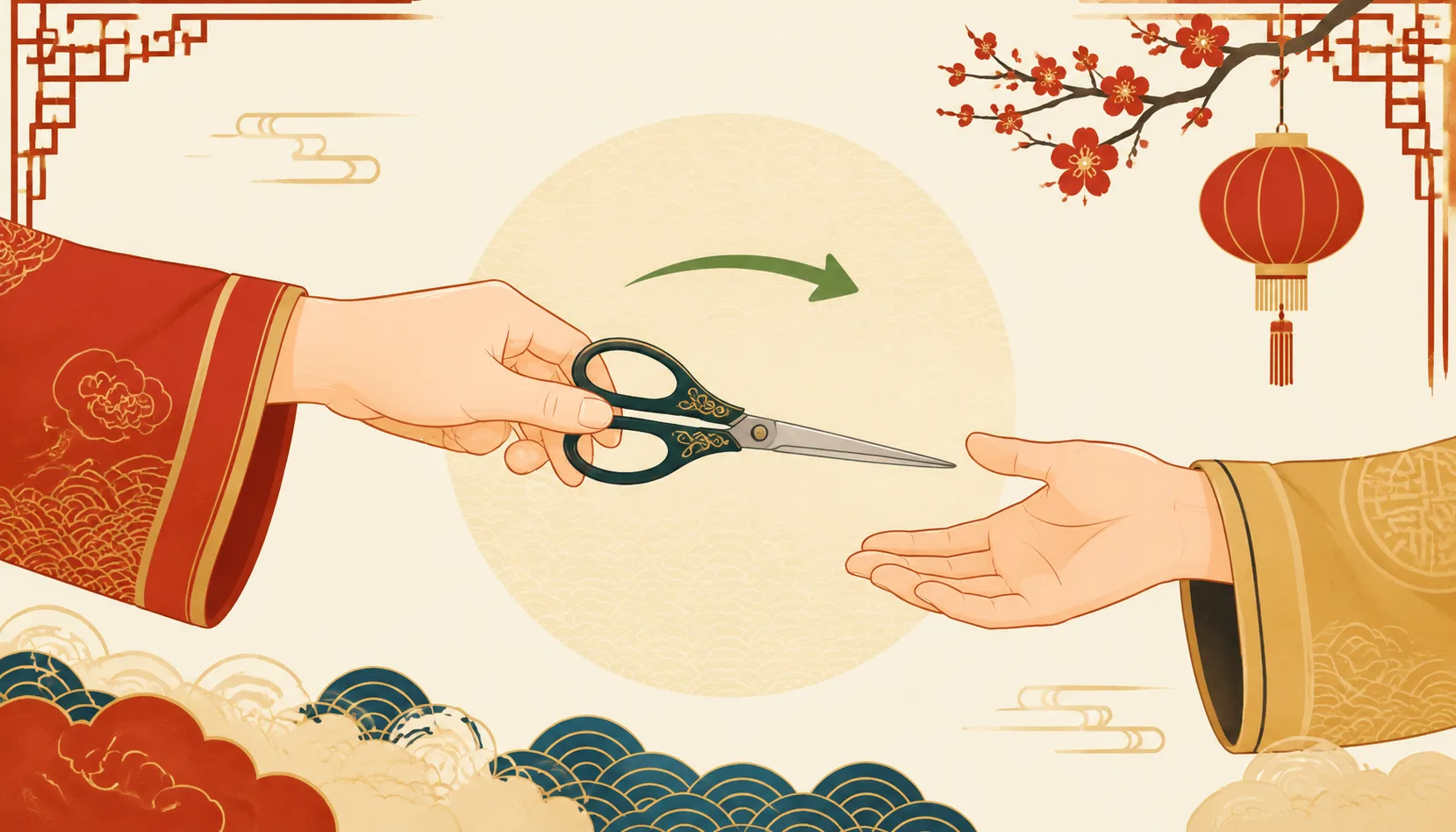
Yes. When handing scissors or any sharp object to someone, point the blade or sharp end diagonally away from both you and the recipient. Only let go after they have a firm grip.
Why This Rule Matters
This practice keeps both parties safe during transfer of sharp objects. It also demonstrates consideration and care for the other person's wellbeing. In Chinese etiquette, attentiveness to safety and comfort when sharing objects is a mark of good upbringing.
What You Should Do
- Hold the blunt end and extend the object handle-first toward the recipient
- Point the sharp end at a downward-diagonal angle away from both people
- Wait until the recipient has firmly grasped the object before releasing your grip
What You Shouldn't Do
- Hand scissors to someone with the blades pointing at them
- Drop scissors or knives on a surface carelessly for someone to pick up
- Let go before the other person has a firm hold
Practical Tips for Foreigners
This rule applies in most social and formal settings across China. When in doubt, watch what your Chinese host or senior colleague does and follow their lead. Breaking this rule once is forgivable — breaking it repeatedly signals a lack of cultural awareness.
Why It's a Sign of Respect and Care
In Chinese culture, this isn't just a safety tip—it's a subtle way of showing you respect the other person's well-being. Offering a blade toward someone can be read as careless or even aggressive, implying you don't mind if they get hurt. By turning the handle toward them, you signal that you're thinking of their safety first. This matters in workplaces like hospitals, kitchens, or construction sites in Shenzhen or Shanghai, where precision and mutual trust are daily currency. Locals notice these small gestures, and getting it right builds quiet rapport.
Real Scenarios Foreigners Get Wrong
- A British expat in Beijing handed a chef's knife blade-first to a colleague in a shared office kitchen—the colleague flinched and later told a coworker the foreigner seemed 'unaware of basic courtesy.'
- An American teacher in Chengdu passed scissors to a Chinese principal pointing the tips toward her; the principal said nothing but paused, then corrected the grip before using them—a silent lesson.
- At a factory in Dongguan, a German engineer tossed a box cutter to a worker handle-first but with the blade still exposed; the worker caught it awkwardly, and the supervisor later explained the proper way: retract the blade fully first.
- In a Guangzhou design studio, a French expat handed a craft knife to a younger Chinese intern blade-side up—the intern laughed it off, but an older Fujianese manager frowned and muttered about foreign habits.
Regional and Generational Nuances
While this rule is universal in China, its weight varies. In northern cities like Beijing or Harbin, people tend to be more direct—they'll correct you openly if you slip up. In the south, especially among Cantonese or Fujianese elders, the gesture carries heavier symbolic meaning; they might view it as a subtle insult but won't say a word. Younger urban professionals in Shenzhen or Hangzhou are often more relaxed, especially if they've worked with foreigners, but they still notice. In formal settings—<a href="/business/chinese-negotiation-small-talk-strategy/">business meetings</a>, government offices, or traditional family gatherings—strict adherence matters most. When in doubt, always default to the safer, <a href="/customs/chinese-eye-contact-guide/">more respectful</a> way.
What Your Host Thinks But Won't Say
If you hand a sharp object blade-first, your Chinese counterpart might think: 'Doesn't he care about my safety?' or 'Is he testing me?' They likely won't call it out—that would cause face-loss for both sides. Instead, they'll quietly adjust or avoid using your tools altogether. Over time, this small habit can shape how they perceive you: as thoughtful or as careless. For foreigners aiming to build long-term relationships, mastering this micro-etiquette pays off more than big gestures. It's a low-effort, high-signal way to show you respect local norms.
What Chinese People Actually Say
- 刀尖朝外 | dāo jiān cháo wài | blade pointing outward | say when handing over scissors or knife
- 递刀时刀口朝向自己 | dì dāo shí dāo kǒu cháo xiàng zì jǐ | when passing knife, blade faces yourself | correct etiquette phrase
- 小心刀口 | xiǎo xīn dāo kǒu | be careful of the blade edge | common warning when passing sharp objects
2026 Reality Check
2026 Reality Check: The rule still exists but adherence is mixed. In formal settings—hotels, restaurants, offices—most people still follow it, especially older generations.
Gen Z vs. Older Generations: Boomers and Gen X remember it as basic manners. Many millennials follow it out of habit. Gen Z? Mostly unaware or indifferent. They see it as "old-fashioned" unless reminded.
Beijing/Shanghai vs. Smaller Cities: Tier-1 cities show higher compliance in professional and service contexts. Smaller cities and rural areas? The rule is rarely enforced outside formal occasions. Younger people in these areas often don't know it exists.
Bottom Line: It's fading. The rule survives in etiquette-conscious environments but is largely ignored by younger, less urban populations. Cultural transmission is breaking down.
Frequently asked questions
Why should I point the blade away when handing scissors in China?
It's a practical safety habit that also shows respect and care for the other person. Pointing the blade away prevents accidental cuts and is seen as polite and considerate.
Is it rude to hand a knife directly with the handle first in China?
No, handing with the handle first is actually the correct way, but the blade must be pointed away from both you and the receiver. This avoids any risk of injury and is universally appreciated.
What is the exact way to pass a pair of scissors in China?
Hold the scissors by the blades, with the handles facing the recipient, and angle the sharp tips downward or away. Only release once the other person has a firm grip on the handles.
Does this rule apply to all sharp objects like knives or box cutters?
Yes, the same principle applies to any sharp object, including knives, box cutters, or even letter openers. Always present the safe end first and keep the sharp part away from both people.
What should I do if someone hands me a sharp object incorrectly in China?
Politely accept it, but be careful not to grab it until you can safely take it. You can gently say 'thank you' and adjust your grip, or simply hold it by the safe part without making a fuss.
Is this a Chinese-specific custom or just common sense?
It's both common sense and a cultural norm in China, where showing consideration for others is highly valued. Following this practice helps build positive relationships and avoids awkward or dangerous moments.
Try our tools
Related guides
Ancient Chinese Etiquette Rules: The Unwritten Code Every Foreigner Should Know
China has thousands of years of accumulated social rules — many of them "unwritten" but universally understood. These rules cover everything from how you sit, h…
Read the guide →
Visiting a Chinese Home: Complete Etiquette Guide for Foreigners
Bring a small gift, arrive 5 minutes late (never early), remove shoes at the door, wait for the host to assign your seat, and let the eldest eat first. Follow t…
Read the guide →
10 Social Mistakes Foreigners Commonly Make in China
The most common mistakes cluster around face (publicly correcting or disagreeing with someone), physical greeting norms (hugging or back-patting people who are …
Read the guide →