What smaller Chinese holidays should foreigners know about?
Quick answer
Beyond Spring Festival, Golden Week, and Mid-Autumn, five smaller Chinese holidays matter for foreigners in Chinese social and professional life: Lantern Festival (spring closing ceremony), Women's Day (March 8, give female colleagues small gifts), Teachers' Day (September 10, give teachers gifts), Chongyang (October, respect for elders), and Winter Solstice (eat dumplings with Chinese friends).
The Holidays That Trip Up Foreigners Most
Spring Festival, Mid-Autumn, and National Day Golden Week are impossible to miss — they shut down the country. But there are five smaller holidays that foreigners often don't know about until they find themselves empty-handed at the wrong moment, or unaware of why the office atmosphere has shifted.
These five are not obligations at the scale of Spring Festival — but getting them right earns social points; missing them causes quiet awkwardness.
1. Lantern Festival (元宵节, Yuánxiāo Jié)
Date: 15th day of the 1st lunar month (typically late January to early March)
| Year | Date |
|---|---|
| 2026 | March 3 |
| 2027 | February 22 |
What it is: The official closing ceremony of Spring Festival. The first full moon of the new lunar year — the year's emotional finale after two weeks of celebrating. When Lantern Festival ends, everyone mentally accepts that the new year has truly begun and returns to normal life.
What happens:
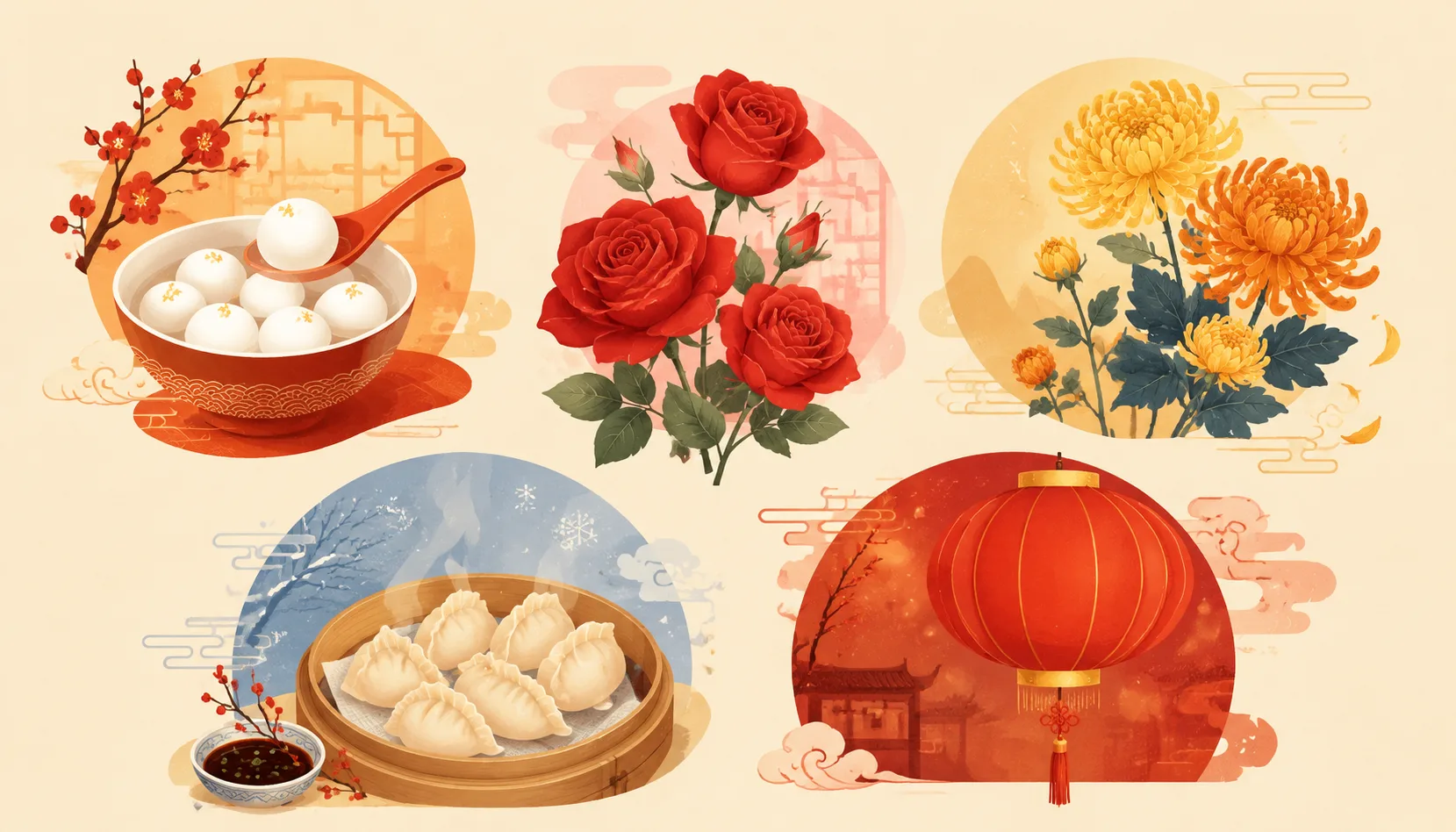
- Eat 汤圆 (tāngyuán) — round white glutinous rice balls filled with sweet sesame paste, red bean, or peanut butter, served in sweet broth. The roundness symbolizes family completeness.
- View elaborate lantern displays in parks and public squares
- Guess lantern riddles (灯谜, dēngmí) — riddles written on lanterns, solved for small prizes
- Watch dragon and lion dances in public spaces
What foreigners should do: Eat tangyuan with Chinese friends. Visit a lantern display if there's one near you. Say "元宵节快乐" (Yuánxiāo jié kuàilè) to colleagues.
Gift-giving? Not required. A bag of tangyuan as a small gesture to a close colleague or neighbor is entirely appropriate.
2. Women's Day (妇女节, Fùnǚ Jié) — March 8
Date: March 8 every year (fixed)
What it is: International Women's Day is a legal half-day holiday for female employees in China — women get the afternoon off. Companies typically give gifts, and male colleagues are expected to make a gesture.
What happens:
- Companies give female employees gifts: hand cream sets, flowers, small electronics, spa vouchers
- Male colleagues buy female coworkers milk tea, coffee, or small gifts
- Husbands and boyfriends give their partners flowers and dinner
The language detail: Call it "女神节" (Nǚshén jié, Goddess Day) rather than "妇女节" (Women's Day). "妇女" sounds matronly to many young Chinese women — "女神" (goddess) is the preferred modern framing.
What male foreigners should do: Buy female colleagues a bubble tea, a small plant, or a hand cream. The spend is ¥30–100. Not doing anything is noticed.
| Recipient | Gift | Budget |
|---|---|---|
| Female colleague | Flower, hand cream, bubble tea | ¥30–100 |
| Female assistant | Small plant, skincare | ¥50–150 |
| Partner | Flowers + dinner | ¥200–500 |
3. Teachers' Day (教师节, Jiàoshī Jié) — September 10
Date: September 10 every year (fixed). No public holiday.
What it is: A day to thank teachers and mentors. In Chinese culture, teachers hold a social status close to that of parents — the Confucian hierarchy places teacher (师) alongside ruler, parent, and heaven as fundamental human relationships.
What happens:
- Students give teachers flowers, cards, and small gifts
- Parents give children's teachers gifts — the boundary between appropriate gift and professional boundary is worth knowing; see the don'ts below
- Younger staff give gifts to senior mentors or supervisors
What foreigners should do:
- If you have a Chinese tutor, teacher, or mentor, prepare a gift or sincere card
- If you're a parent, give your child's Chinese teacher a small, non-cash gift (see table)
What NOT to give:
- ❌ Cash or gift cards — this crosses a professional line and creates awkwardness
- ❌ Clocks or watches — "送钟" sounds like "送终" (attending a funeral)
- ❌ Overly expensive gifts — anything above ¥300 starts to feel like influence-buying
| Recipient | Gift | Budget |
|---|---|---|
| Language teacher / tutor | Tea, fountain pen, book | ¥100–300 |
| Child's school teacher | Flowers + card | ¥50–150 |
4. Chongyang Festival (重阳节, Chóngyáng Jié) — Double Ninth
Date: 9th day of the 9th lunar month
| Year | Date |
|---|---|
| 2026 | October 18 |
| 2027 | October 7 |
What it is: The Festival of Respect for the Elderly (敬老节). "Nine" is the largest single digit and represents yang (the active, positive force) — double nine is maximum yang, hence "重阳" (double yang). By extension it became associated with climbing high (高, gāo, which also means "tall/elevated") and longevity.
What happens:
- Families take elderly relatives on outings — particularly climbing hills or mountains
- Chrysanthemum flowers and chrysanthemum wine are traditional
- Chongyang cake (重阳糕) is eaten — the cake's name 糕 (gāo) sounds like 高 (high), symbolizing rising up
- Communities organize elder-care activities
What foreigners should do: If you have elderly Chinese friends or your Chinese partner has elderly relatives, this is an excellent day to make a respectful visit or send a small health-oriented gift.
Gift ideas for elderly people: health supplement gift sets, warm clothing, tea, or a small cash red envelope (appropriate from juniors to very elderly seniors).
5. Winter Solstice (冬至, Dōngzhì)
Date: Around December 21–23 (solar calendar, fixed)
What it is: The longest night of the year, treated as a mini-Spring Festival in northern China. The saying: "冬至大如年" (Dōngzhì dà rú nián, Winter Solstice is as grand as New Year's). Families gather for a meal.
What people eat — and where it divides China:
| Region | Traditional Food | Why |
|---|---|---|
| North China | Dumplings (饺子, jiǎozi) | Legend: eat dumplings or your ears will freeze off in winter |
| South China | Glutinous rice balls (汤圆, tāngyuán) | Round shape = family wholeness |
What foreigners should do:
- Accept any invitation to make or eat dumplings with a Chinese friend or colleague on Winter Solstice — this is one of the warmest, most relaxed holiday experiences available to foreigners
- Say "冬至快乐" (Dōngzhì kuàilè) to Chinese colleagues on the day
- If your office does a dumpling-making session (increasingly common), participate enthusiastically — it's always fun and messy and endearing
Gift-giving? Optional. If visiting a Chinese home on Winter Solstice, bring ingredients — dumpling wrappers, filling, or ready-made dumplings — as your contribution. This is far better received than flowers or a wine bottle.
What Chinese People Actually Say
- 吃元宵 | chī yuánxiāo | eat glutinous rice balls | Traditional food eaten during Lantern Festival; symbolizes family reunion
- 尊师重教 | zūn shī zhòng jiào | respect teachers and value education | Common phrase for Teachers' Day; shows gratitude to educators
- 登高 | dēng gāo | climb high | Traditional activity for Chongyang Festival; symbol of seeking blessings and good health
2026 Reality Check
2026 Reality Check: These holidays remain official but observance varies widely. Lantern Festival still sees family gatherings and tangyuan eating, though younger crowds now treat it as a photo opportunity rather than ritual. Teachers' Day maintains strong school traditions but gift-giving has declined due to anti-corruption rules. Chongyang shows the biggest generational gap—Gen Z largely ignores it, while older generations still climb mountains and honor elders. Winter Solstice remains important for family dinners, especially in southern China. Women's Day has evolved into a commercial event with widespread marketing.
Gen Z vs Older: Young people celebrate these holidays selectively, focusing on photo-worthy moments and shopping deals. Older generations maintain traditional customs, especially for Lunar New Year extensions and ancestor veneration.
Beijing/Shanghai vs Smaller Cities: Tier-1 cities have commercialized these holidays into marketing events. Smaller cities and rural areas retain stronger traditional practices, particularly for Winter Solstice and ancestor-related observances. The generational and urban-rural divide continues to widen in 2026.
Frequently asked questions
How do foreigners actually celebrate Lantern Festival with Chinese friends?
Eat tangyuan (glutinous rice balls) with your Chinese friends — sweet ones in the south, savory in the north. In bigger cities, head to parks or temples for lantern displays and riddle games. Expect crowds, so go early. If invited to a family dinner, bring fruit or a small gift. It's the official end of Spring Festival, so treat it as the last chance for festive greetings.
What should a foreign male colleague give female coworkers on Women's Day?
A small, thoughtful gift works best: flowers (one or a few stems, not a huge bouquet), chocolate, or a small desk plant. Avoid expensive or personal items like perfume or jewelry — that can feel awkward in a workplace. A simple card saying 'Happy Women's Day' in Chinese (妇女节快乐) is appreciated. Many companies give half-day leave to women, so don't schedule afternoon meetings.
Is Teachers' Day only for school teachers, or also for tutors and trainers?
It's mainly for formal school teachers, but showing appreciation to any educator — including language tutors or corporate trainers — is common and welcomed. If you have a Chinese tutor, a small gift like fruit, tea, or a card is appropriate. Avoid cash. For your child's teacher, a small gift from the child (handmade card or flowers) is perfect. Many teachers politely refuse gifts, so don't be offended.
How do I show respect to elders on Chongyang Festival if I'm not family?
If you know an elderly neighbor or a friend's grandparent, a simple visit with fruit, tea, or flowers is ideal. Call or message elderly colleagues or acquaintances to wish them health (重阳节快乐). If you're close, offer to go for a walk or climb a hill together — it's the traditional activity. Avoid giving clocks or umbrellas, as these have negative connotations in Chinese gift-giving culture.
What happens on Winter Solstice in southern China vs. northern China?
The north eats dumplings (jiaozi) — tradition says eating them prevents your ears from freezing. The south eats tangyuan (sweet rice balls) or, in parts of Guangdong and Guangxi, a hearty mutton hotpot. In some regions like Suzhou, people drink rice wine with osmanthus flowers. If you're invited to a colleague's home, accept — it's a major family gathering. If not, join friends at a dumpling restaurant.
Can I use these holidays as an excuse to take time off work in China?
Only Women's Day (March 8) and Youth Day (May 4) give half-day leave — and only to eligible groups (women, and those under 28 for Youth Day). Lantern Festival, Teachers' Day, Chongyang, and Winter Solstice are not public holidays. However, many companies close early on Lantern Festival, and some give small bonuses or activities on Women's Day. Don't plan a day off for these — instead, use them for evening social events.
Try our tools
Related guides
Chinese New Year Survival Guide for Foreigners: What to Do, What Not to Do (2026)
Spring Festival is China’s biggest holiday, a family reunion that dwarfs Western celebrations. If invited to New Year’s Eve dinner, arrive early, bring fruit or…
Read the guide →
Mid-Autumn Festival Guide for Foreigners in China 2026: Moon, Mooncakes, and Gift Etiquette
Mid-Autumn Festival is China’s second-biggest gift-giving event, blending Thanksgiving’s warmth with Christmas’s pressure around a full moon. Expect three days …
Read the guide →
China Golden Week (National Day): What Stops, What Changes, and What to Do (2026)
China's National Day Golden Week (国庆黄金周) runs October 1–7 — 7 days of public holiday. Almost everything non-essential stops: vendors, many service businesses, a…
Read the guide →