What is the Chongyang (Double Ninth) Festival and how should foreigners in China honor it?
Quick answer
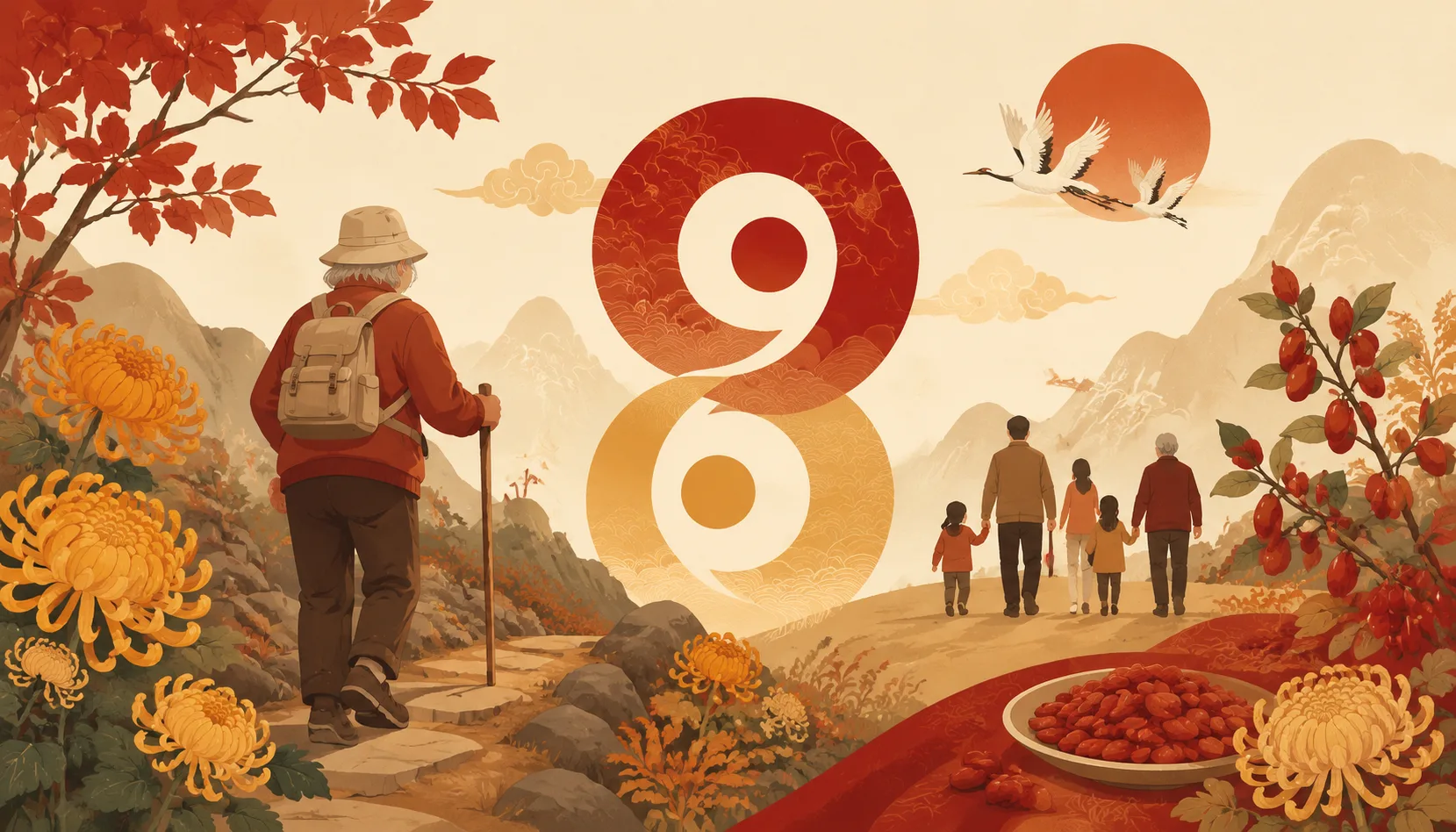
The Chongyang Festival (重阳节 Chóngyáng Jié) falls on the 9th day of the 9th lunar month (usually October). It's China's day for respecting elders, marked by climbing hills, drinking chrysanthemum wine, and eating Chongyang cake. As a foreigner, visit or call elderly Chinese friends or relatives, bring a thoughtful gift like fruit or tea, and avoid giving chrysanthemums (associated with funerals).
What Is the Chongyang Festival?
The Chongyang Festival (重阳节 Chóngyáng Jié) is one of China's most cherished traditional holidays, celebrated on the 9th day of the 9th lunar month – usually falling in October. The name comes from the ancient Chinese concept of yīn and yáng: nine is a yáng (positive, masculine) number, so double nine is doubly auspicious.
Over centuries, the festival has evolved into China's dedicated day for honoring the elderly, also known as 老人节 Lǎorén Jié (Elderly People's Day). In 2013, it was formally designated as Senior Citizens' Day (老年节 Lǎonián Jié), giving it official status in modern Chinese society.
For foreigners, understanding this day is a powerful way to connect with Chinese culture and show respect to older generations – a value that runs deep in Chinese society. Whether you have elderly colleagues, neighbors, or in-laws, a small gesture on this day can create enormous goodwill.
Key Traditions: Climbing, Chrysanthemums, and Cake
The festival is rich with symbolic activities, each carrying a wish for health and longevity. Here are the core traditions you'll likely encounter:
- 登高 dēnggāo – Climbing mountains or hills. This symbolizes rising above difficulties and reaching new heights. Even a walk up a park hill counts!
- 菊花酒 júhuā jiǔ – Drinking chrysanthemum wine. Chrysanthemums bloom in autumn and are associated with longevity and vitality.
- 重阳糕 Chóngyáng gāo – Eating Chongyang cake, a steamed layered cake often topped with nuts and dried fruits. The word for cake (糕 gāo) sounds like 'high' (高), echoing the climbing theme.
- 茱萸 zhūyú – Wearing cornus (dogwood) branches or leaves, believed to ward off evil spirits and misfortune.
While these traditions are less universally practiced in modern cities, many families still go for a hike or enjoy Chongyang cake together. If you're invited to join, accept enthusiastically – it's a great honor.
What Foreigners Should Know: Etiquette and Gift Giving
As an expat, your actions on Chongyang Festival can speak volumes about your cultural sensitivity. Here are the golden rules:
- Do visit or call elderly relatives, friends, or colleagues' parents. A simple phone call or WeChat message saying “重阳节快乐” (Chóngyáng Jié kuàilè – Happy Chongyang Festival) is deeply appreciated.
- Do bring a thoughtful gift if visiting. Good options include fruit baskets (especially apples and oranges), quality tea, health supplements (like ginseng or bird's nest), or warm clothing like scarves.
- Never give chrysanthemums as a gift. While chrysanthemums are the festival's symbol, they are also strongly associated with funerals and mourning in China. Giving them as a gift – especially to an elder – is a major faux pas.
- Avoid gifts with clocks (送钟 sòng zhōng sounds like 'attending a funeral') or sharp objects like knives.
If you're unsure, a fruit basket is always safe and appreciated. Pair it with a warm smile and a few words of respect.
How Chinese Families Celebrate Today
Modern celebrations blend tradition with contemporary family life. Here's what you might see:
- Multi-generational outings: Families often take grandparents to parks, mountains, or scenic spots for a walk. You'll see three generations strolling together, laughing and taking photos.
- Park visits and temple fairs: Many cities host special events, including chrysanthemum exhibitions, traditional performances, and health fairs for seniors.
- Family meals: A big dinner at home or a restaurant is common, with dishes that symbolize longevity, like noodles (长寿面 chángshòu miàn).
- Gift-giving to elders: Children and grandchildren present gifts, money (in red envelopes, 红包 hóngbāo), or practical items like phones with large buttons.
In workplaces, some companies give employees a half-day off to care for elderly relatives – a practice that has grown since the official designation as Senior Citizens' Day. If you're an employer, consider offering this to your Chinese staff; it will be hugely appreciated.
Practical Tips for Expats: Building Goodwill
You don't need to be Chinese to participate meaningfully. Here are actionable ways to show respect and build relationships:
| Situation | What to Do | Why It Works |
|---|---|---|
| Elderly neighbor in your apartment building | Knock on their door with a small fruit basket and say “祝您重阳节快乐” (Zhù nín Chóngyáng Jié kuàilè – Wishing you a happy Chongyang Festival) | Shows you value them as a community member; they'll likely tell their family about the kind foreigner |
| Colleague's parents | Send a WeChat message or have your colleague pass along your greetings | Demonstrates respect for family – a core Chinese value |
| Elderly friend or mentor | Invite them for tea or a walk in a park; ask about their health | Personal time is the most sincere gift |
| Your Chinese partner's grandparents | Accompany your partner to visit, bring a gift, and greet them formally | Wins you immense favor in the family |
Remember to use respectful language – address elders as 您 (nín) rather than 你 (nǐ). Even a few words of Chinese will be met with warm smiles.
Language Guide: Useful Phrases for the Day
Learning a few key phrases will help you navigate the day with confidence. Here's a handy table:
| Chinese | Pinyin | English |
|---|---|---|
| 重阳节快乐 | Chóngyáng Jié kuàilè | Happy Chongyang Festival |
| 祝您健康长寿 | Zhù nín jiànkāng chángshòu | Wishing you health and longevity |
| 您身体好吗? | Nín shēntǐ hǎo ma? | How is your health? |
| 这是给您的礼物 | Zhè shì gěi nín de lǐwù | This is a gift for you |
| 请多保重 | Qǐng duō bǎozhòng | Please take good care of yourself |
Practice these before the day – your effort will not go unnoticed. Even if your pronunciation is imperfect, the sincerity shines through.
Modern Evolution and What It Means for You
The Chongyang Festival has transformed from a folk custom into a national day of respect for the elderly. This shift reflects China's aging population and the government's push to promote filial piety (孝道 xiàodào). For expats, this means the festival is more visible than ever – expect to see posters, community events, and even social media campaigns.
As a foreigner, participating is a win-win: you honor a core Chinese value, deepen your relationships, and gain a richer understanding of the culture. It's also a chance to reflect on your own attitudes toward aging – a universal theme.
So mark your calendar for the 9th day of the 9th lunar month (check the Gregorian date each year – it's usually early October). Reach out to the elders in your life, whether Chinese or not. A small gesture on this day can create bonds that last a lifetime.
What Chinese People Actually Say
What Chinese People Actually Say:
- 祝您福如东海,寿比南山 (Zhù nín fú rú Dōnghǎi, shòu bǐ Nánshān) – “Wish you happiness as vast as the East Sea, longevity as tall as Mount Nan.” Used to wish elders health and longevity on Chongyang.
- 重阳登高,步步高升 (Chóngyáng dēnggāo, bùbù gāoshēng) – “Climbing high on Chongyang, each step higher.” Said when climbing hills or mountains during the festival.
- 赏菊饮酒,健康长寿 (Shǎng jú yǐn jiǔ, jiànkāng chángshòu) – “Enjoy chrysanthemum and drink wine, health and longevity.” Used while drinking chrysanthemum wine.
- 敬老爱老,福气满堂 (Jìng lǎo ài lǎo, fúqì mǎn táng) – “Respect and love the elderly, blessings fill the home.” Said to express respect for elders.
2026 Reality Check
2026 Reality Check: In 2026, Gen Z in China’s tier‑1 cities are reinterpreting Chongyang Festival through short‑video challenges and virtual greeting cards, while many older adults still prioritize family visits and traditional mountain‑climbing outings. In tier‑2 and tier‑3 cities, the holiday remains largely community‑driven, with local senior centers organizing group activities and handing out longevity noodles. Expat participation varies: metro‑area foreigners often join digital campaigns, whereas those in smaller towns encounter more traditional, less‑commercialized celebrations. Awareness among expats has risen due to social media, but practical barriers—language, transportation, and cultural nuances—still challenge full inclusion. For expats, the key is to balance digital engagement with genuine respect for elder‑centered customs, especially in cities where the holiday’s cultural depth outweighs its viral appeal.
Frequently asked questions
How do I calculate when Chongyang Festival falls each year?
Check a Chinese lunar calendar or an online converter. It's always the 9th day of the 9th lunar month, which lands between mid-September and mid-October in the Gregorian calendar. In 2024, it falls on October 11. Apps like Hanping or Chinese calendar widgets show the date automatically.
Is it considered rude if I don't participate in Chongyang Festival activities?
Not rude at all – foreigners aren't expected to observe Chinese festivals. However, if you have elderly Chinese colleagues, neighbors, or in-laws, a simple greeting like 'Chongyang jie kuaile' (Happy Chongyang Festival) or a brief visit goes a long way in building goodwill. Participation is a bonus, not an obligation.
Can I give chrysanthemums as a gift on Chongyang Festival?
Avoid it. While chrysanthemums are the festival's symbol, giving them as a physical bouquet is strongly associated with funerals and ancestor worship in China. Instead, bring chrysanthemum tea, which is a safe and thoughtful gift. Fresh flowers in general are less common as gifts to elders than fruit, tea, or cakes.
What should I do if my workplace or school organizes Chongyang activities?
Join in if you're comfortable. Common activities include visiting nursing homes, climbing nearby hills, or volunteering at community events for seniors. If you're invited to climb a hill with colleagues, that's a normal team-building activity. You're not expected to bring anything, but offering to carry supplies or help seniors shows respect.
Is Chongyang Festival a public holiday where banks and offices close?
No, Chongyang is not a public holiday in mainland China, so banks, offices, and schools operate normally. It's a cultural observance, not a day off. However, some companies may organize early afternoon events or volunteer trips. If you need government services, they'll be open as usual.
Are there regional differences in how Chongyang is celebrated in China?
Yes. In southern provinces like Guangdong and Fujian, families often hold large ancestor worship ceremonies and big family dinners. In northern areas like Beijing, hill-climbing outings are more prominent. Some rural regions still fly kites or wear dogwood branches. In cities, nursing home visits and community tea ceremonies for seniors are increasingly common. Ask locals how they celebrate – they'll appreciate your interest.
Try our tools
Related guides
Chinese New Year Survival Guide for Foreigners: What to Do, What Not to Do (2026)
Spring Festival is China’s biggest holiday, a family reunion that dwarfs Western celebrations. If invited to New Year’s Eve dinner, arrive early, bring fruit or…
Read the guide →
Mid-Autumn Festival Guide for Foreigners in China 2026: Moon, Mooncakes, and Gift Etiquette
Mid-Autumn Festival is China’s second-biggest gift-giving event, blending Thanksgiving’s warmth with Christmas’s pressure around a full moon. Expect three days …
Read the guide →
Dragon Boat Festival China: Zongzi, Dragon Boats & What Foreigners Must Know (2026)
Dragon Boat Festival (端午节, Duānwǔ Jié) falls on the 5th day of the 5th lunar month. Eat zongzi (sticky rice dumplings wrapped in bamboo leaves), watch or join d…
Read the guide →