Chinese New Year Survival Guide for Foreigners: What to Do, What Not to Do (2026)
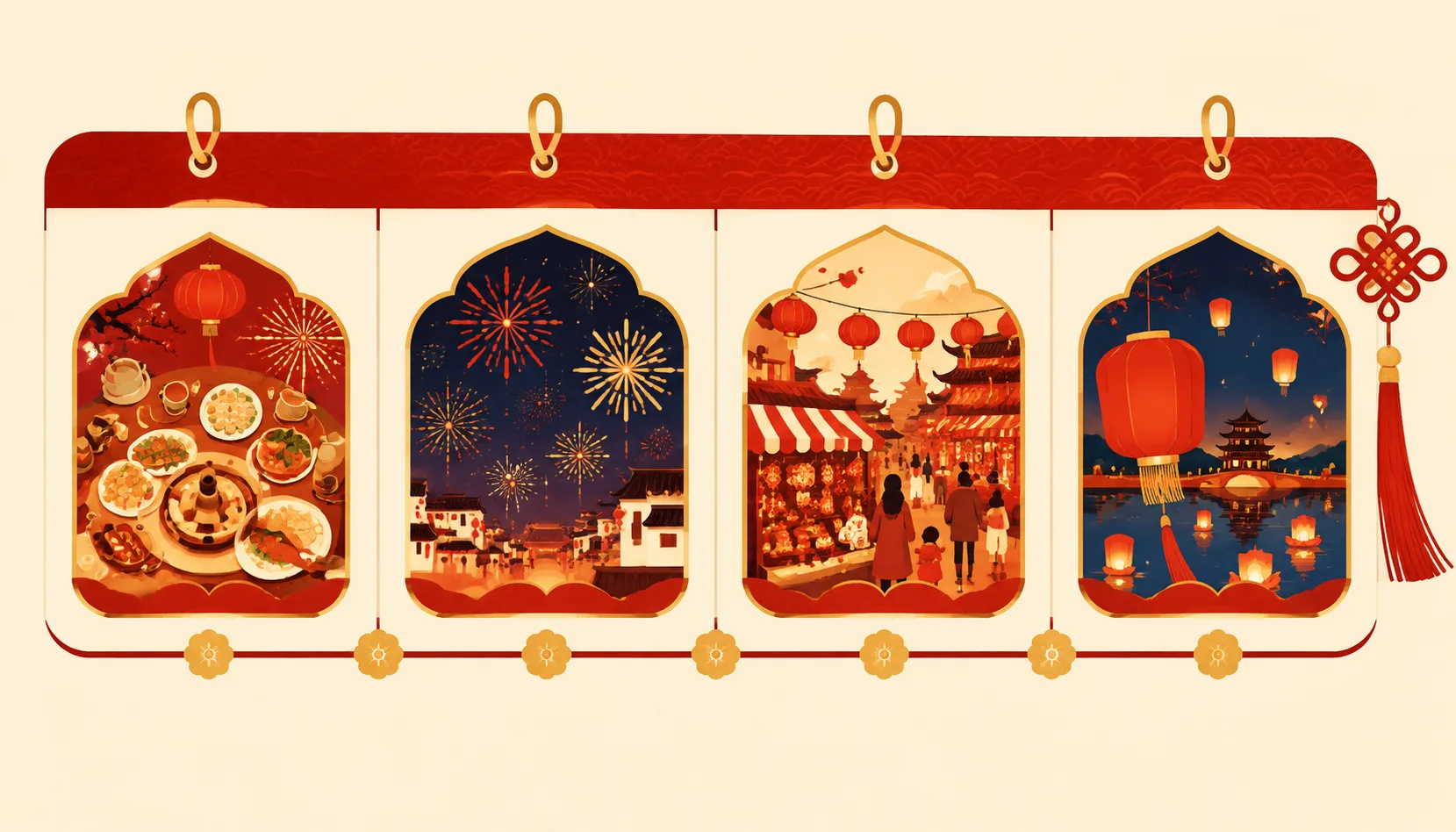
Quick answer
Spring Festival is China’s biggest holiday, a family reunion that dwarfs Western celebrations. If invited to New Year’s Eve dinner, arrive early, bring fruit or pastries, and give red envelopes (hongbao) to kids and unmarried juniors. Avoid saying “happy new year” to those in mourning, and never gift clocks. Accept all food offered—it’s a gesture of inclusion.
What Is Chinese New Year?
The Western comparison that actually works: Spring Festival (春节, Chūnjié) is Christmas + Thanksgiving + New Year's Eve combined — but with a core that none of those has. It's the absolute, non-negotiable annual summons of every Chinese person back to their family.
Missing Christmas in the US disappoints your parents. Missing Spring Festival in China raises questions in the neighborhood about whether you've gone bankrupt or are fleeing the law.
The one-line version: Spring Festival is the most important event in the Chinese year — personal, professional, and social. For foreigners living in China, navigating it well earns more social capital than anything else you could do.
The Date Problem: Why It Changes Every Year
Spring Festival follows the lunar calendar (农历, nónglì) — based on the moon's cycle, not the Gregorian calendar. It always falls in late January or mid-February.
You cannot calculate it intuitively. Look it up each year.
| Year | Spring Festival Date |
|---|---|
| 2025 | January 29 |
| 2026 | February 17 |
| 2027 | February 6 |
| 2028 | January 26 |
What this means practically: Plan your calendar around the official date. Everything shuts down for 7–10 days. Transportation becomes impossible without advance booking weeks ahead.
Chūnyùn: The World's Biggest Annual Migration
In the 40 days surrounding Spring Festival, billions of trips are made as Chinese people return home.
What this means for you as a foreigner:
- Major cities empty out. Beijing, Shanghai, Guangzhou go from 20 million people to feeling like a small town on New Year's Eve
- Transportation is impossible to book last-minute. Train tickets and flights sell out weeks in advance
- Services shut down. Restaurants, delivery, taxis, small shops — most close for 5–10 days
- Stock up 7 days of food before the Eve. Supermarkets are battlefields the week before
The City Survival Guide: → What foreigners need to know about surviving Spring Festival in a Chinese city
The Five Things That Define Your Spring Festival
1. Being Invited to a New Year's Eve Dinner (年夜饭, Nián Yè Fàn)
If a Chinese person invites you to their family's New Year's Eve dinner, you have been given a rare honor. Year夜饭 is typically reserved for immediate family and a handful of people the family considers "truly their own." You will be the only foreigner there.
This is the complete guide to navigating it correctly: → Being invited to a Chinese New Year's Eve dinner: complete guide
The two-minute version:
- Bring a gift (fruit + wine or tea — ¥200–500)
- Wear red or warm colors (never white or black)
- Say "恭喜发财!身体健康!" when you walk in
- Wait for the eldest person to pick up chopsticks before you eat
- Leave some fish on the plate (年年有余 — abundance every year)
- Accept red envelopes with both hands; don't open them in front of the giver
2. What to Say: Spring Festival Greetings
Five phrases you must know:
| Chinese | Pinyin | Meaning | Use For |
|---|---|---|---|
| 新年快乐 | Xīnnián kuàilè | Happy New Year | Everyone, always |
| 恭喜发财 | Gōngxǐ fācái | Wishing you prosperity | Friends, business contacts |
| 身体健康 | Shēntǐ jiànkāng | Wishing you good health | Elderly — never misses |
| 万事如意 | Wànshì rúyì | May everything go as you wish | General |
| 大吉大利 | Dàjí dàlì | Great luck and great profit | Casual, cheerful |
Full greetings guide with audio pronunciation: → Chinese New Year greetings: complete phrase guide with pinyin
3. The Red Envelope (红包, Hóngbāo)
Red envelopes contain cash — this is the primary gift mechanism during Spring Festival. Children receive them from adults. Adults receive them in some contexts too.
If you receive one: take it with both hands, say "谢谢,祝您身体健康!", don't open it in front of the giver.
If you want to give one: ¥100–300 for children in a family you're visiting is warm and appropriate.
Full red envelope guide for foreigners: → Spring Festival red envelopes: a foreigner's guide to 红包
4. The Taboos (There Are Many)
On New Year's Day (正月初一, the 1st day of the 1st lunar month), there's a list of things you cannot do — sweeping, taking out trash, washing hair, using knives, saying certain words. Getting these wrong in a traditional household matters.
Full taboo guide: → Spring Festival taboos: what you cannot do on Chinese New Year's Day
Quick reference — never say these words during Spring Festival:
- 死 (sǐ — death)
- 完 (wán — finished/depleted)
- 坏 (huài — broken/bad)
- 没 (méi — none/lack)
- 破 (pò — broken)
Emergency recovery phrase if you break something: immediately say "岁岁平安!" (Suìsuì píng'ān! — Peace year after year). It turns the bad omen into a good one (碎 suì sounds like 岁 suì — years).
5. The Company New Year's Party (年会, Nián Huì)
Most Chinese companies hold a formal party 1–2 weeks before the holiday. It involves speeches, performances, a banquet, toasts, and prizes. Being asked to perform is normal. Refusing is worse than performing badly.
Full guide: → Chinese company Spring Festival party: what to expect and how to shine
Spring Festival Timeline
| Period | What Happens | What You Do |
|---|---|---|
| 3–4 weeks before | Decorations appear (red lanterns, 福 characters, Spring Festival couplets) | Stock up on food and necessities |
| 1–2 weeks before | Company New Year's party (年会) | Attend, prepare a performance if asked |
| 1 week before | Gift-giving between colleagues, friends | Receive with both hands, reciprocate |
| New Year's Eve (除夕) | Family reunion dinner (年夜饭) | If invited, follow the dinner guide |
| New Year's Day (初一) | No sweeping, no trash, no knives, only auspicious words | Check the taboo guide |
| Days 2–7 (初二–初七) | Family visits, temple fairs (庙会), firecrackers | Attend temple fairs, give red envelopes to children |
| Day 5 (初五) | "Breaking five" (破五) — some taboos lift | Some normal activities resume |
| Day 15 — Lantern Festival | Festival officially ends with lantern displays | Eat 汤圆, view lanterns |
| First workday back | 开工利是 — red envelopes from bosses | Accept with both hands, say "开工大吉" |
The Gift Guide for Spring Festival
What to bring to a home visit, how much to spend, and what never to give: → Chinese New Year gift guide: what to bring, what to avoid
Quick reference:
- ✅ Fruit basket (¥150–300), imported wine (¥200–500), premium tea (¥200–600), nut/candy gift sets
- ❌ Clocks, pears, umbrellas, shoes, white or black packaging, anything in 4s
The Quick-Reference Checklist
Do These
- Stock 7 days of food before New Year's Eve
- Learn "新年快乐" / "恭喜发财" / "身体健康" — say all three when entering a home
- Wear red or warm colors. Have something red on your body.
- Present and receive everything with both hands
- Wait for the eldest person to start eating before you touch chopsticks
- Leave a few bites of fish on the plate ("年年有余")
- Accept red envelopes graciously — don't open in front of the giver
- Say "岁岁平安!" immediately if you break anything
- On the 1st: no sweeping, no trash, no knives, only auspicious words
- Send a WeChat greeting on the first workday back: "开工大吉!"
Never Do These
- Arrive empty-handed at a Spring Festival home visit
- Wear white or black clothing to a New Year's celebration
- Open a red envelope in front of the person who gave it to you
- Say "死" (death), "完" (depleted), "坏" (broken), "没" (none), or "破" (broken) during the holiday
- Sweep or take out trash on New Year's Day
- Pick up your chopsticks before the eldest person at the table
- Eat the entire fish (leave head, tail, and some meat)
- Leave immediately after dinner is done (stay 30–60 minutes after)
- Give a clock, pears, umbrella, or shoes as a gift
- Show impatience when relatives ask intrusive personal questions
Sub-articles in This Section
- → Being invited to a Chinese New Year's Eve dinner — The complete dinner guide
- → Spring Festival taboos: what you can't do — The full list of prohibitions
- → Chinese New Year greetings — Every phrase with pinyin and situations
- → Red envelopes: a foreigner's guide to 红包 — Giving and receiving protocol
- → Company Spring Festival party guide — How to navigate the 年会
- → Chinese New Year gifts — What to bring and budget guide
- → Lantern Festival guide — Spring Festival's closing ceremony
What Chinese People Actually Say
- 恭喜发财 | gōng xǐ fá cái | Wishing you wealth and prosperity | Say to adults and elders; often followed by a slight bow
- 新年快乐 | xīn nián kuài lè | Happy New Year | Safe, universal greeting for anyone you meet
- 身体健康 | shēn tǐ jiàn kāng | Wishing you good health | Best for elders; shows respect and care
2026 Reality Check
Red Envelopes (Hongbao): Still essential. Gen Z in big cities now use digital red envelopes via WeChat Pay—older generations prefer cash. In smaller cities, cash is still king. Give to kids and unmarried adults.
Sweeping Taboo: Most Chinese still believe sweeping during CNY sweeps away good luck. Younger urbanites increasingly ignore this; older generations and rural areas strictly observe it. Don't clean house Jan 1-3.
Taboo Words: Avoid "death," "sickness," "poor," or "broken" during CNY. Gen Z jokes about this online but still avoids saying unlucky words to elders. Smaller cities take this more seriously.
Food Rules: Fish must remain whole (represents completeness). Don't eat noodles on birthday only—CNY is fine. Younger Chinese mix traditional dishes with外卖 (takeout). Rural areas stick to homemade traditional foods.
Visiting Etiquette: Always bring gifts (fruit, tea, cigarettes). Older generations expect formal greetings; Gen Z prefers casual. In Beijing/Shanghai, shorter visits are acceptable; smaller cities expect longer stays and multiple family visits.
Frequently asked questions
What should I do if I'm invited to a Chinese New Year's Eve dinner but I don't know the family?
Accept the invitation—it's a major honor. Bring a small gift like fruit, tea, or pastries (avoid clocks, pears, or anything white or black). Arrive on time, greet elders first, and let your host guide you on seating. Eat a bit of everything offered, even if you're full, as refusing food can seem impolite.
Can I give money in a red envelope, or is a gift better?
Cash in a red envelope (hongbao) is standard, but only give it to unmarried younger people or children—never to elders or your boss. Use crisp, new bills in even amounts, avoiding the number 4. If you're a guest, a physical gift like fruit or wine is safer than cash, which can feel transactional.
Is it rude to say 'Happy New Year' in English to everyone I meet?
Not rude, but a bit flat. Learn 'Xin nian kuai le' (Happy New Year) and 'Gong xi fa cai' (wish you prosperity). Say these to everyone, especially elders and shopkeepers. For colleagues or friends, a simple 'Guo nian hao' (good New Year) works too. Effort matters more than perfect pronunciation.
Why do some Chinese people avoid showering or washing hair during the first days of the festival?
It's a traditional belief that washing away on New Year's Day washes away your luck. This is regional—northerners often avoid it on Day 1, while southerners may skip until Day 2 or 3. If you're staying with a host family, ask casually. Otherwise, showering is fine, just don't sweep floors on Day 1.
What if I can't eat the food served, like for religious or dietary reasons?
Politely decline with a smile and say 'bu yong, xie xie' (no need, thanks). Offer a brief reason like 'I'm vegetarian' or 'I'm allergic.' Don't make a fuss. Eat the dishes you can, like rice or vegetables. Your host will likely prepare extra options if you tell them in advance—send a message before the dinner.
Is it okay to wear black or white clothing during Chinese New Year?
Avoid these colors entirely—they're associated with mourning and funerals. Red, gold, and pink are lucky and festive. If you only have black, add a red scarf, hat, or accessories to balance it. White shoes are also frowned upon, so opt for dark shoes with a red accent. When in doubt, wear something bright.
Try our tools
Related guides

Chinese New Year Gift Guide 2026: What to Buy, How Much to Spend, and When to Send
Chinese New Year (春节, Chūnjié) is China's largest annual gift-giving event. The window is the two weeks before the holiday through the first 15 days of the luna…
Read the guide →
China's Teacher's Day: Gift Etiquette & Customs (2024 Guide)
On September 10, students and parents show gratitude to teachers with flowers, small gifts, and heartfelt messages. Avoid cash gifts (controversial due to anti-…
Read the guide →
Children's Day in China: What Parents & Foreigners Must Know
Children's Day (六一儿童节, Liù-Yī Értóng Jié) on June 1 is a real holiday for kids up to age 12, with school performances and gifts. Parents should attend the schoo…
Read the guide →