Lantern Festival China Guide (元宵节): What to Do, Eat, and Experience (2026)
Quick answer
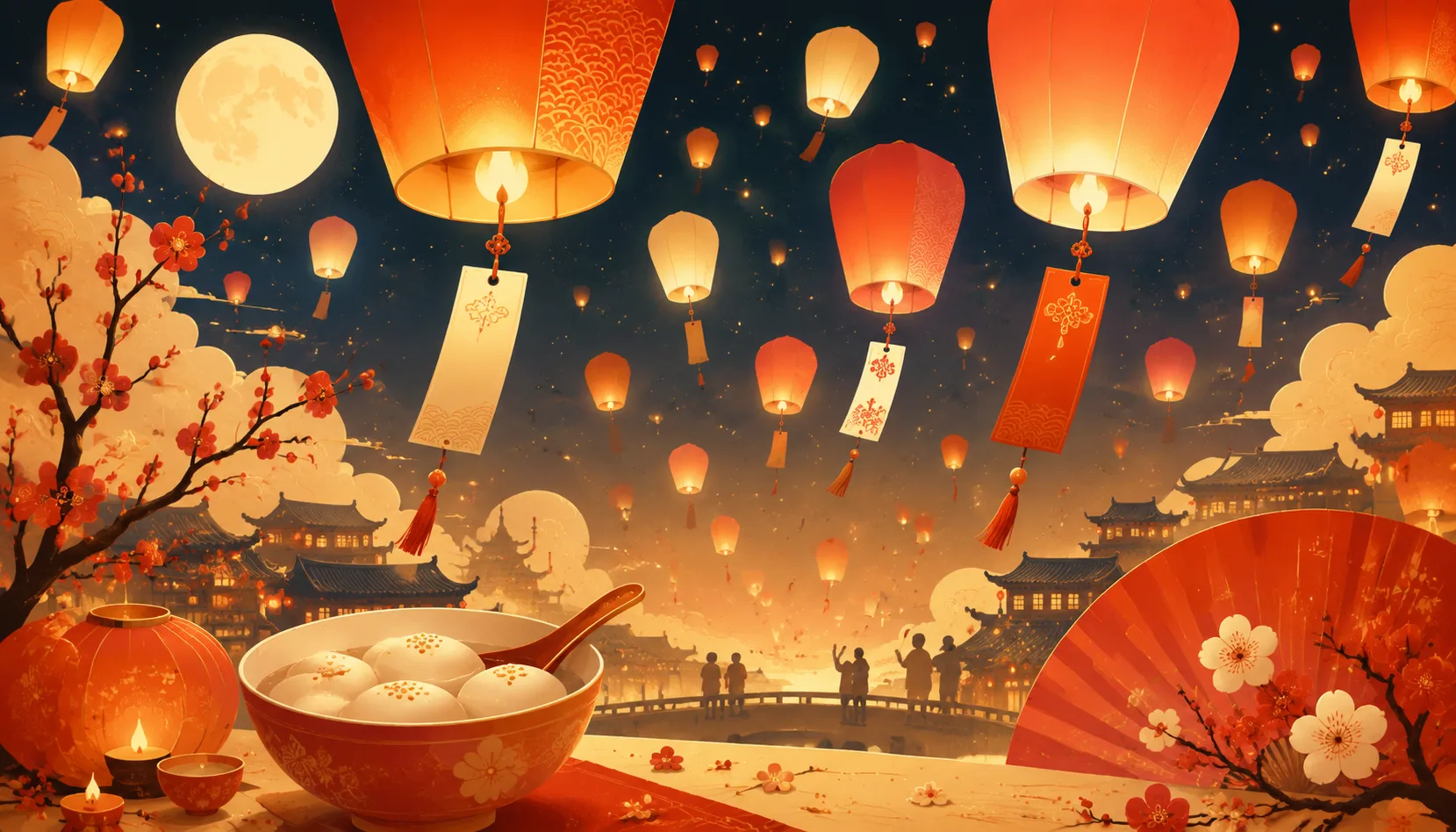
The Lantern Festival (元宵节, Yuánxiāo Jié) falls on the 15th day of the 1st lunar month — marking the official end of Spring Festival. The traditions: view lantern displays at parks and temples, try to solve lantern riddles (猜灯谜), and eat 汤圆 (glutinous rice balls filled with sweet sesame, peanut, or red bean). This is one of China's most beautiful and accessible public festivals — easy for foreigners to enjoy.
Quick Answer
The Lantern Festival (元宵节, Yuánxiāo Jié) falls on the 15th day of the 1st lunar month — marking the official end of Spring Festival. The traditions: view lantern displays at parks and temples, try to solve lantern riddles (猜灯谜), and eat 汤圆 (glutinous rice balls filled with sweet sesame, peanut, or red bean). This is one of China's most beautiful and accessible public festivals — easy for foreigners to enjoy.
What Is the Lantern Festival?
元宵节 (Yuánxiāo Jié) literally means "Lantern Festival Eve" (元宵 = the night of the first full moon of the year). It marks:
- The first full moon of the new year — which in Chinese culture represents completeness and family reunion
- The formal end of the Spring Festival holiday period (春节 is over after 元宵节)
- A moment of public celebration, warmth, and collective joy
Date: The 15th day of the 1st lunar month. This falls in February or early March each year.
- 2025: February 12
- 2026: March 3
- 2027: February 20
The Western equivalent: Think of it as Spring Festival's Valentine's Day (in ancient China, it was one of the few nights when unmarried young women could go out at night) plus a community arts festival. Warm, beautiful, and celebratory.
What Happens at the Lantern Festival
1. Lantern Displays (观灯, Guān Dēng)
Parks, temples, and public squares are filled with elaborate lantern installations. The scale varies:
- Small city squares: Rows of traditional red lanterns, often with cutout figures
- Major parks (Temple of Heaven in Beijing, Yuyuan Garden in Shanghai): Multi-story lantern sculptures, elaborate themed installations (zodiac animals, mythological scenes, famous landmarks)
- River and waterway cities (Suzhou, Hangzhou, Zigong): Floating lanterns and water-reflected light shows
What to do: Show up after dark. The lanterns are lit from about 6pm. Bring your camera. The crowds are thick but the mood is festive — this is an event where everyone is in good spirits.
The Zigong Lantern Festival in Sichuan Province is considered the premier lantern display in China — an entire month of installations drawing visitors from across the country. If you're ever near Zigong in February, this is world-class.
2. Lantern Riddles (猜灯谜, Cāi Dēngmí)
Paper riddles are attached to lanterns. Solve the riddle → win a small prize. Riddles are typically puns, wordplay, or lateral thinking puzzles.
For foreigners: Most riddles require Chinese language knowledge and are difficult to participate in directly. But watching the game — and seeing Chinese people excitedly competing to solve them — is part of the festival atmosphere.
If you want to join: Ask a Chinese friend to translate the riddle. The "I'm a foreigner trying to solve a Chinese riddle" frame earns amused appreciation from bystanders.
3. Eating 汤圆 or 元宵 (Tāngyuán / Yuánxiāo)
The festival food. 汤圆 (Tāngyuán) is the Southern Chinese version — smooth glutinous rice balls filled with sweet pastes (black sesame, peanut, red bean). 元宵 (Yuánxiāo) is the Northern version — slightly rougher texture, rolled rather than shaped.
The symbolism: Round shape = completeness, togetherness, family reunion (团圆, tuányuán). Eating them "completes" the Spring Festival cycle.
Common fillings:
- 黑芝麻 (hēi zhīma — black sesame) — the most popular and widely loved
- 花生 (huāshēng — peanut) — sweet and nutty
- 红豆 (hóngdòu — red bean) — traditional, mildly sweet
- 流沙 (liúshā — salted egg yolk custard) — modern premium version
Where to get them: Street stalls, supermarkets, and restaurants. Most restaurants offer 汤圆 specifically during this period. Convenience stores (全家, 7-Eleven, 便利蜂) sell packaged 汤圆 that you can cook at home (boil in water for 5–8 minutes until they float).
The correct greeting to use while eating them: "元宵节快乐!团团圆圆!" (Yuánxiāo jié kuàilè! Tuántuán yuányuán!) — "Happy Lantern Festival! Togetherness and completeness!"
4. Releasing Sky Lanterns (放天灯, Fàng Tiān Dēng)
In some cities and traditional areas, people release small paper sky lanterns (天灯, tiāndēng) with a written wish inside. The lantern floats up as the candle inside heats the air.
The tradition: Write your wish for the year on the inside of the lantern before releasing it. Watch it rise and join hundreds of other lights in the sky.
Where to experience this: This tradition is most active in sichuan, fujian, and China Taiwan. In major cities, sky lantern releases are often restricted for fire safety reasons. Check local regulations before attempting.
5. Dragon and Lion Dances (龙狮表演)
Temple fairs and shopping districts often feature 舞龙 (dragon dances) and 舞狮 (lion dances). The dragon dance involves 8–20 people carrying a long dragon costume through the streets to drumbeats. The lion dance involves 2-person lion costumes performing acrobatics.
What to do: Watch and photograph. If you're at a business event where a lion dance is performed (common for grand openings and business celebrations), it's tradition to "feed" the lion — a red envelope is given to the lion's mouth. The lion's antics as it "accepts" the envelope is part of the show.
The Romantic History
In ancient China, 元宵节 was one of the few occasions when unmarried women were permitted to go out at night without a chaperone. Young men and women would view lanterns together, and the festival became associated with love and romance.
Some Chinese poets describe 元宵节 as the Chinese equivalent of Valentine's Day — a night for couples and for young people hoping to meet someone. This history makes 元宵节 a popular date night even today.
The most famous poem about the festival: 辛弃疾's 《青玉案·元夕》 ends with the line: "众里寻他千百度,蓦然回首,那人却在灯火阑珊处" — "Having searched a thousand times through the crowd, suddenly turning my head, she stands where the lantern lights are sparse." This is one of the most quoted romantic lines in Chinese literary history.
What the Day-After Means
The morning after 元宵节:
- Spring Festival is officially over
- Migrant workers and students who extended their stay for the festival begin their return journeys
- Cities refill to normal density
- Shops and restaurants that closed for Spring Festival reopen
- Life returns to its normal rhythm
One last thing to do: If you haven't already, send your Chinese friends a final Spring Festival message:
"元宵节快乐!春节假期结束了,新的一年,希望我们都顺顺利利,心想事成!" "Happy Lantern Festival! Spring Festival is over — in this new year, may everything go smoothly for all of us and may all our wishes come true!"
Experience Checklist
| Experience | Where | Difficulty for Foreigners |
|---|---|---|
| View lantern displays | Parks, temple fairs | Easy — just show up after dark |
| Eat 汤圆 | Any Chinese restaurant or convenience store | Easy |
| Watch dragon/lion dance | Temple fairs, commercial districts | Easy |
| Try lantern riddles | Temple fairs with dedicated riddle sections | Medium — language help needed |
| Release a sky lantern | Sichuan, Fujian, traditional towns | Medium — depends on local regulations |
FAQ
Q: Is it worth going out for Lantern Festival if I'm not in a major city? A: Yes — even in smaller cities and towns, local temples and parks typically have some lantern displays. The scale is smaller but the atmosphere is often more intimate and traditional. Ask a local colleague: "你们这边元宵节有什么活动?" (Nǐmen zhèbiān Yuánxiāo jié yǒu shénme huódòng?) — "What's happening for Lantern Festival here?"
Q: I didn't participate in Spring Festival at all — is it too late to do something meaningful at Lantern Festival? A: No. 元宵节 is a standalone cultural experience. Going to a park lantern display, buying and eating 汤圆, and sending your Chinese friends a festival greeting on the day is a complete and meaningful cultural participation. Better late than not at all.
Q: Can I send a WeChat message on Lantern Festival? A: Yes, and you should. "元宵节快乐!" is the correct greeting. Sending this message to your Chinese contacts on this specific day (not just "Happy Spring Festival" at New Year's) signals that you actually know how the calendar works — which earns appreciation.
What Chinese People Actually Say
- 吃元宵 | chī yuán xiāo | eating tangyuan (glutinous rice balls) | Say when enjoying the festival food with family
- 赏花灯 | shǎng huā dēng | appreciating lantern displays | Use when describing lantern viewing activities
- 猜灯谜 | cāi dēng mí | solving lantern riddles | Use when referring to the traditional game
2026 Reality Check
2026 Reality Check: Lantern Festival traditions remain strong but are evolving. Older generations still gather for family yuanxiao dinners, but Gen Z increasingly celebrates virtually or at lantern-themed café events rather than traditional temple visits.
Beijing and Shanghai have modernized the experience—LED lantern displays, AR treasure hunts, and social media challenges dominate. Smaller cities and rural areas still hold traditional lantern processions and community tangyuan-making, though attendance is declining as youth migrate to urban areas.
The "no crying on Lantern Festival" rule is largely ignored by younger families. Eating tangyuan remains nearly universal, but pre-made frozen versions now outsell homemade by 3:1 in major cities. Night tours and photo-sharing have replaced some older customs—tradition persists, but the method has changed.
Frequently asked questions
What date is the Lantern Festival in 2026?
In 2026, the Lantern Festival falls on March 3rd. It is always the 15th day of the first lunar month, so the date shifts each year—typically landing between early February and mid-March. Check a Chinese lunar calendar to confirm exact dates for future years.
Is the Lantern Festival a public holiday in China?
No, the Lantern Festival is not an official public holiday. Most people work or attend school as usual, though celebrations happen in the evening. If you plan to visit lantern displays, expect large crowds after work hours. Some companies may let employees leave early, but this is not guaranteed.
Can I participate in lantern riddles if I don't read Chinese well?
Yes, but it's challenging. Most riddles are written in Chinese characters and rely on wordplay, puns, or classical references. Bring a Chinese-speaking friend or use a translation app for basic clues. Alternatively, enjoy the visual spectacle—many lanterns are shaped like animals, flowers, or mythological figures, which need no translation.
What is the difference between 汤圆 and 元宵?
Both are glutinous rice balls, but they differ in preparation. 汤圆 (tāngyuán) are made by wrapping filling in a smooth dough—common in southern China. 元宵 (yuánxiāo) are made by rolling filling in dry rice flour—common in the north. The taste is similar, but 元宵 has a rougher, flakier texture. Try both if you can!
Are there regional variations in how the Lantern Festival is celebrated?
Absolutely. In southern China, especially in cities like Nanjing and Hangzhou, river lanterns are floated on water. In northern China, you'll find more ice lanterns and traditional yangge folk dances. In Taiwan, the Pingxi Sky Lantern Festival releases thousands of paper lanterns into the night sky—a spectacular sight worth traveling for.
What should I do if I'm in a small town that doesn't have big lantern displays?
Don't worry—even small towns have local celebrations. Visit a nearby temple, where monks often hang lanterns and offer free tangyuan to visitors. Check local community boards or ask your hotel staff about evening activities. Alternatively, buy a small lantern and paper riddle from a shop, and enjoy the festival spirit with locals in a teahouse.
Try our tools
Related guides
Chinese New Year Survival Guide for Foreigners (2026)
Spring Festival is China’s biggest holiday, a family reunion that dwarfs Western celebrations. If invited to New Year’s Eve dinner, arrive early, bring fruit or…
Read the guide →
Chinese New Year Greetings 2026: Phrases and When to Use
Five phrases cover 90% of your Spring Festival social needs: 1. 新年快乐 (Xīnnián kuàilè) — Happy New Year. Universal. 2. 恭喜发财 (Gōngxǐ fācái) — Wishing you prosperi…
Read the guide →
Chinese New Year Red Envelopes (红包): A Foreigner's Guide
A red envelope (红包, hóngbāo) contains cash — it's the primary gift mechanism during Spring Festival. When you receive one: take it with both hands, say "谢谢,祝您身体…
Read the guide →