How does ancestor worship work in modern China, and what should foreigners know about Qingming and related customs?
Quick answer
Ancestor worship in China centers on honoring deceased family members through rituals like Qingming grave sweeping, burning paper offerings, and maintaining home altars. Urban Chinese often adapt these traditions with simplified practices, while rural families maintain more elaborate customs. As a foreigner, you should show respect, avoid touching offerings, and follow your Chinese friends' lead during these observances.
The Core of Ancestor Worship in China
Ancestor worship, or jì zǔ (祭祖), is a deeply rooted practice in Chinese culture that extends beyond religion. It's based on the belief that deceased ancestors continue to exist in a spiritual realm and can influence the lives of their descendants. In return, the living have a duty to honor and provide for their ancestors through rituals, ensuring their comfort in the afterlife and maintaining harmony between the living and the dead.
This practice is not just about reverence; it's about maintaining a reciprocal relationship. Families often perform rituals to seek blessings for health, wealth, and success. The customs are most visible during festivals like Qingming (Tomb-Sweeping Day) and the Hungry Ghost Festival, but they also occur on other occasions such as Lunar New Year and death anniversaries.
For foreigners, understanding this helps explain why Chinese colleagues or friends might take time off during these periods or seem preoccupied with family duties. It’s a cultural obligation that is taken seriously, even among those who may not consider themselves religious.
Qingming Festival: Grave Sweeping and More
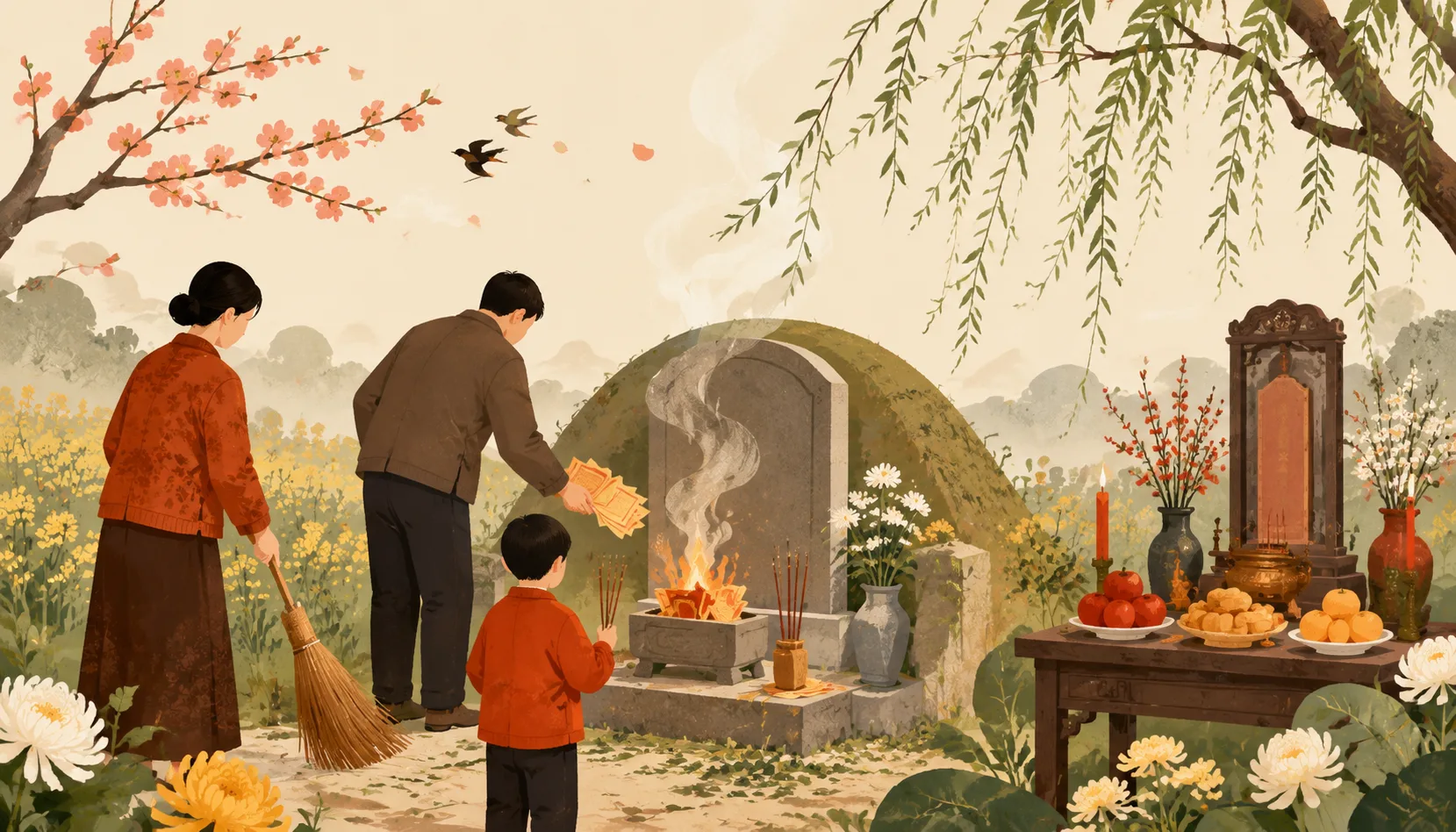
Qingming Festival (清明节), usually falling on April 4th or 5th, is the most important day for ancestor veneration. The name means 'clear and bright,' reflecting the spring weather. Its primary activity is grave sweeping (扫墓), where families visit the graves of their ancestors to clean the site, remove weeds, and make repairs.
During the visit, families typically:
- Place fresh flowers or willow branches on the grave.
- Set out food offerings such as fruit, rice, and the deceased's favorite dishes.
- Burn joss paper (paper money) and other paper items like paper houses, cars, or smartphones, believing these will be transferred to the afterlife.
- Light incense and bow or kneel in front of the grave.
- Set off firecrackers (in rural areas) to scare away evil spirits.
After the rituals, families often share a meal together, sometimes eating the food that was offered. In modern times, especially in cities, many people also use this holiday for outdoor outings, as it coincides with spring weather, but the core purpose remains honoring the deceased.
Paper Offerings: Money, Goods, and the Digital Twist
Burning paper offerings, known as joss paper or ghost money, is a central part of ancestor worship. The practice stems from the belief that the paper items, when burned, become real goods in the spirit world. Traditional offerings include:
- Paper money (冥币) – often gold or silver foil sheets, or imitation banknotes with large denominations.
- Paper clothes and accessories – such as paper shoes, hats, and even jewelry.
- Paper houses and cars – miniature replicas that provide comfort in the afterlife.
- Paper servants – sometimes burned for the deceased to have assistance in the spirit world.
In recent years, there's been a modern twist: paper iPhones, laptops, and even luxury brand items like Gucci bags are available. Some families also burn paper credit cards or checks. Urban dwellers who cannot burn items due to apartment living may use online memorial platforms where they can virtually burn offerings or send digital tributes. This adaptation shows how tradition evolves with technology while maintaining the core intent of providing for ancestors.
Ancestor Tablets and Home Altars
Many Chinese families maintain a small altar or shrine in their homes dedicated to their ancestors. This typically features an ancestor tablet (牌位) – a wooden or paper plaque inscribed with the ancestor's name and sometimes a photo. The altar may also include incense burners, candle holders, and small offerings like fruit or tea.
On important dates – such as the ancestor's death anniversary, Lunar New Year, and Qingming – family members will light incense, make offerings, and bow before the altar. In some families, daily incense is lit as a sign of respect. The altar is usually placed in a prominent but respectful location, often in the living room or a dedicated room.
For foreigners living with a Chinese family or visiting their home, it's crucial to never touch or move the altar items without permission. Avoid pointing at the tablets, and do not use the altar space for other purposes. If you are invited to participate, follow the host's lead – they may offer you incense to light, and you should bow respectfully. It's a gesture of honor, not a religious conversion, so you can participate respectfully regardless of your own beliefs.
The Hungry Ghost Festival: A Month of Spirits
The Hungry Ghost Festival (中元节) occurs on the 15th day of the 7th lunar month (usually August). According to tradition, the gates of the underworld open, and spirits, including ancestors and restless ghosts, roam the living world for a month. During this period, families perform rituals to appease both their ancestors and wandering spirits who have no descendants to care for them.
Key practices include:
- Burning joss paper and incense on streets, especially near homes or businesses.
- Offering food and water to spirits, often placed on small tables outside.
- Releasing floating lanterns on water to guide lost spirits.
- Holding Chinese opera performances or puppet shows, traditionally to entertain the spirits.
In modern cities, you might see piles of ash and burnt paper on sidewalks during this month, which can be surprising. It's important not to step on these offerings or disturb them. Many Chinese also avoid swimming, traveling at night, or making major decisions during this month due to superstitions. As a foreigner, you don't need to observe these taboos, but being aware helps you understand why some colleagues might seem cautious or avoid certain activities.
Urban vs. Rural Practices: Adaptation and Change
China's rapid urbanization has significantly changed how ancestor worship is practiced. In rural areas, traditions remain strong and elaborate: families travel to ancestral graves, often in the mountains or fields, and perform full rituals with food, incense, and firecrackers. The clan system is more active, with large gatherings of extended family during Qingming.
In urban areas, space constraints and environmental regulations have led to adaptations:
- Cremation is more common, and ashes may be kept in columbariums (niche walls) rather than graves.
- City governments designate safe burning areas for joss paper, or families use online memorials.
- Some families visit public cemeteries where they clean the headstone and leave flowers, but skip burning due to fire hazards.
- Younger generations may simplify rituals, focusing on the family gathering aspect rather than the spiritual details.
Despite these changes, the emotional core remains: honoring ancestors and maintaining family bonds. Many urban Chinese still feel a strong pull to return to their hometowns for Qingming, making it one of the busiest travel periods in China.
What Foreigners Should Know: Etiquette and Participation
If you have Chinese friends, colleagues, or a partner who observes these customs, here are key points to keep in mind:
- Respect the rituals: Never mock or dismiss these practices, even if you don't share the beliefs. They are deeply meaningful to many Chinese.
- Offer condolences appropriately: If someone mentions a deceased relative, a simple 'I'm sorry for your loss' or 'May they rest in peace' is appropriate. Avoid asking intrusive questions.
- If invited to a grave-sweeping: Dress modestly (dark colors are fine), follow your host's actions, and accept any offerings they give you to place. Don't refuse, as it may be seen as disrespectful.
- Don't touch offerings: Whether at a grave or a home altar, never pick up or move food, paper, or other items. They are meant for the spirits.
- Be mindful of taboos: During Hungry Ghost Month, avoid walking through burnt paper piles, and don't kick or step over them. Also, avoid whistling at night (a common superstition).
- Ask questions politely: If you're curious, ask in a respectful way, such as 'Could you tell me more about this tradition?' Most Chinese are happy to share their culture with interested foreigners.
By showing respect and genuine interest, you'll build stronger relationships and gain a deeper appreciation for Chinese culture.
What Chinese People Actually Say
- 扫墓 | sǎomù | Tomb sweeping | Use when describing the act of cleaning and tending ancestors' graves
- 祭祖 | jìzǔ | Ancestor worship | Say when performing rituals to honor deceased family members
- 纸钱 | zhǐqián | Spirit money | Refers to the paper bills burned as offerings for ancestors
2026 Reality Check
Is this still followed in 2026? Yes, but with major shifts. Ancestor worship hasn't disappeared—it's transforming.
Gen Z vs Older Generations: Older generations (60+) still observe traditional rituals faithfully—sweeping tombs, burning paper money, preparing food offerings. Millennials and Gen Z are more casual. Many visit cemeteries but skip the incense. Some treat Qingming as a paid holiday for family travel rather than solemn remembrance. Digital offerings (online memorial platforms) are growing but still niche.
Big Cities vs Smaller Cities: Beijing and Shanghai have seen the biggest drop in traditional practices. Young professionals often return to hometowns briefly or send money home instead. Smaller cities and rural areas remain more conservative—rituals are still taken seriously, especially in southern provinces like Guangdong and Fujian where ancestor worship runs deep.
Frequently asked questions
Can foreigners participate in Qingming grave sweeping with a Chinese family?
Yes, if invited, you're welcome to join. Follow your host's lead—offer flowers or help clean the grave if asked. Avoid touching food offerings, incense, or paper money. Dress modestly and stay quiet during prayers. Taking photos is usually fine, but ask first. Never joke or show disrespect, as this is a solemn family occasion.
What is the difference between Qingming and the Hungry Ghost Festival?
Qingming (April 4-6) is about honoring ancestors with grave cleaning, offerings, and family gatherings—a positive, respectful time. The Hungry Ghost Festival (15th day of the 7th lunar month, usually August) is when spirits are believed to roam the living world. People burn paper money and food at roadsides to appease wandering ghosts, not just ancestors. Qingming focuses on lineage; Ghost Festival is broader and more superstitious.
Is it offensive to burn paper offerings as a foreigner at a grave?
Not offensive if you're doing it with a Chinese family and they invite you. The paper items (joss paper, cardboard houses, phones) are symbolic gifts for the deceased's afterlife. If unsure, ask your host how to do it properly—usually you light the paper, let it burn completely, and don't put other items in the fire. Never burn offerings on your own at random graves.
Why do some Chinese people sweep graves in March instead of April?
In many regions, especially in southern China, families visit graves in the weeks before Qingming—from mid-March to early April—to avoid crowds and heat. This is called 'sweeping the tomb early' (提早上坟). Some believe it's better to honor ancestors before the official date to show diligence. If you're invited in March, it's still Qingming-related, just an earlier observance.
How do urban Chinese honor ancestors if they can't travel to a hometown grave?
Urbanites often use simplified practices: they visit a local temple or columbarium (where ashes are kept), burn incense, or set up a small home altar with photos and food. Some use online memorial apps to 'visit' virtual graves. Others hire grave-cleaning services in their hometown to maintain the site. The key is the intention, not the location—ancestors are believed to receive offerings wherever they're made.
Can I bring my children to a Qingming ceremony, and what should they do?
Yes, children are welcome—it's a family event. Tell them to be quiet and not run around graves. They can help place flowers or bow if taught. Don't let them touch offerings or paper money. Some families let kids light incense under supervision. If your child is very young and disruptive, step aside briefly. It's a teaching moment about respect for elders and family history.
Try our tools
Related guides
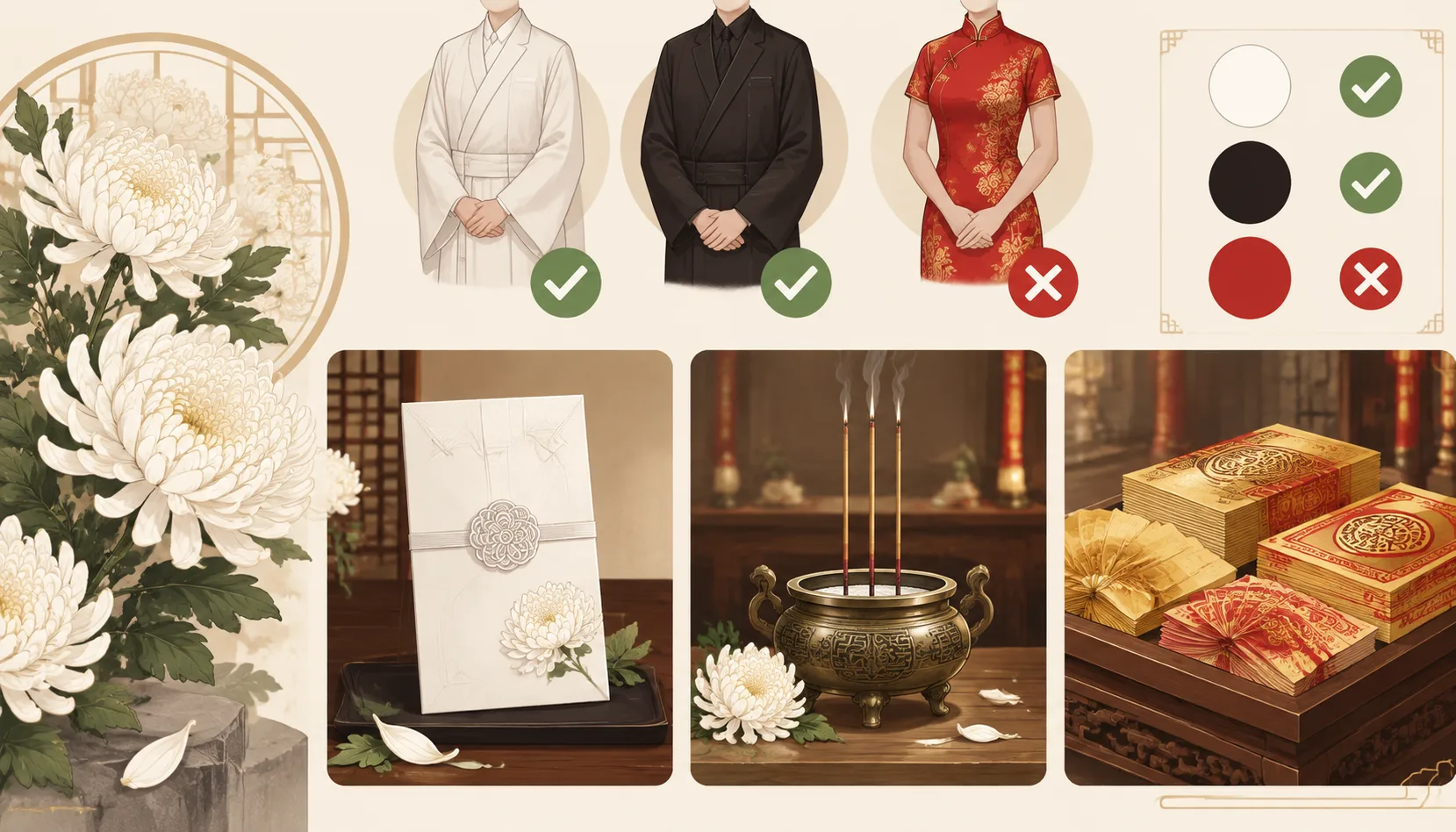
Chinese Funeral Customs: What Foreigners Must Know
Wear black or white, avoid red and bright colors. Bring a white envelope with cash in an even amount (no 4s) and white flowers — never red roses. Offer brief co…
Read the guide →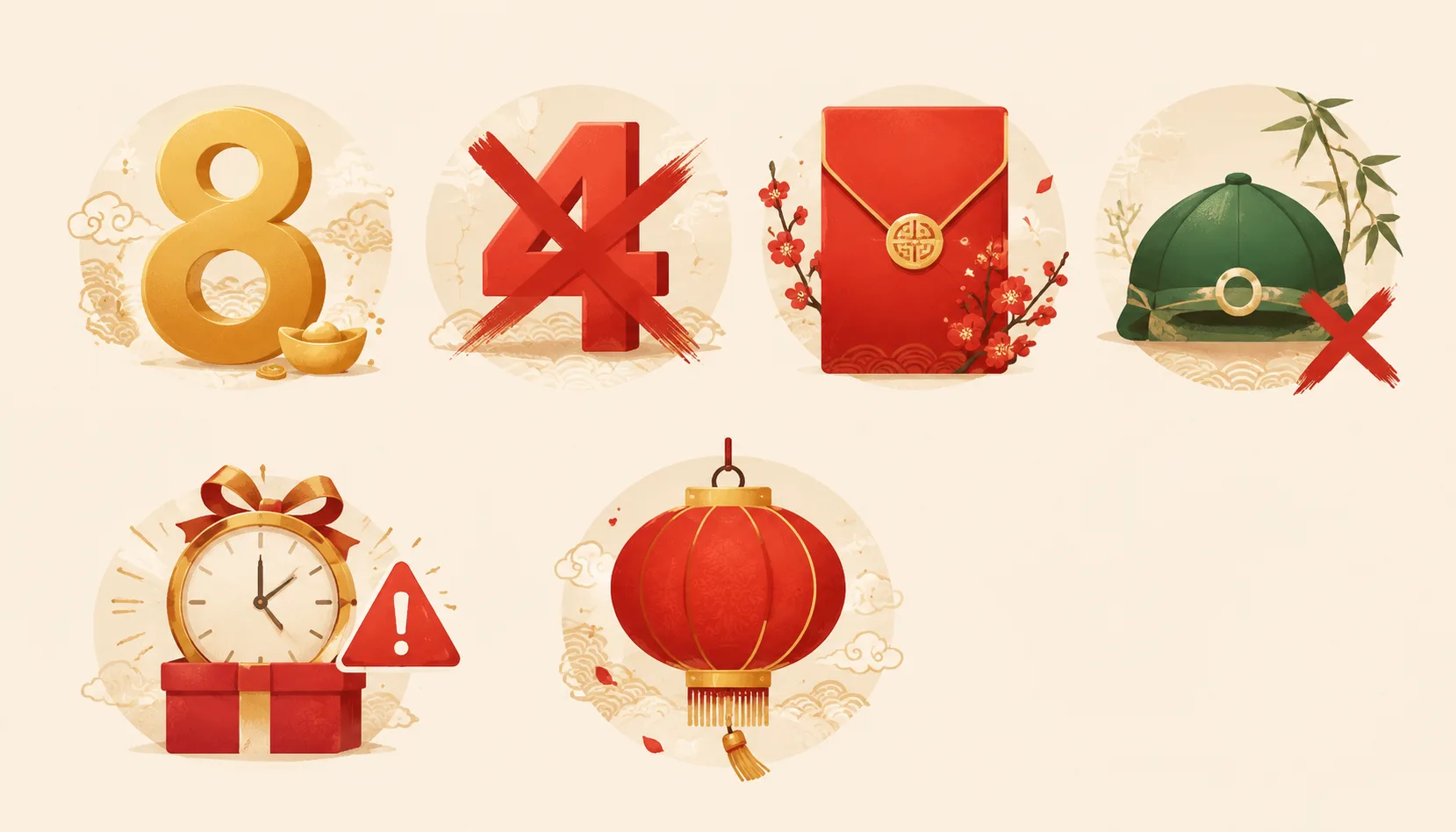
Chinese Superstitions in Everyday Life: What Foreigners Should Know
Several Chinese superstitions remain genuinely active in modern life — especially around gifts (clocks, pears, green hats), numbers (4 = death, 8 = prosperity),…
Read the guide →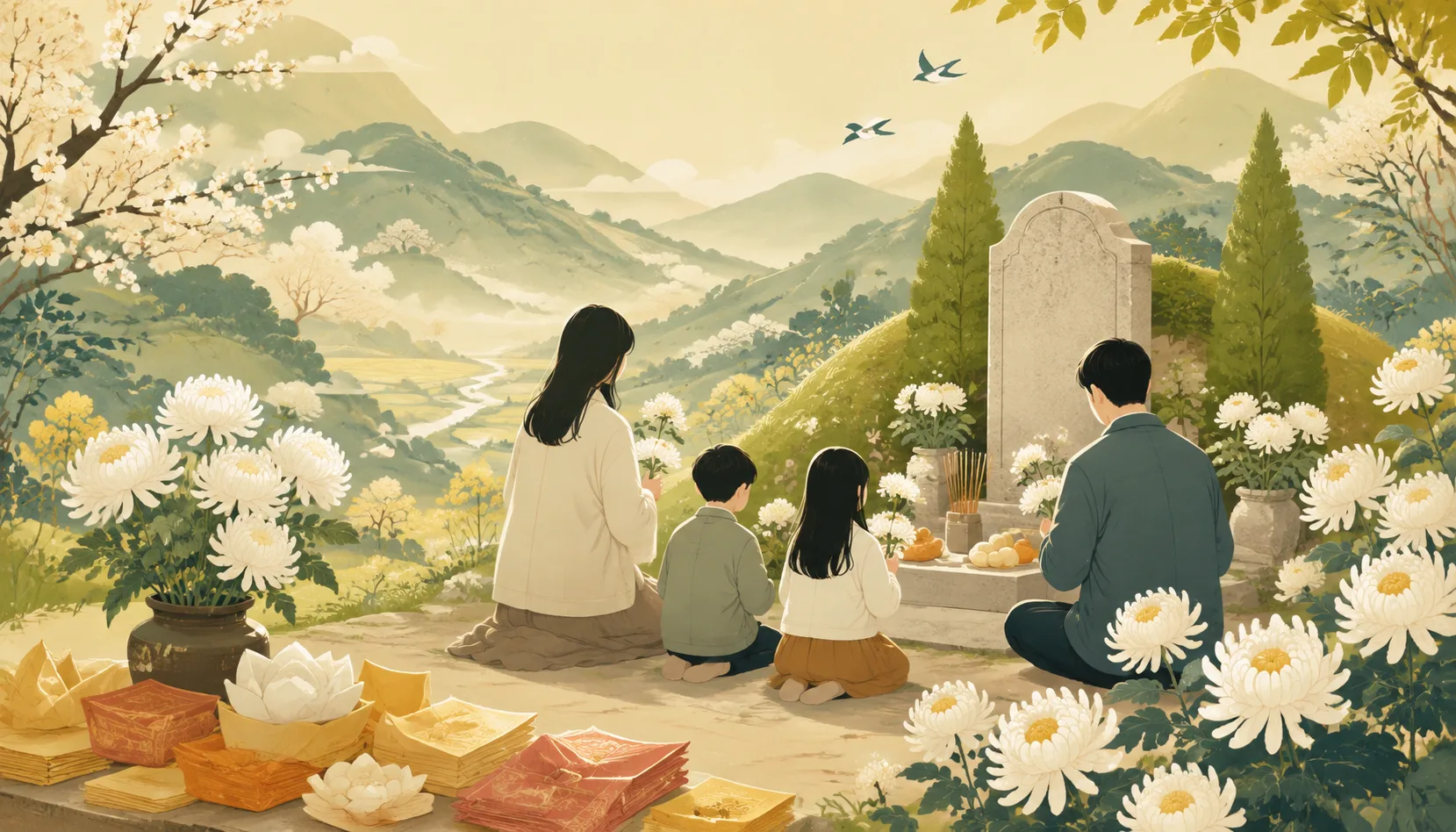
Qingming Festival (Tomb-Sweeping Day) China: A Foreigner's Respectful Guide (2026)
Qingming Festival (清明节, Qīngmíng Jié) is China's major ancestral remembrance day — families visit graves, clean tombstones, burn paper offerings, and spring-pic…
Read the guide →