What should foreigners know about Qingming Festival in China?
Quick answer
Qingming Festival (清明节, Qīngmíng Jié) is China's major ancestral remembrance day — families visit graves, clean tombstones, burn paper offerings, and spring-picnic afterwards. Foreigners should be quietly respectful. Don't schedule loud parties this weekend. If invited to join a family's tomb-sweeping trip, wear muted colors and follow their lead.
What Is Qingming Festival?
Qingming Festival (清明节, Qīngmíng Jié) is China's day of ancestral remembrance — a moment when millions of families travel to their ancestral homes, clean graves, and make offerings to those who came before them.
The closest Western equivalent: a combination of All Souls' Day (Catholic day of remembrance for the dead) and Memorial Day (American tribute to the fallen) — but more familial, more practical, and more emotionally central to Chinese identity than either Western version.
The name comes from the phrase 清明 (qīngmíng, clear and bright) — this is spring's clearest, brightest period, and the timing was chosen deliberately. After a cold winter, the ground thaws, flowers bloom, and it's possible to travel to distant ancestral burial sites.
The Date
Unlike most Chinese festivals, Qingming follows the solar calendar — it always falls around April 4–6.
| Year | Date |
|---|---|
| 2025 | April 4 |
| 2026 | April 5 |
| 2027 | April 5 |
The government holiday is 3 days. Transportation gets crowded as people travel to ancestral hometowns.
What Chinese Families Actually Do
1. Sweep Graves (扫墓, Sǎomù)
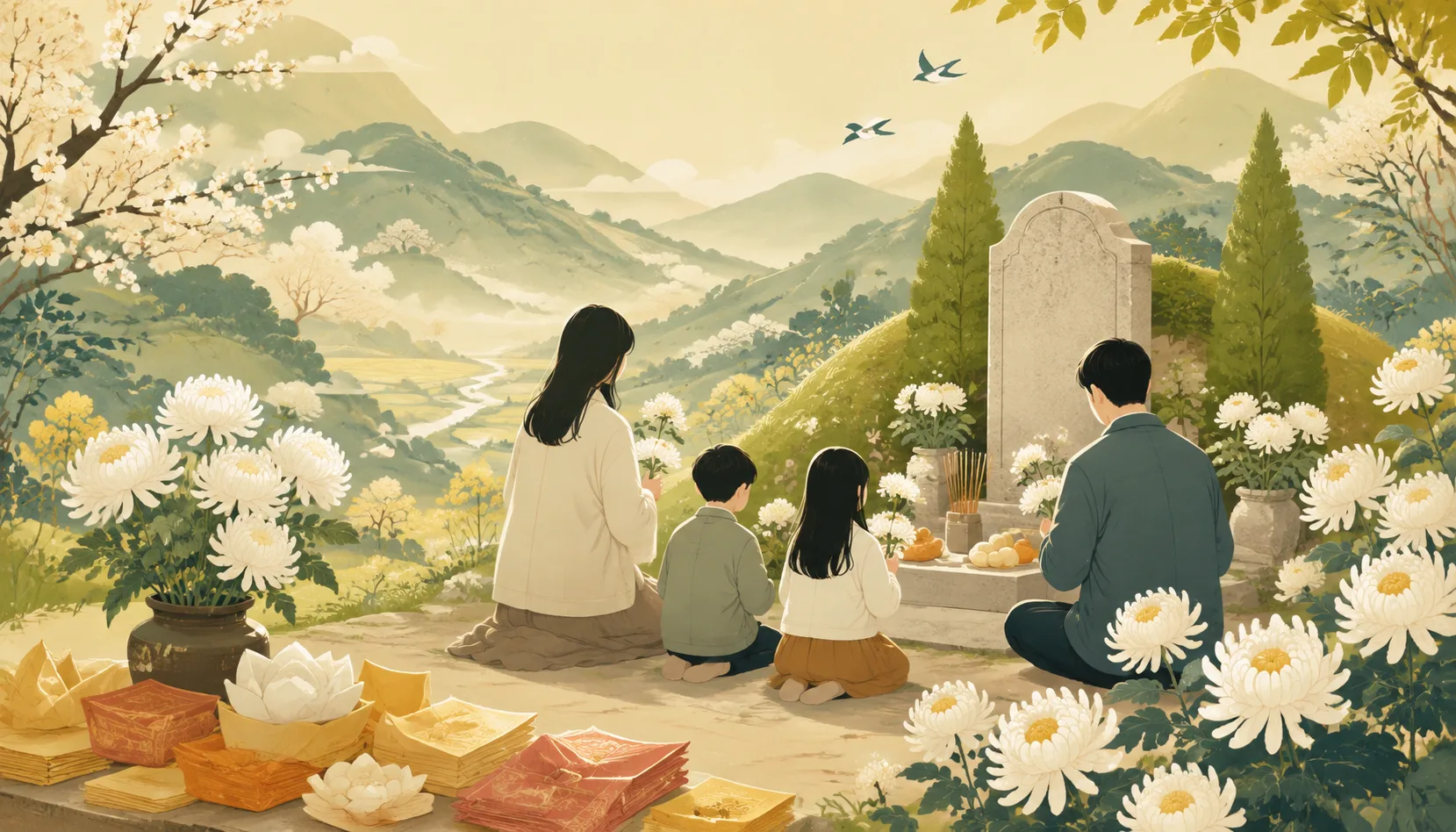
The literal act: families visit ancestral graves, clear away weeds and overgrown grass, wipe down tombstones, arrange fresh flowers (traditionally white chrysanthemums or yellow chrysanthemums — never red roses), and burn paper offerings.
This is not morbid. Chinese culture understands death as a continuation — ancestors are not gone, they simply inhabit another realm and need to be remembered and tended to. Neglecting a grave is a serious failure of filial piety (孝, xiào).
2. Burn Paper Offerings (烧纸钱)
Paper money, paper houses, paper cars, paper clothes — these are burned so the smoke carries them to the ancestors in the afterlife. You may see roadside fires or small burn piles during Qingming. This is normal and intentional. Do not interfere, photograph, or comment.
3. Spring Outing (踏青, Tàqīng)
After the solemn morning at the grave, families often spread out on the grass for a spring picnic — 踏青 literally means "stepping on the green." The combination of remembrance + renewal is deliberate: honoring the past while celebrating the living season.
4. Eat Green Rice Balls (青团, Qīngtuán) — Yangtze Delta
In Jiangsu, Zhejiang, and Shanghai, the traditional Qingming food is 青团 — soft green rice-flour balls filled with sweet red bean paste or savory pork. The green color comes from mugwort or barley grass juice. They taste mild and slightly earthy — worth trying if you're in the region.
What Foreigners Should Do
- Respect the tone of the weekend. Don't organize loud birthday parties or celebratory events that clash with the quiet, reflective mood.
- If invited to join a family's tomb-sweeping trip, you may go. Dress in muted colors (grey, black, navy, white), follow the family's lead completely, and express quiet respect. This is a significant act of inclusion — treat it as such.
- When you see roadside burning, walk past without photographing, stopping, or asking questions. Treat it like you'd treat a private prayer.
- Try qingtuán if you're in Shanghai or Hangzhou — they appear in stores starting 2–3 weeks before Qingming and are a pleasant seasonal food experience.
What Foreigners Must NOT Do
- ❌ Wear red clothing to a grave visit — red is a celebration color; at a grave it signals profound disrespect.
- ❌ Take photos at the graveside — this is an intimate family ritual, not a photo opportunity.
- ❌ Laugh or joke loudly at or near a burial site — the same way you'd be quiet at any Western funeral or memorial site.
- ❌ Bring red roses as an offering — for graves, white or yellow chrysanthemums are correct. Red flowers are for joyful occasions.
- ❌ Organize loud recreational events on Qingming day itself — if a Chinese colleague declines a social invitation because of this festival, understand and accept it.
The Concept of 慎终追远
The philosophical foundation of Qingming is the Confucian phrase 慎终追远 (shèn zhōng zhuī yuǎn) — "carefully attend to the end of life, and remember those who came before."
This isn't superstition or sentimentality. It's a moral discipline: the idea that a person's character is shaped by how seriously they take obligations to those who gave them life. Chinese people who "don't even sweep their ancestors' graves" are considered to have failed a fundamental human duty.
When you understand this, the whole festival makes different sense. It's not about ghosts. It's about who you are relative to your family line.
Practical Notes for Foreigners
- Transportation: Qingming is a peak travel period. Trains and highways fill up as urban workers return to hometowns. Book travel early if you're going anywhere.
- Timing of gift-giving: Qingming is not a gift-sending occasion. Don't send gifts — it creates awkwardness.
- Office atmosphere: The days before Qingming can feel slightly subdued as people mentally prepare for the journey home. Don't schedule high-energy presentations or demanding deadlines for Qingming week.
What Chinese People Actually Say
- 扫墓 | sǎo mù | to sweep the tomb | Use when describing the main Qingming activity of cleaning ancestor graves.
- 祭祖 | jì zǔ | to offer sacrifices to ancestors | Use when referring to paying respects to deceased family members.
- 踏青 | tà qīng | spring outing | Use when describing the tradition of walking in nature during Qingming.
2026 Reality Check
2026 Reality Check: Traditional Qingming etiquette persists but with notable shifts. Most Chinese still visit ancestral graves, but many younger urbanites now use online memorial platforms or flower deliveries instead of physical visits.
Gen Z vs Older Generations: Boomers and Gen X maintain strict traditions—sweeping tombs, burning paper money, kneeling. Gen Z treats Qingming more casually, treating it as a 3-day holiday for travel or shopping, though they still honor ancestors through social media posts or brief virtual rituals.
Beijing/Shanghai vs Smaller Cities: Major cities see relaxed observance; younger residents often skip tomb visits entirely. Rural areas and smaller cities (especially in provinces like Hunan, Guangdong) still follow traditional customs rigidly—full family gatherings, elaborate food offerings, and multi-day rituals remain the norm.
Frequently asked questions
When exactly is Qingming Festival in 2026 and how long does it last?
In 2026, Qingming Festival falls on Saturday, April 4th. It's a one-day public holiday, but the official holiday period often extends to a three-day weekend (April 4-6). Many families visit graves on the actual day, though some go on the weekend before to avoid crowds. Expect heavy traffic at cemeteries and popular travel destinations.
Can foreigners visit Chinese cemeteries during Qingming to take photos?
You can visit public cemeteries, but photography is highly discouraged. Families are performing private mourning rituals, and taking photos feels intrusive. If you're documenting culture, ask permission first — most people will politely decline. Never photograph burning paper offerings or people crying. Instead, focus on capturing the spring scenery or the festival atmosphere from a respectful distance.
What should I do if my Chinese friend invites me to join their tomb-sweeping trip?
Accept gracefully — it's a sign of deep trust. Wear dark or muted colors (avoid bright red). Bring a small bouquet of yellow or white chrysanthemums, which are funeral flowers in China. Let the family lead all rituals. If they offer you incense to hold, take it with both hands, bow three times, and hand it back. Don't touch the tombstone or clean it unless explicitly asked.
Is it rude to schedule a business meeting or loud party during Qingming weekend?
Yes, it's culturally tone-deaf. Qingming is a solemn mourning period, and many Chinese people see it as inappropriate to celebrate loudly. Business meetings are fine if scheduled normally, but avoid hosting parties, weddings, or grand openings on April 4th. If you must celebrate, keep it private and low-key. Many restaurants and entertainment venues operate normally, but attendance may be low.
What are the green and grey paper things people burn at tombs — and can I buy them?
Those are joss paper (冥币), or 'spirit money,' burned to send wealth to ancestors in the afterlife. You'll also see paper replicas of houses, cars, and iPhones. You can buy them at flower shops or street stalls near cemeteries. As a foreigner, you're not expected to purchase or burn them. If you want to show respect, observe quietly rather than participate in the burning.
Are there regional differences in how Qingming is celebrated across China?
Yes, traditions vary significantly. In southern China, families often eat qingtuan (green rice balls) and fly kites. In northern China, they may eat cold foods and avoid lighting fires. In places like Guangdong, entire clans gather for elaborate feasts after sweeping. In rural areas, some still practice 'hanging paper' on ancestral graves. If you're traveling, ask locals about their specific customs — showing curiosity is appreciated.
Try our tools
Related guides
5 Chinese Holidays Foreigners Often Miss: Lantern Festival
Beyond Spring Festival, Golden Week, and Mid-Autumn, five smaller Chinese holidays matter for foreigners in Chinese social and professional life: Lantern Festiv…
Read the guide →
Chinese New Year Survival Guide for Foreigners (2026)
Spring Festival is China’s biggest holiday, a family reunion that dwarfs Western celebrations. If invited to New Year’s Eve dinner, arrive early, bring fruit or…
Read the guide →
Dragon Boat Festival China 2026: Zongzi & What to Know
Dragon Boat Festival (端午节, Duānwǔ Jié) falls on the 5th day of the 5th lunar month. Eat zongzi (sticky rice dumplings wrapped in bamboo leaves), watch or join d…
Read the guide →