Is it rude to move a dish closer to my seat at a Chinese dinner?
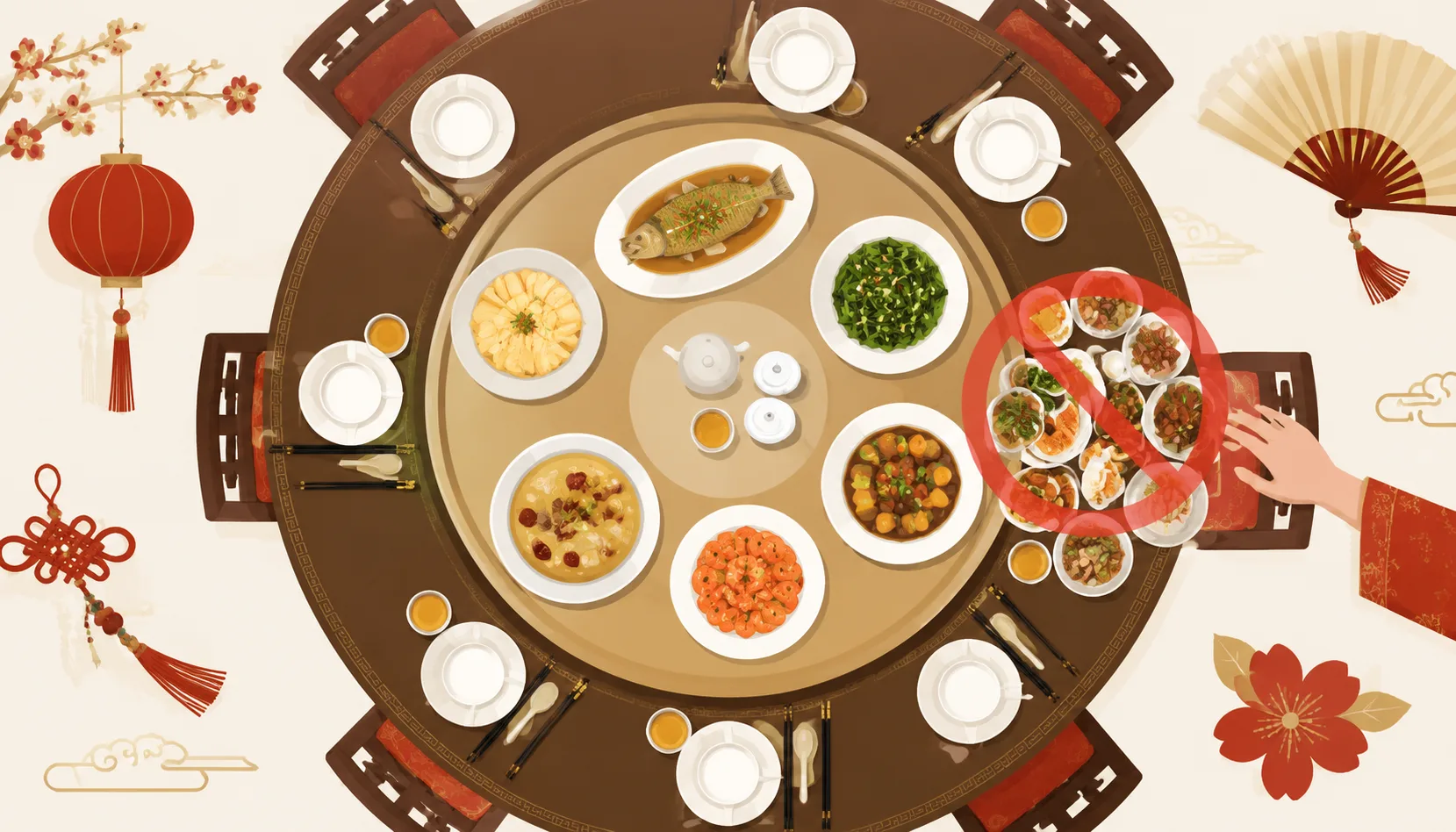
Quick answer
Yes. Don't position shared dishes directly in front of yourself just because you like them. Place dishes where everyone can reach them.
Why This Rule Matters
Chinese dining etiquette centers on 'qiān ràng' (谦让, modesty and yielding). Hoarding a dish for yourself signals selfishness and poor upbringing. The rule reflects Confucian values of considering others' needs before your own.
What You Should Do
- Leave shared dishes in the center of the table
- If you like a dish, take a reasonable portion and leave it accessible to others
- Recommend dishes to others — 'this one is really good, try some'
What You Shouldn't Do
- Pull a shared dish directly in front of you
- Take large portions of a dish you like and leave little for others
- Claim a dish as 'yours' during a shared meal
Practical Tips for Foreigners
This rule applies in most social and formal settings across China. When in doubt, watch what your Chinese host or senior colleague does and follow their lead. Breaking this rule once is forgivable — breaking it repeatedly signals a lack of cultural awareness.
Regional Generational Differences You'll Notice
In Beijing and northern China, older colleagues in state-owned enterprises or traditional family gatherings treat moving a dish as a direct challenge to the host's authority — they'll see it as 'nǐ zhème dà dǎn' (你这么大胆, you're so bold). But in Shanghai and Shenzhen's tech or startup scenes, younger professionals in their 20s and 30s often shrug it off, especially if you're a foreigner they know well. The real tension surfaces in Guangdong and Fujian, where elders from Chaozhou or Quanzhou still link table behavior to family upbringing — they'll quietly note it but say nothing, then mention it to your Chinese friend later.
Real Scenarios: What Foreigners Do Wrong
- A British expat in Shanghai reached across a hotpot table to pull the beef platter toward himself at a team dinner. The HR manager, a 45-year-old Shanghainese, said nothing but later told his Chinese colleague, 'He acts like he's eating alone.' The expat never got invited to client dinners again.
- An American teacher in Chengdu, at a family banquet, rotated the lazy Susan so the mapo tofu stopped right in front of her plate. The grandmother, from a traditional Sichuan family, stopped eating for a moment, then pushed the dish back to the center without a word — a silent correction everyone noticed.
- In Shenzhen, a German engineer at a startup lunch moved a shared fish dish closer to himself. His 28-year-old Chinese coworkers laughed it off, but the CEO's 60-year-old father, visiting from Hunan, frowned and said, 'In my day, that would start a fight.'
What Your Chinese Host Thinks But Won't Say
When you pull a dish toward yourself, the host's internal monologue runs something like: 'Does he not understand this is shared? Or worse — does he think he's more important than everyone here?' In formal settings, they'll interpret it as a lack of 'xiū yǎng' (修养, self-cultivation) — a core value they believe separates educated people from the uncultured. They won't correct you directly because that would embarrass you and break the harmony ('hé qì'). Instead, they'll compensate by over-serving you from that dish, making you feel guilty without a word. If you do it repeatedly, they'll quietly label you as 'zì sī' (自私, selfish) and adjust your future invitations accordingly.
One Exception: When It's Acceptable
The rule softens in two situations. First, at a 'jiā cháng biàn fàn' (家常便饭, casual home meal) with close friends — if everyone's already eating family-style and you're all relaxed, a slight nudge is forgivable, but still don't claim a dish as yours. Second, if the dish is served in a small bowl meant for your personal portion, like a soup or a side dish placed by the server specifically for you. Otherwise, the center is the only safe zone. When in doubt, mirror what the host does — if they leave a dish untouched in the middle, so do you.
What Chinese People Actually Say
- 布菜 | bù cài | to serve dishes to others | Use when placing food into a guest's bowl to show hospitality
- 夹菜 | jiā cài | to pick up dishes from shared plates | Use when taking food from the communal dishes to the side
- 敬菜 | jìng cài | to respectfully offer dishes to guests | Use when inviting elders or guests to eat certain dishes
2026 Reality Check
2026 Reality Check: The "don't move dishes to your spot" rule is fading but not dead. It's now more about politeness than strict etiquette.
Gen Z vs. Older Generations: Younger Chinese (under 30) largely ignore this rule—they see it as outdated and inconvenient. Older generations (50+) still notice and sometimes comment, especially at family dinners. The gap is widening.
Big Cities vs. Smaller Cities: In Beijing and Shanghai, most people don't care. Restaurants are crowded, and grabbing your space is normal. In smaller cities and family-run restaurants, the rule still holds more weight—elders may frown upon moving dishes, and younger diners often comply to avoid conflict.
Bottom Line: It's becoming a suggestion, not a rule. Enforcement depends on who's at the table and where you're eating.
Frequently asked questions
Why is it considered rude to move a shared dish closer to my seat at a Chinese dinner?
Moving a dish to your spot signals that you prioritize your own preference over the group, which goes against the communal spirit of Chinese dining. It can also make it harder for others to reach the dish, disrupting the shared experience.
What should I do if I really like a dish that's far from me?
Politely ask someone near the dish to pass it to you, or use the serving spoon to take a small portion onto your own plate. Avoid pulling the dish toward you—just take what you need and leave it in place.
Can I move a dish if I'm the host or the eldest person at the table?
Even as a host or elder, it's better to keep dishes centered so everyone can reach them. If you want to offer a dish to a specific guest, gently rotate the lazy Susan or ask a server to reposition it, rather than moving it to your own spot.
Is it okay to move a dish if the table is very crowded and I can't reach it?
No, instead of moving the dish, ask someone closer to it to pass you a portion, or wait for the lazy Susan to rotate if available. Moving it yourself can knock over other dishes or spill food, which is even more disruptive.
What's the proper way to take food from a shared dish without moving it?
Use the communal serving spoon or chopsticks to take a small amount directly onto your plate, then return the serving utensil to the dish. Keep the dish in its original position and avoid leaning over or dragging it toward you.
Are there any exceptions, like in a casual or family setting?
In very informal family meals, some flexibility may exist, but the habit of keeping dishes central is still appreciated. Even at home, it's better to pass dishes around or use serving spoons rather than pulling them close, to maintain good dining etiquette.
Try our tools
Related guides
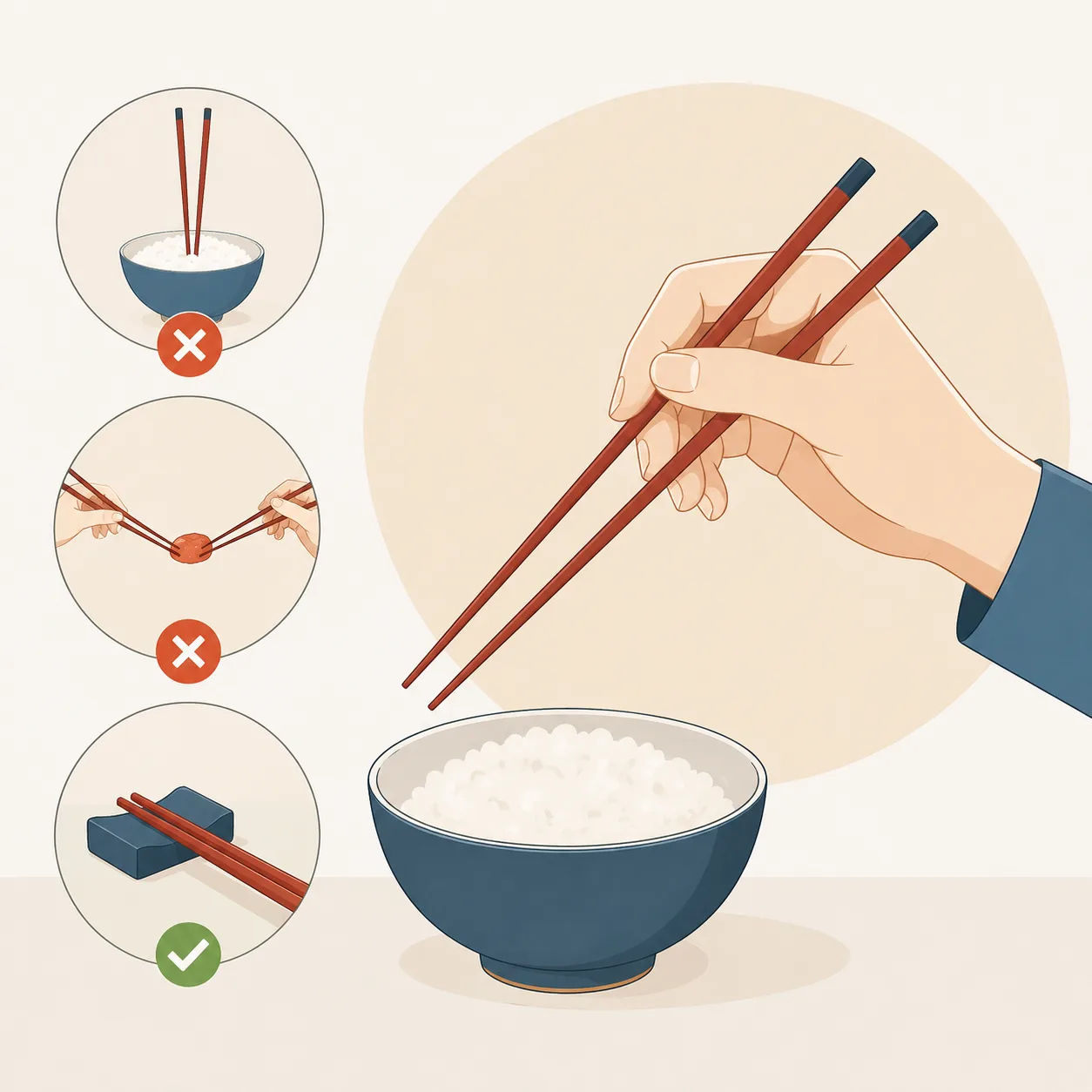
Chopstick Rules in China: What to Do and What to Avoid
The three biggest chopstick taboos in China: never stand them upright in a bowl of rice, never tap your bowl with them, and never dig through shared dishes. Kee…
Read the guide →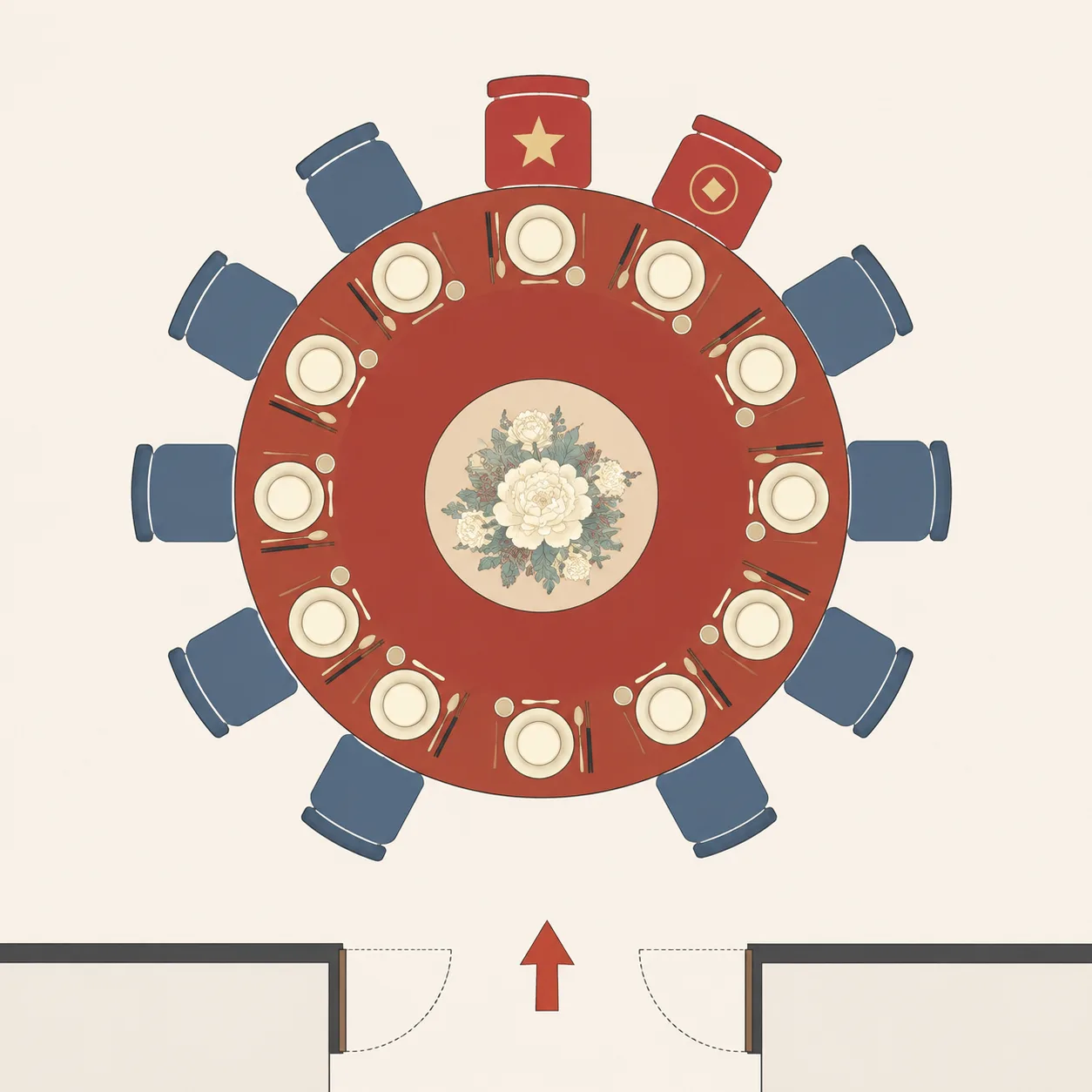
Chinese Banquet Seating Explained: Where to Sit and What It Means
At a Chinese banquet, the seat of honor faces the door and belongs to the host or most senior person. The most important guest sits to the host's right. Everyon…
Read the guide →
Chinese Restaurant Dining Etiquette: During the Meal and Beyond
During a Chinese meal: wait for the host to signal the start, toast with the host before drinking, serve others before yourself, and never leave without a prope…
Read the guide →