Invited to a Chinese Mid-Autumn Festival Home Dinner? Etiquette Guide for Foreigners (2026)
Quick answer
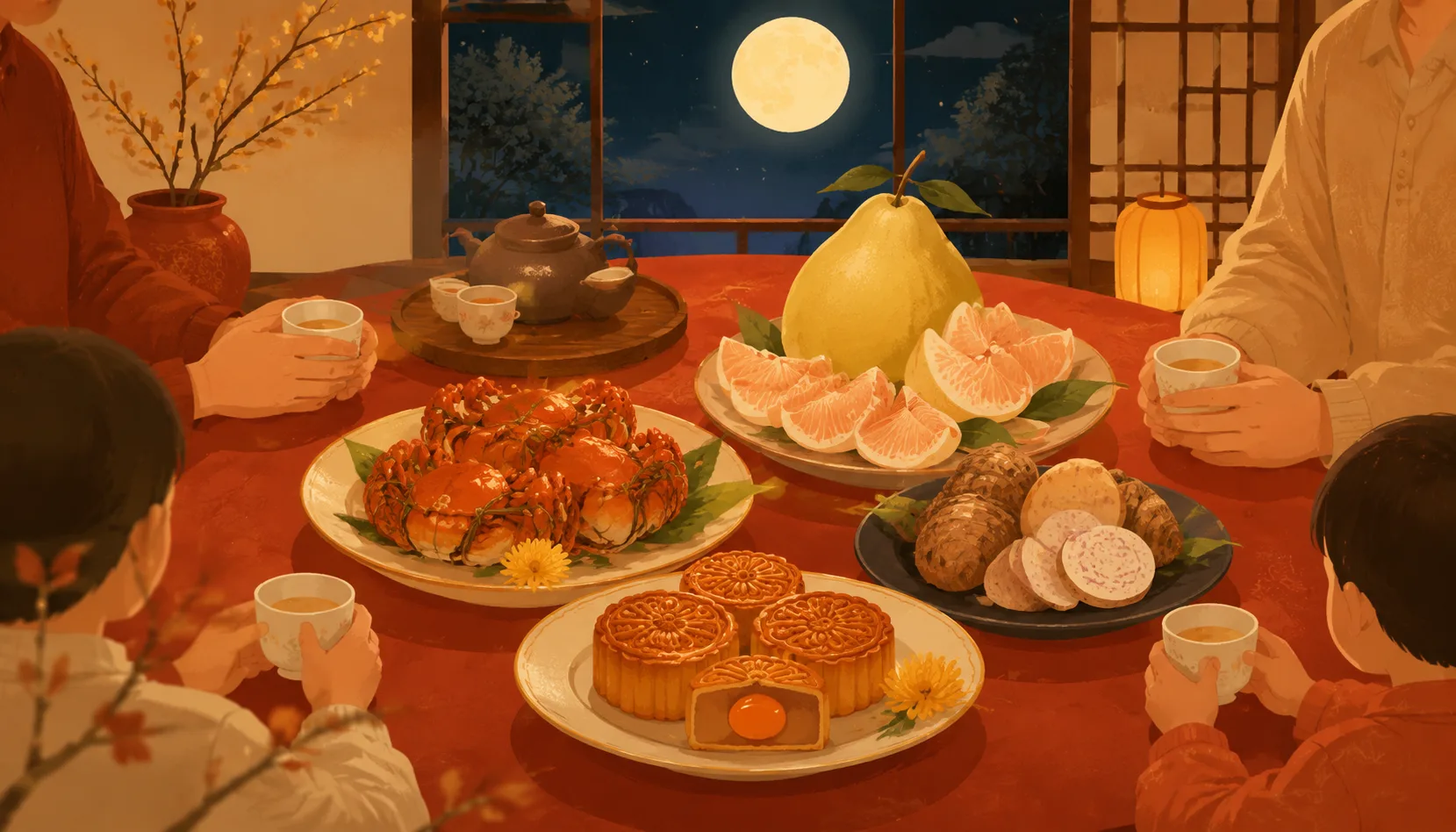
A Mid-Autumn home dinner invitation is a significant relationship signal — you're being included in a family ritual, not just a meal. Bring: mooncakes + pomelo or grapes (¥200–400 total). Wear warm colors; avoid white/black. Say "中秋快乐!月圆人团圆!" when you arrive. At dinner: wait for the eldest to start, don't eat the pomelo until moon-gazing time, participate in moon-watching after dinner. Leave 30–60 minutes after the meal.
Quick Answer
A Mid-Autumn home dinner invitation is a significant relationship signal — you're being included in a family ritual, not just a meal. Bring: mooncakes + pomelo or grapes (¥200–400 total). Wear warm colors; avoid white/black. Say "中秋快乐!月圆人团圆!" when you arrive. At dinner: wait for the eldest to start, don't eat the pomelo until moon-gazing time, participate in moon-watching after dinner. Leave 30–60 minutes after the meal.
What the Invitation Means
Unlike the Spring Festival year夜饭 — which has near-mythical family-only status — the Mid-Autumn home dinner is warmer and more relaxed. It may include a few non-family guests, close friends, or colleagues who've reached a genuine relationship depth.
Still, being invited is meaningful. The scale is small (8–12 people maximum), the mood is intimate, and the host has specifically thought: "I want this person at my table during Mid-Autumn."
If you're the only foreigner there: you've passed an unspoken test of cultural trustworthiness. The family has decided you're someone who will appreciate rather than misunderstand this occasion.
What to Bring
Never arrive empty-handed. Mid-Autumn is a gift occasion — arriving with nothing to a holiday home dinner is the social equivalent of showing up to Thanksgiving with nothing.
The Standard Bring
Option A: Mooncake set + seasonal fruit
- A quality branded mooncake box (¥150–250) — not novelty, not cheap
- A pomelo (柚子, yòuzi) — the quintessential Mid-Autumn fruit, round like the moon, symbolic of family protection ("佑" blessings)
- Or: grapes, pomegranate, mandarin oranges
- Total: ¥200–350
Option B: Mooncake set + wine
- A quality branded mooncake box + a bottle of imported wine or good baijiu
- Total: ¥250–500
Option C: Fruit basket + specialty item
- A seasonal fruit arrangement (pomelo, grapes, apples, mandarin) + something specific you know they like (specialty tea, artisan snack from your country)
- Total: ¥200–400
What to avoid bringing:
- Pears (梨 = separation — worst symbol for a reunion festival)
- White or yellow chrysanthemums (funeral flowers)
- Anything in white or black packaging
- Single items (give even numbers — 6, 8 pieces of fruit; a pair of bottles)
Affiliate placement: → Mid-Autumn mooncake sets ¥150–300 | Premium pomelo and seasonal fruit baskets for home visits
What to Wear
Mid-Autumn dress code is more relaxed than Spring Festival, but some rules still apply:
Wear: Warm colors — cream, warm yellow, soft red, orange, autumnal tones. Your host said "the moon-colored dress was beautiful" to a guest in cream — this is the aesthetic of the festival.
Avoid: All-black or all-white outfits. While Mid-Autumn is less strict than Spring Festival on this point, both colors carry funeral associations in Chinese culture. A subdued outfit on a festival evening reads as either unaware or unmotivated. One warm-colored element (a scarf, a top, a jacket) is enough.
Adding red: Any red accessory signals you know what occasion this is. It's not required but always noticed positively.
When You Arrive
Standard arrival sequence:
- Knock or ring. Wait to be invited in.
- At the door: present your gift with both hands, slight forward lean:
> "李阿姨,中秋快乐!一点心意,祝您阖家团圆,身体健康!" > (Lǐ āyí, zhōngqiū kuàilè! Yìdiǎn xīnyì, zhù nín héjiā tuányuán, shēntǐ jiànkāng!) > "Auntie Li, Happy Mid-Autumn! A small token — wishing your whole family togetherness and good health!"
- Remove your shoes at the entrance (slippers will be offered).
- Greet everyone in the room. Eldest first:
> "爷爷/奶奶,中秋节好!祝您身体健康,长命百岁!" > "Grandpa/Grandma, happy Mid-Autumn! Wishing you good health and long life!"
- The host will ask you to sit. Accept wherever you're directed — don't choose your own seat.
At the Dinner Table
The Seating Logic
Traditionally: the seat facing the door (面门位) is most honorable. The host sits nearest to the kitchen. As a guest, you'll be placed at an honored position — let your host arrange this.
The Starting Protocol
Wait. Watch the eldest person at the table. When they pick up their chopsticks (or the host says "大家吃吧!" / "请动筷!" — everyone eat / please start), then you eat. Never before.
The Foods You'll See
Mooncakes: Served after dinner, during or after moon-watching — not as a main course. Don't eat them during dinner unless the host specifically serves them at the table.
Pomelo (柚子): Also typically for after-dinner moon-viewing. The pomelo is round like the moon, and its Cantonese name sounds like "bless you" (佑你). Peeling a pomelo together is a moon-gazing tradition — wait for this ritual rather than eating it at dinner.
Hairy crabs (大闸蟹): If served, this is the centerpiece of the evening. Eating hairy crabs is slow, ritualistic, and social — it takes 30–45 minutes per crab and everyone eats together. The host may crack crabs for you if you're unfamiliar. Let them. Express genuine appreciation when the crab roe is revealed: "蟹黄好漂亮!" (Xiè huáng hǎo piàoliang!) — "The crab roe is beautiful!"
How to eat hairy crab if you've never done it:
- Lift the back shell (twist off the triangular flap first)
- Remove the gray-brown gills (these are not eaten — they look like fingers)
- The orange/yellow roe (females) or white fat (males) in the body is the prize — eat with a small spoon
- The leg and claw meat is extracted with the crab tools provided (or chopsticks)
- Eat slowly — this is a patient, social meal
Table Conversation Topics That Work
Good topics:
- The moon and Chang'e mythology ("I read about Chang'e and the jade rabbit — is that the story your family tells?")
- The food ("The crab roe is incredible — is this Yangcheng Lake?")
- Your experience of autumn in China ("Autumn in [your home city] and China both feel like..."
- Family (how many people are traveling home for the holiday)
- The view of the moon from where you're sitting
Topics to avoid:
- Politics, territorial disputes, social media controversies
- Comparing China negatively to your home country during a national holiday
- Asking intrusive personal questions unprompted (though you'll receive them — see below)
The Questions You Will Be Asked
Mid-Autumn family dinners are less interrogation-heavy than Spring Festival year夜饭, but curious relatives will still ask:
| Question | Graceful Response |
|---|---|
| 来中国多久了?(How long have you been in China?) | "X years. Every season here teaches me something new." |
| 喜欢中国吗?(Do you like China?) | "非常喜欢!(Very much!) The people, the food, the culture." |
| 中秋节有什么感受?(How do you feel about Mid-Autumn?) | "看着这轮圆月,感觉特别温暖。" (Seeing this full moon feels very warm.) |
| 有对象了吗?(Do you have a partner?) | "还没找到呢!(Haven't found the right person yet!) Maybe you know someone suitable?" |
The Moon-Gazing Ritual
After dinner — this is where the evening reaches its emotional core.
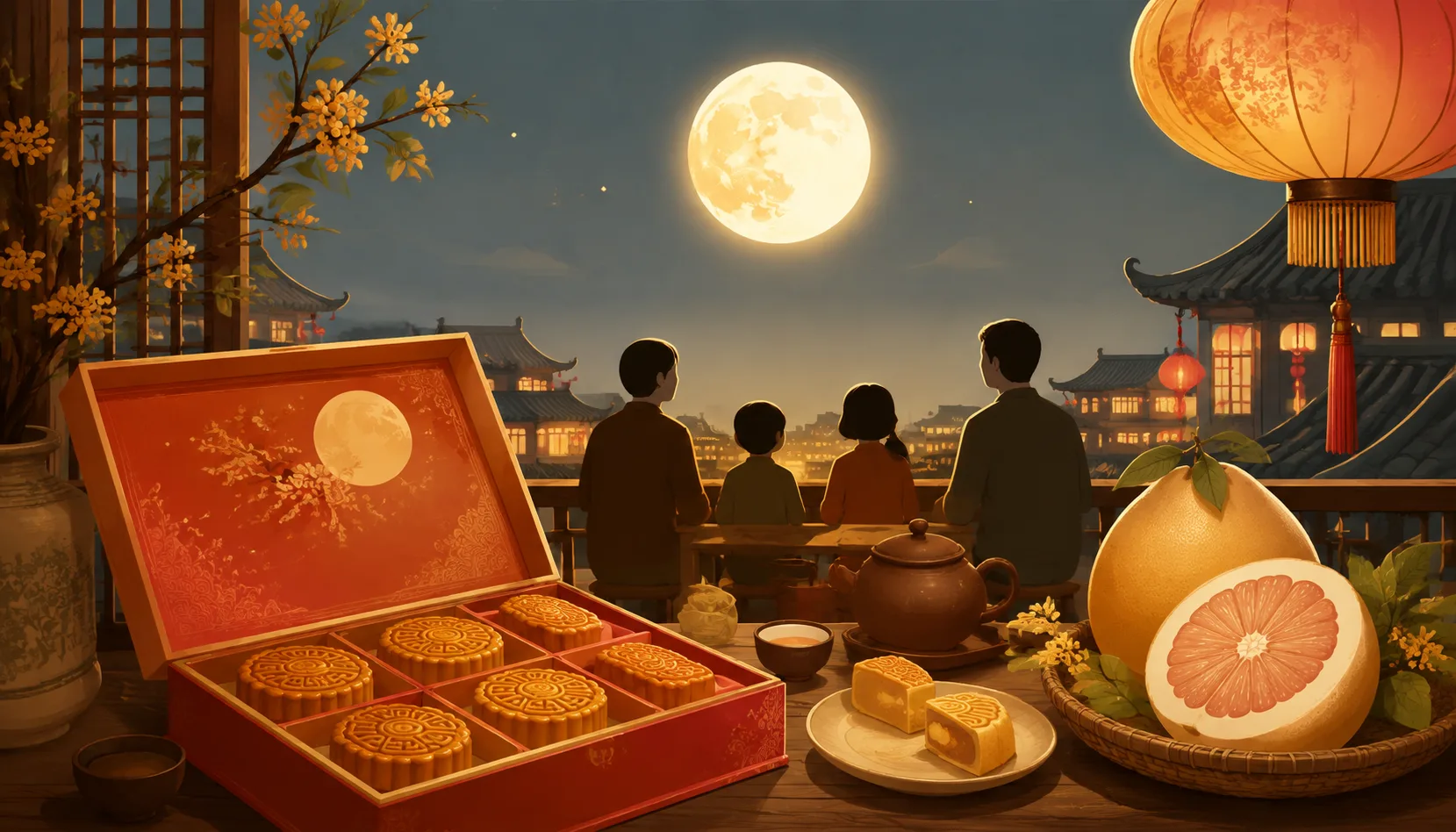
The family (and you) moves to the balcony, courtyard, or an outdoor space. Tea is made, the pomelo is cut, mooncakes are sliced. Everyone looks at the moon.
Your role:
- Put your phone in your pocket
- Actually look at the moon
- Say something sincere: "今晚的月亮真圆!" (The moon tonight is so perfectly round!) or "在这里看月亮特别美。" (Watching the moon here is especially beautiful.)
- If you know the Chang'e story: "我一直觉得嫦娥很孤独,但今晚大家在一起,她应该也高兴了。" (I always thought Chang'e must be lonely, but tonight with everyone together, she must be happy too.) — This kind of culturally-aware, emotionally warm comment will be remembered and repeated.
Taking photos: Yes, everyone takes photos. Take yours too. But put the phone away and be present for the 5–10 minutes when the family is simply looking at the moon together. That silent, collective presence is the heart of the ritual.
Tasting mooncakes: The host will cut mooncakes and offer a piece. Take it with both hands, taste it, and comment genuinely. Even if it's not to your taste, "这个馅很特别,我喜欢!" (The filling is so unique — I love it!) is always appropriate.
When to Leave
Mid-Autumn dinners are warm and unhurried. The moon-gazing portion can extend for an hour or more after dinner.
Signs it's time to leave:
- Elderly family members are visibly tired or have excused themselves
- The host starts clearing tea cups or tidying
- It's past 10pm on a weekday
Leaving script:
"今天太开心了!谢谢叔叔阿姨的招待,饭菜太好吃了。我不打扰你们了,祝中秋快乐,月圆人团圆!改天再来看你们!" "Tonight was so wonderful! Thank you, Uncle and Auntie, for having me. The food was incredible. I won't take any more of your time — wishing you a Happy Mid-Autumn, family togetherness! I'll come visit again soon!"
The gift-back: The host may send you home with leftover mooncakes, fruit, or food. Accept it warmly: "那我就不客气了,谢谢!" (Then I won't be modest — thank you!)
The Day-After Message
Send a WeChat message the following morning:
"昨晚过得太开心了!谢谢您们的盛情款待,月饼太好吃了,月亮也超级圆。祝您们新的一年阖家幸福,身体健康!" "Last night was wonderful! Thank you so much for your warm hospitality — the mooncakes were delicious, and the moon was perfectly round. Wishing your whole family happiness and good health in the coming year!"
This message costs 30 seconds and permanently upgrades where you sit in this family's social ranking.
FAQ
Q: Do I need to know how to eat hairy crabs to go to a Mid-Autumn dinner? A: No. Not knowing how to eat hairy crabs and having the host teach you is actually a warm, connecting experience that many Chinese families enjoy. Ask: "我不太会吃螃蟹,可以教我吗?" (I'm not too skilled at eating crab — could you teach me?) You'll be taught with evident pleasure.
Q: I don't drink. Will there be a lot of pressure to drink at a Mid-Autumn dinner? A: Less pressure than at a Spring Festival banquet or formal business dinner. Mid-Autumn is family-scale and warm rather than performance-oriented. Say early: "我不喝酒,以茶代酒。" (I don't drink alcohol — I'll use tea.) No one will press the issue.
Q: The family asked me to bring a friend. Can I bring my foreign roommate? A: If the family explicitly invited both of you, yes. If they're asking out of politeness and you've already been invited, it's safer to attend alone and perhaps mention your friend warmly ("my friend is very interested in Chinese culture — maybe next time?"). A foreign guest pair changes the social dynamic in ways that can make the host feel obligated to be "hosts" rather than genuine participants.
What Chinese People Actually Say
- 祝您中秋快乐 | zhù nín zhōng qiū kuài lè | Happy Mid-Autumn Festival | Greet your host warmly when arriving at their home
- 月饼 | yuè bǐng | mooncake | Bring a box as a gift; traditional Mid-Autumn Festival treat
- 团圆饭 | tuán yuán fàn | reunion dinner | The special family dinner eaten together on this holiday
2026 Reality Check
2026 Reality Check: Most traditional Mid-Autumn etiquette still applies, but flexibility has increased, especially in urban areas.
Gen Z vs Older Generations: Younger Chinese are far more relaxed about formal gift-giving rituals. They appreciate thoughtful gestures over strict protocols. Older generations still expect proper greetings and respectful behavior, especially in family settings.
Beijing/Shanghai vs Smaller Cities: Tier-1 cities are cosmopolitan—foreigners get more latitude. Etiquette is more casual; bringing quality wine or fruit is fine. Smaller cities and rural areas stick closer to tradition—arriving with gifts (mooncakes, tea, fruit) and showing gratitude to hosts remains expected.
Bottom Line: Core respect (thank host, try food, don't refuse everything) never goes out of style. Overly rigid rules have softened. A sincere attitude matters more than perfect manners in 2026.
Frequently asked questions
What should I bring if I'm invited to a Mid-Autumn Festival dinner but can't find mooncakes?
If mooncakes are unavailable, bring fresh pomelo (柚子) — it's a classic festival fruit symbolizing blessing and reunion — plus a box of quality tea or high-end fruit like grapes or pears. Avoid pears (梨, 'li') because it sounds like 'separation.' Keep the total value around ¥200–400; anything too lavish may embarrass your host.
Is it rude to refuse food at a Chinese Mid-Autumn dinner?
Not necessarily, but try everything at least once — it shows respect. If you're full or have dietary restrictions, say '谢谢,我吃饱了' (I'm full) or '我对这个过敏' (I'm allergic). Never leave food untouched on your plate; that's wasteful. If you can't eat something, place it aside neatly rather than leaving it visible.
Can I bring my own alcohol to a Mid-Autumn family dinner in China?
Yes, but only if you know the family's drinking culture. A bottle of baijiu (白酒) for the father or male elders is a strong gesture, but many urban families now prefer red wine or none at all. If you're unsure, don't bring alcohol — bring tea instead. When toasting, remember: your glass should be lower than the elder's when clinking.
What if I arrive late to the Mid-Autumn dinner due to traffic?
Call or message your host immediately, apologize sincerely, and explain briefly. Arriving late by 15–30 minutes is generally tolerated, but more than that is disrespectful. When you arrive, greet the eldest first with '中秋快乐' and apologize to everyone. Don't start eating immediately — wait for the host to invite you to sit and join.
Is there a specific time to eat the pomelo during the Mid-Autumn dinner?
Yes. Pomelo is traditionally eaten during or after moon-gazing (赏月), which typically happens after the main meal, around 8–10 PM when the moon is high. Don't eat it during the main courses. If the family doesn't explicitly do a moon-gazing segment, follow their lead — they might serve it as dessert. When in doubt, ask: '我们什么时候吃柚子?'
Are there regional differences in Mid-Autumn dinner etiquette I should know about?
Yes. In southern China (Guangdong, Fujian), families may have elaborate moon-gazing rituals with lanterns and extra sweets. In northern China, dinner is often earlier and more formal, with stricter seating order. In rural areas, you might be expected to toast more frequently. Always mirror the host's behavior — if they're casual, relax; if formal, follow their lead strictly.
Try our tools
Related guides
Mid-Autumn Festival 2026: Mooncakes & Gift Etiquette Guide
Mid-Autumn Festival is China’s second-biggest gift-giving event, blending Thanksgiving’s warmth with Christmas’s pressure around a full moon. Expect three days …
Read the guide →
Mid-Autumn Festival Mooncakes 2026: What to Give and When
Mid-Autumn Festival (中秋节, Zhōngqiū jié) falls on the 15th day of the 8th lunar month — typically September. Send or give mooncake gift boxes before the festival…
Read the guide →
Mid-Autumn Festival Gift Guide 2026: Mooncakes, Tea, Rules
Send gifts 7–10 days before the festival (never after). For business: branded mooncake box + quality tea (¥300–800 for manager/client). For colleagues: smaller …
Read the guide →