What should I bring as a gift when visiting a Chinese family?

Quick answer
Never arrive empty-handed. Safe choices: premium seasonal fruit in gift packaging, quality tea, or chocolates (¥100–300 for casual visits). For holiday visits, bring the festival-specific item — mooncakes for Mid-Autumn, nut boxes for Spring Festival.
When a Chinese friend invites you over, one unwritten rule overrides everything else: never arrive empty-handed. This isn't about the monetary value of the gift — it's about signaling that you respect the host's effort and you understand Chinese social norms. Show up with nothing, and even the most forgiving host will internally note that you're someone who "doesn't understand how things work" (bù dǒng shì).
This guide tells you exactly what to bring, organized by occasion and budget, plus how to present the gift without making it awkward.
The Golden Rules of Chinese Home Visit Gifts
- Packaging matters as much as the gift itself. A ¥200 box of imported cherries in a beautiful gift basket outperforms ¥300 in a supermarket plastic bag.
- Avoid gifts with bad symbolism. No clocks (送钟 = sending someone off to death), no pears (梨 = separation), no shoes (suggesting you want them to walk away), no umbrellas (伞 sounds like 散 = break up).
- Present the gift with both hands as soon as you've changed shoes — not at the end of the visit.
- Match the gift to the relationship depth and budget to the occasion's formality.
For Casual Weekend Visits (Budget: ¥80–250)
These are typical Saturday evening dinners with colleagues or friends — warm but not deeply formal.
Top 5 Safe Choices
- Premium Seasonal Fruit in a Gift Box — Imported cherries, shine muscat grapes, or a mixed fruit basket from a specialty shop. Always get proper gift packaging. ¥80–150.
- Quality Nut/Snack Gift Box — Brands like 三只松鼠 (Three Squirrels) or 良品铺子 (Bestore) offer nicely boxed mixed nut and snack sets. Safe for all ages and dietary habits. ¥100–200.
- Premium Boxed Biscuits or Pastries — A tin of Danish butter cookies or a box of Japanese matcha confections. Visually elegant and universally liked. ¥80–150.
- Good Quality Tea (Single Box) — A box of premium Dragon Well (Longjing) or Tieguanyin oolong. Choose a brand with clear, elegant packaging. ¥100–200.
- Imported Chocolate Box — Especially good for households with children or a female host. Lindt, Ferrero Rocher, or Godiva all have strong brand recognition. ¥80–180.
If the family has young children, an additional small box of children's snacks or a small toy alongside your main gift is a thoughtful extra touch.
For Visiting a Friend's Parents or Elders (Budget: ¥200–500)
Meeting your friend's parents for the first time, or visiting an elderly family member, calls for a step up in both quality and formality. You're signaling respect to the family hierarchy.
Best Options
- Premium Tea Gift Set — Eight Horses Tea (八马茶业) Tieguanyin or Longjing gift sets, or small-can premium tea collections. ¥200–500. A classic that never fails with older Chinese adults.
- Quality Health Supplement Box — Traditional Chinese health products like bird's nest (燕窝), ginseng extract, or quality vitamin C. ¥200–400. Especially appreciated by health-conscious elders.
- Premium Nut or Dried Fruit Gift Box (Larger) — A larger, more elaborate version of the casual gift, ideally in a decorative wooden or tin box. ¥200–350.
- High-Quality Honey Gift Set — Premium Chinese honey (manuka or local mountain varieties) in elegant presentation boxes. Practical and health-oriented. ¥180–400.
- Rice or Cooking Oil Gift Set — Sounds mundane to Western eyes, but a premium aged rice (五常大米) or extra-virgin camellia oil gift box is genuinely appreciated by Chinese parents as a practical luxury. ¥150–300.
Spring Festival (Lunar New Year) Visits
This is the most important gift-giving season in China. Gifts should look festive (red and gold packaging) and carry positive symbolism.
Budget ¥100–300
- Three Squirrels (三只松鼠) or Bestore (良品铺子) New Year nut gift box in red tin — widely recognized, great packaging
- Wangwang (旺旺) New Year snack mega-box — the brand name means "prosperity," instant good luck vibes
- Yili Premium Organic Milk gift box (伊利金典) — practical and highly regarded
Budget ¥300–800
- Eight Horses Tea (八马茶业) premium gift set — ¥400–700, excellent for bosses or important relationships
- Maotai brand baijiu (not Flying Fairy — that's ¥2,000+) — sub-brands like Maotai Jiang series ¥400–600
- Godiva or Lindt premium New Year chocolate collection — ¥300–500, great for modern families
Budget ¥800+
- Flying Fairy Maotai (飞天茅台) — the ultimate Chinese social currency. ¥2,500–3,000. Reserved for the most important relationships.
- Premium aged Pu-erh tea cake (陈年普洱) — for tea connoisseurs. ¥1,000–2,500.
- High-end seafood gift box — imported king crab, abalone, or lobster. ¥1,000–3,000.
Mid-Autumn Festival Visits
Mooncakes are the centerpiece. But the market is flooded — quality varies enormously.
Budget ¥100–300
- Maxim's Cakes (美心) flowing custard mooncakes — Hong Kong brand, beloved nationwide, consistently excellent quality. ¥250–350 per box. Buy from official store — counterfeits exist.
- Guangzhou Restaurant (广州酒家 利口福) Cantonese mooncakes — classic double-yolk white lotus paste. Old-school prestige. ¥150–280.
- Daoxiangcun (稻香村) traditional Beijing-style mooncakes — nostalgic taste, affordable elegance. ¥100–200.
Budget ¥300+
- Peninsula Hotel mini custard mooncakes — the Hermès of mooncakes. ¥400–600. Pre-order in late August; they sell out.
- Hairy crab voucher card (大闸蟹礼卡) — Mid-Autumn coincides with peak hairy crab season. A crab voucher card is considered highly sophisticated. ¥200–500+.
- Eight Horses Tea + mooncake combo box — mooncakes paired with premium tea, the ideal host gift pairing. ¥300–600.
General Household Visit Gifts (No Specific Holiday)
For everyday situations: dropping by a colleague's new home, visiting someone who's been unwell, or a casual drop-in.
- Fruit — Always appropriate. Always in gift packaging, not a supermarket bag.
- Flowers — For a housewarming. Skip chrysanthemums (funeral flowers) and yellow flowers (symbolizes infidelity in Chinese culture). Peonies, roses, and orchids are safe.
- A potted plant — For a new home, a Crassula (发财树 — money tree) or Dracaena (lucky bamboo) brings positive symbolism.
- Packaged specialty foods from your home country — Extremely well-received. Chinese people are genuinely curious about foreign foods. A box of authentic cookies, jam, olive oil, or honey from your hometown is often more memorable than an expensive brand gift.
How to Present the Gift
- Present immediately after changing shoes — not at the end of the visit
- Hand with both hands, gift facing toward the recipient
- Say something simple: 一点小心意,希望你们喜欢。 ("Just a small token — I hope you like it.")
- When they say "You really didn't need to bring anything!" — keep extending the gift and repeat: 一点心意,一点心意。
- They WILL accept after 1–2 rounds of gentle refusal. Do not take the gift back.
Gifts That Will Cause Problems
| Gift | Why It's Problematic |
|---|---|
| Clocks or watches (as a gift) | 送钟 sounds like 送终 — escorting someone to death. Only give if asked. |
| Pears | 梨 (lí) sounds like 离 (lí) = separation |
| Shoes | Implies you want the person to walk away from you |
| Umbrellas | 散 (sǎn) sounds like 散 = break up / scatter |
| Green hats | 戴绿帽 = being cheated on by a spouse |
| Anything in sets of 4 | 四 (sì) sounds like 死 (sǐ) = death |
| Very cheap or visibly bargain items | Signals you don't value the relationship |
What Chinese People Actually Say
- 一点心意 | yì diǎn xīn yì | "a small token of my appreciation" | Say when presenting gifts to show humility
- 不成敬意 | bù chéng jìng yì | "not worthy of your reception" | Humble phrase used when giving gifts to show modesty
- 略表心意 | lüè biǎo xīn yì | "just to express my heart" | Polite expression when bringing gifts to someone's home
2026 Reality Check
Reality Check 2026: Traditional gift rules still exist but have softened significantly, especially in major cities.
Gen Z vs. Older Generations: Younger Chinese (under 30) often skip formal gift-giving entirely, especially among friends—WeChat red packets or shared meals are preferred. Boomers and Gen X still adhere to "fruit + tea/wine" conventions for formal visits, especially to elders.
Beijing/Shanghai vs. Smaller Cities: Tier-1 cities have become casual. Bringing gifts to casual hangouts is often unnecessary. Smaller cities and rural areas still observe traditional etiquette more strictly—showing up empty-handed to a family dinner is still considered rude.
The Bottom Line: The rule isn't dead, but it's situational. Always bring something to elders or formal occasions; casual visits among peers? Less mandatory, especially in urban areas.
Frequently asked questions
Can I bring alcohol as a gift to a Chinese home, or is that risky?
Alcohol is a welcome gift, especially baijiu, red wine, or whiskey, but avoid cheap supermarket brands. A quality bottle (¥200+) shows respect, particularly for male hosts. However, skip alcohol if you don't know the host's drinking habits or if there are elderly or health-conscious family members present — fruit or tea is safer.
What if I'm visiting a Chinese home for dinner — should I bring something different than a casual visit?
For a dinner invitation, bring something that complements the meal, not competes with it. Premium fruit (like imported oranges or cherries) or a dessert such as pastries from a known bakery works well. Avoid bringing a dish unless the host explicitly asks, as it can disrupt the carefully planned menu and create awkwardness.
Is it okay to bring flowers when visiting a Chinese home?
Yes, but choose carefully. Avoid white flowers (associated with funerals), and never give chrysanthemums, which are reserved for mourning. Sunflowers, lilies, or roses in even numbers are fine, though odd numbers are better for some regions. A potted plant is a thoughtful alternative, but check if the host has pets that might nibble on it.
How do I handle it when the host refuses my gift — should I insist or back off?
Politely refuse to take it back. The host's refusal is a ritual — they're showing humility. Say something like, 'It's just a small token, please accept it,' and gently place it down. Typically, after two or three exchanges, the host will accept. If they truly won't, don't force it; taking it back gracefully without embarrassment is fine.
What's a safe gift budget for a casual visit versus a formal holiday visit?
For a casual visit, ¥100–200 is adequate — think quality fruit or a box of tea. For formal occasions like Spring Festival or a wedding visit, raise it to ¥300–500, matching the relationship's closeness and the host's status. In tier-1 cities like Beijing or Shanghai, budgets skew higher; in smaller towns, simpler gifts are appreciated.
Can I bring a gift from my home country, or is a local Chinese gift better?
A small, high-quality item from your country is a great conversation starter — for example, artisan chocolate, a branded scarf, or specialty coffee. Avoid anything bulky, fragile, or with cultural symbols that might be misread. Pair it with a local Chinese item (like fruit) to show you've made an effort on both fronts.
Try our tools
Related guides

Chinese Gift-Giving Guide 2026: Rules, Taboos, and What Actually Works
In China, gift-giving is not about the gift. It's about the relationship. The right gift, delivered at the right time with the right words and two hands, commun…
Read the guide →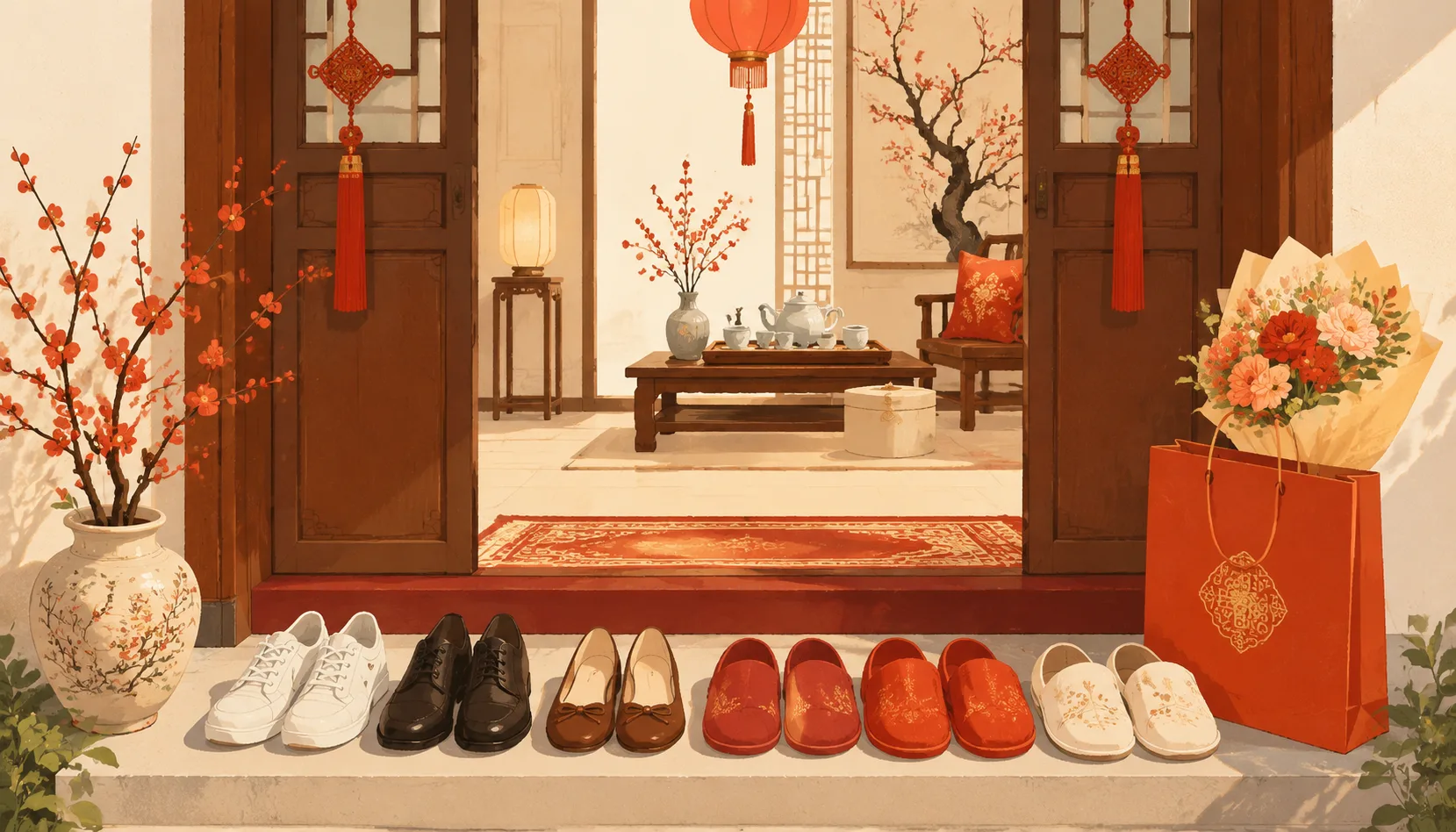
Visiting a Chinese Home: Complete Etiquette Guide for Foreigners
Bring a small gift, arrive 5 minutes late (never early), remove shoes at the door, wait for the host to assign your seat, and let the eldest eat first. Follow t…
Read the guide →
What to Bring to a Chinese Home for Dinner: Guest Gift Guide for 2026
Never arrive empty-handed at a Chinese home dinner. Safe options: a fruit basket, quality packaged pastries or snacks, good quality tea, or imported wine/spirit…
Read the guide →