How to Decline Drinks in China: Polite Refusal Strategies That Actually Work
Quick answer
You can decline drinks at a Chinese banquet without damaging relationships — but the method matters enormously. Declare your non-drinking status before the meal starts, give a credible reason, participate enthusiastically with tea or juice, and use the correct gestures. Refusing awkwardly halfway through is far worse than declining gracefully at the start.
Quick Answer
You can decline drinks at a Chinese banquet without damaging relationships — but the method matters enormously. Declare your non-drinking status before the meal starts, give a credible reason, participate enthusiastically with tea or juice, and use the correct gestures. Refusing awkwardly halfway through is far worse than declining gracefully at the start.
DO
- Declare your non-drinking status before you sit down — tell the host privately
- Give a credible, face-saving reason (medical is best — see list below)
- Participate with tea or juice for every single toast — raise your cup, clink, say ganbei
- Use the phrase "以茶代酒" (yǐ chá dài jiǔ) — "I'm substituting tea for wine" — it's a recognized and respected tradition
- Use the two-finger tap (叩指礼) every time someone pours for you
- Keep your expression warm and engaged — show you're enjoying everything else
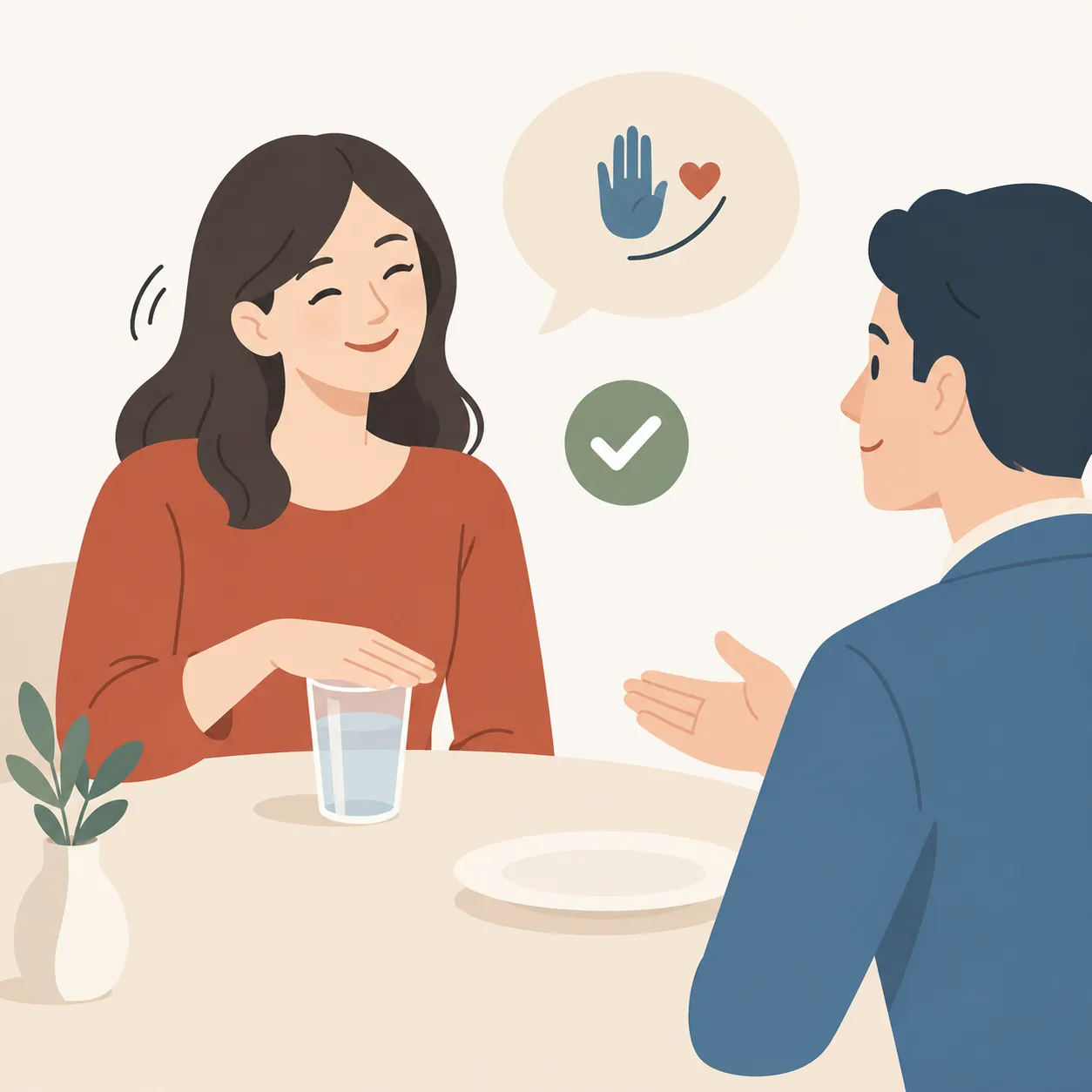
- When pressed, cover your cup with your palm — this is the universal "no more" signal
- If someone is pouring against your will, slide your cup toward the center of the table out of reach
DON'T
- Don't say "I don't drink alcohol" if you've already had a glass — it destroys credibility
- Don't refuse without giving any reason — naked refusal reads as rejection
- Don't refuse repeatedly in a flat, impatient tone — smile every time
- Don't refuse to participate at all — not raising your tea cup for a toast is worse than not drinking
- Don't say "I'm driving" — driving is no longer a strong excuse because designated drivers (代驾) are widely available
- Don't announce "I don't do drinking culture" — you'll sound like you're judging the whole evening
- Don't try to negotiate a smaller pour as your first response — that implies you're willing to drink, just not much
WHY Refusal Needs a Strategy
In Chinese social settings, a direct "no" can be interpreted as:
- "I don't trust you enough to lower my guard"
- "I think I'm above this ritual"
- "I'm rejecting your hospitality"
None of these are what you mean, but that's how it can land. The culture is not trying to get you drunk — it's trying to build connection. Your participation in the ritual (not in the alcohol) is what matters.
The solution is to decline in a way that keeps you fully inside the ritual while keeping the alcohol out of your body. This means being enthusiastic about everything else: the food, the conversation, the toasting gestures, the tea. Your non-drinking becomes invisible when everything else is warm and engaged.
The Best Excuses, Ranked by Effectiveness
Tier 1: Medical (almost always accepted without pushback)
- "I'm on antibiotics tonight — mixing with alcohol is dangerous for me" → 我今天吃了头孢,不能喝酒
- "I have a heart condition / high blood pressure" → 我心脏不好/血压高
- "I had stomach surgery recently" → 我最近刚做了胃部手术
- "I'm allergic to alcohol — I turn red immediately and get very sick"
Note: The antibiotic excuse (specifically mentioning cephalosporins/头孢) is extremely credible in China because mixing antibiotics with alcohol causes a severe reaction. Many Chinese people have experienced this or know someone who has. It works almost universally.
Tier 2: Religious / Ethnic (highly respected)
- "I'm Muslim / I don't drink for religious reasons" — Chinese culture deeply respects religious dietary restrictions
- "I'm Buddhist and I don't drink"
Tier 3: Work obligation (moderately effective)
- "I have an important meeting first thing tomorrow morning"
- "I need to drive someone home tonight with no designated driver available"
Tier 4: Simply being consistent from the start (effective with strong commitment)
- Arrive at the table and immediately say: "Tonight I really cannot drink anything — please don't mind me." Then hold this position for the entire evening without wavering. The key: if you accept even one drink, this excuse no longer works for the rest of the night.
The "以茶代酒" Method (Substitute Tea for Wine)
This is an ancient, respected practice. When you toast with tea instead of alcohol:
- Make sure your cup has tea in it before the first toast
- When the toast comes, raise your teacup exactly as you would a wine glass
- Say "以茶代酒,心意一样" (yǐ chá dài jiǔ, xīnyì yīyàng) — "Tea instead of wine, the feeling is the same"
- Clink cups, drink
This phrase is graceful because it emphasizes that your intent to honor the person is unchanged — only the liquid is different. Most hosts will appreciate this and stop pressing.
Body Language Strategies
Palm over cup: When someone approaches to pour, place your palm flat over the top of your cup while smiling. This is a universally understood "no more." Do it before they start pouring, not after.
Cup slide: Move your cup toward the center of the table, slightly out of easy reach. This passive signal says "I'm done" without verbal confrontation.
Tea refill: Keep asking for tea refills — a full tea cup signals you're drinking something and reduces pressure to fill with alcohol.
Engaged expression: The most powerful tool. If you're laughing, making eye contact, leaning in, and visibly enjoying the evening, people care less about whether alcohol is in your cup.
What to Do When Someone Won't Stop Pressuring You
Occasionally, someone will push past the normal social limits. Here's the escalation:
Level 1 — Smile and repeat: "I really appreciate it, I just can't tonight." Keep smiling.
Level 2 — Be slightly more specific: "I'm on medication that makes even one sip dangerous. I'm sorry."
Level 3 — Find an ally: If a Chinese colleague is present, they can step in and say "Let them off tonight, they're not well." This allows the pusher to back down gracefully.
Level 4 — Self-penalize: Say "Let me penalize myself with tea" (罚茶三杯) — pour yourself three cups of tea and drink them. This is a humorous, self-aware gesture that usually defuses the situation completely.
Never: Get into an argument or show frustration. Keep the emotional temperature warm even if you're annoyed.
Real-Life Examples
- A Canadian consultant in Beijing with genuine hypertension told his host before the banquet: "I have high blood pressure — my doctor has banned me from drinking." He raised his water glass for every single toast, used the two-finger tap, and smiled through the entire meal. Not one person pressed him after the first round.
- An Australian teacher in Chengdu tried a different approach: she accepted the first toast but declined subsequent ones with "I've had enough, thank you." By the fourth refusal, the host was visibly frustrated. She later learned she'd made the initial acceptance into a problem — once you drink, declining later looks selective.
- A Muslim engineer from Malaysia attended a business dinner in Shanghai. When the baijiu came out, he said quietly: "I don't drink for religious reasons." The host immediately ordered premium tea for him, personally poured his first cup, and introduced him to the table as "our honored guest who drinks the finest tea." He was treated with extra warmth all night.
FAQ
Q: Can I just sip a tiny bit to be polite? A: Yes — but only if that's truly what you want. The risk is that one tiny sip opens the door to "see, you can drink a little!" pressure. If you're going to participate with alcohol at all, it's better to take a proper sip and say "I'll go slow tonight" than to try to do a meaningless token sip.
Q: What if I'm pregnant? A: This is the most unambiguous excuse in existence. Say so, or have a colleague say it for you. No one will push a pregnant person to drink in China. The host will likely personally ensure you have everything you need.
Q: What if I simply don't want to drink — no medical reason? A: Attach it to something physical anyway. "My body doesn't handle alcohol well" or "I always feel terrible the next day" are personal, non-judgmental, and hard to argue with. Saying "I just prefer not to" sounds like a deliberate rejection of the ritual, which is harder for the host to accept.
Q: Is declining easier in South China vs North China? A: Yes, significantly. In Guangdong and Shanghai, not drinking is widely normalized, especially among the younger generation. In Shandong, Dongbei, or Inner Mongolia, the drinking culture is more intense and refusal requires more strategy. Calibrate your approach accordingly.
Q: What if I refuse and the person seems genuinely hurt? A: Go to the host privately after the meal and say: "I'm sorry I couldn't drink tonight — I really valued the evening. Can we have tea together again soon?" This gesture shows respect and usually repairs any perceived slight.
What Chinese People Actually Say
- 不好意思,我不能再喝了 | bù hǎo yìsi, wǒ bù néng zài hē le | "Sorry, I really can't drink anymore" | Most versatile—polite and universally accepted
- 我酒量不好 | wǒ jiǔliàng bù hǎo | "My alcohol tolerance isn't good" | Blames ability, not willingness—reduces pressure
- 我开车来的 | wǒ kā chē lái de | "I drove here" | Practical excuse that most people respect immediately
2026 Reality Check
2026 Reality Check: The "干杯" (gān bēi) culture is softening, especially in big cities. Younger Chinese, especially Gen Z, are more comfortable skipping alcohol entirely—mocktails and tea are widely accepted now in Beijing and Shanghai.
Gen Z vs. Older Generations: Boomers and Gen X still expect the host to pour drinks and guests to accept. Refusing can feel rude to them. Gen Z politely declines with "我开车" (I'm driving) or "我明天有事" (I have plans tomorrow)—excuses that work without judgment. The key shift: refusal is no longer a social dealbreaker among youth.
Beijing/Shanghai vs. Smaller Cities: Tier-1 cities are lenient. Tier-2 and smaller cities still hold tighter to hospitality norms. Saying "谢谢,我够了" (Thanks, I'm good) with a smile works everywhere—but in smaller towns, you may need to explain why.
Frequently asked questions
What should I say when someone first offers me a drink at a Chinese dinner?
State your non-drinking status immediately and confidently, before any toasts begin. Say something like 'I'm sorry, I don't drink alcohol for health reasons' or 'My doctor has strictly forbidden it.' Pair this with a warm smile and immediately raise your tea or juice glass to show you're still participating in the toast spirit. Don't apologize excessively—that invites pressure.
Is it rude to refuse a toast from a senior or boss in China?
Yes, directly refusing a toast from someone senior is considered a serious face-loss for them. Instead, use the 'respectful decline': stand up, hold your non-alcoholic drink with both hands, gesture for them to stay seated, and say 'I really respect you, but I can't drink. Let me toast you with tea instead.' Then drink your tea fully. This honors them while protecting your boundary.
Can I pretend to drink by just touching the glass to my lips?
Touching your lips to the glass is acceptable in many casual settings, but it can backfire at formal banquets where hosts watch closely. A better trick is to keep your glass constantly full—people rarely refill a full glass, and you can sip tiny amounts all night. If caught, smile and say 'I'm a very light drinker, I need to go slow.'
What if my host keeps insisting after I've already declined?
The host is testing your sincerity, not trying to get you drunk. Stay calm and repeat your reason once, then change the subject or start a toast in their honor using your non-alcoholic drink. If they push a third time, use humor: 'If I drink, you'll have to carry me home—do you want that responsibility?' Then laugh and redirect to food or conversation.
Is it acceptable to say I'm allergic to alcohol in China?
Yes, but phrase it medically and firmly: 'I have an alcohol allergy—my face turns red and I can't breathe well.' In fact, many Chinese people themselves have alcohol intolerance (the 'Asian flush'), so this is a widely understood and respected excuse. Combine it with 'my doctor says it's dangerous' to make it non-negotiable. Avoid saying 'I'm allergic' if you then drink juice—that's fine, but don't contradict yourself.
How do I handle drinking customs in southern China vs. northern China?
Northern China (especially Shandong and Beijing) has heavier drinking culture—toasts are frequent, and refusal requires more elaborate politeness. Southern China (like Guangdong and Fujian) is more relaxed; tea ceremonies are common, and declining is easier. In the north, always stand when toasting and use both hands; in the south, a seated nod with a smile often suffices. When in doubt, mirror your host's formality while keeping your drink non-alcoholic.
Try our tools
Related guides
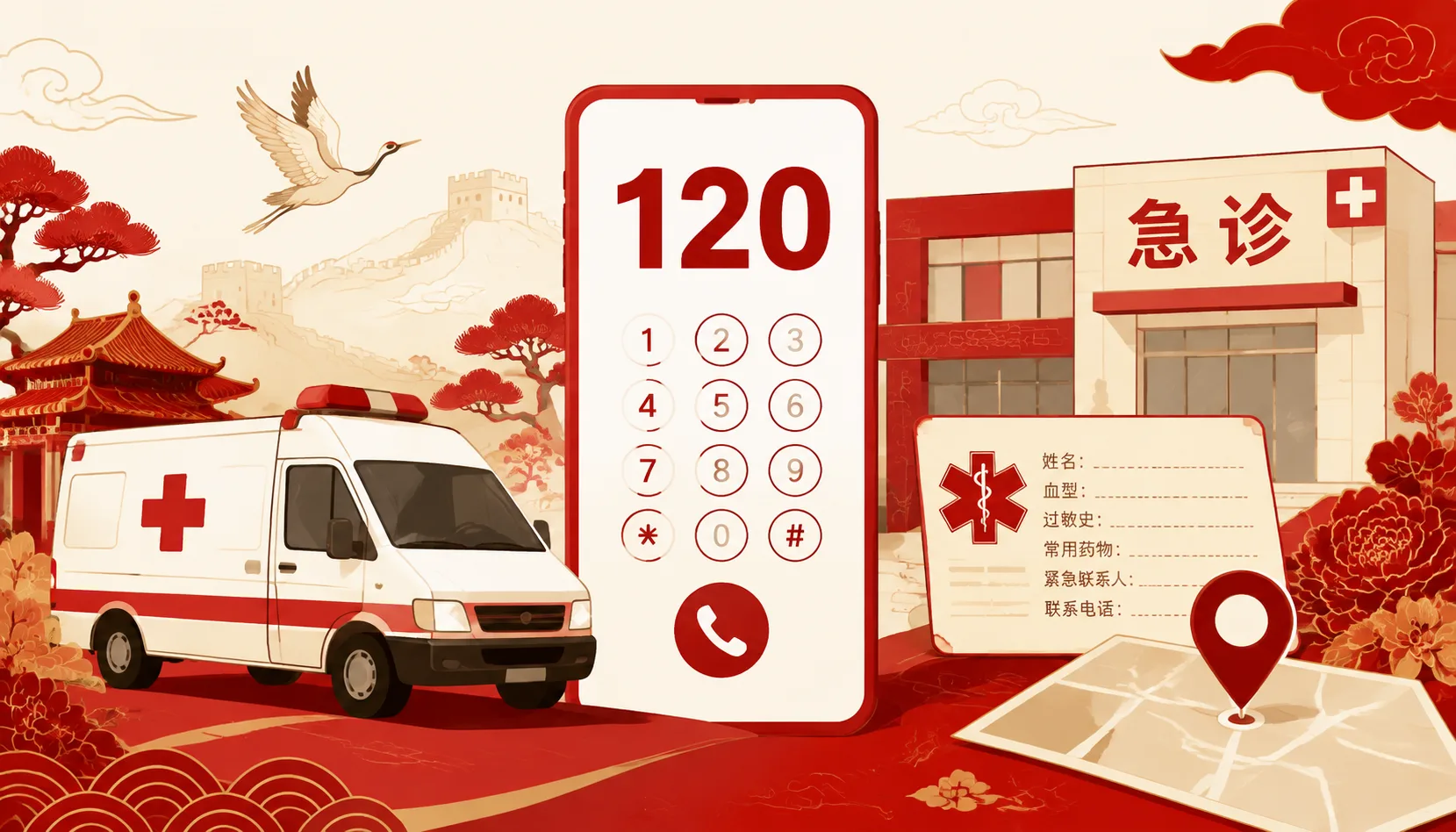
Medical Emergencies in China: What Foreigners Must Know
Call 120 (yāo-èr-líng) for life-threatening emergencies, or go directly to the nearest Grade 3-A hospital's emergency department (急诊科 Jízhěn Kē) for serious but…
Read the guide →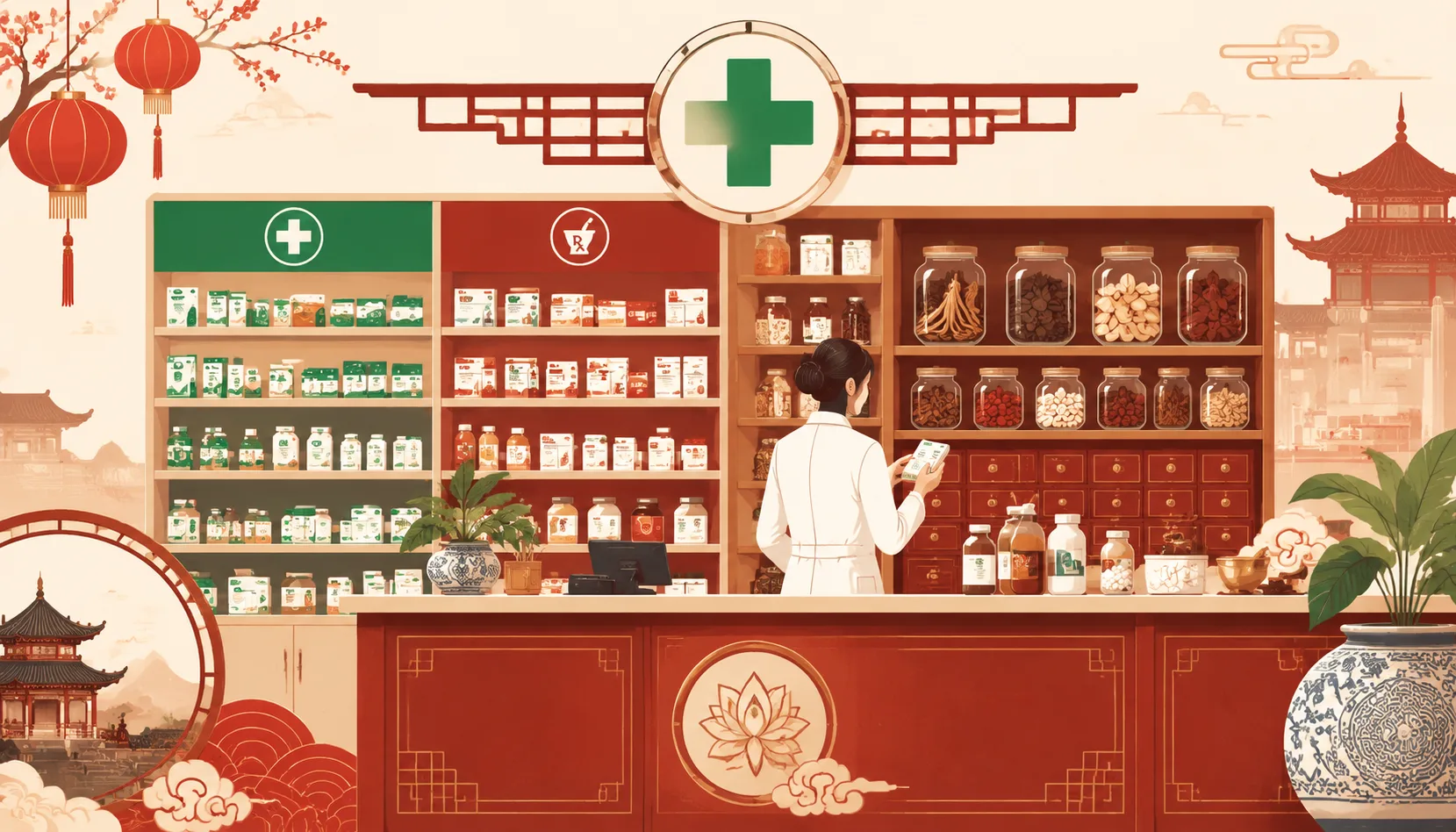
Buying Medicine in China: Pharmacy Guide for Foreigners
Look for pharmacies with a green cross sign (药). Most common OTC meds are available without a prescription, but antibiotics and many other drugs require a presc…
Read the guide →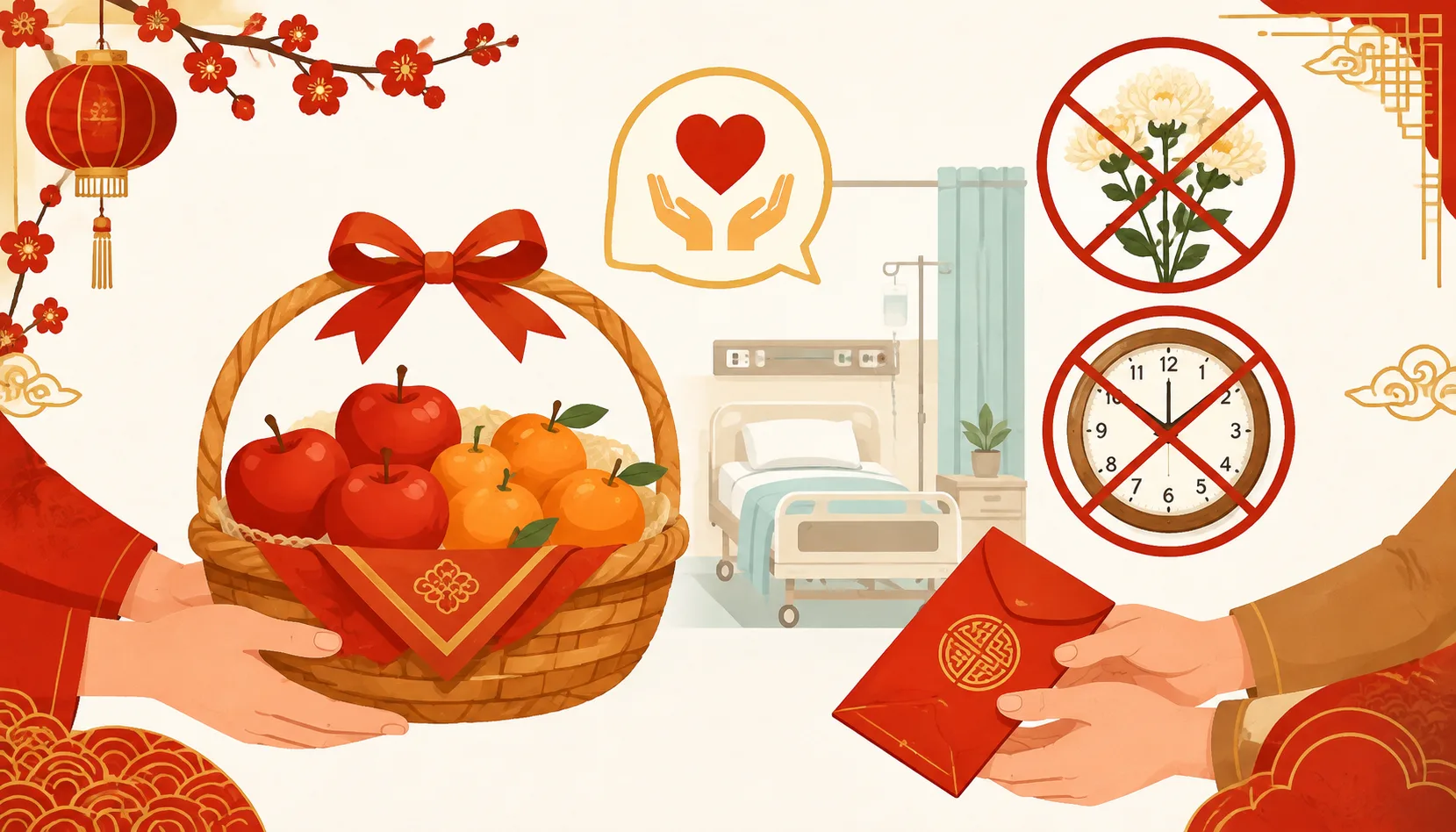
Visiting a Sick Friend in China: Hospital Etiquette Guide
Visit in the afternoon or early evening, keep it to 20–30 minutes, and bring a fruit basket (avoid pears), quality tea, or a red envelope if you're close. Never…
Read the guide →