How can foreigners build good relationships with Chinese neighbors in a residential compound?

Quick answer
Start with small, consistent gestures: a nod and '您好' in the elevator, respect quiet hours (12-2pm and after 10pm), and never return a food container empty. Over weeks, these micro-encounters build trust and turn strangers into friendly neighbors.
Why Your Chinese Neighbors Don't Smile at First
When you first move into a Chinese residential compound (小区 xiǎoqū), you might feel a bit cold. Neighbors pass by without eye contact, no one says hello, and the elevator is silent. Don't take it personally — it's not unfriendliness. It's a deep-rooted culture of 互不打扰 (hù bù dǎrǎo) — mutual non-intrusion — that thrives in high-density city living. With hundreds of families in one building, everyone values privacy and assumes you do too.
This is a big shift from Western suburbs where a wave or 'howdy' is expected. Here, the rule is: don't impose, but be ready to respond. If you smile, most will smile back. If you say '您好' (nín hǎo, hello), they'll likely reply. The key is to let them set the pace.
Actionable tip: On your first week, just observe. Don't force greetings. When you catch a neighbor's eye, give a slight nod and a small smile. That's enough to start the process.
Think of it as a dance: you don't rush in for a hug; you wait for the rhythm. Over time, the ice melts naturally.
The 3-Stage Relationship Progression: Stranger to Friend
Building a relationship with Chinese neighbors is not about one big barbecue or a housewarming party. It's a gradual, stage-by-stage process that happens through daily micro-encounters. Here's the typical ladder:
| Stage | Behavior | Example |
|---|---|---|
| 1. Stranger | No eye contact, no words | Passing in hallway, both look away |
| 2. Nod/Smile | Acknowledge each other | In elevator, a nod and '您好' |
| 3. Brief Small Talk | Short exchanges | '天气不错' (tiānqì búcuò, nice weather) |
| 4. Occasional Chat | Longer conversations | Discussing building issues, local tips |
Each stage can take weeks. Don't rush it. The magic is in consistency: seeing the same face every day and slowly warming up.
Actionable tip: Aim for one small interaction per week. If you see the same neighbor in the elevator, say '您好' and maybe comment on the weather. Next week, ask about the elevator speed. Little by little, you become familiar.
Here's a realistic dialogue:
You: 您好,今天天气真好。(Nín hǎo, jīntiān tiānqì zhēn hǎo.) — Hello, the weather is nice today.
Neighbor: 是啊,难得。(Shì a, nándé.) — Yes, rare.
You: 您住几楼?(Nín zhù jǐ lóu?) — Which floor do you live on?
Neighbor: 8楼,你呢?(Bā lóu, nǐ ne?) — 8th floor, and you?
That's it. Short and sweet.
Elevator Etiquette: The Silent Social Space
The elevator is your primary social arena in a Chinese compound. It's a tiny, enclosed space where you're forced into proximity with strangers. The rules are simple: don't stare at your phone as a signal of rudeness — that's a common mistake. Instead, give a nod and a simple '您好' (nín hǎo). That's enough.
If you want to go further, use light topics: the weather (天气 tiānqì), the elevator's speed, or a simple observation about the building. Avoid personal questions like 'Where do you work?' — that's too forward.
Here's a table of useful elevator phrases:
| Chinese | Pinyin | English |
|---|---|---|
| 您好 | nín hǎo | Hello (polite) |
| 天气不错 | tiānqì búcuò | Nice weather |
| 您先请 | nín xiān qǐng | After you |
| 几楼? | jǐ lóu? | Which floor? |
Actionable tip: When entering, if someone is already inside, say '您好' and maybe ask '几楼?' to help press the button. That's a kind gesture. If you're both getting off at the same floor, a small smile and '再见' (zàijiàn, goodbye) works.
Avoid talking loudly on the phone in the elevator. It's considered intrusive. And never stare at someone — even if you find them interesting. Just be polite and brief.
Noise Rules: The Two Sacred Quiet Times
In Chinese residential compounds, there are two absolute red lines for noise: 午休 (wǔxiū) — the midday rest from 12:00 to 2:00 PM, and 晚上10点 (wǎnshàng shí diǎn) — 10 PM at night. These are sacred. Violating them is the fastest way to earn enemy neighbors.
During 午休, many people nap, especially the elderly and children. So no loud music, no drilling, no moving furniture. After 10 PM, the entire building is expected to be quiet. If you're having a party, keep it low or warn neighbors in advance.
Here's a quick reference:
| Time | Chinese | Pinyin | Rule |
|---|---|---|---|
| 12:00-14:00 | 午休 | wǔxiū | No loud noise |
| After 22:00 | 晚上十点 | wǎnshàng shí diǎn | No loud noise |
Actionable tip: If you need to do construction or move furniture, schedule it between 2 PM and 6 PM on weekdays. And always check with your property management (物业 wùyè) for specific compound rules — some have stricter hours.
If you accidentally make noise during these times, be prepared to apologize immediately. The key is to show you respect the rules.
When You've Been Too Loud: Apologize Fast and Sincerely
It happens to everyone: you're moving a sofa, your kid is running, or you're playing music a bit too loud. The moment a neighbor knocks or complains, open the door immediately, apologize sincerely, and stop the noise. Don't argue, don't explain why you're right. In China, attitude matters more than being technically correct.
Here's a script for a sincere apology:
Neighbor: 你好,你们家太吵了。(Nǐ hǎo, nǐmen jiā tài chǎo le.) — Hello, your home is too noisy.
You: 不好意思,打扰一下!我马上关小。(Bù hǎoyìsi, dǎrǎo yíxià! Wǒ mǎshàng guān xiǎo.) — Sorry to disturb you! I'll turn it down right away.
Then actually do it. Follow up with a small gift (like fruit) the next day if it was a serious offense. That goes a long way.
Actionable tip: Keep a small box of chocolates or tea bags at home for such occasions. A quick '抱歉' (bàoqiàn, sorry) plus a sweet treat can turn a complaint into a future friendship.
Remember: the goal is to show you care about the community, not to win an argument.
When THEY Are Too Loud: Polite Requests and the Property Management Route
Now the reverse: your neighbor is blasting music at 11 PM or drilling during 午休. Your first instinct might be to bang on their door aggressively — resist that. It escalates tension. Instead, knock calmly and say '不好意思,打扰一下' (bù hǎoyìsi, dǎrǎo yíxià) — 'Sorry to disturb you' — then make your request politely.
Here's a dialogue:
You: 不好意思,打扰一下。现在有点吵,能不能小声一点?(Bù hǎoyìsi, dǎrǎo yíxià. Xiànzài yǒudiǎn chǎo, néng bù néng xiǎo shēng yìdiǎn?) — Sorry to disturb you. It's a bit noisy now, could you be quieter?
Neighbor: 好的,不好意思。(Hǎo de, bù hǎoyìsi.) — Okay, sorry.
If that doesn't work, or if you're uncomfortable confronting directly, go through the 物业 (wùyè) — the property management. They act as intermediaries and are often more effective. Call them or visit their office, explain the issue, and they'll handle it.
Actionable tip: Before complaining, check if the noise is during allowed hours. If it's during 午休 or after 10 PM, you have a strong case. If it's at 8 PM, you might need to be more tolerant.
Never involve the police unless it's a serious disturbance — that's a last resort and can sour relationships.
Hallway and Corridor Rules: Keep It Clear
The hallway (楼道 lóudào) and fire exits (消防通道 xiāofáng tōngdào) are shared spaces with strict rules. Even if you see neighbors leaving shoes or a doormat outside, don't assume it's permitted. Some compounds have zero-tolerance policies for any items in corridors due to fire safety regulations.
Before placing anything — even a small shoe rack — check with your property management (物业 wùyè). They'll tell you the rules. In many modern compounds, you can't leave anything outside your door, not even a welcome mat.
Here's a table of key terms:
| Chinese | Pinyin | English |
|---|---|---|
| 楼道 | lóudào | Hallway |
| 消防通道 | xiāofáng tōngdào | Fire exit |
| 物业 | wùyè | Property management |
Actionable tip: If you see a neighbor with items outside, don't copy them. Instead, ask the 物业 first. They might have special permission or be breaking rules — either way, it's not your business.
Keep your own area spotless. This shows respect and avoids complaints.
When the Auntie Brings Food: The Golden Rule of Reciprocity
One of the most heartwarming moments in a Chinese compound is when a neighbor — often an 阿姨 (āyí, auntie) — brings you homemade dumplings or a bowl of soup. This is a huge honor. But there's a critical rule: NEVER return the container empty. Wash it clean, then fill it with something — small chocolates, fruit, or imported snacks — as a token of gratitude.
This is the principle of 投桃报李 (tóu táo bào lǐ) — 'give a peach, return a plum' — the norm of reciprocity. It's not about the value; it's about the gesture. Returning an empty container signals that you're taking without giving, which is a social faux pas.
Here's how to do it right:
- Wash the container thoroughly.
- Fill it with something nice: a bag of oranges, a box of chocolates, or a small jar of jam.
- Return it within a day or two, with a smile and a '谢谢' (xièxie, thank you).
Actionable tip: Keep a stash of small gifts at home — tea, cookies, or even a bottle of wine. When you return the container, say: '这是我的一点心意' (zhè shì wǒ de yìdiǎn xīnyì) — 'This is a little token of my appreciation.'
This simple act upgrades you from stranger to trusted neighbor. The 阿姨 will likely become your biggest advocate in the building.
The unspoken rules of returning a neighbor's container are part of a larger pattern of favors, and A Peach for a Plum explores how timing, proportion, and relationship shape the return.
What Chinese People Actually Say
- 打招呼 | dǎ zhāo hu | to greet | always greet neighbors when you meet them in the elevator or hallway
- 请勿喧哗 | qǐng wù xuān huá | please keep quiet | observe quiet hours, especially after 10pm
- 邻里和谐 | lín lǐ hé xié | neighborhood harmony | maintain good relations by being considerate and helpful
2026 Reality Check
1. Greeting neighbors: Older generations still do this religiously. Gen Z? Rarely—they'd rather text. Big cities: cold. Smaller cities/towns: still common.
2. Bringing gifts when visiting: Still expected everywhere, especially older adults. Gen Z skips this more often, especially in urban areas.
3. Keeping noise down: Widely enforced in urban apartment buildings, especially in tier-1 cities, though enforcement is looser in smaller towns and rural areas. Gen Z actually better at this—headphones culture. Tier-1 cities stricter than rural areas.
4. Sharing food: Dying out in Beijing/Shanghai. Thriving in smaller cities where community ties remain strong.
5. Avoiding hallway clutter: Still a rule, but Gen Z ignores it more. Building management enforces more in new developments.
6. Lunar New Year greetings: Older gens: essential. Gen Z: optional. More common outside major cities.
7. Watching out for each other's homes: Weaker in big cities (less trust). Strong in tight-knit smaller communities.
8. Not drying laundry indoors: Big cities ban it for aesthetics. Smaller cities: nobody cares.
9. Community WeChat groups: Now universal in urban China. Everyone uses them—Gen Z for gossip, elders for complaints.
10. Participating in building activities: Attendance dropping everywhere. Gen Z: "too busy." Elders: still show up.
Frequently asked questions
What should I do if my Chinese neighbor complains about noise from my apartment?
Apologize immediately with '对不起' and ask for their preferred quiet times. Most xiaoqu residents expect silence after 10pm and during 12-2pm. Offer a small gift like fruit as a gesture of goodwill. If complaints persist, talk to the property manager (物业) to mediate rather than escalating the conflict yourself.
Is it rude to decline food offered by Chinese neighbors?
Yes, flatly refusing can seem cold. Accept with both hands, taste a little, and praise it with '好吃'. If you must decline due to allergies or diet, explain briefly and offer a small return gift next time. This maintains face (面子) and keeps the relationship warm without causing offense.
Can I hang laundry or decorations on my xiaoqu balcony?
Generally yes on your own balcony, but avoid hanging wet clothes over the railing where they drip onto neighbors below. For external decorations like lanterns or flags, check with the property management first—many xiaoqu have uniform appearance rules. During festivals like Spring Festival, small red couplets on your door are always welcomed.
How do I handle my neighbor's dog barking in a Chinese residential compound?
First, try a friendly chat—many owners don't realize the noise carries. Say '您家的狗很可爱,但晚上叫得有点响'. If it continues, document the times and report to the xiaoqu property office. In most cities, dogs must be leashed and muzzled in public areas, but barking complaints are usually resolved through mediation, not fines.
What's the proper way to greet neighbors I see regularly in the elevator?
A simple '您好' with a slight nod works for everyone. For older residents, add '您先请' when letting them exit first. Avoid asking personal questions like age or job early on. If you've met before, a smile and '出去啊?' (going out?) is a natural, friendly opener that doesn't require a detailed answer.
When should I give gifts or return favors to Chinese neighbors?
Always return a food container with something inside—fruit, snacks, or homemade dishes—within a few days. For major help like watching your apartment during travel, give a slightly nicer gift like tea or a fruit basket. During Chinese New Year, small red envelopes (红包) for children or oranges for elders are customary, but never give clocks or umbrellas.
Try our tools
Related guides

What to Bring to a Chinese Home Dinner: 2026 Gift Guide
Never arrive empty-handed at a Chinese home dinner. Safe options: a fruit basket, quality packaged pastries or snacks, good quality tea, or imported wine/spirit…
Read the guide →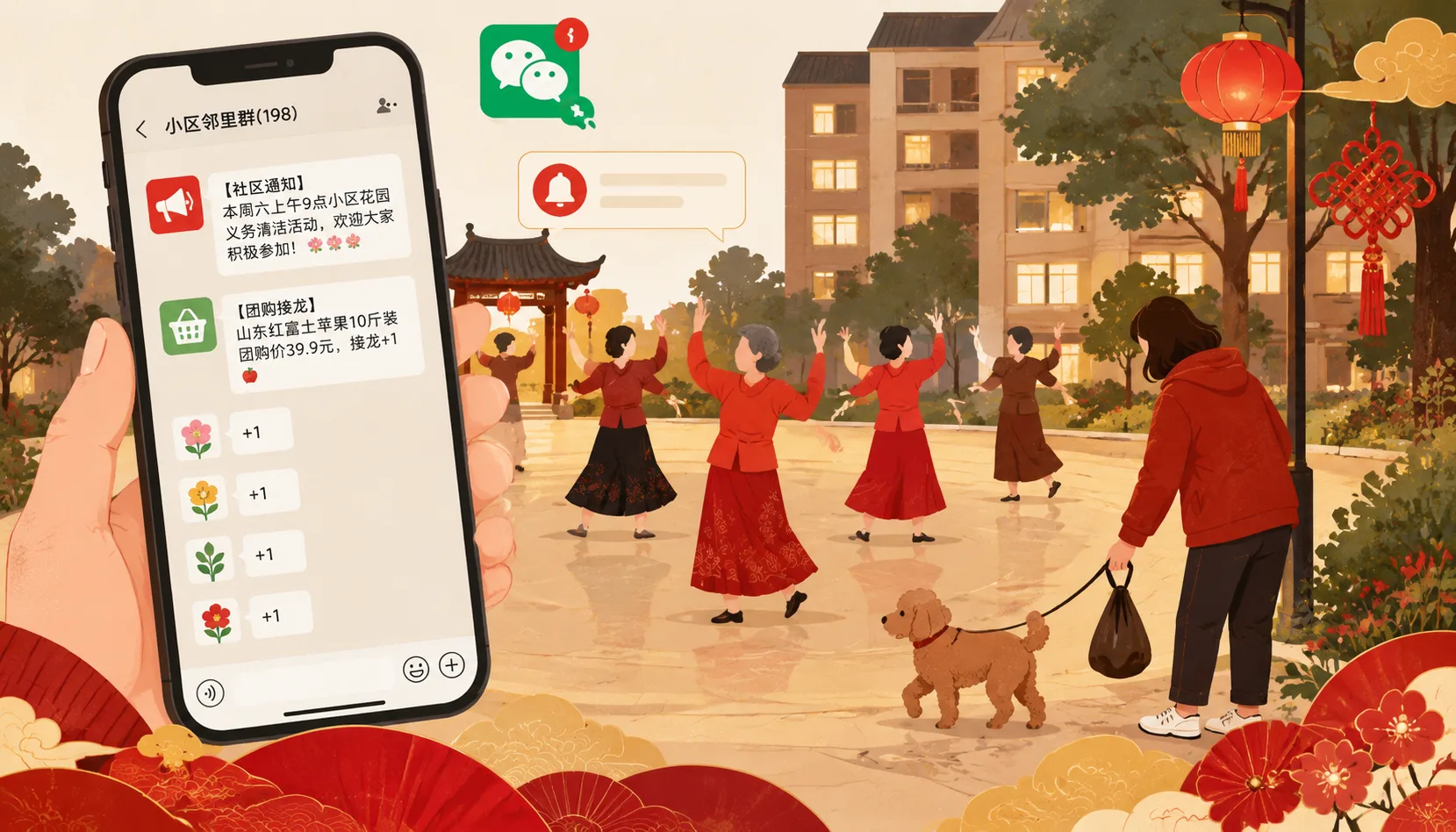
Chinese Neighborhood WeChat Groups: Expat Survival Guide
Join your compound's WeChat group via your property management office or landlord. Use it to get critical notices, participate in group buying, and connect with…
Read the guide →
China Parcel Delivery: Lockers, Stations & Door Delivery
In China, couriers typically leave packages at smart lockers (快递柜) or pickup stations (菜鸟驿站) rather than delivering to your door. You'll receive a pickup code v…
Read the guide →