How can foreigners navigate Chinese neighborhood WeChat groups to stay informed and avoid common pitfalls?
Quick answer
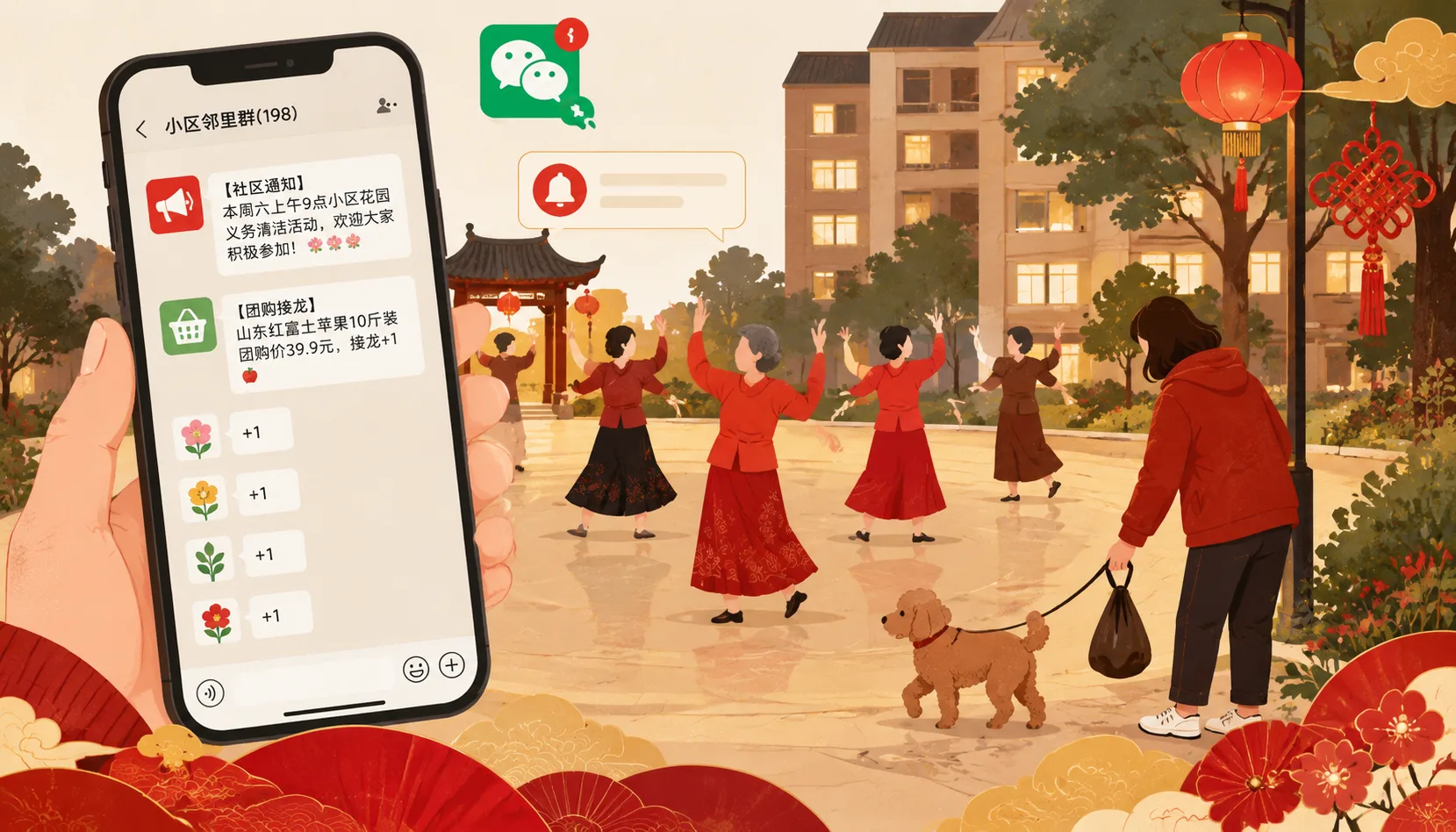
Join your compound's WeChat group via your property management office or landlord. Use it to get critical notices, participate in group buying, and connect with neighbors. Follow etiquette: avoid public complaints, use emojis, and keep dogs leashed. This guide covers everything from joining to thriving.
Why You Absolutely Need to Join Your Compound's WeChat Group
When I first moved into my Beijing compound, I skipped the WeChat group, thinking it was just chatter. Then the water shut off for six hours with no warning, and I had no idea why. That's when I learned: your compound's WeChat group is the digital lifeline of your building. Maintenance notices, water shutoffs, community votes, delivery notifications, and security alerts all flow through it. Miss it, and you miss critical info about your own home.
For example, last month our group posted a notice about elevator maintenance scheduled for Tuesday 9am-11am. Without the group, I'd have been stuck carrying groceries up 15 floors. Another time, the property management (物业 wùyè) announced a pest control spray in the hallways—I made sure to keep my cat inside.
Actionable tip: If you haven't joined yet, contact your property management office or landlord today. It's normal to be added within the first week of moving in. Don't wait for an emergency to see why it matters.
How to Get Added (and What to Expect)
Getting into the group is straightforward. Walk to your property management office (物业 wùyè) and ask: “你好,我想加入我们小区的微信群,可以吗?” (Nǐ hǎo, wǒ xiǎng jiārù wǒmen xiǎoqū de wēixìn qún, kěyǐ ma? – Hello, I'd like to join our compound's WeChat group, is that possible?). They'll usually scan your WeChat QR code and add you on the spot. If you rent, your landlord can also add you—many do this automatically.
Once you're in, you'll see a mix of posts: maintenance schedules, parking notices, security alerts, group buying offers (团购 tuángòu), neighbor requests (like borrowing a drill or asking for a plumber recommendation), and community votes on facilities (e.g., whether to install a new playground). It's a lot, but you can mute notifications and check in daily.
Here's a typical exchange you might see:
邻居A: “请问谁家有电钻?想借一下。” (Qǐngwèn shéi jiā yǒu diànzuàn? Xiǎng jiè yīxià. – May I ask who has a power drill? I'd like to borrow one.)
邻居B: “我家有,私聊你。” (Wǒ jiā yǒu, sīliáo nǐ. – I have one, I'll message you privately.)
Actionable tip: Introduce yourself briefly when you join: “大家好,我是新搬来的,请多关照。” (Dàjiā hǎo, wǒ shì xīn bān lái de, qǐng duō guānzhào. – Hello everyone, I'm new here, please take care of me.) This builds goodwill from day one.
Community Group Buying (社区团购): Your Wallet's Best Friend
One of the best perks of the WeChat group is community group buying (社区团购 shèqū tuángòu). Here's how it works: someone posts a bulk purchase offer—fresh fruits, vegetables, imported goods, or seasonal items like hairy crabs. You reply with “+1” or a quantity. One person (often a neighbor or a local vendor) places the bulk order, and items are delivered to the compound entrance, usually within a day or two. Prices are often 20-40% cheaper than the supermarket.
For example, last week our group bought a box of 10kg of Fuji apples for 30 yuan—half the supermarket price. Another time, we ordered a case of imported milk for our toddler. The key is to jump in when you see something you need; these offers close quickly.
Here's a typical group buy post:
“团购:山东大樱桃,5斤装,45元一箱,今晚8点截止,明天到货。” (Tuángòu: Shāndōng dà yīngtáo, 5 jīn zhuāng, 45 yuán yī xiāng, jīn wǎn 8 diǎn jiézhǐ, míngtiān dào huò. – Group buy: Shandong cherries, 5-jin pack, 45 yuan per box, deadline tonight 8pm, arrives tomorrow.)
You reply: “+1” or “我要一箱” (Wǒ yào yī xiāng – I want one box).
Actionable tip: Start with small, low-risk items like fruit. Pay via WeChat Pay when the organizer collects money, and always confirm pickup time. It's a great way to save money and meet neighbors.
Square Dancing (广场舞): The Soundtrack of Community Life
If you live in a Chinese compound, you'll hear it: the rhythmic beats of square dancing (广场舞 guǎngchǎng wǔ) every evening, usually from 7:30 to 9:30pm. Retired ladies gather in the compound square to dance—it's social, healthy, and a beloved community ritual. For many expats, it's charming at first, but the noise can grate.
Here's the thing: modern compound windows block most of the sound, and by 9:30pm it typically stops on its own. If it doesn't bother you, enjoy it—it's a window into local life. If it does, resist the urge to complain in the WeChat group. Public complaints about square dancing are a surefire way to start a war; it's a sensitive topic because it's a cherished activity for many elderly residents.
Instead, if it's genuinely disruptive past 10pm (which is rare), message the property management (物业 wùyè) privately. They can mediate. One expat friend did this, and the dancers agreed to lower the volume slightly—no drama.
Actionable tip: If noise is a concern, ask your landlord about window soundproofing before you move in. It's a small investment that pays off.
WeChat Group Etiquette: The Unwritten Rules
Every community has its norms, and WeChat groups are no exception. To avoid being that foreigner who annoys everyone, follow these rules:
- Don't post irrelevant content. No memes, no news links, no personal photos unless they're community-related.
- Don't spam. If you're selling something, ask the admin first. Unsolicited ads are a fast way to get muted.
- Don't argue publicly. If you have a complaint—about noise, parking, or a neighbor—message the 物业 admin directly, not the whole group. Public arguments escalate quickly and make you unpopular.
- Emoji reactions are fine. A thumbs-up or a smiley is a friendly way to acknowledge a post without adding noise.
Here's a common scenario: your neighbor posts a complaint about someone's dog not being leashed. You might be tempted to jump in, but it's better to stay neutral. If it's your dog, respond privately to the complainant.
Actionable tip: When in doubt, lurk for a week. Observe how others interact, then follow suit. It's the safest way to learn the group's culture.
Dog Walking Rules: Avoid the #1 Compound Conflict
Dog-related disputes are among the most common conflicts posted in WeChat groups. To keep the peace, follow the compound rules religiously: 必须牵绳 (bìxū qiān shéng – must use a leash at all times in public areas). This isn't optional—it's for everyone's safety and comfort. Also, pick up your dog's waste using a 拾便袋 (shíbiàn dài – poop bag), and keep your dog close when passing elderly people and children, especially in elevators.
One expat I know learned this the hard way. She let her small dog off-leash in the courtyard, and a neighbor posted a photo in the group with a passive-aggressive caption. She felt attacked, but the rule is clear. Now she always leashes, and she's made friends with other dog owners by being proactive.
Here's a typical group post:
“提醒大家:小区内遛狗请牵绳,谢谢配合!” (Tíxǐng dàjiā: Xiǎoqū nèi liù gǒu qǐng qiān shéng, xièxiè pèihé! – Reminder: Please leash your dogs when walking in the compound, thanks for your cooperation!)
Actionable tip: Buy a retractable leash and a bag dispenser that attaches to it. Always carry bags, even for short walks. Being a responsible dog owner earns you respect in the group.
Key WeChat Group Phrases You'll See Every Day
To navigate your group like a pro, memorize these common phrases. They'll help you understand posts and respond appropriately.
| Chinese | Pinyin | English |
|---|---|---|
| 团购 | tuángòu | Group buy |
| 请问 | qǐngwèn | May I ask |
| 感谢 | gǎnxiè | Thank you |
| 帮顶 | bāng dǐng | Help bump a post (to keep it visible) |
| 已收到 | yǐ shōudào | Received / Got it |
You'll see these in action daily. For example, when someone posts a notice, you might reply “已收到,谢谢” (Yǐ shōudào, xièxiè – Received, thanks). When someone asks for a recommendation, you can say “帮顶” to help it get noticed. And when a group buy is posted, you'll jump in with “+1”.
Actionable tip: Save this table to your phone. Within a week, you'll use these phrases without thinking.
What Chinese People Actually Say
- 邻里们 | lín lǐ men | "neighbors all" (addressing the group) | Use to address everyone in the group politely
- 打扰一下 | dǎ rǎo yī xià | "sorry to bother" | Polite opener before asking a question
- 收到,谢谢 | shōu dào, xiè xie | "received, thank you" | Confirm you saw the announcement or information
2026 Reality Check
2026 Reality Check: Yes, the "no noise before 9am" and "no spamming" rules still stand, but enforcement has softened. Younger residents in big cities now just mute groups entirely rather than follow etiquette.
Gen Z vs Older Generations: Boomers and Gen X still post morning greetings, weather updates, and "don't forget to close your gas" warnings. Gen Z treats the group as a dead platform—many have already migrated to RedNote or Xiaohongshu for neighborhood chatter. When they do use WeChat groups, it's purely for delivery notifications and rent disputes.
Beijing/Shanghai vs Smaller Cities: Tier-1 cities are more relaxed—people ignore the rules, admins rarely enforce them. Smaller cities and towns? The groups are still highly active with strict social control. Neighbor disputes, community event polls, and "who left their trash outside" callouts happen daily. The group chat remains the digital town square outside major metros.
Frequently asked questions
How do I find and join my neighborhood WeChat group as a foreigner?
Ask your property management office (wuye) or landlord directly—they usually administer the group. If you rent, your landlord can add you. You can also check your building's elevator notice board for a QR code. Once added, introduce yourself briefly with your building and unit number to get verified.
What should I do if a neighbor posts something I don't understand in the group?
Don't panic—use WeChat's built-in translate feature by long-pressing the message and tapping 'Translate.' For voice messages, ask a Chinese-speaking friend or neighbor to clarify. Most groups are forgiving of language barriers. If it's an urgent notice (like water shutdown), reply '收到' (received) to confirm you've seen it.
Can I complain about noise or issues in the group chat without causing drama?
Technically yes, but avoid public complaints—they often backfire. Instead, message the property manager privately or use the group to ask for advice neutrally, like 'Does anyone else hear construction noise?' If it's about square dancing, mention it's 'loud' rather than 'annoying.' Public criticism can make you seem confrontational and hurt neighborly relations.
Is it okay to join group buying (tuangou) deals in the neighborhood WeChat group?
Yes, group buying is a major perk. You can get fresh produce, snacks, and household goods at lower prices. Start small—order once to test quality and delivery. Pay via WeChat Pay, and pick up from a designated spot (often the guard room). If something's wrong, contact the organizer privately, not in the group, to keep things smooth.
What if I accidentally send a message to the wrong WeChat group?
Act fast—long-press your message and tap 'Recall' within 2 minutes. If it's too late, apologize briefly in Chinese ('抱歉,发错了' — sorry, wrong send) and move on. Avoid over-explaining. Most neighbors will ignore it. If it was embarrassing, you can mute the group for a few days to let it blow over.
Can I leave the neighborhood WeChat group if it's too noisy?
You can, but it's not recommended—you'll miss critical notices like water outages, package deliveries, or security alerts. Instead, mute the group (set to 'Only show unread' or 'Mute') and check it once daily. If you must leave, ask the admin to add you back later. Some groups have a 'notice-only' subgroup—ask if one exists.
Try our tools
Related guides

What to Bring to a Chinese Home Dinner: 2026 Gift Guide
Never arrive empty-handed at a Chinese home dinner. Safe options: a fruit basket, quality packaged pastries or snacks, good quality tea, or imported wine/spirit…
Read the guide →
China Parcel Delivery: Lockers, Stations & Door Delivery
In China, couriers typically leave packages at smart lockers (快递柜) or pickup stations (菜鸟驿站) rather than delivering to your door. You'll receive a pickup code v…
Read the guide →
China Waste Sorting: A Foreigner's Practical Guide
Learn the 4-category system (recyclables, hazardous, food waste, other), but always check your specific compound's rules. Listen for the music signal to bring o…
Read the guide →