What do foreigners in China need to know about medical insurance to avoid huge out-of-pocket costs?
Quick answer
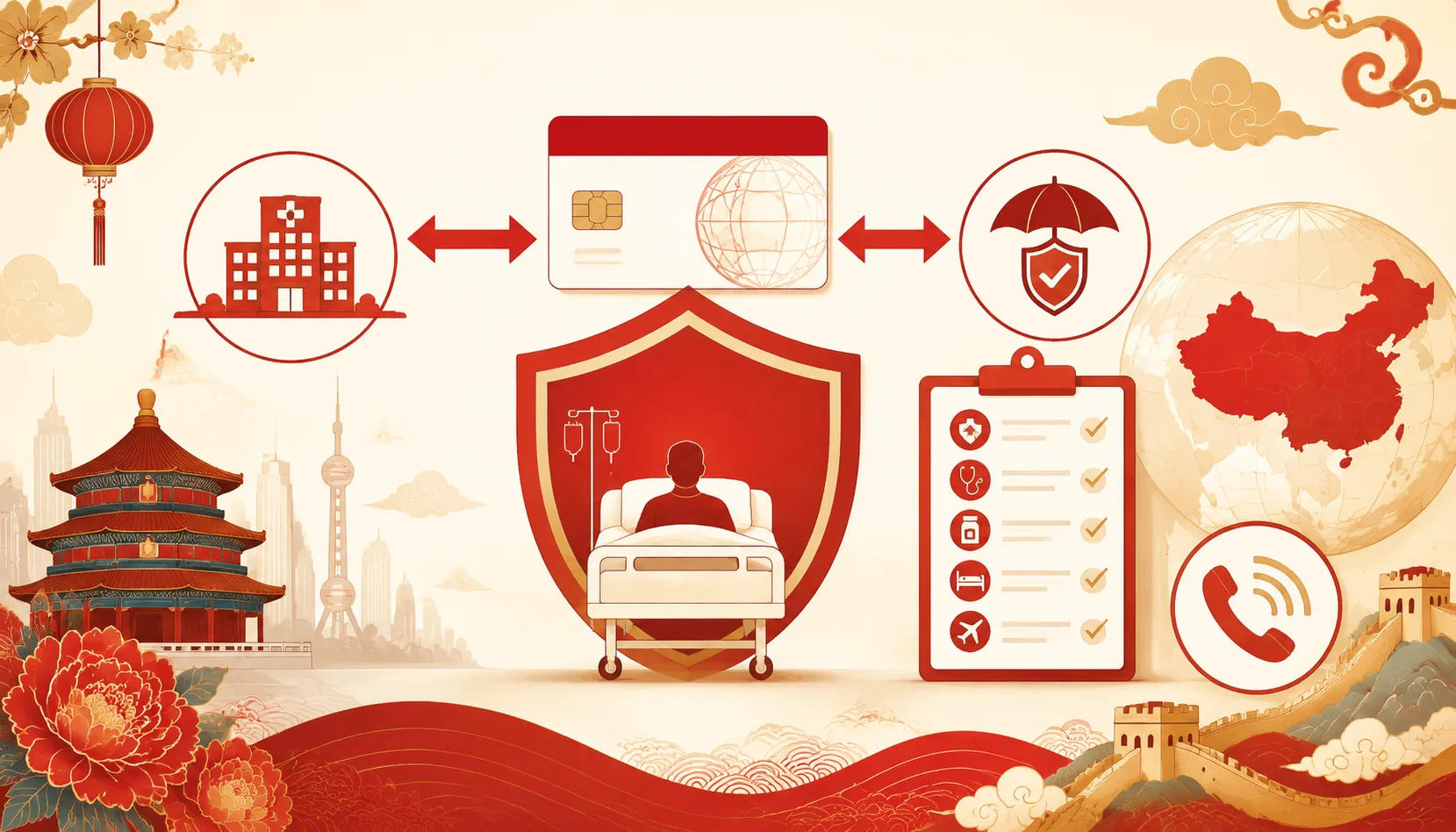
Don't assume China is cheap. While a common cold costs little, surgery, ICU stays, or international hospital visits can drain your savings. You need international health insurance that specifically covers mainland China, includes inpatient and outpatient care, offers direct billing at major hospitals, and includes medical evacuation. Ask the right questions before you get sick, and always have your insurer's emergency number saved.
Why You Can't Rely on 'China Is Cheap'
When I first moved to Shanghai, a friend told me, "Don't worry about insurance, a doctor's visit costs 50 yuan." He wasn't wrong—for a cold. But that mindset is the single biggest mistake expats make. China's public healthcare system is excellent for routine care, but the costs escalate dramatically when you need serious treatment.
Here's a reality check: a simple outpatient visit at a public hospital might cost ¥200-500. But a single night in an ICU can run ¥5,000-20,000 or more. Surgery for something like appendicitis? Expect ¥20,000-50,000. If you want to be treated at an international hospital (like Parkway Health or United Family), costs are comparable to Western private healthcare—a consultation alone can be ¥1,500+.
Key point: China's basic social insurance (社保, shèbǎo) is designed for Chinese citizens. Unless your employer contributes to social insurance on your behalf (which some foreign companies do), you'll be paying full price at public hospitals. Even if you do have social insurance, it may not cover everything—especially at private or international hospitals.
Practical tip: Before you even need care, check your current insurance policy (if any) to see if it covers mainland China. Many travel insurance policies exclude it or limit coverage to emergencies only. Don't learn this the hard way.
What Your International Health Insurance Must Cover in China
Not all international health insurance is created equal. When you're shopping for a plan, make sure it ticks these boxes:
- Mainland China coverage – Some policies cover Hong Kong and Macau but exclude the mainland. Read the fine print.
- Inpatient + outpatient – You need both. Inpatient covers hospital stays and surgery; outpatient covers doctor visits and diagnostics. Some cheap plans only cover inpatient, which is useless for everyday needs.
- Direct billing (直付, zhífù) – This is the ability to walk into a hospital without paying upfront. The hospital bills your insurer directly. Without it, you'll pay out-of-pocket and claim later—a cash flow nightmare for big bills.
- Medical evacuation (医疗转运, yīliáo zhuǎnyùn) – If you get seriously ill in a remote area, you may need to be transported to a major city or even back home. This can cost $50,000+ without coverage.
Also check for pre-existing conditions coverage. Many policies exclude them, but some offer add-ons. If you have a chronic condition, be upfront with the insurer.
Practical tip: When comparing plans, ask for the list of in-network hospitals in your city. If your preferred hospital isn't on the list, you'll have to pay upfront and claim later—which is slower and riskier.
Direct Billing: The Difference Between Smooth and Stressful
Direct billing (直付, zhífù) is the single most important feature for expats in China. Here's how it works: You show up at a hospital that has an agreement with your insurer. The hospital sends the bill directly to the insurer, and you walk out without paying a cent (except maybe deductibles or co-pays).
Without direct billing, you pay upfront—sometimes thousands of dollars—and then submit a claim for reimbursement. That means you need to have that cash available, and you might wait weeks to get it back. For a major surgery, that's a huge financial burden.
Top private hospitals and international departments in major cities (Beijing, Shanghai, Guangzhou, Shenzhen) often support direct billing with major global insurers like Cigna, Aetna, BUPA, Allianz, and AXA. But not all hospitals do. Some public hospitals have no direct billing at all.
Realistic scenario: You're in Chengdu and get appendicitis. You're taken to a public hospital. They don't do direct billing with your insurer. You need to pay ¥30,000 upfront before surgery. If you have that cash, fine. If not, you're in trouble. That's why you need to know before an emergency which hospitals in your city have direct billing.
Practical tip: Call your insurer and ask for a list of direct billing hospitals in your city. Save that list on your phone. Also, ask about the pre-authorization (预授权, yùshòuquán) process—for planned hospitalizations, you'll need to get approval beforehand.
5 Questions to Ask Before You Need the Hospital
Don't wait until you're sick to figure out your insurance. Ask these questions now, and write down the answers:
- Is mainland China covered? – Sounds obvious, but many policies exclude it or have restrictions.
- What's the pre-authorization process? – For planned treatments, you'll need to notify the insurer in advance. How do you do that? How long does it take?
- Which hospitals are in-network? – Get a list for your city. Check if your preferred hospital is on it.
- Does it cover pre-existing conditions? – If yes, what's the waiting period? If no, can you buy a rider?
- Is medical evacuation included? – And to where? To the nearest major city, or back to your home country?
Also ask about emergency assistance—most good insurers have a 24/7 hotline. Save that number in your phone right now, not when you're in an ambulance.
Practical tip: Create a document with your policy number, insurer's emergency hotline, and a list of direct billing hospitals. Share it with a trusted friend or family member. You might not be able to communicate clearly when you're sick.
Your Insurance Options: Corporate, Individual, or Travel
Depending on your situation, you have three main paths:
| Option | Pros | Cons |
|---|---|---|
| Corporate group plan (if employer provides) | Often comprehensive, covers direct billing, may include dental and vision | Tied to your job; if you leave, coverage ends. Check if it covers dependents. |
| Individual international health insurance | Portable, flexible, tailored to your needs | Can be expensive (¥20,000-60,000+ per year), but worth it for peace of mind |
| Travel insurance | Cheap, easy to buy | Short-term only (usually up to 90 days), limited coverage, often excludes pre-existing conditions and direct billing |
If you're a long-term visitor (more than 6 months), travel insurance is not enough. It's designed for tourists, not residents. You need a proper international health insurance plan.
If your employer offers a group plan, read the policy carefully. Some group plans have low limits or exclude certain treatments. You might want to supplement with a personal plan.
Practical tip: When comparing individual plans, look at the annual maximum (usually $1-2 million), the deductible, and the co-pay. A higher deductible lowers your premium, but make sure you can afford the out-of-pocket cost in an emergency.
The Reality of Public Hospitals and Insurance
Here's a hard truth: many Chinese public hospitals do NOT accept foreign insurance direct billing. They expect you to pay upfront and then claim reimbursement from your insurer. This is common even in big cities.
Why? Because direct billing requires a contractual agreement between the hospital and the insurer, and many public hospitals haven't set that up. They'd rather not deal with international paperwork.
So if you choose to go to a public hospital (which is often excellent and much cheaper), be prepared to pay cash or by card, then submit a claim. Keep all receipts and medical records—you'll need them for reimbursement.
On the other hand, private international hospitals (like United Family, Parkway, or Jiahui) almost always support direct billing with major insurers. But their prices are higher—a consultation can be ¥1,500-3,000. If you have good insurance, the cost is often covered, so it's a no-brainer for serious issues.
Practical tip: Even if you plan to use public hospitals, check if your insurer has a cashless arrangement with any public hospitals in your city. Some do, especially in tier-1 cities. If not, keep a credit card with a high limit for emergencies.
Key Insurance Terms in Chinese (with Pinyin)
When dealing with hospitals or insurers in China, you'll encounter these terms. Save them in your phone's notes:
| English | Chinese | Pinyin |
|---|---|---|
| Inpatient | 住院 | zhùyuàn |
| Outpatient | 门诊 | ménzhěn |
| Direct billing | 直付 | zhífù |
| Pre-authorization | 预授权 | yùshòuquán |
| Medical evacuation | 医疗转运 | yīliáo zhuǎnyùn |
| Insurance card | 保险卡 | bǎoxiǎn kǎ |
| Claim | 理赔 | lǐpéi |
| Reimbursement | 报销 | bàoxiāo |
When you're at a hospital, you might need to say "Wǒ yǒu guójì bǎoxiǎn, qǐng bāng wǒ kāi fāpiào" (我有国际保险,请帮我开发票) – meaning "I have international insurance, please give me an invoice." You'll need that invoice for reimbursement.
Practical tip: Always ask for an itemized bill (费用清单, fèiyòng qīngdān) and a formal invoice (发票, fāpiào) before leaving the hospital. Your insurer will require them for claims.
What Chinese People Actually Say
- 医保 | yī bǎo | medical insurance | Used for basic government-run health coverage, mandatory for most residents
- 定点医院 | dìng diǎn yī yuàn | designated hospital | Choose hospitals with this status to use your insurance coverage
- 报销 | bào xiāo | to reimburse/claim expenses | Submit receipts here to get money back for medical costs
2026 Reality Check
2026 Reality Check: The mandatory medical insurance requirement for foreigners in China is still technically on the books, but enforcement varies significantly. Most cities no longer require proof of insurance for visa extensions.
Gen Z vs. Older Generations: Younger foreigners (Gen Z) overwhelmingly rely on international travel insurance or employer-provided coverage. They're less likely to navigate China's local system. Older expats, especially those on work permits, still often enroll in local schemes like Shanghai's for better access to public hospitals.
Beijing/Shanghai vs. Smaller Cities: Tier-1 cities have more English-friendly insurance options and private hospitals that accept international plans. Smaller cities still strongly prefer local social insurance, but foreigners can often negotiate with employers for private alternatives.
Frequently asked questions
Can I use my home country's health insurance while living in China?
Usually not for local hospital visits. Most domestic policies exclude coverage outside your home country, and even travel insurance rarely covers long-term stays. Check your policy's geographic limits — many expats discover their coverage is void only after a medical emergency. If your plan lacks China coverage, you'll need international insurance before treatment.
What happens if I get sick in China without any insurance?
You'll pay upfront at public hospital registration, then receive itemized bills per visit. A simple consultation might cost ¥50–200, but surgery or hospital stays can reach tens of thousands of yuan. Without insurance, hospitals may require a deposit before admitting you — often ¥5,000–20,000 for procedures. Some expats delay care due to cost, which worsens outcomes.
Is Chinese public hospital insurance enough if my employer provides it?
Employer-provided local insurance typically covers public hospitals only, with limited outpatient caps and no international coverage. If you're diagnosed with a serious condition, you might want treatment at an international hospital or back home — neither is covered. Also, this insurance usually ends the day you leave your job, leaving you unprotected during your notice period or job search.
How does direct billing work at hospitals in China, and is it reliable?
Direct billing means your insurer pays the hospital directly — you show your insurance card and present a claim form, and the hospital invoices your insurer. It's reliable at major international hospitals in Beijing, Shanghai, and Guangzhou, but less so in smaller cities. Before treatment, confirm your hospital is in your insurer's network; otherwise, you'll pay cash and submit receipts for reimbursement later.
What is medical evacuation coverage, and why do expats in China need it?
Medical evacuation transports you to a better-equipped hospital, often in your home country or a regional hub like Bangkok or Singapore, when local care is inadequate. For serious conditions like heart attacks or complex trauma, evacuation can cost 0,000–100,000. Your insurance must cover evacuation from mainland China — some policies exclude it or require pre-approval, so read the fine print carefully.
Can I buy Chinese health insurance as a foreigner instead of international coverage?
Yes, some Chinese insurers offer policies to foreigners with valid residence permits, but these typically cover only public hospitals and have low outpatient limits. You'll also face language barriers in claims and policy documents. For most expats, international insurance with China coverage is more practical because it includes English support, direct billing, and evacuation — unless you're on a tight budget and healthy.
Try our tools
Related guides

Can You Give a Clock to a Chinese Person?
Traditionally, no. “Giving a clock” (送钟, sòng zhōng) sounds exactly like 送终 (sòng zhōng), an expression for attending to the dying — so clocks and watches are t…
Read the guide →
Buying Medicine in China: Pharmacy Guide for Foreigners
Look for pharmacies with a green cross sign (药). Most common OTC meds are available without a prescription, but antibiotics and many other drugs require a presc…
Read the guide →
Visiting a Sick Friend in China: Hospital Etiquette Guide
Visit in the afternoon or early evening, keep it to 20–30 minutes, and bring a fruit basket (avoid pears), quality tea, or a red envelope if you're close. Never…
Read the guide →