How do Chinese people choose auspicious dates for weddings, moving, and business launches, and what should foreigners know?
Quick answer
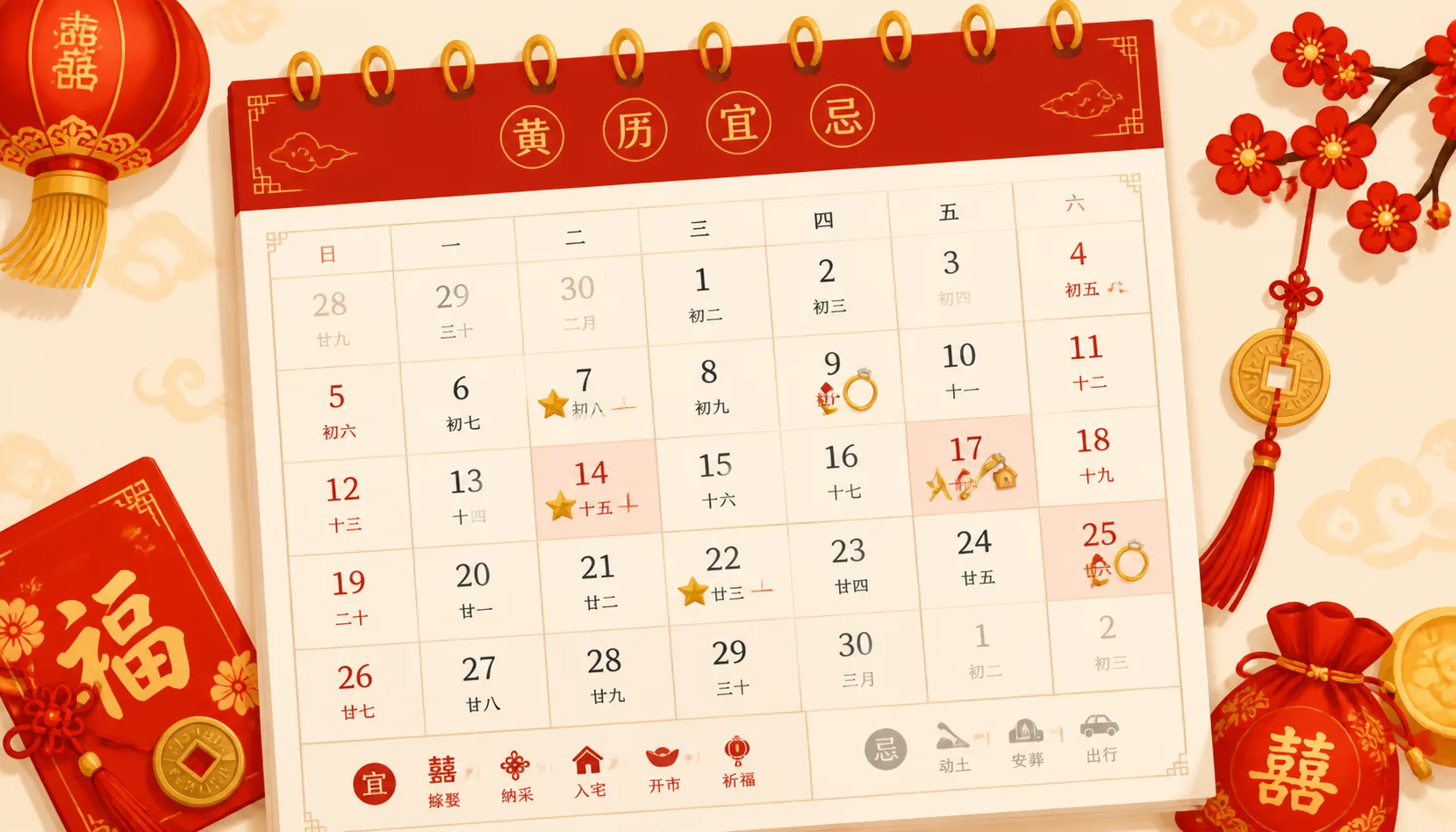
Chinese people often consult the lunar calendar and the almanac (tong shu) to pick dates that are believed to bring good luck for events like weddings, moving, or opening a business. As a foreigner, you should be aware that certain dates are extremely popular, so venues and registries book up fast, and it's respectful to ask your Chinese partner or in-laws if they have a preferred date.
What is an Auspicious Date?
In Chinese culture, an auspicious date (吉日, jí rì) is a day believed to be harmonized with cosmic forces, bringing good fortune to important events. The concept stems from traditional Chinese metaphysics, including the lunar calendar (农历, nóng lì) and the almanac (通书, tōng shū, or 黄历, huáng lì). The almanac is a daily guide that lists which activities are favorable or unfavorable for each day, based on complex calculations involving the Heavenly Stems, Earthly Branches, and the five elements.
For centuries, Chinese people have consulted these tools before scheduling weddings, moving houses, starting a business, or even beginning construction. While many modern urban Chinese may not follow every tradition, the practice remains deeply embedded in society, especially among older generations and in southern regions like Guangdong and Fujian.
For foreigners, understanding this practice is key to avoiding unintentional disrespect or scheduling conflicts. If you are invited to a Chinese wedding or are planning one with a Chinese partner, you may find that the date is not chosen arbitrarily—it is often a day that has been carefully selected for its auspicious qualities.
The Lunar Calendar vs. the Gregorian Calendar
China uses the Gregorian calendar for official and daily purposes, but the traditional lunar calendar (also called the Chinese calendar) still governs festivals and auspicious date selection. The lunar calendar is based on the cycles of the moon, with each month beginning on the new moon. It also incorporates solar terms (节气, jiéqì) to align with the seasons, making it a lunisolar calendar.
Key differences: the lunar year has 12 or 13 months, and the Chinese New Year falls on a different Gregorian date each year (between January 21 and February 20). When choosing an auspicious date, the lunar date is what matters most. For example, the 8th day of the 4th lunar month is often considered highly auspicious because it is the birthday of Buddha, while the 7th day of the 7th lunar month (Qixi Festival) is popular for weddings due to its romantic associations.
As a foreigner, you don't need to master the lunar calendar, but you should know that when a Chinese friend or colleague says a date is 'lucky,' they are likely referring to the lunar date. If you are planning an event, ask for the lunar date as well as the Gregorian date to avoid confusion.
The Role of the Tong Shu (Almanac)
The tong shu (通书) or huang li (黄历) is an ancient almanac that provides daily guidance on what to do and what to avoid. Each day is marked with symbols and text indicating whether it is suitable for activities like:
- Marriage (嫁娶, jiàqǔ)
- Moving house (搬家, bānjiā)
- Opening a business (开市, kāishì)
- Travel (出行, chūxíng)
- Funerals (祭祀, jìsì)
The almanac also marks days as 'good for all things' (百无禁忌, bǎi wú jìnjì) or 'bad for everything' (诸事不宜, zhū shì bù yí). Professional fortune tellers or geomancers (feng shui masters) can provide more personalized date selection based on the individuals' birth dates and times.
For foreigners, consulting a tong shu might seem superstitious, but it is a practical tool for understanding why certain dates are packed with events. If you are scheduling a meeting or a launch, avoid dates that are considered 'bad' (like the Qingming Festival, when people visit graves) if you want to show cultural sensitivity.
Why Certain Dates Are Extremely Popular
In China, some dates are so auspicious that they create massive surges in weddings and business registrations. For example, the number 8 (八, bā) sounds like 'prosper' (发, fā) in Chinese, so dates with many 8s—like August 8, 2008 (8/8/2008)—are incredibly popular. The 2008 Beijing Olympics famously opened at 8:08 PM on 8/8/2008 for this reason.
Similarly, dates with the number 9 (九, jiǔ) are associated with longevity, and 6 (六, liù) with smoothness (顺, shùn). Conversely, the number 4 (四, sì) sounds like 'death' (死, sǐ) and is avoided.
Beyond numbers, the lunar calendar designates specific days as 'golden days' for marriage, often based on the day's position in the 12-day cycle of the 'Jian Chu' (建除) system. These days can fall on any Gregorian date, but they are often clustered around weekends and holidays, leading to a phenomenon where civil affairs bureaus (婚姻登记处) are overwhelmed. For example, on May 20, 2020 (520, which sounds like 'I love you'), thousands of couples across China lined up to register their marriages.
If you are planning a wedding or a business launch, be aware that these peak dates may require booking venues and services months or even a year in advance.
How Chinese Couples Choose Wedding Dates
For Chinese couples, choosing a wedding date is often a family affair. The process typically involves:
- Consulting the lunar calendar to identify days marked as 'suitable for marriage' (宜嫁娶).
- Checking the couple's birth dates (and sometimes the parents') to avoid clashes with their zodiac signs.
- Avoiding certain months, like the seventh lunar month (Ghost Month), which is considered unlucky for weddings.
- Selecting a date that falls on a weekend or public holiday to maximize guest attendance.
In many families, the parents will take the lead in this process, often using a professional fortune teller or an online almanac. As a foreigner marrying into a Chinese family, it is crucial to be flexible and respectful. Show interest in the tradition, and ask questions—this will be seen as a sign of respect and cultural appreciation.
If you are a guest, never question the date choice. Instead, congratulate the couple on their 'lucky day.'
Moving and Business Launch Considerations
Auspicious dates are not just for weddings—they are equally important for moving house (搬家) and opening a business (开业). Many Chinese families will consult the almanac before moving to a new home, believing that a good date will bring harmony and prosperity to the household. Similarly, business owners often choose a grand opening date that falls on an auspicious day to attract good fortune.
For foreigners working in China, this can affect your professional life. If your Chinese partner or client suggests a specific date for a project launch or a signing ceremony, they may be following this tradition. It's wise to accommodate these preferences, as it shows respect and can strengthen your relationship.
Practical tips: if you are moving, ask your landlord or local friends for a 'good' date. For business, check the almanac or ask a Chinese colleague. Avoid scheduling important events on days like the Qingming Festival (early April) or the Ghost Festival (15th day of the 7th lunar month), as these are considered inauspicious.
Practical Tips for Foreigners
Here are some actionable tips to navigate auspicious dates in China:
- Ask early: If you are planning a wedding or major event, ask your Chinese partner or in-laws if they have a preferred date. Do this months in advance to secure venues.
- Learn the numbers: Know that 8, 6, and 9 are lucky, while 4 is unlucky. Avoid dates with many 4s.
- Use online tools: Websites like Chinese Fortune Calendar or apps like Almanac provide daily auspicious information in English.
- Be flexible: If a date is 'bad' for your Chinese counterparts, suggest alternatives. Show that you respect their traditions.
- Don't mock: Even if you are skeptical, never make fun of these beliefs. They are deeply meaningful to many people.
Ultimately, understanding auspicious dates is a way to connect with Chinese culture and show respect. By embracing this practice, you'll not only avoid scheduling conflicts but also build stronger relationships with your Chinese friends, colleagues, and family.
What Chinese People Actually Say
- 黄道吉日 | huáng dào jí rì | auspicious day | Used for weddings, business openings, and major events; check the lunar calendar
- 择日 | zé rì | to choose an auspicious day | The general term for selecting favorable dates for important events
- 开业大吉 | kāi yè dà jí | grand opening prosperity | Traditional phrase used on business opening day invitations
2026 Reality Check
Is this rule still followed in 2026? Yes, but with major caveats. Choosing auspicious dates (kanxi) remains culturally significant, though its influence has softened considerably.
Gen Z vs Older Generations: Boomers and Gen X still consult lunar calendars for weddings, business openings, and funerals. Gen Z largely dismisses superstition but paradoxically uses "lucky date" apps for fun or social media content. The difference: older generations believe it; younger ones treat it as cultural flavor.
Beijing/Shanghai vs Smaller Cities: Tier-1 cities show the weakest adherence—educated urbanites view it as outdated. Third-tier cities and rural areas maintain stronger traditions, especially for major life events. However, even traditional families now compromise, picking "lucky dates" that also fit work schedules.
Bottom line: Auspicious date selection persists as cultural practice, not universal belief. It's fading fastest among urban youth but remains practical common sense in less developed regions.
Frequently asked questions
What is the tong shu and how do I read it as a foreigner?
The tong shu is a Chinese almanac that lists daily activities considered lucky or unlucky based on traditional astrology. Each day is marked with symbols and characters indicating suitability for events like weddings or moving. You don't need to read Chinese—apps like 'Chinese Almanac' or websites translate daily rankings into English. Simply check if your chosen date is marked 'suitable' for your specific event.
Can I choose my own auspicious date if my Chinese partner's family disagrees?
Yes, but approach it diplomatically. In China, elders often hold strong beliefs about fortune. Suggest a compromise: pick a date from the tong shu that also works for your schedule. If they insist on a specific date, it's wise to defer—it shows respect and avoids conflict. You can still hold a private celebration on your preferred day if the official event falls elsewhere.
What happens if I schedule a wedding on an inauspicious date by accident?
Don't panic. Many foreigners do this unknowingly, and it's rarely a disaster. Some families may feel uneasy, but you can offset bad luck with small rituals like choosing an auspicious time of day, wearing lucky colors, or consulting a feng shui master for a quick remedy. The key is to show you care about their traditions, not to be perfect.
Are there regional differences in how auspicious dates are chosen?
Yes, significantly. Northern China often relies more on the tong shu, while southern regions like Guangdong and Hong Kong emphasize feng shui and the couple's birth charts. Some areas follow the lunar calendar strictly, others use solar terms. If your partner's family is from a specific region, ask them which calendar they use—it shows cultural awareness and avoids mismatched expectations.
Is it true that certain dates are booked out a year in advance?
Absolutely. Dates like the 8th of the 8th month (8 is a lucky number) or the 9th of the 9th month (longevity) are extremely popular. Wedding venues, government registry offices, and even restaurants can be reserved 6-12 months ahead. If you have a flexible schedule, aim for less popular but still auspicious days, like the 6th or 16th of a month, to secure your booking.
When should I consult the tong shu for moving house versus opening a business?
For moving, check the day's suitability for 'moving' or 'settling in'—often marked as 'yi ru zhai'. For business launches, look for 'kai shi' or 'opening' days, which favor beginnings. Avoid days marked 'chu xing' (travel) for moving, and 'po tu' (breaking ground) for business. Timing matters too: mornings are generally better for moves, while business openings often favor late morning or early afternoon.
Try our tools
Related guides

Feng Shui Basics: What Foreigners Must Know in China
Feng shui influences everything from apartment floor numbers to mirror placement and home orientation. In China, many buildings skip the 4th floor, mirrors are …
Read the guide →
Chinese Wedding Traditions: What Foreigners Need to Know
Chinese weddings involve rituals foreign partners rarely expect: cǎilǐ (bride price), elaborate pre-wedding photo shoots, multiple toasting rounds, and sometime…
Read the guide →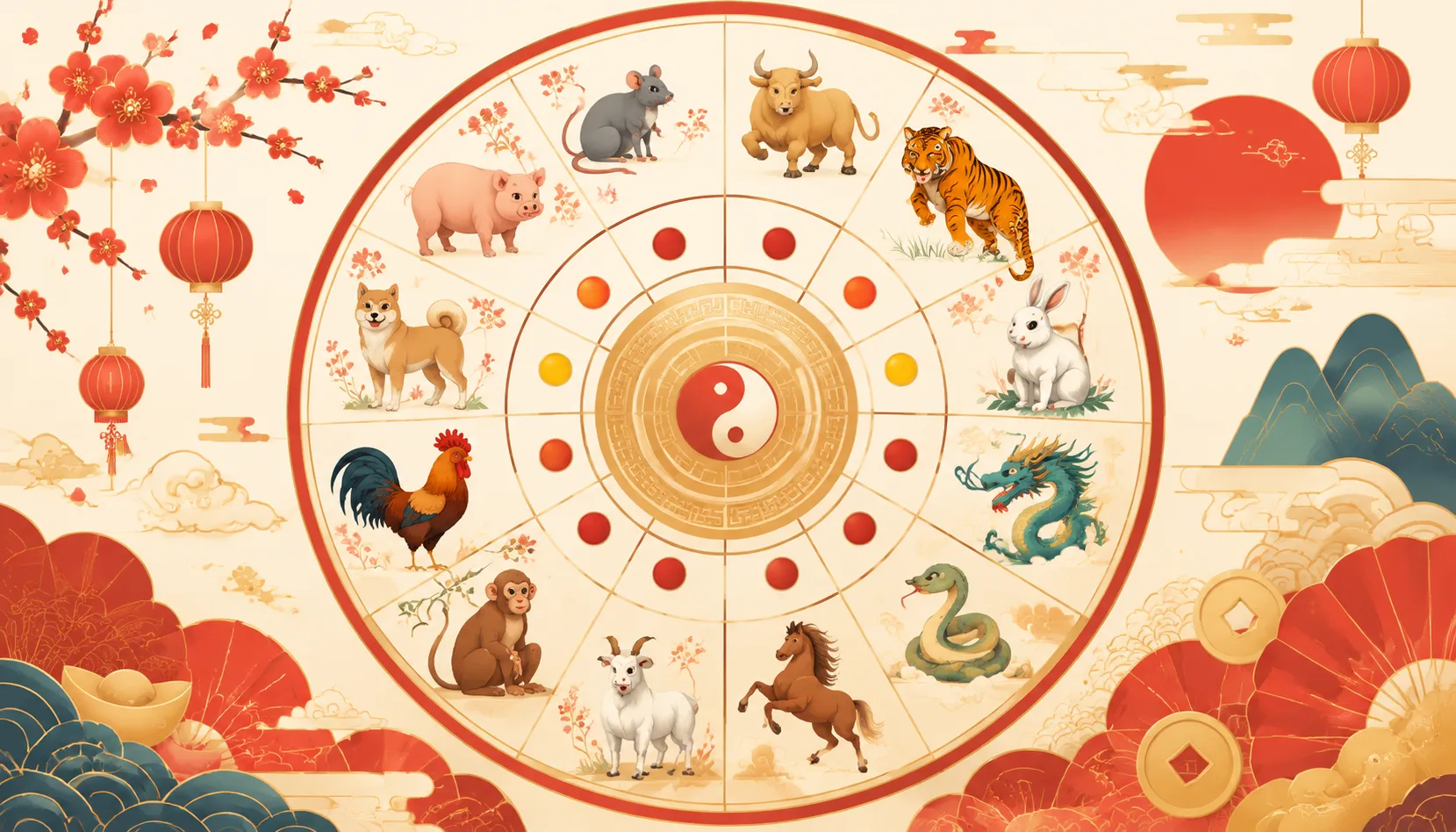
Chinese Zodiac in Daily Life: What Expats Need to Know
The Chinese zodiac influences everything from gift-giving and wedding dates to office dynamics and personal decisions. Many Chinese people consult zodiac compat…
Read the guide →