What do colors mean in Chinese culture and which should I wear or avoid at weddings, funerals, festivals, and business events?
Quick answer
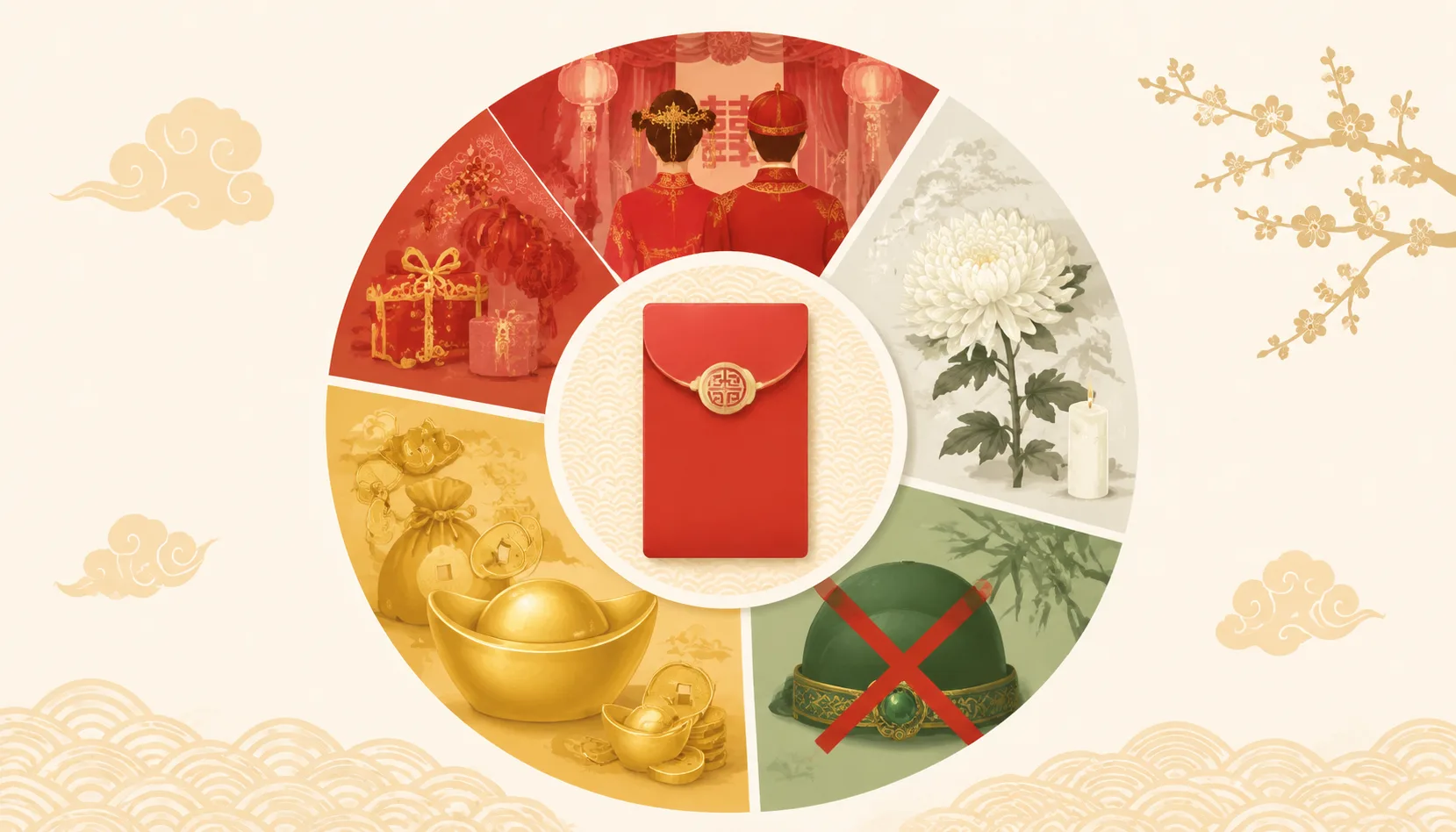
In China, red symbolizes luck and joy, white is for mourning, gold means prosperity, and green hats imply infidelity. Wear red at weddings and festivals, avoid white and black at celebrations, and stick to dark or neutral tones at funerals. For business, navy, gray, and dark red are safe choices.
Why Color Matters in China
In Chinese culture, colors carry deep symbolic meanings that go far beyond aesthetics. They are tied to ancient philosophy (the Five Elements), historical traditions, and social customs. For a foreigner, understanding these meanings can help you avoid awkward or even offensive situations—like giving a white gift at a wedding or wearing a green hat in public.
Colors are especially important at life events: weddings, funerals, birthdays, and festivals. The wrong color can signal disrespect or bring bad luck. The right color can earn you respect and show cultural awareness.
This guide breaks down the most critical color meanings and gives you practical advice on what to wear and avoid in different contexts. Remember, context matters: a color that’s perfect for a wedding may be completely wrong for a funeral.
Red: The Color of Luck and Joy
Red (红色, hóngsè) is the most auspicious color in China. It symbolizes happiness, prosperity, good fortune, and vitality. You’ll see red everywhere during Chinese New Year, weddings, and grand openings. Red envelopes (hóngbāo) are given as gifts during festivals and celebrations.
- Weddings: Brides often wear red, and guests are encouraged to wear red or other bright colors. Avoid white, black, or blue.
- Festivals: Wear red for Chinese New Year and Lantern Festival to attract good luck.
- Business: Dark red is a good choice for business attire—it conveys confidence and good fortune.
Tip: If you’re invited to a Chinese wedding, wearing red is always a safe and appreciated choice. Even a red accessory (tie, scarf, or handbag) works.
White: Mourning and Purity—But Not for Gifts
White (白色, báisè) is traditionally the color of mourning and death in China. It is worn at funerals and symbolizes the purity of the deceased’s soul. However, white is also used in modern contexts for purity (e.g., bridal gowns), but in traditional settings, it’s still associated with loss.
- Funerals: Wear white or dark colors (black, gray, navy). White flowers are appropriate.
- Weddings: Avoid wearing white as a guest—it’s considered inauspicious and disrespectful to the couple’s joy.
- Gifts: Never wrap gifts in white paper or give white flowers (especially chrysanthemums) at celebrations—they symbolize death.
Tip: If you’re unsure, ask the host or check the invitation. In urban areas, some Western influences have softened these rules, but it’s better to be safe.
Black: Formal but Also Mourning
Black (黑色, hēisè) has a dual meaning. On one hand, it’s associated with mourning and death, similar to white. On the other, it’s seen as a color of formality and authority—you’ll see black suits at business meetings and official events.
- Funerals: Black is a standard choice for mourning attire.
- Weddings: Avoid wearing all black—it’s considered unlucky. If you must, add a red or bright accessory.
- Business: Black is perfectly acceptable for formal business attire. It projects professionalism and seriousness.
Tip: In China, black is not as negative as in some Western cultures, but it’s still best to avoid it at joyful events. For business, a black suit with a red tie is a classic power combo.
Gold and Yellow: Prosperity and Royalty
Gold (金色, jīnsè) and yellow (黄色, huángsè) symbolize prosperity, wealth, and high status. Historically, yellow was reserved for the emperor—commoners were forbidden to wear it. Today, gold is a popular color for celebrations and gifts.
- Festivals: Gold decorations and clothing are common during Chinese New Year and Mid-Autumn Festival.
- Weddings: Gold jewelry is a traditional gift for brides, and gold accents in attire are welcome.
- Business: Gold is less common in business attire, but gold-toned accessories (watches, pens) can signal success.
Tip: Gold is a great color to wear to any celebratory event. It pairs well with red and is universally positive.
Green: The Hat Taboo
Green (绿色, lǜsè) is generally a positive color—it represents nature, growth, and harmony. However, there is one major taboo: wearing a green hat (绿帽子, lǜ màozi). In Chinese slang, this means your spouse is cheating on you. It’s a serious insult.
- Never wear a green hat in China, even as a fashion statement.
- Gifts: Avoid giving green hats or hats in general as gifts—they can be misinterpreted.
- Other green items: Green clothing, accessories, or jewelry are fine and even trendy.
Tip: If you see a Chinese person wearing a green hat, they’re either unaware of the stigma or it’s a deliberate joke. As a foreigner, just avoid it entirely.
Blue and Purple: Neutral to Prestigious
Blue (蓝色, lánsè) is a neutral-to-positive color in Chinese culture. It symbolizes immortality, tranquility, and trust. It’s a safe choice for both business and casual events.
Purple (紫色, zǐsè) historically symbolized prestige and nobility—it was associated with the emperor and high-ranking officials. Today, it’s seen as luxurious and creative.
- Business: Navy blue suits are excellent—they convey professionalism and reliability.
- Weddings: Blue and purple are acceptable, but avoid light blue if you’re worried about clashing with the bride’s dress (if she wears white).
- Funerals: Avoid bright blue or purple; stick to dark tones.
Tip: Blue is your safest bet for any uncertain situation. Purple is great for social events where you want to stand out as sophisticated.
What Chinese People Actually Say
- 红色 (hóng sè) | Red color | Symbolizes luck, joy, and prosperity; wear for celebrations like Chinese New Year and weddings
- 白色 (bái sè) | White color | Represents mourning and death; avoid at weddings and celebrations
- 黑色 (hēi sè) | Black color | Associated with funerals and mourning; inappropriate for festive occasions
2026 Reality Check
2026 Reality Check: Traditional Chinese color rules still exist but have softened significantly. Red remains popular for celebrations, while white and black are no longer taboo for everyday wear—even at weddings, many Chinese couples now wear white or pastel gowns.
Gen Z vs. Older Generations: Young Chinese (18-30) largely ignore color taboos. They wear white to Chinese New Year and black to weddings without concern. Parents may grumble, but acceptance is rising. Seniors (50+) still prefer avoiding white/black for important occasions, though even many elders have relaxed.
Beijing/Shanghai vs. Smaller Cities: Tier-1 cities are cosmopolitan—color rules are optional fashion advice. Smaller cities and rural areas follow traditions more strictly, especially for funerals, weddings, and holidays. However, even there, younger generations are bending the rules.
Bottom Line: The rule survives as a suggestion, not a requirement. It's strongest in formal contexts and older demographics, weakest in urban youth culture.
Frequently asked questions
Can I wear white to a Chinese wedding if it's my wedding dress style?
At a Chinese wedding, white as a bride's gown is now acceptable, especially in modern or Western-influenced ceremonies. However, as a guest, avoid wearing all white—it's associated with funerals and can be seen as disrespectful to the couple. If you're unsure, opt for red, pink, or gold instead.
Is it really taboo to wear a green hat in China, or is that just a myth?
It's not a myth. Wearing a green hat (lǜ mào zi) literally means your partner is cheating on you. This is a strong cultural taboo, so avoid green hats entirely, even casually. Other green clothing is fine, but hats are specifically problematic. If someone gifts you a green hat, it's a serious insult.
What should I wear to a Chinese funeral if I'm a foreigner and don't have dark clothes?
Dark, muted colors like black, navy, gray, or dark brown are appropriate. If you don't have them, choose the darkest outfit you own and avoid anything bright or patterned. White is also acceptable at some funerals, as it's the traditional mourning color. The key is to appear somber and respectful, not flashy.
Can I wear red to a Chinese business meeting, or is it only for celebrations?
Red is generally fine for business, but it can feel too festive or aggressive in formal settings. Dark red (like burgundy) is a better choice—it conveys confidence and good fortune without being overwhelming. Avoid bright red suits or ties unless you're attending a celebratory business event, like a company anniversary or a deal signing.
Why do Chinese people avoid giving gifts in white or black wrapping paper?
White and black are associated with death and mourning in Chinese culture. Giving a gift wrapped in these colors can imply you wish harm or bad luck on the recipient. Instead, use red, gold, or pink wrapping paper for gifts, especially during festivals or celebrations. If you receive a gift in white, it's usually a misunderstanding, not intentional.
Is yellow a lucky color in China, and can I wear it during Chinese New Year?
Yellow (specifically golden yellow) is a lucky color, symbolizing prosperity and royalty, and it's excellent for Chinese New Year. However, avoid wearing plain yellow (like mustard) in formal settings, as it can be associated with outdated or low-status clothing. Gold or bright yellow accessories are safe and festive choices.
Try our tools
Related guides
Chinese Lucky and Unlucky Numbers: Why 8 is Gold and 4 is Catastrophic
In China, 8 is the luckiest number (sounds like 'prosper'), 6 means smooth sailing, and 9 means longevity. The number 4 is avoided like death — because it sound…
Read the guide →
Chinese Superstitions in Everyday Life: What Foreigners Should Know
Several Chinese superstitions remain genuinely active in modern life — especially around gifts (clocks, pears, green hats), numbers (4 = death, 8 = prosperity),…
Read the guide →
Chinese Zodiac in Daily Life: What Expats Need to Know
The Chinese zodiac influences everything from gift-giving and wedding dates to office dynamics and personal decisions. Many Chinese people consult zodiac compat…
Read the guide →