Does gift wrapping color matter in China?
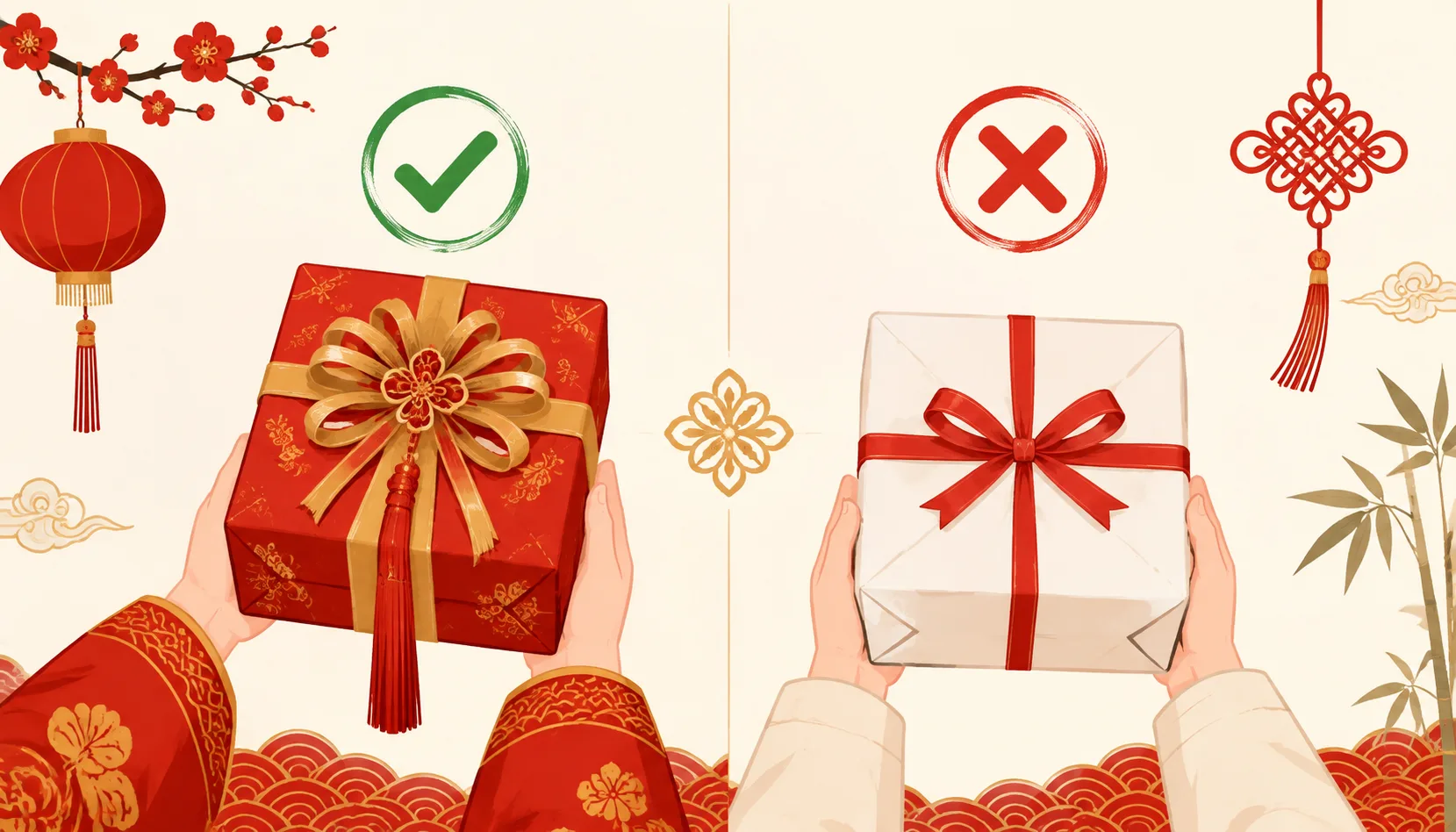
Quick answer
Yes. Use red, gold, orange, or bright colors for gift wrapping. Black and white are funeral colors and will make your gift feel like a death omen.
Why This Rule Matters
In Chinese culture, white is associated with death and funerals (the opposite of Western tradition). Red represents happiness and good fortune. Presenting a gift in white or black wrapping signals, at best, cultural ignorance, and at worst, a very bad omen for the recipient.
What You Should Do
- Wrap gifts in red (happiness), gold (prosperity), or bright warm colors
- Use red ribbons, bags, or boxes for festive occasions
- Pink and orange are also safe and celebratory choices
What You Shouldn't Do
- Wrap gifts in white — white is the color of mourning in China
- Use black wrapping paper or black gift bags
- Combine black and white, which strongly suggests a funeral
Practical Tips for Foreigners
This rule applies in most social and formal settings across China. When in doubt, watch what your Chinese host or senior colleague does and follow their lead. Breaking this rule once is forgivable — breaking it repeatedly signals a lack of cultural awareness.
Regional and Generational Differences
The black-and-white taboo is strongest in northern China and among older generations. In Beijing or Harbin, a white-wrapped gift at a family dinner would raise eyebrows immediately. But in cities like Shenzhen or Shanghai, younger professionals under 35 often shrug it off — many have studied abroad and see it as an outdated superstition. Still, don't let that fool you: if you're giving a gift to your boss's parents in Guangzhou or to a colleague from a traditional Fujian family, the old rules apply in full force. When in doubt, ask a local friend what the recipient's family background is like. It's not rude — it shows you care enough to get it right.
Real-World Scenarios
- A British expat in Shanghai brought a white-wrapped box of chocolates to his Chinese girlfriend's mother's birthday. The room went quiet — the mother smiled stiffly and placed it aside, unopened. Later, the girlfriend explained that white wrapping felt like a bad omen for an elder's health. He re-wrapped it in red the next day, and the mother warmed up instantly.
- An American manager in Beijing gave a black gift bag with a luxury watch to his Chinese business partner for a successful deal closing. The partner accepted it politely but never wore the watch in the office. A local colleague later told the manager that black visually 'killed' the luck of the deal — red or gold would have celebrated the win.
- In Guangdong, a young Australian teacher brought a white envelope with cash to a wedding (a common practice in the West). The bride's grandmother quietly pulled her aside and explained that white envelopes are only for funerals — she quickly swapped it for a red envelope and apologised. The bride laughed it off, but the grandmother never forgot the initial mistake.
The Unspoken Thought
When you hand over a white or black-wrapped gift, the Chinese recipient rarely says anything directly — it's considered impolite to criticise a gift. But inside, they're thinking: 'Does this foreigner not know our customs, or are they deliberately disrespecting us?' They'll smile, thank you, and set the gift aside. Later, they might mention it to a spouse or close friend. Your mistake becomes a story told at the dinner table, not a direct confrontation. That's why getting the colour right matters — it's a silent signal that you respect their world enough to learn its rules.
What Chinese People Actually Say
- 红包 | hóngbāo | red envelope (gift of money in red) | always use red for money gifts
- 送礼 | sòng lǐ | to give gifts | choose auspicious colors like red or gold
- 讨吉利 | tǎo jílì | to seek good luck | use red/gold colors to attract fortune
2026 Reality Check
2026 Reality: The rule still exists but has softened significantly. Red remains dominant for weddings, Lunar New Year, and business gifts. However, black and white are no longer absolute taboos—especially in urban areas.
Gen Z vs. Older Generations: Younger Chinese (18-30) care far less about color symbolism. They prioritize aesthetics, packaging design, and gifting experiences over traditional color rules. Parents and grandparents still insist on red envelopes and red wrapping, but Gen Z might wrap a gift in black or white if it looks "stylish."
Beijing/Shanghai vs. Smaller Cities: Tier-1 cities are far more relaxed. International influence and younger demographics have normalized neutral or even black packaging, especially for friend-to-friend gifts. Smaller cities and rural areas stick closer to tradition—red still dominates, and white/black at weddings or funerals remains sensitive.
Frequently asked questions
Why is red the best color for gift wrapping in China?
Red symbolizes luck, happiness, and prosperity in Chinese culture, making it the safest and most auspicious choice for any gift.
Can I use gold or orange wrapping paper for gifts?
Yes, gold and orange are also excellent choices—gold represents wealth and fortune, while orange conveys warmth and good energy.
What happens if I wrap a gift in black or white paper?
Black and white are traditionally associated with funerals and mourning in China, so using them may unintentionally signal bad luck or a death omen to the recipient.
Are there any other colors I should avoid for gift wrapping?
Avoid dark blue or gray as they can feel somber; stick to bright, festive colors like red, pink, or yellow to keep the tone celebratory.
Does the wrapping color rule apply to all occasions, like birthdays or business gifts?
Yes, it applies broadly—always choose red, gold, or bright colors for any gift-giving occasion, from birthdays to corporate exchanges, to show respect and good intent.
What if I receive a gift wrapped in white or black—should I be offended?
Don't take offense; the giver likely doesn't know the custom. Politely accept it, but for your own gifts, stick to red or gold to avoid any cultural misstep.
Try our tools
Related guides
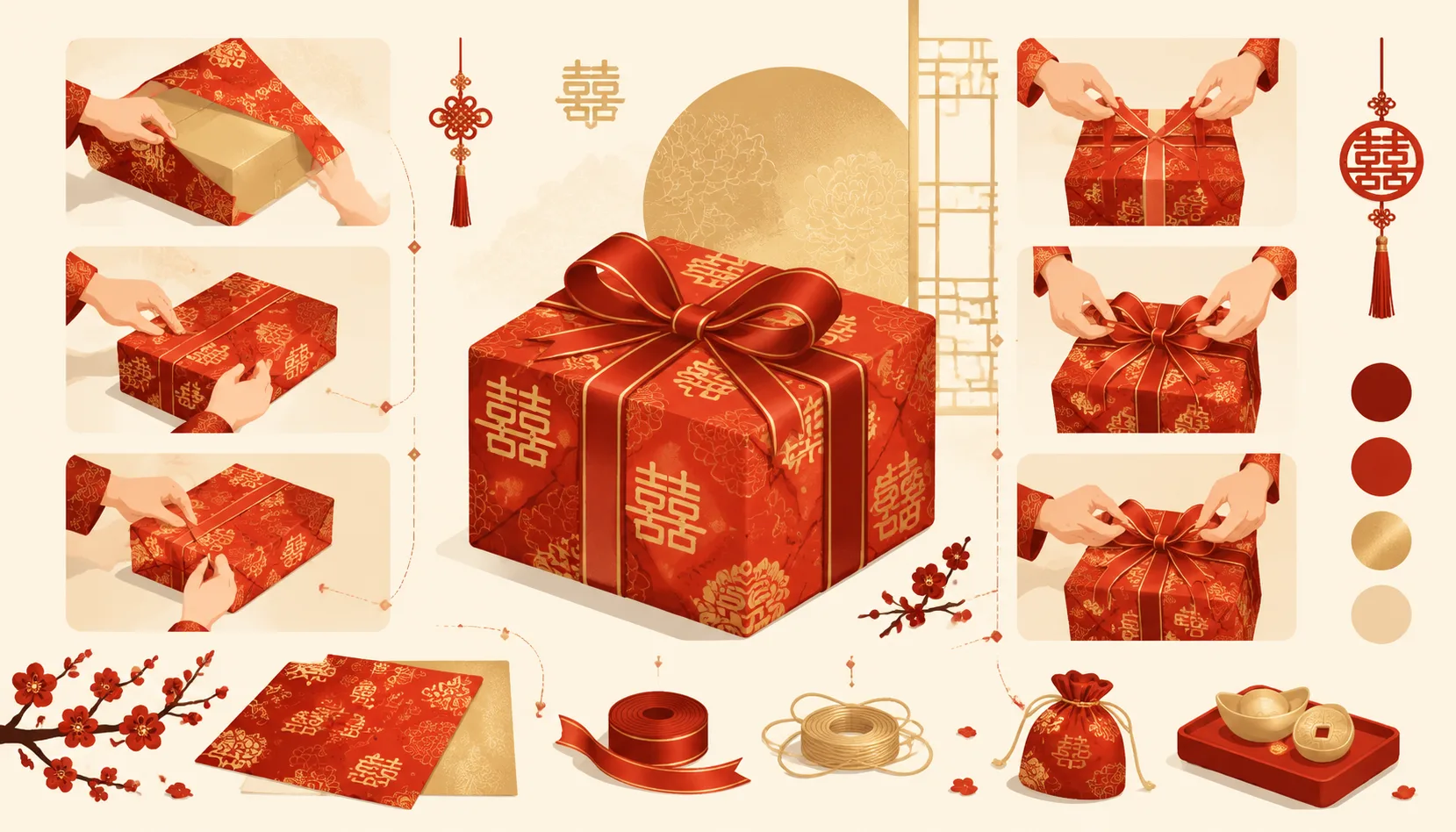
Chinese Gift Wrapping Rules: Colors, Lucky Numbers, and the Packaging Taboos You Need to Know
In China, the packaging communicates before the gift is opened. Red and gold are always safe — they signal joy and prosperity. White and black are funeral color…
Read the guide →
14 Chinese Gift Taboos: The Complete Forbidden List (With Salvage Tips)
Most Chinese gift taboos come from homophones — words that sound identical to something unlucky. "送钟" (giving a clock) sounds exactly like "送终" (attending a fun…
Read the guide →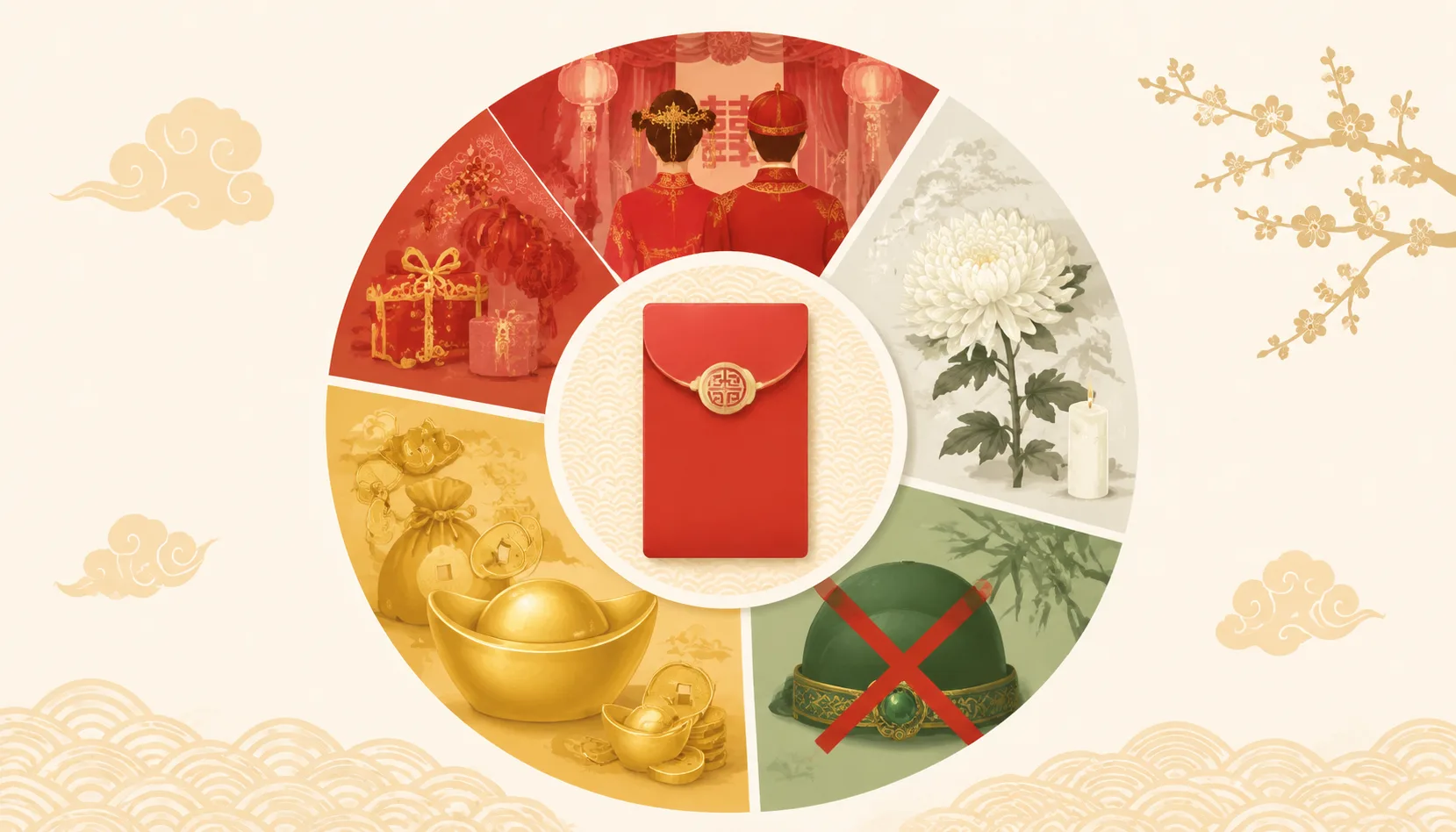
Chinese Color Symbolism: What to Wear & Avoid
In China, red symbolizes luck and joy, white is for mourning, gold means prosperity, and green hats imply infidelity. Wear red at weddings and festivals, avoid …
Read the guide →