Which numbers are lucky and unlucky in China and why does it matter?
Quick answer
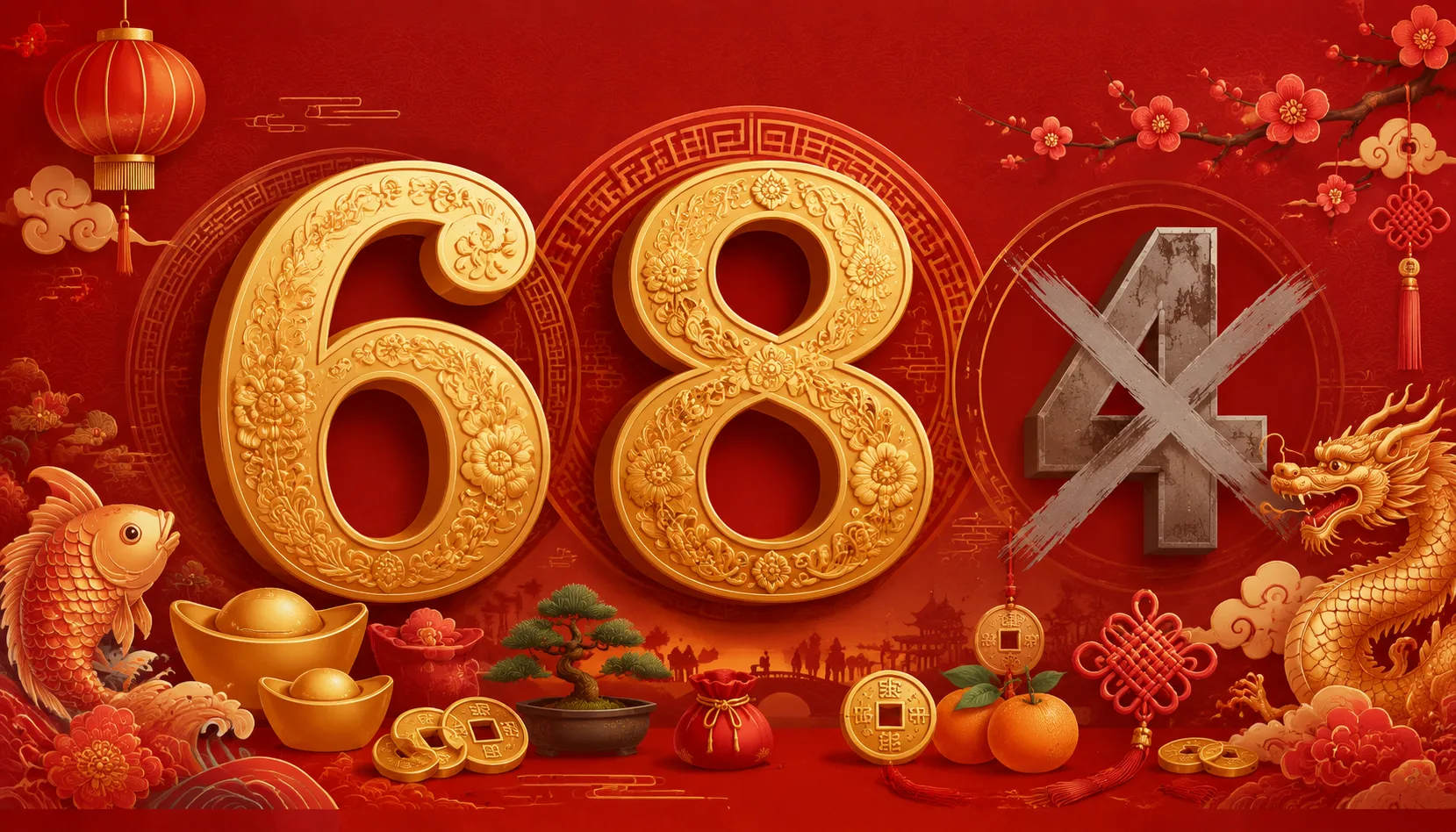
In China, 8 is the luckiest number (sounds like 'prosper'), 6 means smooth sailing, and 9 means longevity. The number 4 is avoided like death — because it sounds exactly like the word for death (死, sǐ). This affects phone numbers, apartment floors, license plates, gift amounts, and even building numbering.
Why Do Numbers Matter So Much in China?
Chinese is a tonal language with thousands of homophones — words that sound identical or very similar but have completely different meanings. This creates an entire layer of cultural meaning around numbers: the sound of a number matters as much as its mathematical value.
The result: in China, choosing a phone number, apartment floor, gift amount, or wedding date is a decision laden with symbolic weight. Companies pay enormous premiums for phone numbers and license plates loaded with 8s. Buildings routinely skip floors numbered 4, 13, and 14. Hospital wards avoid certain numbers.
Understanding this system is not superstition management — it is basic cultural literacy for anyone doing business or building relationships in China.
The Complete Number Guide
8 (八, bā) — The Luckiest Number
Sounds like: 发 (fā) — to prosper, get rich, flourish
8 is the most coveted number in Chinese culture. The 2008 Beijing Olympics opened at 8:08 PM on 08/08/2008. Mobile phone numbers and car license plates containing multiple 8s sell for significant premiums. A ¥888 red envelope is considered auspicious because it signals "triple prosperity."
In practice: If you're choosing a gift amount, phone number, or anything where the number can be deliberate — include 8s. It is always noticed and appreciated.
6 (六, liù) — Smooth and Lucky
Sounds like: 顺 (shùn) — smooth, without obstacle, everything flows
The phrase 六六大顺 (liùliù dà shùn, "six-six, grand smooth sailing") is a popular blessing. 66, 666, and 6666 are cheerful and optimistic numbers. On Chinese internet platforms, "666" is used as slang for "incredibly skilled" — the gaming community adopted it as an exclamation of awe.
In practice: ¥66 and ¥666 are excellent red envelope amounts. 6-heavy phone numbers are considered smooth and pleasant. No negative associations.
9 (九, jiǔ) — Long-lasting
Sounds like: 久 (jiǔ) — long time, forever, enduring
9 suggests permanence and longevity. It's particularly popular in weddings (eternal love), milestone birthdays, and business partnerships (lasting relationships). However: in some regions and some religious contexts, 9 is also associated with the 9th lunar month and Ghost Festival. When in doubt, 8 is safer.
In practice: ¥99 or ¥999 are good for romantic or long-term-relationship contexts. Note: 9 is generally not used for funerals.
4 (四, sì) — The Worst Number
Sounds like: 死 (sǐ) — death
4 is the Chinese equivalent of the Western 13. Buildings in China, Hong Kong, and much of East Asia routinely skip floor 4 — and sometimes 14, 24, 34 (any floor containing 4). Hospitals remove ward number 4. Gift amounts containing 4 are never given for happy occasions. Phone numbers ending in 4 sell at a discount.
Numbers to avoid absolutely: 4, 14, 40, 44, 104, 140, 144, 400, 404, 444, 1400, 4444 — any amount with 4 in it.
In practice: Never include 4 in any gift amount, never schedule important meetings on the 4th (especially the 4th of April — "死死", death-death), and be aware that Chinese clients or partners may have strong reactions to 4s that appear in contracts or proposals.
7 (七, qī) — Best Avoided
7 is associated in some regions with the 7th lunar month — Ghost Month — and with funerary rites. It's not as catastrophically avoided as 4, but it's not chosen deliberately either. In a gift context, ¥700 or ¥770 are not good choices — use ¥666 or ¥800 instead.
2 (二, èr) — Pairs and Celebrations
2 means pairs, doubles, celebration. The phrase 好事成双 (hǎo shì chéng shuāng, good things come in pairs) reflects why even numbers are preferred for gifts. Giving 2 of anything (two oranges, two bottles of wine, ¥200) signals completeness and harmony.
3 (三, sān) — Neutral
3 can mean "third time lucky" but it's also associated with the number of ritual offerings at funerals. It's neutral — not sought after, not avoided in most contexts.
5 (五, wǔ) — Associated With Negative Things
5 sounds similar to 无 (wú, nothing/none) and 吾 (wǔ, I/me, archaic). Not a major taboo but not chosen when better options exist. The 5th lunar month is considered an unlucky month in some traditions.
Where You See This in Real Life
| Context | How Number Beliefs Apply |
|---|---|
| Building floors | 4th floor often skipped or renamed "3A"; same for 14, 24, 34, 44 |
| License plates | Plates with multiple 8s sell for 5-10× premium at auction |
| Phone numbers | Numbers ending in 888, 8888 are premium; 4444 unsellable |
| Wedding dates | Dates with 8 or 6 are heavily booked; 4th of any month avoided |
| Red envelopes | Amounts with 8 or 6 preferred; anything with 4 is a social error |
| Business proposals | Contract values of ¥1,400,000 may be quietly adjusted |
| Product pricing | ¥888 and ¥1,688 are popular retail price points for this reason |
Odd vs. Even: The Celebration Rule
Beyond individual digit meanings, there's a master rule for gift amounts:
- Even numbers (双数, shuāng shù) = celebrations. Good things come in pairs.
- Odd numbers (单数, dān shù) = mourning and funerals. White envelope condolence money is given in odd amounts.
This means: ¥500 for a wedding gift is wrong (odd). ¥600 is correct. ¥1,000 is fine (even, ends in 0). ¥1,001 is a funeral amount.
Quick Reference: Number Cheat Sheet
| Number | 🟢 Good For | 🔴 Avoid |
|---|---|---|
| 6 | All gifts, all occasions | Nothing |
| 8 | Everything — default lucky | Nothing |
| 9 | Weddings, birthdays | Some ghost-festival contexts |
| 4 | Nothing — ever | All positive occasions |
| 7 | Skip it if possible | Gift amounts, happy dates |
| Odd totals | Condolence money only | Weddings, New Year, births |
| Even totals | All celebrations | Funerals |
What Chinese People Actually Say
- 八 | bā | eight | The word for "eight" sounds like "fa" (prosperity) in Cantonese; widely used in phone numbers, car plates, and business addresses
- 四 | sì | four | Pronounced identically to "sǐ" (death), making it highly unlucky; avoid giving gifts in sets of four
- 六六大顺 | liù liù dà shùn | everything goes smoothly with six | Traditional blessing meaning "everything falls perfectly into place"; 6 represents favorable outcomes
2026 Reality Check
The 8/4 rule remains strong in 2026, but with generational gaps. Older generations (50+) still actively avoid 4 in phone numbers, floor numbers, and wedding dates. Gen Z largely dismisses it as superstition, though many still "just in case" avoid 4 for major purchases.
Beijing and Shanghai show mixed results. Luxury real estate developers still charge premium for 8th floors, but younger buyers increasingly ignore it. Smaller cities and rural areas hold the tradition tight—many buildings skip 4th floors entirely, and 4-themed phone numbers sell for 20-30% less.
Bottom line: the belief is fading fastest among urban youth but remains commercially significant. Businesses still pander to it; individuals increasingly don't care.
Frequently asked questions
How much extra do people actually pay for a phone number with 8s in China?
A lot. A mobile number with multiple 8s can sell for thousands of yuan, and rare combinations with five or more 8s have fetched over a million RMB at auction. In contrast, numbers containing 4 are often discounted or given away free. If you're buying a SIM card, expect premium pricing for 8-heavy numbers.
What should I give as a red envelope amount for a wedding or birthday in China?
Give amounts containing 8, 6, or 9 — like 88, 168, 666, or 999 yuan. Avoid 4, 40, 400, and any amount ending in 4. For weddings, even numbers are preferred (except 4), and for funerals, odd amounts like 101 or 501 are traditional. When in doubt, 88 or 168 is always safe.
Is the number 4 really skipped on building floors in China, or is that just a myth?
It's real. Many residential and commercial buildings in mainland China skip the 4th floor entirely — going from 3 to 5 — and some also skip 13 and 14. Elevator buttons may show '3A' instead of 4. However, this is less common in international hotels and newer developments catering to foreigners, so don't assume every building follows the rule.
Can I use the number 4 for my business license plate or is it truly forbidden?
It's not forbidden, but it's strongly avoided. Chinese drivers often pay extra for plates with 6, 8, or 9, and many will go out of their way to reject plates containing 4. Some cities have even removed 4 from certain plate series to avoid public complaints. If you're registering a car, expect to wait longer if you insist on an 8-heavy plate.
What does the number 7 mean in Chinese culture — is it lucky or unlucky?
It's mixed. 7 sounds like 'together' (起, qǐ) and also 'to rise', so it's positive in business. But in Cantonese, 7 sounds like a vulgar word, and in some contexts it's associated with ghosts (Ghost Month is the 7th lunar month). Generally, 7 is neutral-to-positive in Mandarin-speaking regions, but avoid it in Guangdong or Hong Kong if you're sensitive to slang.
Does the number 4 avoidance apply to prices in shops and restaurants in China?
Yes, especially for big-ticket items. You'll rarely see a price ending in 4 in Chinese retail — instead, you'll see 98, 168, 288, or 888. Restaurants may skip table 4, and hotels skip room 404. Some shops even round prices to avoid 4 entirely. If you're negotiating, offering a price with 8 at the end is a friendly gesture.
Try our tools
Related guides

14 Chinese Gift Taboos: The Complete Forbidden List (With Salvage Tips)
Most Chinese gift taboos come from homophones — words that sound identical to something unlucky. "送钟" (giving a clock) sounds exactly like "送终" (attending a fun…
Read the guide →
Chinese Superstitions in Everyday Life: What Foreigners Should Know
Several Chinese superstitions remain genuinely active in modern life — especially around gifts (clocks, pears, green hats), numbers (4 = death, 8 = prosperity),…
Read the guide →
Chinese Gift-Giving Guide 2026: Rules, Taboos, and What Actually Works
In China, gift-giving is not about the gift. It's about the relationship. The right gift, delivered at the right time with the right words and two hands, commun…
Read the guide →