How is International Women's Day (March 8) observed in Chinese workplaces and society, and how should foreigners participate appropriately?
Quick answer
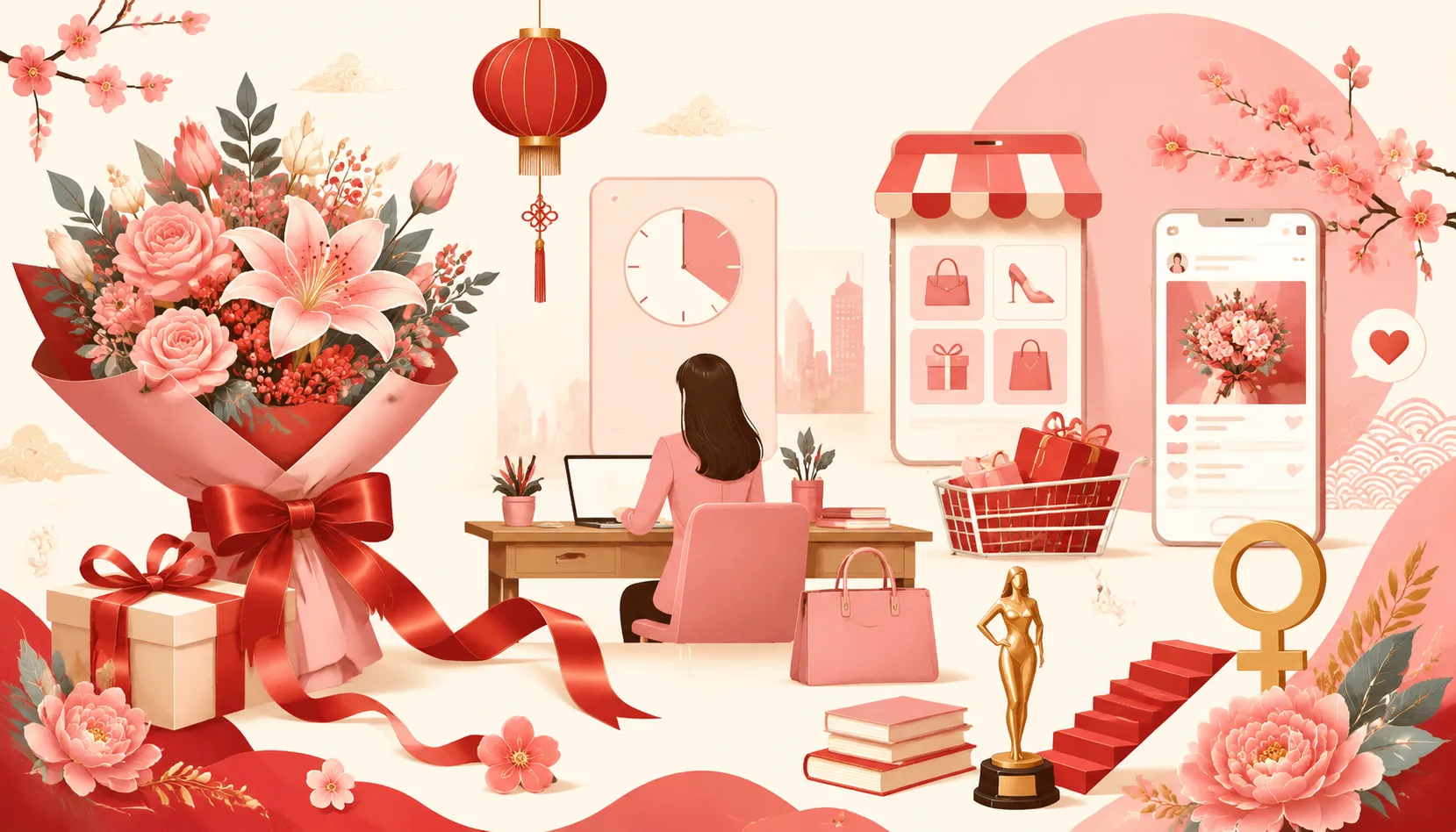
In China, March 8 (三八妇女节) is a widely celebrated holiday where female employees often get a half-day off, gifts, and company events. As a foreigner, acknowledge female colleagues with '节日快乐' (Happy Holiday), consider small gifts like flowers or tea, and participate enthusiastically in workplace celebrations. Avoid treating it as a political statement—it's a mainstream, commercial, and social occasion.
Why March 8 Matters More in China Than in the West
In many Western countries, International Women's Day (IWD) is a low-key affair—maybe a social media post or a small office acknowledgment. But in China, 三八妇女节 (Sān-Bā Fùnǚ Jié) is a genuine, widely observed holiday with significant economic and social weight. It's not just a day for activism; it's a day of appreciation, celebration, and consumer spending.
Chinese companies take it seriously. Many give female employees a half-day off in the afternoon (下午半天假, xiàwǔ bàntiān jià), as encouraged by government regulations. Others offer gift vouchers, flowers, or organize a celebratory lunch or team-building event. Some companies even give cash bonuses, especially in larger firms or foreign-invested enterprises.
E-commerce platforms like Taobao, JD.com, and Pinduoduo run massive '38 Women's Day' sales (三八女神节, Sān-Bā Nǚshén Jié), often rivaling Singles' Day in scale. Social media floods with tributes, hashtags, and brand campaigns. For foreigners, understanding this cultural weight is key—this is not a day to ignore or treat as a mere political statement.
Practical tip: Mark March 8 on your calendar as a real holiday. If you're a manager, plan something for your female team members. If you're a colleague, a simple greeting goes a long way.
Workplace Expectations: What Companies Do
In Chinese workplaces, March 8 is a day when employers are expected to show appreciation to female staff. The most common practices include:
- Half-day off: Many companies allow female employees to leave after lunch, or even take the whole day off.
- Gifts: Practical items like vouchers, beauty products, or small electronics are common. Some companies give flowers or a box of chocolates.
- Events: Team lunches, afternoon tea, or organized activities like flower-arranging workshops (插花, chāhuā) or yoga classes.
- Cash bonuses: Some firms include a small cash gift (过节费, guòjié fèi) in the salary for the month.
As a foreign colleague, you should participate with enthusiasm. If your company organizes something, join in—even if you're male. Your presence shows respect and cultural awareness.
If you're in a leadership position, consider initiating a small gesture: a group lunch, a fruit basket, or a heartfelt message in the company chat. It's a low-cost way to boost morale and demonstrate that you understand local customs.
Practical tip: If you're unsure what your company does, ask a Chinese colleague or HR. Don't assume it's a normal working day.
How Men Should Behave: Acknowledging Female Colleagues
For men working in China, March 8 is a day to be proactive and thoughtful. The simplest and most important thing is to acknowledge the day verbally. A warm '节日快乐' (Jié rì kuàilè, Happy Holiday) to female colleagues is expected and appreciated. It's a small effort that shows you're in tune with local culture.
Beyond the greeting, consider a small gift. You don't need to spend a lot—a bouquet of flowers, a box of nice tea, or a bag of quality snacks is perfectly acceptable. In many offices, it's common for male colleagues to chip in for a collective gift for the women on the team.
Be careful with your tone: avoid making it about romance or flirtation. This is a day to celebrate women's achievements and contributions, not to hit on someone. Keep it professional and respectful.
Practical tip: If you're a male manager, make a point to publicly thank your female team members. A group WeChat message or a brief speech at a team meeting can have a big impact.
Relationships: What Boyfriends and Husbands Should Do
In China, March 8 is also a day when men in relationships are expected to mark the occasion. Unlike Valentine's Day (情人节, Qíngrén Jié), which is about romance, Women's Day is more about appreciation and respect—but gifts are still standard.
The most common gift is flowers. Red roses are popular, but any bright, cheerful bouquet works. Avoid white chrysanthemums (白菊花, bái júhuā), which are associated with funerals. Other popular gifts include:
| Gift Category | Examples | Notes |
|---|---|---|
| Beauty products | Skincare sets, makeup, perfume | High-end brands are appreciated |
| Jewelry | Necklaces, earrings, bracelets | Gold or silver are safe bets |
| Tea or gourmet items | High-quality tea, chocolates, fruit baskets | Elegant and practical |
| Dining vouchers | Restaurant gift cards | For a nice dinner out |
If you're in a serious relationship, a thoughtful gift is expected. It doesn't have to be expensive, but it should show you've put thought into it. A handwritten note or a special dinner at home can also work well.
Practical tip: Don't forget to say '节日快乐' to your partner first thing in the morning. The gift is secondary to the acknowledgment.
What NOT to Do: Avoiding Common Pitfalls
While March 8 is a joyful occasion, there are a few things foreigners should avoid:
- Don't treat it as a political statement. In China, IWD is not about protests or feminist activism—it's a mainstream holiday. Avoid bringing up sensitive topics like gender inequality in politics or workplace discrimination. Keep it positive.
- Don't ignore it. Failing to acknowledge the day can come across as rude or out of touch. Even a simple greeting is better than silence.
- Don't give inappropriate gifts. As mentioned, avoid white chrysanthemums. Also, avoid anything too personal or intimate unless you're in a close relationship.
- Don't make it about yourself. If you're a man, don't complain about not getting gifts. The day is about celebrating women.
Another common mistake is assuming that all women want the same thing. Some younger women prefer experiences over material gifts, while others appreciate a cash bonus or a day off. If you're organizing something, ask for input.
Practical tip: When in doubt, err on the side of simplicity. A sincere greeting and a small token of appreciation are always well-received.
The Modern Shift: Celebrating Female Achievement and Independence
In recent years, the way Chinese women view March 8 has evolved. While older generations might see it as a day for men to thank women, younger women have reframed it as a celebration of female achievement and independence. The term '女神节' (Nǚshén Jié, Goddess Day) has become popular, especially in marketing, emphasizing empowerment rather than mere appreciation.
This shift means that gifts and gestures should celebrate women's capabilities, not just their roles as wives or mothers. For example, a book by a female author, a workshop on professional skills, or a donation to a women's charity in her name could be meaningful.
In the workplace, this translates to more inclusive celebrations. Companies might host beauty workshops (美容讲座, měiróng jiǎngzuò), career development seminars, or even outdoor adventures like hiking or team sports. As a foreign colleague, be enthusiastic about these events—they're a great opportunity to bond with your team.
Practical tip: When choosing a gift or planning an activity, think about what empowers the woman in question. Ask her what she'd enjoy, or observe her interests.
Gift Ideas and Etiquette: A Quick Reference
To help you navigate March 8, here's a quick reference table of gift ideas and their appropriateness:
| Gift | Appropriate For | Notes |
|---|---|---|
| Flowers (not white chrysanthemums) | Colleagues, friends, partners | Roses, tulips, or mixed bouquets |
| Beauty products | Close friends, partners | Skincare sets, makeup, perfume |
| Jewelry | Partners, family | Gold, silver, or gemstone pieces |
| Nice tea or coffee | Colleagues, acquaintances | High-quality loose-leaf tea or a gift set |
| Dining vouchers | Partners, friends | For a special meal out |
| Books or courses | Anyone | Focus on empowerment or personal growth |
When giving gifts, remember to use both hands (双手, shuāngshǒu) as a sign of respect. If you're giving flowers, avoid even numbers—odd numbers are considered lucky.
Finally, always pair your gift with a verbal greeting. '节日快乐' is the standard, but you can also say '祝你节日快乐' (Zhù nǐ jiérì kuàilè, Wishing you a happy holiday).
Practical tip: If you're unsure about a gift, a gift card to a popular store or platform is always safe. It lets the recipient choose what they truly want.
What Chinese People Actually Say
What Chinese People Actually Say
- 节日快乐 (Jié rì kuàilè) – "Happy holiday" – Use to greet female colleagues on Women's Day.
- 祝您妇女节快乐 (Zhù nín fùnǚ jié kuàilè) – "Wishing you a happy Women's Day" – Formal greeting in workplace.
- 女王节快乐 (Nǚwáng jié kuàilè) – "Happy Queen Day" – Playful, used among friends.
- 女神节快乐 (Nǚshén jié kuàilè) – "Happy Goddess Day" – Modern, used in marketing and social media.
2026 Reality Check
2026 Reality Check: In 2026, Gen Z in China’s tier‑1 cities are pushing for gender‑inclusive policies and using social media to amplify women’s achievements, while older generations still prioritize traditional gifts and family gatherings. In tier‑2/3 cities, the holiday remains more community‑focused, with local NGOs and state‑run women’s unions organizing workshops on rights and health. Workplace celebrations in Shanghai and Beijing now often include flexible hours and mentorship programs, whereas in Chengdu or Nanjing they may still be limited to a half‑day off and a group lunch. The gap between urban and rural attitudes is narrowing, but tier‑1 companies lead in implementing gender‑neutral leave and transparent promotion pathways.
Frequently asked questions
Do female employees in China actually get a half-day off on March 8?
Yes, it's official policy under China's 'National Holidays for Some Citizens' regulations. Many companies grant female staff a half-day off on March 8, though it's not mandatory for all industries. In practice, some employers give the full day, while others skip it entirely. Ask your HR or check your contract—but don't assume it's automatic.
What is the best gift to give a Chinese female colleague for Women's Day?
Small, thoughtful gifts work best: a bouquet of flowers (especially roses or carnations), a box of chocolates, or premium tea. Avoid expensive items, as they can create awkward reciprocity expectations. If you're in a team, pooling money for a shared gift like a cake or fruit basket is common and appreciated.
Can I say 'Happy Women's Day' to a Chinese woman, or is it offensive?
It's perfectly fine to say '节日快乐' (Happy Holiday) or '三八妇女节快乐' (Happy March 8 Women's Day). The term '妇女' (woman) is neutral in Chinese, not derogatory. However, younger women sometimes prefer '女神节' (Goddess Day) or '女王节' (Queen Day), which are popular marketing spins. Stick with '节日快乐' to be safe.
Is Women's Day in China a political or feminist event?
Not really. While it has socialist origins, today it's overwhelmingly commercial and social. E-commerce platforms run massive sales, companies host tea parties or spa vouchers, and friends exchange small gifts. Avoid bringing up gender politics or Western feminist framing—it can feel preachy or out of touch in a Chinese workplace context.
What if my company doesn't celebrate Women's Day at all?
Don't make a fuss. Smaller private companies or foreign-invested firms sometimes skip it. You can still acknowledge female colleagues casually with a verbal '节日快乐' or a small personal gesture like coffee. If you're a manager, consider at least a simple gesture—even a group lunch goes a long way. But never criticize the company's choice openly.
Are there regional differences in how Women's Day is celebrated in China?
Yes, but they're subtle. In first-tier cities like Shanghai, Beijing, and Shenzhen, celebrations are more elaborate—think team-building events and branded gifts. In smaller cities, it's often simpler: a cash bonus or a bouquet. Some state-owned enterprises host formal afternoon teas, while tech companies lean into fun activities. Observe your local office culture first.
Try our tools
Related guides
Chinese New Year Survival Guide for Foreigners: What to Do, What Not to Do (2026)
Spring Festival is China’s biggest holiday, a family reunion that dwarfs Western celebrations. If invited to New Year’s Eve dinner, arrive early, bring fruit or…
Read the guide →
Mid-Autumn Festival Guide for Foreigners in China 2026: Moon, Mooncakes, and Gift Etiquette
Mid-Autumn Festival is China’s second-biggest gift-giving event, blending Thanksgiving’s warmth with Christmas’s pressure around a full moon. Expect three days …
Read the guide →
Dragon Boat Festival China: Zongzi, Dragon Boats & What Foreigners Must Know (2026)
Dragon Boat Festival (端午节, Duānwǔ Jié) falls on the 5th day of the 5th lunar month. Eat zongzi (sticky rice dumplings wrapped in bamboo leaves), watch or join d…
Read the guide →