Chinese Housewarming Gift Guide: What to Give for 乔迁 (New Home) in 2026
Quick answer
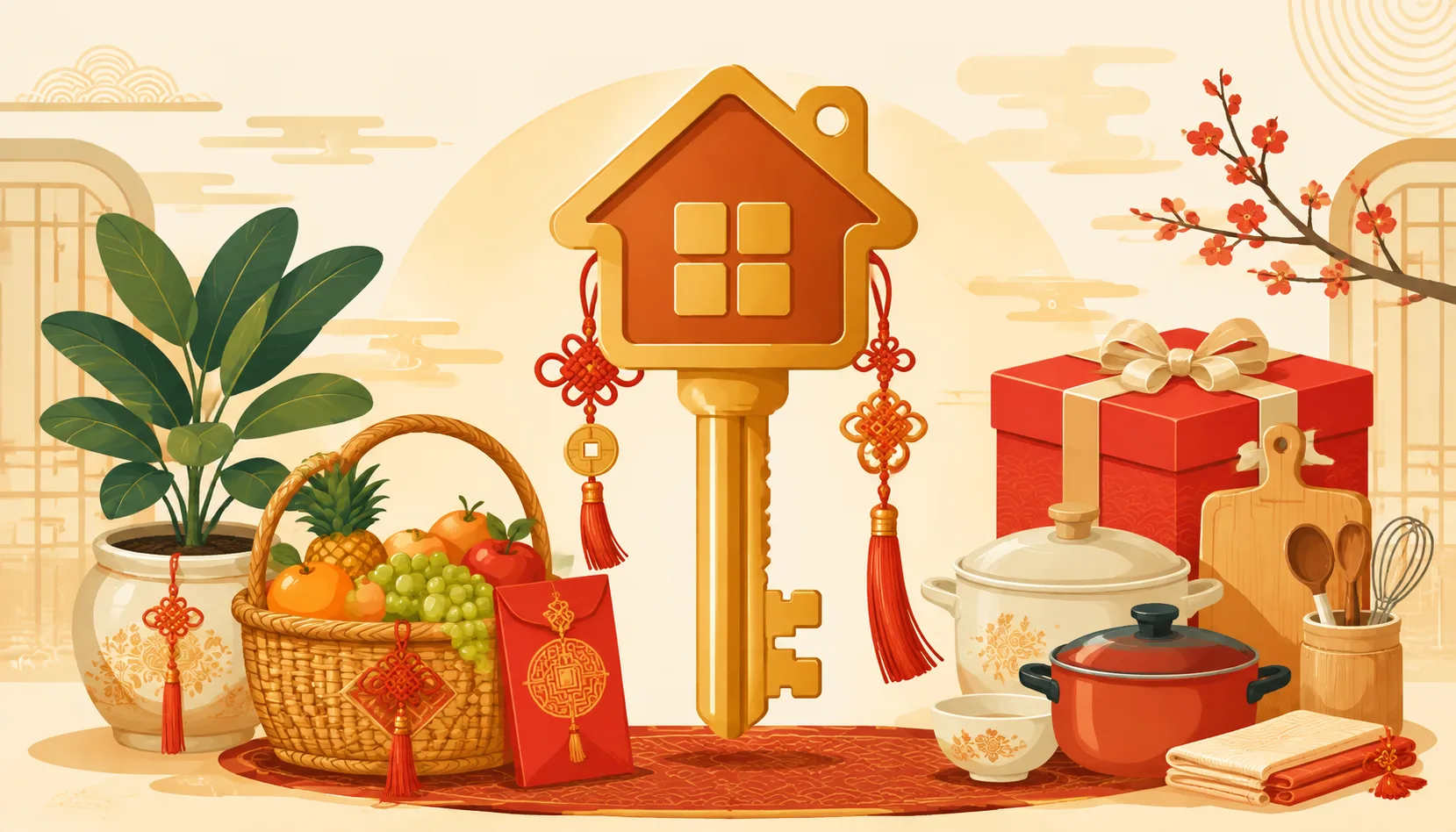
A Chinese housewarming (乔迁, qiáoqiān) is a major life milestone. Practical and auspicious gifts work best: quality kitchen equipment, a stylish home decoration with auspicious symbolism, premium tea sets, or a red envelope (cash). Budget ¥200–800 depending on relationship. Never give a clock, shoes, or anything in 4s. Red is always a safe packaging color.
Quick Answer
A Chinese housewarming (乔迁, qiáoqiān) is a major life milestone. Practical and auspicious gifts work best: quality kitchen equipment, a stylish home decoration with auspicious symbolism, premium tea sets, or a red envelope (cash). Budget ¥200–800 depending on relationship. Never give a clock, shoes, or anything in 4s. Red is always a safe packaging color.
What 乔迁 Means and Why It Matters
乔迁之喜 (Qiáoqiān zhī xǐ — "the joy of moving to a new home") is one of the five major life events in Chinese culture that trigger gift-giving obligations. It ranks below weddings and child birth, but above regular birthdays. The move into a new home represents:
- A major financial achievement (in China, home ownership is the highest social milestone)
- A new chapter of life
- The beginning of the household's fortune and luck for years to come
Gifts given at a housewarming symbolically "bless" the new home. This is not casual. In Chinese thinking, the energy and symbolism of the first things brought into a new home shapes the fortune of everything that follows.
The Auspicious Gift Framework
Chinese housewarming gifts fall into three categories:
Category A: Practical + Auspicious — Items the household will actually use, with positive symbolic weight (best category)
Category B: Purely Decorative/Symbolic — Items specifically for good luck and beautification (excellent if chosen well, risky if unfamiliar with their taste)
Category C: Cash (Red Envelope) — Always appreciated, especially for close relationships (increasingly common)
Category A: Practical + Auspicious (Best Choice)
Premium Tea Sets
A quality 茶具套装 (chájù tàozhuāng — tea set) is one of the most classic and universally appropriate housewarming gifts in China:
- Symbolizes refinement, hospitality, and a cultured household
- Actually used daily in Chinese homes
- The ritual of tea says "your home is a place of warmth and gathering"
What to buy: A complete set with teapot, cups, and serving tray. Ceramic (陶瓷, táocí) or Yixing clay (宜兴紫砂, Yíxīng zǐshā — China's most prestigious teaware) are the best options.
Price range: ¥150–800. Yixing clay sets at ¥300–800+ are appropriate for important relationships.
Affiliate placement: → Premium Chinese tea sets for housewarming gifts (ceramic and Yixing clay) | Complete tea ceremony sets in gift packaging
Quality Cookware
Practical and immediately useful:
- A premium wok (铁锅, tiě guō) from a quality brand
- A quality knife set (but never scissors alone — scissors = 剪断关系, cutting the relationship)
- Matching bowl sets in auspicious designs (dragon, phoenix, fish)
- A quality electric kettle or rice cooker from a premium brand
What to avoid: Scissors as the primary gift (see taboo section). A knife set can be given, but pair it with something else or they should give you ¥1 to "buy" it from you to sever the cutting symbolism.
Affiliate placement: → Premium cookware sets for Chinese housewarming | Matching bowl and chopstick sets in auspicious designs
Quality Bedding or Textiles
Warm, practical, and symbolically appropriate for a new home:
- Premium silk pillowcases or duvet cover set
- Quality towel sets
- A beautiful table runner or tablecloth
These are less common as gifts but deeply appreciated — practical items that make a home feel established.
Alcohol and Spirits
If you know the host drinks:
- A bottle of good baijiu (white spirits) — for important relationships, Moutai or Wuliangye
- A quality bottle of imported wine or cognac
Alcohol at a housewarming says "let's toast the new home" — it's a celebratory, future-forward gift.
Affiliate placement: → Premium baijiu gift sets for housewarming | Imported wine gift sets for Chinese occasions
Category B: Decorative and Symbolic
Auspicious Home Decorations
These require more taste-calibration, but when you get them right, they're memorable:
Fish decorations (鱼, yú): "Fish" sounds like "surplus" (余, yú) — 年年有余 (abundant year after year). A quality painting of fish, a ceramic fish sculpture, or a goldfish-patterned item is a widely understood auspicious housewarming gift.
Ruyi (如意, rúyì) — "as you wish" objects: A traditional ornamental scepter shape symbolizing wishes coming true. Jade or quality stone ruyi decorations are a premium housewarming option.
"福" (fú — luck/fortune) characters: A quality framed 福 character in calligraphy, or a decorative 福 wall piece, is a classic housewarming gift. The tradition is to hang it upside down (福倒 = 福到 — "fortune has arrived").
Pixiu (貔貅, pí xiū): A mythological creature that attracts wealth and repels negative energy. A quality jade or crystal pixiu is a very common housewarming gift in business circles.
What to be careful about:
- Mirrors (破镜难圆 — "broken mirrors can't be made whole again")
- Clocks (送钟 = 送终 — "giving a clock = attending a funeral")
- Paintings of water in bedrooms (water = wealth flowing out in certain feng shui interpretations)
Affiliate placement: → Auspicious Chinese home decorations for housewarming (pixiu, ruyi, fish) | Jade home decor pieces for new home gifts
Plants
Living plants symbolize growth and vitality — appropriate for a new home with caveats:
Good choices:
- Money plant / pothos (绿萝, lǜluó) — easy to care for, widely popular
- Bamboo (竹, zhú) — resilience and growth
- Lucky money tree (发财树, fācái shù) — "prosperity tree"
- Orchid (兰花, lánhuā) — refinement and elegance
Avoid:
- Cactus (symbolizes hardship and friction)
- Any plant with thorns as the primary feature
- Plants associated with yin energy (generally dark-leafed, low-growing plants)
Affiliate placement: → Lucky bamboo gift sets for housewarming | Money tree and indoor plant gift sets
Category C: Red Envelope (Cash)
For close relationships, a red envelope with cash is increasingly standard and deeply practical:
- The couple just spent a significant sum on the new home — cash helps with furnishing
- ¥300–800 for close friends
- ¥500–2000 for very close friends or family
How to give: Present it with both hands with the words: "恭喜乔迁!这是给你们新家的一点心意。" (Gōngxǐ qiáoqiān! Zhè shì gěi nǐmen xīn jiā de yīdiǎn xīnyì.) — "Congratulations on the new home! This is a small token for your new house."
Auspicious amounts: ¥600, ¥800, ¥888, ¥1000, ¥1688. Avoid ¥400 (4 = death) and odd numbers.
What to Avoid (The Housewarming Taboo List)
| Item | Why | Safe Alternative |
|---|---|---|
| Clock or watch | 送钟 = 送终 (funeral symbolism) | Tea set, decorative item |
| Scissors (alone) | Cuts the relationship | Knife set OK if paired; always let them "buy" it with ¥1 |
| Shoes | 鞋 = 邪 (evil/misfortune) | Any other category |
| Mirrors | 破镜难圆 (broken mirrors can't be mended) | Decorative art instead |
| 4 of anything | 4 = death | 6, 8, or sets of other numbers |
| White/black packaging | Funeral colors | Red, gold, or warm-colored packaging |
| Pears | 梨 = 离 (separation) | Apples, oranges |
| Cactus | Hardship, friction | Lucky bamboo, orchid |
How to Present the Gift
If attending the 乔迁宴 (housewarming banquet): Follow banquet gift etiquette — arrive on time, bring your gift, present it to the hosts when you arrive, participate in the toasts.
The housewarming toast: When the host toasts the new home, raise your glass and say "乔迁之喜!" (Qiáoqiān zhī xǐ!) — "Joy of the new home!" This is the specific phrase for this occasion.
If you can't attend: Send your gift with a delivery service with a card that says "恭祝乔迁之喜,新家新气象!" (Gōngzhù qiáoqiān zhī xǐ, xīn jiā xīn qìxiàng!) — "Wishing you joy in your new home — fresh home, fresh prospects!"
Budget Guide
| Relationship | Budget | What to Buy |
|---|---|---|
| Casual colleague / peripheral contact | ¥150–300 | Quality plant, premium snacks, small tea set |
| Regular friend or colleague | ¥250–500 | Quality tea set, premium decorative item, or wine |
| Close friend | ¥400–800 | Premium tea set or cookware, or cash (¥600) |
| Close family | ¥500–2000+ | Cash (¥800–1000+), or major practical item |
| Business partner (formal relationship) | ¥300–800 | Premium tea set, quality decorative item, or paired set |
FAQ
Q: I'm not sure about their interior design taste. Should I stick to practical gifts? A: Yes. When in doubt, practical + auspicious wins over purely decorative. A quality tea set or premium cookware is universally useful regardless of the host's aesthetic preferences. Decorative items require taste-matching.
Q: The housewarming is happening very soon. What can I get quickly? A: A red envelope (cash) is always appropriate for a close relationship and can be prepared in minutes. For non-cash gifts: fruit baskets, premium teas, or wine can all be purchased same-day and require no special delivery logistics.
Q: They're a Western-Chinese couple (or an expat-friendly family). Does all this still apply? A: For mixed or highly cosmopolitan couples, you have more flexibility. Western housewarming gifts (quality home goods, artisan food items, a bottle of champagne) are fine. The key taboos still apply — no clocks, no white packaging — but the auspicious symbolism requirement relaxes for Western-influenced households.
Q: What if I give a knife set? Is that really bad luck? A: Knives are tricky in Chinese gift culture. The cutting symbolism (剪断, jiǎnduàn — cutting the relationship) means you should: (a) pair the knife set with something else, and (b) ask the recipient to give you ¥1 to "buy" it from you — this severs the gift's bad symbolism. In practice, many urban Chinese don't observe this, but the older generation does. When uncertain: ask a mutual friend if the hosts are traditional about this.
What Chinese People Actually Say
- 乔迁之喜 | qiáo qiān zhī xǐ | "Congratulations on your new home" | Use as greeting card message or verbal祝福 when visiting the new house
- 步步高升 | bù bù gāo shēng | "May you rise step by step" | Write on red envelope or say as blessing for prosperity
- 心想事成 | xīn xiǎng shì chéng | "May all your wishes come true" | Add to gift card for warm, universal well-wishes
2026 Reality Check
2026 Reality Check: Traditional rules still exist but have softened significantly. The core idea—avoiding "sending empty" (送空)—remains, but strict taboos are fading.
Gen Z vs. Older Generations: Boomers still prefer cash red envelopes (红包) or even-numbered gift sets. Gen Z prefers practical gifts (smart home gadgets, plants) or experiences (dinners, Airbnb vouchers). They see cash as "lazy" but elders consider it respectful.
Beijing/Shanghai vs. Smaller Cities: Tier-1 cities embrace minimalist gifting—some young couples request "no gifts, just come." Smaller cities and elder-heavy households still expect traditional items: fruit baskets, tea sets, or household appliances. Rural areas remain most traditional.
Bottom Line: The "rule" survives as a guideline, not a mandate. Context matters more than tradition.
Frequently asked questions
What is the best budget for a Chinese housewarming gift if I'm just a casual colleague?
For a casual colleague or acquaintance, ¥200–300 is appropriate. A potted plant, premium fruit basket, or quality tea works well. If you're close friends or family, expect to spend ¥500–800 or more. In tier-1 cities like Shanghai or Beijing, budgets trend slightly higher. When unsure, a red envelope with cash is always acceptable and lets the homeowner choose what they need.
Can I give a bottle of wine or alcohol as a housewarming gift in China?
Yes, but with caveats. High-quality baijiu (like Moutai) or imported red wine is appreciated, especially if the homeowner drinks. However, avoid giving alcohol to families with strict religious beliefs or to those who don't drink. Pair it with a practical item like a fruit basket to balance the gift. Avoid gifting a single bottle — always give in pairs or even numbers for good luck.
Is it okay to give a gift card or supermarket voucher instead of a physical gift?
Gift cards are increasingly common among younger Chinese couples, especially for big-ticket items like appliances. However, older generations may perceive them as impersonal. A safer middle ground is a red envelope (红包) with cash, which is never considered rude. If you choose a gift card, opt for one from a well-known home goods store like IKEA or JD.com so the couple can buy something practical for their new space.
What if I'm invited to a housewarming but I'm on a tight budget — what's a thoughtful low-cost option?
A handmade gift or a small potted plant like a money tree (发财树) costs under ¥100 and is deeply appreciated. You can also bring a quality box of fruit or a dessert from a reputable bakery. The key is the thought and your presence. If you're visiting in person, offering to help with setup or bringing a home-cooked dish makes a strong positive impression regardless of budget.
Are there regional differences in housewarming gift etiquette across China?
Yes. In southern China (Guangdong, Fujian), red envelopes are strongly preferred over physical gifts, and amounts often end in lucky numbers like 8 or 6. In northern cities like Beijing, practical household items and tea sets are more common. In rural areas, food gifts like rice, oil, or meat are traditional. Always ask mutual friends or your Chinese colleagues about local customs if you're unsure — it shows respect.
Is it rude to give a second-hand or refurbished item as a housewarming gift?
Generally, yes — avoid second-hand gifts for a housewarming. Chinese culture places high value on new items symbolizing a fresh start and good fortune. A used item, even if high-quality, can be seen as unlucky or dismissive. The exception is antiques or vintage collectibles with clear cultural value, but only give these if you know the homeowner appreciates them. Otherwise, stick to new, practical, or symbolic gifts.
Try our tools
Related guides

Chinese Gift-Giving Guide 2026: Rules, Taboos, and What Actually Works
In China, gift-giving is not about the gift. It's about the relationship. The right gift, delivered at the right time with the right words and two hands, commun…
Read the guide →
14 Chinese Gift Taboos: The Complete Forbidden List (With Salvage Tips)
Most Chinese gift taboos come from homophones — words that sound identical to something unlucky. "送钟" (giving a clock) sounds exactly like "送终" (attending a fun…
Read the guide →
Visiting a Chinese Home: Complete Etiquette Guide for Foreigners
Bring a small gift, arrive 5 minutes late (never early), remove shoes at the door, wait for the host to assign your seat, and let the eldest eat first. Follow t…
Read the guide →