How does gift-giving work in Chinese business culture, and how can I use it to build guanxi without crossing ethical lines?
Quick answer
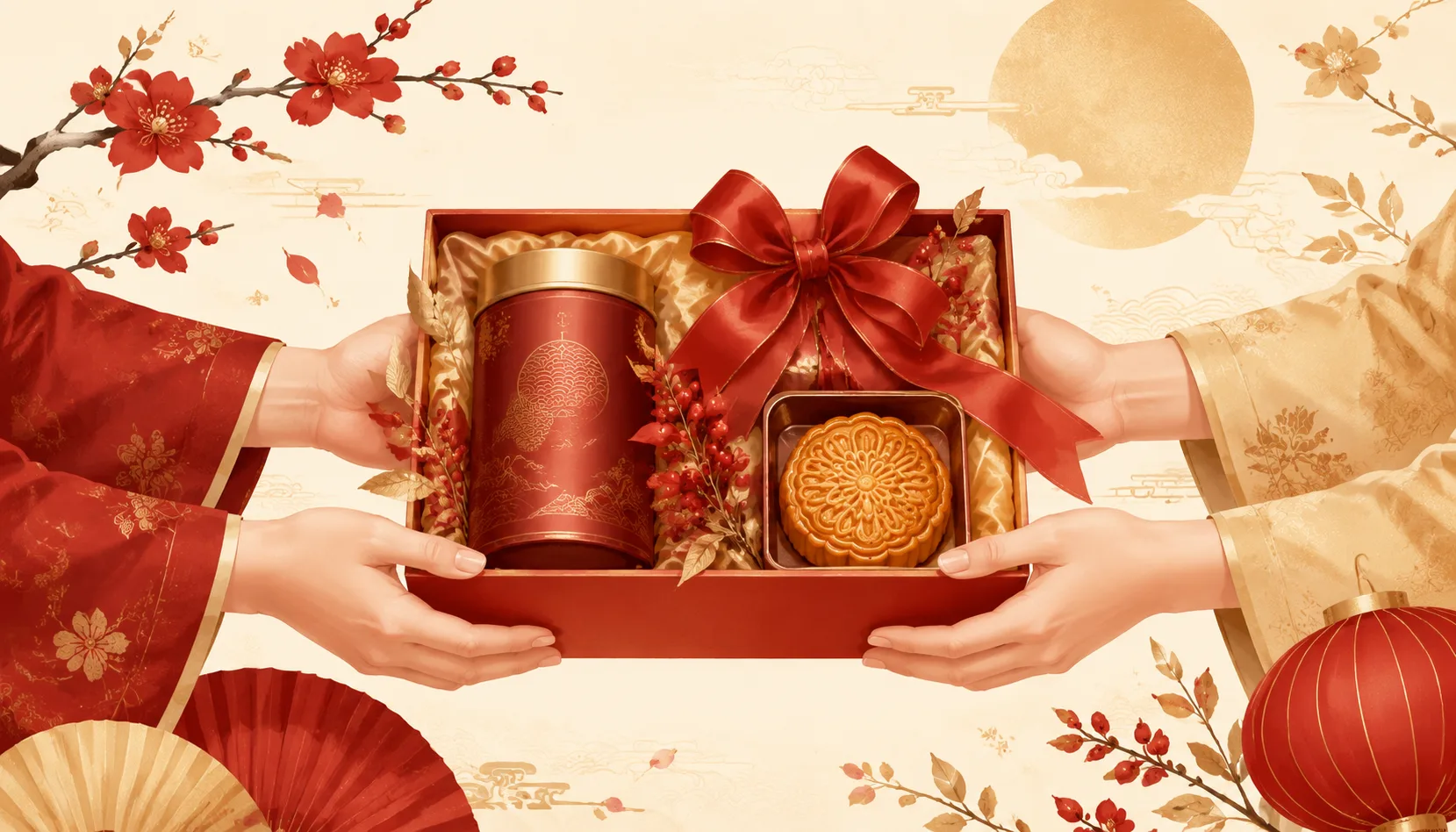
Gift-giving in China is a relationship bookmark—a way to say 'I remembered you.' Give small, thoughtful tokens during key festivals (Chinese New Year, Mid-Autumn, Dragon Boat) and on birthdays. Avoid taboo items like clocks and pears, wrap in red or gold, present with two hands, and never expect immediate favors. Master the timing: give before you need help, not after.
It’s Not Bribery, It’s a Bookmark
When Western professionals first encounter gift-giving in China, they often feel a pang of ethical panic. But here’s the truth: in Chinese business culture, a gift is not a payment for a service—it’s a bookmark. It marks a place in your relationship, saying, “I was thinking of you, even when I didn’t need anything.” That message of remembrance is the currency of guanxi (关系).
Think of it this way: you wouldn’t call a friend only when you need a favor. You’d check in, share a meal, remember their birthday. Gift-giving in China is the formalized version of that instinct. It builds emotional credit, so that when you do ask for help—an introduction, a supplier referral, a contract—it doesn’t feel transactional. It feels like two friends helping each other.
This doesn’t mean you should give cash or extravagant gifts. That crosses into bribery territory and can create awkwardness or legal risk. Instead, focus on thoughtful, modest tokens that show you pay attention to the person’s tastes and the cultural calendar. The gift itself is secondary; the message of “I remembered you” is what matters.
Case in point: Mark, a German procurement manager, once gave a Chinese supplier a box of premium tea from his home region. It cost €40. But he had remembered the supplier mentioned loving tea during a factory tour. That small gesture opened doors for years—the supplier became his most loyal partner, introducing him to other factories.
When to Give: The Four Golden Windows
Timing is everything. Giving a gift at the wrong moment—like right before a negotiation—can feel like a bribe. Instead, anchor your gifts to the four major gift windows that are culturally expected:
- Chinese New Year (春节) – The biggest holiday. Give before the new year, ideally 1-2 weeks ahead.
- Mid-Autumn Festival (中秋节) – Mooncakes and tea are classic. This falls in September or October.
- Dragon Boat Festival (端午节) – Zongzi (rice dumplings) and wine are common. Usually in June.
- Contact’s birthday – If you know it, a small gift is a powerful personal touch.
These windows are your natural opportunities to “bookmark” the relationship. You don’t need a reason beyond the festival itself—everyone expects it. That makes it safe, non-transactional, and effective.
Pro tip: Set reminders in your calendar for each of these dates for your top 20 contacts. Even a simple WeChat message with a digital gift card can work if you’re remote. The key is consistency—showing up every year, not just when you need something.
For business relationships, the gift doesn’t have to be expensive. A box of quality tea (500-800 RMB range) or a local specialty from your home country is perfect. The goal is to be remembered, not to impress.
What to Give: The Safe and the Memorable
When in doubt, stick to the classics. For business contacts, these gifts are always well-received:
- Premium tea sets – Longjing (龙井) or Pu-erh (普洱) in a nice tin, around 500-800 RMB. It’s elegant, healthy, and shows cultural appreciation.
- Quality baijiu – A bottle of Moutai or Wuliangye is a status symbol, but even a mid-range brand is fine. Only give if you know the person drinks.
- Local specialty foods – From your hometown or region. It’s a conversation starter and shows you’re sharing a piece of yourself.
- Curated cultural items – A calligraphy set, a silk scarf, or a beautifully bound book about your country. Avoid anything too personal or expensive.
These gifts are safe because they’re consumable or symbolic—they won’t be seen as a bribe, and they’re easy to reciprocate.
Avoid these taboo items at all costs:
| Item | Chinese phrase | Why it’s taboo |
|---|---|---|
| Clock | 送钟 (sòng zhōng) | Sounds like “attending a funeral” – a death omen |
| Green hat | 戴绿帽 (dài lǜ mào) | Means your wife is cheating on you – an insult |
| Pear | 梨 (lí) | Sounds like “separation” (离) |
| Umbrella | 伞 (sǎn) | Sounds like “scatter” (散) – breaking up |
| Shoes | 鞋 (xié) | Sounds like “walking away” – leaving the relationship |
Also, never give sharp objects like knives or scissors—they symbolize cutting ties.
The Number Rule: Even Is Good, 4 Is Bad
Chinese numerology is serious business. When giving gifts, especially money or items that come in sets, follow these rules:
- Give in pairs – Even numbers are lucky because they symbolize harmony and togetherness. Two boxes of tea, two bottles of wine—perfect.
- Avoid the number 4 – 四 (sì) sounds like death (死). Never give 4 of anything, and avoid price tags ending in 4.
- Prefer 8 – 八 (bā) sounds like prosperity (发). If you can, choose gifts with 8 in the price or quantity—like 888 RMB, which is very auspicious.
- 6 is also good – 六 (liù) sounds like smooth (溜), meaning everything goes smoothly.
This might seem superstitious, but your Chinese contacts will notice. A gift of 4 apples might be seen as a subtle insult, even if unintentional. On the flip side, a gift of 8 oranges shows you’ve done your homework.
Actionable tip: When buying a gift, check the price tag. If it contains a 4, ask the shop to adjust the price slightly—like from 400 to 398—to avoid the bad luck. It’s a small effort that shows respect.
In a business context, this also applies to the number of items in a gift basket. A basket with 8 different small items is ideal. It feels generous and thoughtful.
How to Present a Gift: Two Hands, Red Wrapping
The presentation is as important as the gift itself. Here’s how to do it right:
- Wrap in red or gold – These colors symbolize luck and prosperity. Avoid white or black, which are associated with funerals.
- Present with two hands – Always use both hands when offering the gift. This shows respect and sincerity.
- Be humble – When giving, say something like “This is just a small token, I hope you like it” (小小心意,希望您喜欢). Never boast about the cost.
- Don’t expect immediate thanks – The recipient may not open it in front of you. That’s normal—it’s considered greedy to open gifts in front of the giver.
Here’s a phrase table to help you present and receive gifts gracefully:
| Chinese | Pinyin | English |
|---|---|---|
| 小小心意,希望您喜欢 | Xiǎo xiǎo xīnyì, xīwàng nín xǐhuān | This is just a small token, I hope you like it. |
| 不成敬意 | Bù chéng jìngyì | This isn’t worthy of your respect (humble phrase). |
| 您太客气了 | Nín tài kèqì le | You’re too polite (response when receiving). |
| 让您破费了 | Ràng nín pòfèi le | You’ve spent too much (polite refusal). |
Key rule: When you receive a gift, do not open it immediately. Just thank the giver warmly and set it aside. If you’re the giver, don’t insist they open it—that would be pushy.
Match the Gift to the Relationship Level
Not all gifts are created equal, and neither are all relationships. In guanxi, there are levels of closeness, and your gifts should reflect that:
- Level 1-2 (acquaintance, casual contact) – A simple greeting or a small souvenir from your travels is enough. Don’t overdo it.
- Level 3 (regular business contact) – This is where you start giving small tokens during festivals. A box of tea, a bottle of wine, or a specialty food item.
- Level 4-5 (trusted partner, close friend) – Here you can invest in more substantial gifts, like a premium tea set or a high-quality baijiu. But still keep it under 1000 RMB to avoid awkwardness.
Why this matters: Giving too much too early can make the recipient uncomfortable—they might feel obligated to reciprocate. Giving too little to a close partner can feel dismissive. Match the gift to the depth of the relationship.
Case study: Emma, a marketing director, had been working with a Chinese distributor for two years. They were at Level 3—good rapport but not close. For Mid-Autumn Festival, she sent a gift box with mooncakes and a small tea sampler to every Level 3 contact in her network, including this distributor. Three months later, when she needed an introduction to a key supplier, two of those contacts proactively reached out to help. They told her, “You remembered us during the festival, so we want to help you.” That’s the power of the bookmark.
The Timing Trick: Give Before You Need, Not After
The most common mistake Westerners make is giving a gift right before a negotiation or after a favor. That turns a bookmark into a payment, which is both ethically questionable and culturally awkward.
The master move is to give when you need nothing. Send a gift during a festival, or a random “thinking of you” note. This creates a reservoir of goodwill that you can draw on later. When you do ask for help, it feels like a natural extension of the relationship, not a transaction.
If you’ve already received a favor, a gift afterward is fine, but it should be framed as gratitude, not payment. Say, “This is to thank you for your help, I really appreciate it” (感谢您的帮助,这是一点心意). The key is to keep it modest and not directly proportional to the favor’s value.
Practical tip: Keep a list of your key contacts and their birthdays, festival preferences, and favorite things. Use a CRM or even a spreadsheet. When a festival approaches, set aside 15 minutes to send a gift or a WeChat message. Consistency beats extravagance.
Remember, guanxi is a long-term game. A gift given in June for Dragon Boat Festival might pay off in October when you need a supplier introduction. But only if you’ve been consistent—one gift won’t build a relationship, but a pattern of thoughtful gestures will.
What Chinese People Actually Say
- 送礼 | sòng lǐ | to give a gift | Use when describing the act of giving; neutral and widely accepted.
- 意思意思 | yì si yì si | to give a small token (polite expression) | A humble way to downplay the gift's value; shows humility.
- 略表心意 | luè biǎo xīn yì | to show a slight token of one's feeling | Use to express that the gift is a small gesture of goodwill.
2026 Reality Check
2026 Reality Check: The "gift as bookmark" concept—where gifts signal relationship rather than transaction—still exists but has weakened. Anti-corruption campaigns continue, and digital red envelopes (hongbao via WeChat/Alipay) have normalized small gifts as genuine goodwill, not bribery cover.
Gen Z vs. Older Generations: Younger Chinese (under 30) see gift-giving more pragmatically. They prefer experiences over objects and often skip gifts entirely, using social media greetings instead. Boomers and Gen X still uphold traditional reciprocity—refusing a gift can feel rude.
Beijing/Shanghai vs. Smaller Cities: Tier-1 cities have become more transactional; gifts in business contexts are scrutinized and often replaced with transparent perks. In smaller cities and rural areas, traditional etiquette persists—refusing a gift still risks offense. Guanxi (relationships) remains vital nationwide, but the form is shifting.
Frequently asked questions
What are the best occasions for giving gifts in Chinese business culture?
Key festivals like Chinese New Year, Mid-Autumn Festival, and Dragon Boat Festival are ideal, along with birthdays. Giving a small, thoughtful gift during these times shows you remember the person and helps build guanxi naturally.
What items should I avoid giving as gifts in China?
Avoid clocks (symbolize death), pears (separating), sharp objects like knives (cutting ties), and white or black wrapping (associated with funerals). Stick to safe, auspicious items like tea, fruit, or quality stationery.
How should I wrap and present a gift to a Chinese colleague or partner?
Use red or gold wrapping paper, as these colors symbolize luck and prosperity. Present the gift with both hands, and if it's a physical item, offer it with a slight bow. Avoid wrapping in white, blue, or black.
Is it acceptable to give expensive gifts to build guanxi?
No, expensive gifts can be seen as bribery and may cause embarrassment or legal issues. Focus on modest, thoughtful items under 200-300 RMB (about $30-40), as the gesture matters more than the price tag.
When is the right time to give a gift to a business contact in China?
Give gifts before you need a favor, not after, to avoid appearing transactional. Ideal times are at the start of a meeting, during festivals, or after a successful collaboration—never as a direct exchange for a specific action.
How do I receive a gift in China without offending the giver?
Accept with both hands, thank the giver sincerely, and avoid opening it immediately unless they insist. It's polite to reciprocate later with a small gift or a meal, but never feel pressured to match the value.
Try our tools
Related guides

Chinese Gift-Giving Guide 2026: Rules, Taboos, and What Actually Works
In China, gift-giving is not about the gift. It's about the relationship. The right gift, delivered at the right time with the right words and two hands, commun…
Read the guide →
14 Chinese Gift Taboos: The Complete Forbidden List (With Salvage Tips)
Most Chinese gift taboos come from homophones — words that sound identical to something unlucky. "送钟" (giving a clock) sounds exactly like "送终" (attending a fun…
Read the guide →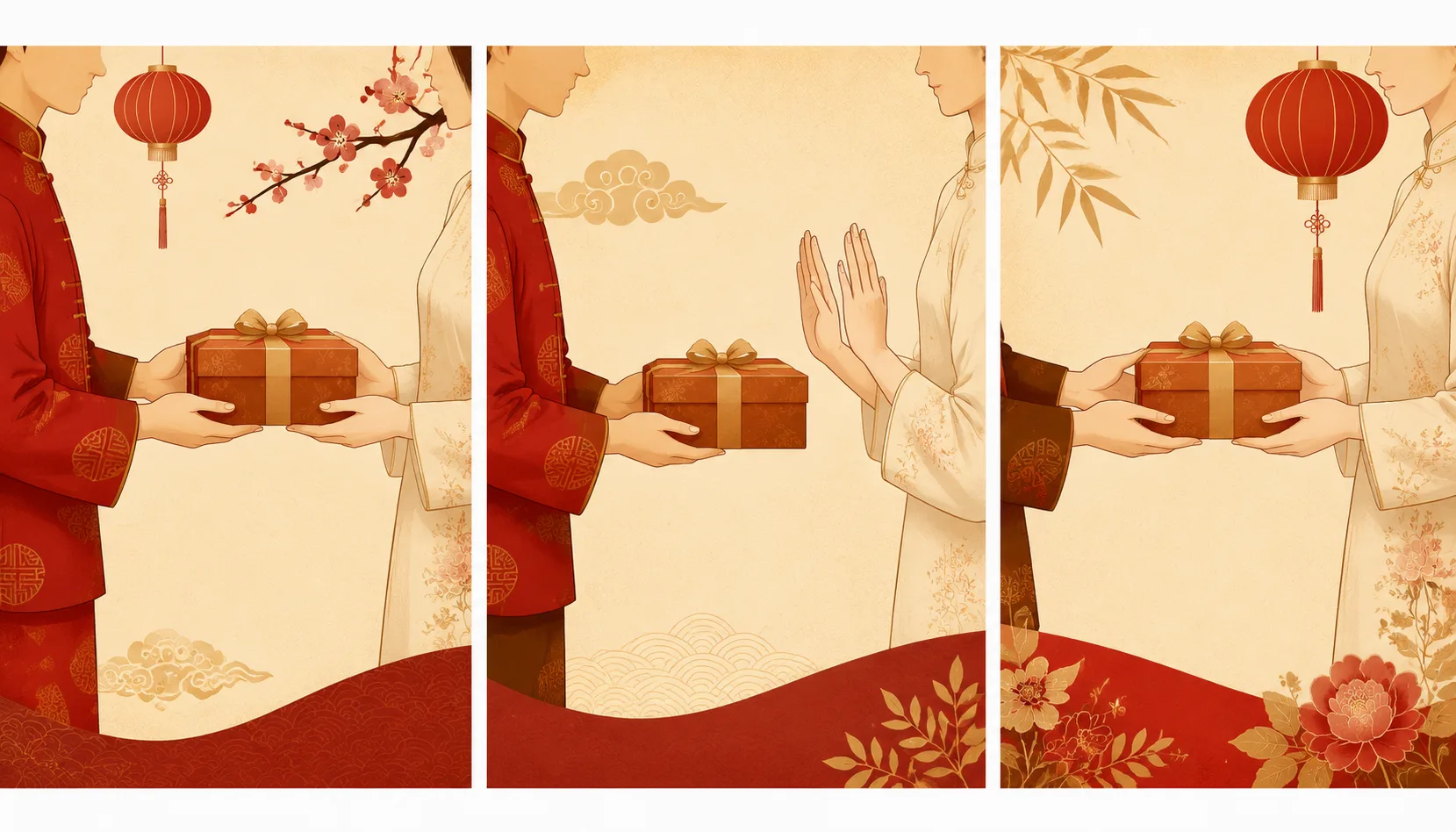
How to Give a Gift in China: Two Hands, Three Rounds, and What to Say
Two hands. Eye contact. Slight forward lean. Say "一点小心意" (a small token). When they refuse, persist twice — then place it in their hands. This is the script. De…
Read the guide →