How can Western businesspeople recognize and counter the red face/white face (good cop/bad cop) tactic in Chinese negotiations?
Quick answer
The red face attacks your conditions aggressively while the white face offers a 'rescue' that lands exactly on their pre-set target. Counter by not engaging the red face, treating the white face's compromise as a new opening, and naming the tactic with humor to reset the dynamic.
The Classic Tactic: How It Works
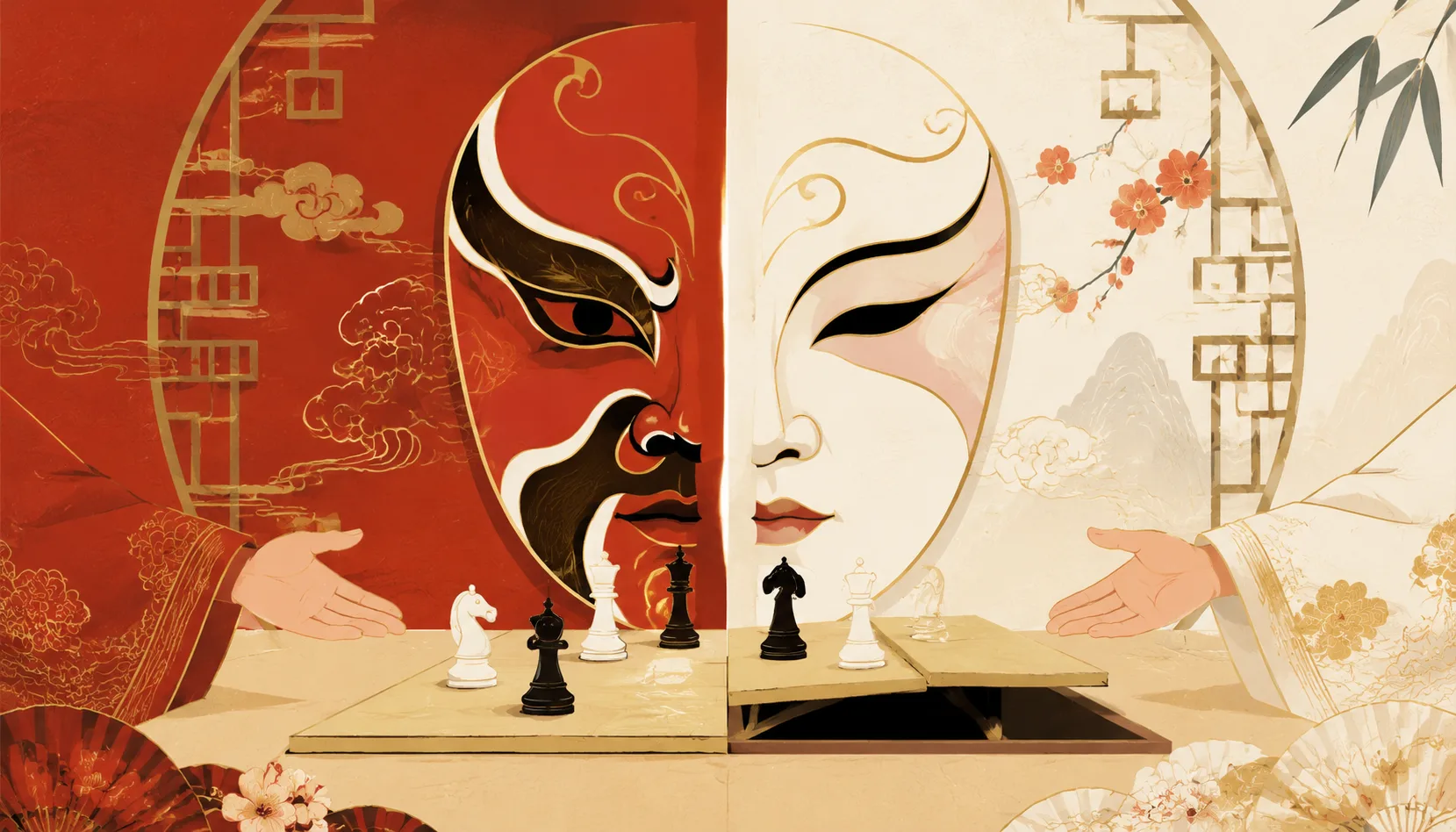
In Chinese business negotiations, the 红脸白脸 (hóngliǎn báiliǎn) — literally 'red face white face' — is a time-honored dynamic. One negotiator plays the red face (aggressor), attacking your conditions with sharp criticism, unrealistic demands, or even personal jabs. The other plays the white face (peacemaker), who appears reasonable, empathetic, and finally 'rescues' you by offering a compromise.
The trap? That compromise is exactly the target they set before the meeting began. You think you've won a concession, but you've simply been steered to their predetermined position.
Here’s a typical scenario: You're negotiating a component price. The red face slams the table, saying your quote is 'absurd' and 'insulting to our partnership.' He threatens to walk. You feel cornered. Then the white face sighs, says 'My colleague is very passionate, but let's be practical,' and offers a price that's 5% higher than the red face's last offer — but still 10% below your minimum. You accept, relieved. But that 5% was their plan all along.
Key insight: The red face never challenges the cooperation itself — only the conditions. If they truly wanted to walk, they wouldn't be negotiating. The attack is performance.
Why It's More Potent in China: The Face Grammar
In Western contexts, good cop/bad cop feels like a script. In China, it's amplified by the cultural grammar of 面子 (miànzi) — face. When the red face attacks, it's not just about numbers; it's a public challenge to your status and competence. Losing face in front of your team or theirs feels visceral, triggering a primal need to restore dignity.
The white face's 'rescue' then becomes a face-saving exit: you can accept the compromise without appearing weak, because the white face has given you a narrative of 'we worked it out.' This emotional arc makes the tactic far more effective than in cultures where direct confrontation is less personal.
Consider this: In a 2022 negotiation for a Shanghai supplier, a German procurement manager told me the red face's criticism of his 'lack of market understanding' made him feel he had to prove himself. He conceded 8% on price just to 'show flexibility.' The white face later admitted to me (over tea) that the target was 8% all along.
Actionable tip: Before any negotiation, brief your team that attacks on competence are tactical, not personal. Pre-decide your walk-away point and stick to it, regardless of emotional pressure.
Recognition Signals: How to Spot the Tactic Early
You can't counter what you don't see. Here are the three tells that the red/white face dynamic is in play:
- The attacker never challenges the cooperation itself. The red face says 'your price is ridiculous' but never 'we should end this partnership.' That's a sign the attack is a negotiating move, not a real threat.
- The white face appears at your lowest moment. When you're about to walk or have just made a concession, the white face steps in with a 'reasonable' offer. This timing is not coincidence.
- The 'compromise' lands exactly where they wanted from day one. If you track the numbers, the white face's offer is usually within 1-2% of their initial hidden target. It's a pre-planned landing zone.
For example, in a 2021 equipment deal, a US buyer noticed the red face always escalated after the white face left the room. That pattern revealed the script. Once he saw it, he stopped reacting to the red face and the tactic collapsed.
Actionable tip: Keep a negotiation journal. Note every offer, who made it, and the emotional tone. If you see a pattern of attack-then-rescue, you've identified the tactic.
Counter-Strategy 1: Don't Argue with the Red Face — Acknowledge and Park
Arguing with the red face is exactly what they want. It puts you on the defensive, making you more likely to concede to escape the pressure. Instead, use the 'acknowledge and park' technique.
When the red face attacks, respond calmly: 'Noted, let's look at that together in a moment.' Then move on to the next agenda item. This does three things: it denies them emotional engagement, it shows you're not rattled, and it keeps control of the agenda.
Here's a phrase you can use:
| Chinese | Pinyin | English |
|---|---|---|
| 好的,我们先记下来,稍后一起讨论。 | Hǎo de, wǒmen xiān jì xiàlái, shāohòu yīqǐ tǎolùn. | OK, let's note that and discuss it together shortly. |
In a real case, a Danish buyer used this against a red face who kept attacking delivery times. By parking the issue, the buyer forced the white face to bring it up later — at which point the buyer had already prepared a counter-proposal. The red face's attack lost all momentum.
Actionable tip: Practice this phrase with your team. When you say it, maintain neutral body language — no sighing, no eye-rolling. The goal is to make the attack irrelevant.
Counter-Strategy 2: Treat the White Face's 'Compromise' as a New Opening, Not a Closing
The white face's offer feels like a relief, but it's a trap. If you accept it immediately, you've walked into their net. Instead, treat the white face's 'reasonable compromise' as the opening position of a new negotiation round — not the final word.
When the white face makes their offer, respond with something like: 'I appreciate your effort to find common ground. Based on that, let's adjust this other point to balance it out.' This shifts the conversation from 'accept or reject' to 'let's keep talking.'
Here's a useful phrase:
| Chinese | Pinyin | English |
|---|---|---|
| 感谢你的建议,我们可以在其他方面做些调整来达成平衡。 | Gǎnxiè nǐ de jiànyì, wǒmen kěyǐ zài qítā fāngmiàn zuò xiē tiáozhěng lái dáchéng pínghéng. | Thank you for your suggestion. We can adjust other aspects to achieve a balance. |
In a 2020 case, a British manufacturer was offered a 'final' price by the white face. Instead of accepting, the buyer asked for extended payment terms as a condition. The white face agreed — because they had room. The buyer saved 3% in financing costs.
Actionable tip: Always have a list of non-price tradeables (delivery, payment terms, warranty) ready. When the white face offers a compromise, condition your acceptance on one of these extras.
Counter-Strategy 3: The Advanced Move — Name the Tactic with Humor
The most powerful counter is to gently expose the tactic with a smile. This isn't confrontational; it's a face-saving way to reset the negotiation to a more honest register. In Chinese culture, direct accusation is rude, but playful transparency can work wonders.
Say something like: 'You two are playing good cop/bad cop very professionally!' — in a light tone. This signals that you see the game, but you're not offended. It often forces the other side to drop the act, because continuing would be embarrassing.
Here's the phrase:
| Chinese | Pinyin | English |
|---|---|---|
| 你们两位红脸白脸配合得真专业! | Nǐmen liǎng wèi hóngliǎn báiliǎn pèihé de zhēn zhuānyè! | You two play red face/white face very professionally! |
In a 2019 negotiation in Shenzhen, a US entrepreneur used this line after the white face made his 'rescue' offer. The Chinese team laughed, and the lead negotiator said, 'OK, let's talk real numbers.' The final deal was 12% better than the white face's offer.
Actionable tip: Use this only after you've established rapport. If you're too early, it can backfire. But when used correctly, it's the fastest way to cut through the script.
Case Study: Tom at Nordica and the 'Compromise' That Was Huayang's Day-1 Target
Tom, a procurement manager at Nordica (a fictional European appliance maker), was negotiating a 3-year contract with Huayang, a Chinese component supplier. The red face, Mr. Chen, opened by calling Tom's proposed price 'unrealistic' and 'a joke.' He threatened to walk, citing rising material costs.
Tom felt the pressure. Then the white face, Ms. Liu, stepped in: 'Mr. Chen is very direct, but we want a long-term partnership. I can offer a compromise — 5% above your original price, but we need a 2-year commitment.' Tom, relieved, accepted.
Later, Tom learned from a Huayang insider that their Day-1 target was exactly 5% above Tom's original offer. The red face's aggression was scripted to push Tom into a corner, and the white face's 'rescue' landed precisely on their goal. Tom had given up a 2-year commitment for a price he could have gotten without the drama.
Lesson: The white face's rescue is the most expensive trap in the negotiation. It feels like a win, but it's their win. Always test the white face's offer against your own BATNA (best alternative to a negotiated agreement). If it's not better than your walk-away point, it's not a compromise — it's a capitulation.
What Chinese People Actually Say
- 唱红脸 | chàng hóng liǎn | "play the good cop" | Use when acting friendly to build rapport and gain concessions.
- 唱白脸 | chàng bái liǎn | "play the bad cop" | Use when applying pressure to push for quick decisions.
- 软硬兼施 | ruǎn yìng jiān shī | "combine soft and hard tactics" | Use to describe alternating between friendly and tough approaches.
2026 Reality Check
2026 Reality Check: The "Red Face White Face" (hongbai lian) tactic still exists but has evolved significantly. It's no longer a rigid rule—it's more of a cultural reference most older negotiators still recognize.
Gen Z vs Older Generations: Younger Chinese negotiators (under 30) largely dismiss this tactic as outdated. They prefer direct communication and transparent negotiation styles influenced by Western business practices and global experience. Older generations (50+) still occasionally use it, especially in state-owned enterprises or traditional family businesses, though even they adapt it to modern contexts.
Beijing/Shanghai vs Smaller Cities: In tier-1 cities like Beijing and Shanghai, the tactic is rare in professional negotiations—viewed as manipulative and inefficient. In smaller cities and provincial areas, especially in traditional industries or with less internationally-exposed business partners, the "bad cop/good cop" dynamic still appears occasionally.
Frequently asked questions
What is the red face/white face tactic in Chinese negotiations?
It's a common negotiation tactic where one negotiator (red face) acts aggressive and unreasonable, while another (white face) appears sympathetic and offers a compromise that actually aligns with their pre-set target. Recognizing this dynamic helps you avoid accepting a 'rescue' that isn't truly a concession.
How can I spot the red face/white face tactic during a negotiation?
Look for a sudden shift in tone: one person becomes confrontational or dismissive, then a colleague steps in to calm things down with a seemingly fair offer. If that offer lands suspiciously close to your bottom line or their original demand, it's likely a scripted move.
What should I do when the red face attacks my terms aggressively?
Stay calm and don't engage emotionally. Redirect your response to the white face or the whole team, saying something like, 'I understand your colleague has strong views, but let's focus on practical solutions together.' This avoids feeding the red face's role.
How should I respond to the white face's 'compromise' offer?
Treat it as a new starting point, not a final concession. Politely acknowledge it, then counter with your own revised position that moves toward your goal. For example, 'I appreciate that offer, but let's adjust it slightly to meet both our needs.'
Can I use humor to counter the red face/white face tactic?
Yes, naming the tactic lightly can reset the dynamic. Say with a smile, 'I feel like we're in a classic good cop/bad cop scene—let's skip the script and find a win-win.' This often disarms the act and encourages more genuine discussion.
Is the red face/white face tactic considered rude in Chinese business culture?
It's a recognized negotiation strategy, not a personal insult, so avoid taking offense. Instead, view it as a signal to test your flexibility. Responding with patience and professionalism is respected, and you can use the tactic yourself to balance power if needed.
Try our tools
Related guides

Chinese Business Negotiation: The Rules Westerners Miss
Chinese business negotiation runs on three rules that Western counterparts routinely miss: indirect refusal (never a direct "no"), strategic patience (silence i…
Read the guide →
Chinese Indirect Communication in Business: Read the Signs
In Chinese business culture, direct disagreement, direct refusal, and direct criticism are all rare. Ambiguous language, extended silence, sudden topic changes,…
Read the guide →
Understanding Mianzi (Face) in China: Rules Beneath Rules
Mianzi (面子) is social reputation and dignity — the invisible currency that governs Chinese social life. It can be given, lost, saved, or attacked. Almost every …
Read the guide →